


Bug Country. We traveled from Valadava to Suprasl in search of a lost paradise
In northern Podlachia, you constantly encounter traces of Belarusian identity — many people there firmly hold onto their roots. From southern Podlachia, non-Poles were displaced in 1947 during Operation Vistula, and not all were able to return. It's sometimes like a desert there. Bug Country is not just about the people, but also stunning landscapes and unexpected associations. And the Belarusians of Podlachia are hardworking, intelligent, and 'proper,' as our mothers used to say. Kostamloty—Kodan — Yablachyn — Valadava — Holya — Belaya Padlyashskaya — Pratulin — Yanaŭ — Hnoyna — Melnik — Grabarka — Suprasl.
We traveled by car. One of us signed up for a cycling tour around the Bug along the route Melnik — Syamyatyčy — Grabarka — Darahichyn — Hnoyna — Melnik. So we traveled together for three days, and one day he cycled without us. We rented accommodation with reference to the cycling tour's starting point. We stayed two nights in Belaya Padlyashskaya and two nights in Syamyatyčy. We couldn't find any available agritourism estates right on the Bug at prices we could afford. (We searched two weeks before departure, for up to $100 per night for 4 people via Booking and AirBNB, with a rating higher than 9, in quiet places with good reviews).
I apologize for not taking many photos. At first, I didn't plan to write, thinking it would just be a private trip. But then I decided to write after all.
Kostamloty
We started with Kostamloty (opposite them, on the Belarusian side, is Zakazań).
Everyone goes to Kostamloty for the old church, dedicated to Saint Nikitа, and it houses a large icon of Saint Nikitа from the 17th century. The icon was donated to the church, as the Cyrillic inscription states, by 'Feodora of Pryluky' — and Pryluky is a village one kilometer north, but on the right bank of the Bug, now in the Republic of Belarus.
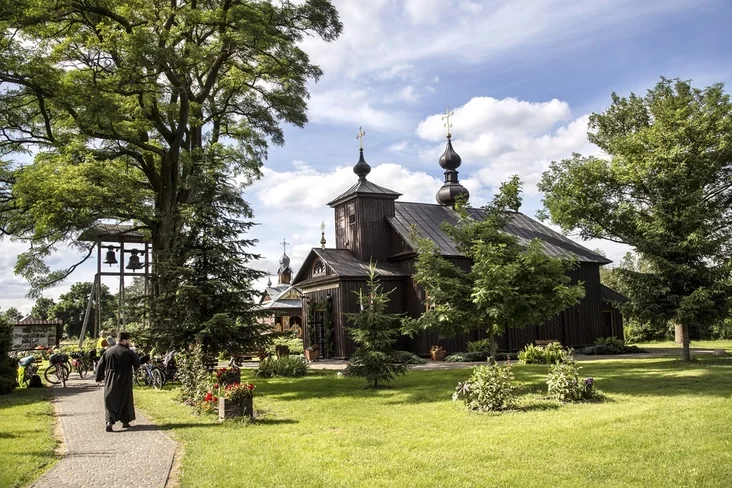
That church is the only 'Neo-Uniate' one in all of Poland, a result of an attempt to revive the Unia (Union) in the 1920s. In the church, Catholic priests serve in Church Slavonic. The church was declared a 'sanctuary of the Uniates of Podlachia' (I will tell more about the complex 19th-century history with the Uniates of Podlachia below).
The church was built in the early 17th century. Is this the same building, or was it replaced in the 18th century? There's no information — meaning, most likely, it's the same old one, but it's impossible to say for sure, as carbon dating of the walls hasn't been conducted.
This is a very old settlement a dozen kilometers south of Terespol, the road winds along the Bug, the very same one people have been traveling here for a thousand years.
Kostamloty is first mentioned when Vytautas gifted it to the Augustinians of Brest. Former Polish Sejm deputy in the 1920s from the Brest district, Vasil Dzmitryuk, hailed from there, as did a whole constellation of figures, including the translator of Shevchenko into Polish.
Life here went on long before Vytautas. Slavs precisely ascended along the Bug, and various peoples, including Goths, descended and ascended to them by the great river. The Bug has always been like a highway for human movement — until it became a dead-end border in the 20th century, for the first time.
Disappointment: around the old church, over the last decade, they have built up… how shall I put it… It's not yet a miniature version of the Saint Elisabeth Convent — but it's on its way. In that, you know, Orthodox style, as ultracatholics imagine it: golden onion domes and bright colors.
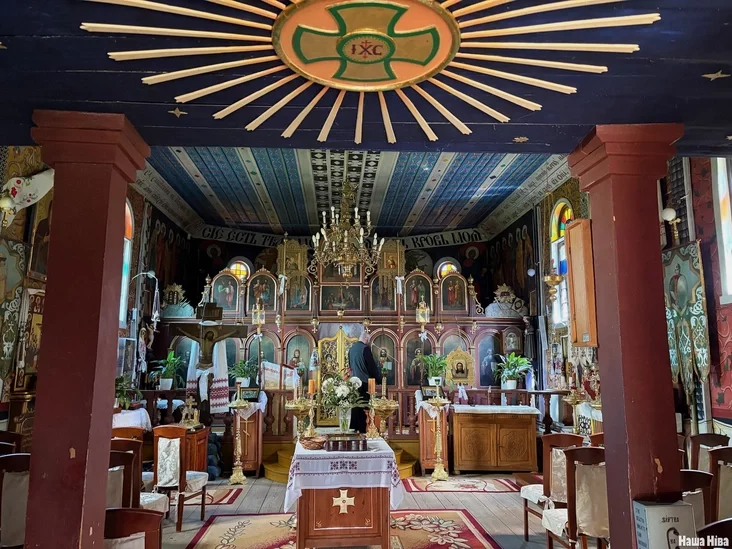
But the church is well-maintained. True, inside it is now completely brightly painted. Everything is like it never was here. And nowhere is there any sign or trace of the language that was spoken here from time immemorial and in which that Khvyadora from Pryluky signed the icon.
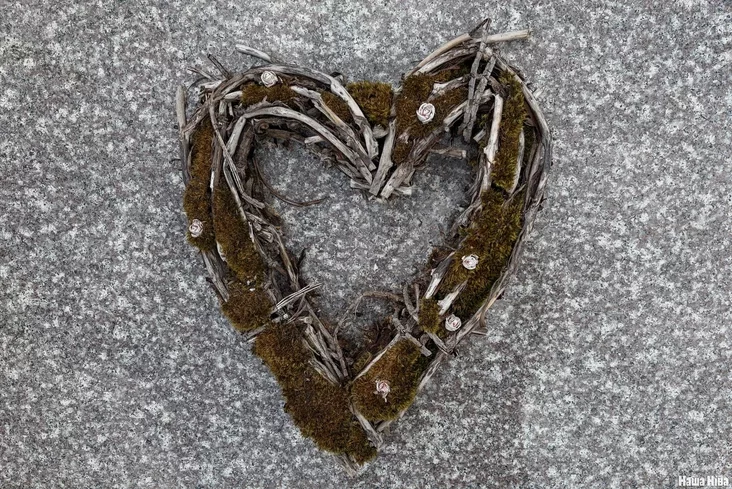
The cemetery was also 'beautified' — in the same manner as they do it with us: all trees were cut down. On the new graves, all inscriptions are in Polish. In Belarus, it's all in Russian, and there — in Polish, nothing in 'our way'.
In 2003, Orthodox believers in Kostamloty, in defiance of the Neo-Uniates — who are anathema to them — built an Orthodox church named after Seraphim of Sarov. More accurately, the Kostamloty residents rebuilt the first church in defiance of the Neo-Uniates from one of the houses back in the 1920s — they saw that Neo-Unia as a cunning method of Polonization, so few families attended it. That small church was demolished by Poles in 1938 — at that time, authorities conducted operations to demolish Orthodox churches in Podlachia and Chełm Land, aiming to Polonize this region as a priority.
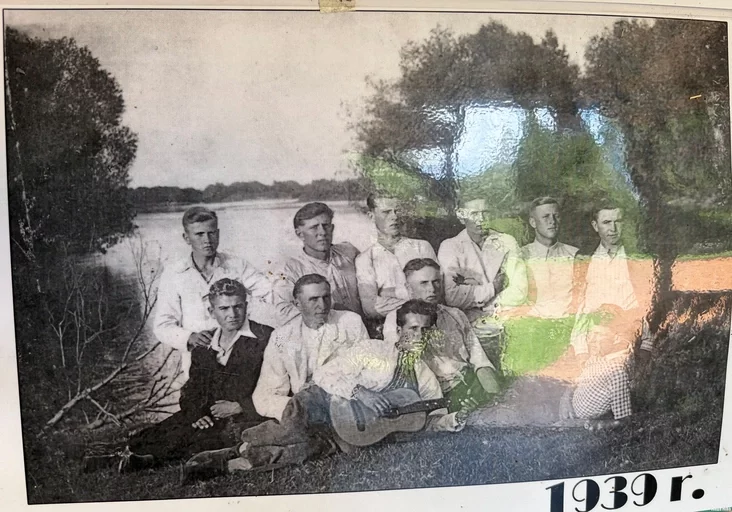
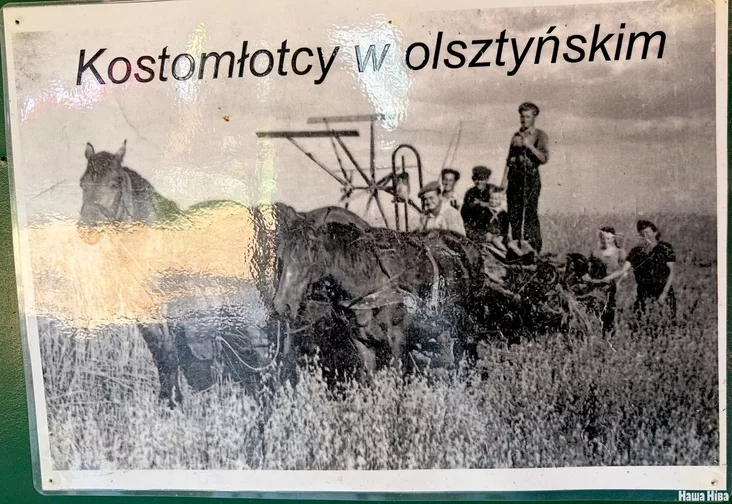
After the Germans arrived, people — there was a strong national consciousness in Kostamloty, it's no coincidence that the deputy came from here — immediately built a new church. But it burned down in the winter of 1944 — probably set on fire by Polish partisans. And now this church stands: the building was moved from Dabryvody near Klyashcheli. Such is the complex history.
The priest in the Uniate church, from the Order of the Oblates, managed in a brief conversation to express himself against ungrateful Ukrainians, and against Radosław Sikorski — "pan przecież wie, że on jest agentem?" (sir, you surely know he's an agent?), and his wife — "przecież, Żydówka, proszę pana" (surely, a Jewess, I beg you, sir).
The priest in the Orthodox church — who is also the only monk in the monastery attached to it — managed in a brief conversation to say that Russians are being killed with bullets in Ukraine, and don't believe that Poles are not fighting there, one and a half thousand special forces are fighting. "And here in Poland, people are killed differently — with food and vaccines."
In short, oh dear, oh dear. Or even: oh God, oh God.
I even thought in distress: why did we even come here. But later everything will not be as bleak as in Kostamloty. Especially if you don't talk to the servants of God, but simply admire the architecture and landscapes.
The Orthodox priest, however, was the only one in Kostamloty who supported a conversation 'in our way'. Women aged 50-60 in the church and cemetery already spoke only Polish with us. Truth be told, we didn't particularly stop to chat with anyone, we were rushing.
When I was there for the first time in the late 1990s, the local people still spoke a beautiful local Ukrainian dialect fluently. I remember — the first person I met there then was a peasant coming back with fish from the Bug. 'A vite chyi budzietse?' (And whose people are you, do you know?) — he began to ask about our roots. A couple of decades — and that's it.
On the lands of the State Agricultural Farms (PGR) here, sunflowers are now mass-cultivated — there are many of them throughout Podlachia now.
Access to the Bug is not fenced off, everything is as it used to be. Only video cameras now guard it. But since we are not Poles, we didn't go — just in case.
Later on the first day, we went to Kodan, Yablachyn, Valadava, and Holya.
Kodan
Kodan (this is opposite Straličy on the Belarusian side) — for centuries was the first town on the road from Brest southwards, to Rome, via Lublin and Krakow.
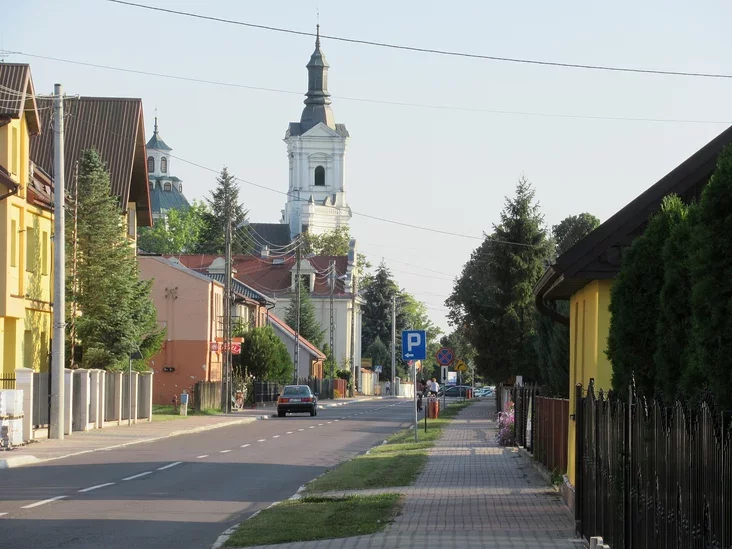
In Brest, there was also a saying about the blessed, favorable south wind: 'the wind from Kodan is God's grace'.
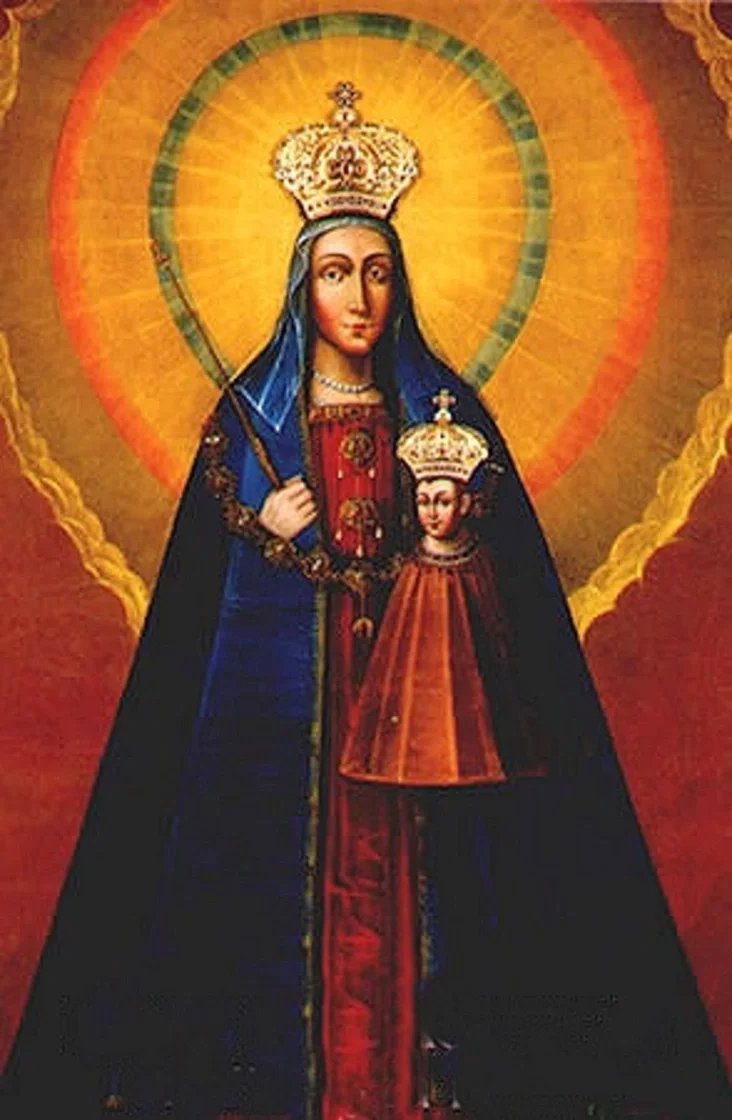
Kodan is alive, a large stream of pilgrims goes there to the 'Basilica Minor'. Because it houses the icon of the Mother of God, stolen by Sapieha from Rome (it turns out, that was also possible).
We had lunch there in the pilgrims' canteen — soup with the best groats and pork chop cutlets with potatoes.
At the castle, the foundations of the palace have been restored. And the entire area of the former castle has been arranged as a Calvary.
The late Gothic Orthodox Church of the Holy Spirit, built by the Sapieha family at the Castle, is enchanting. More precisely, it was Orthodox and Uniate until 1945, and after that it became Catholic — although there is an Orthodox parish in Kodan, in a newer church.
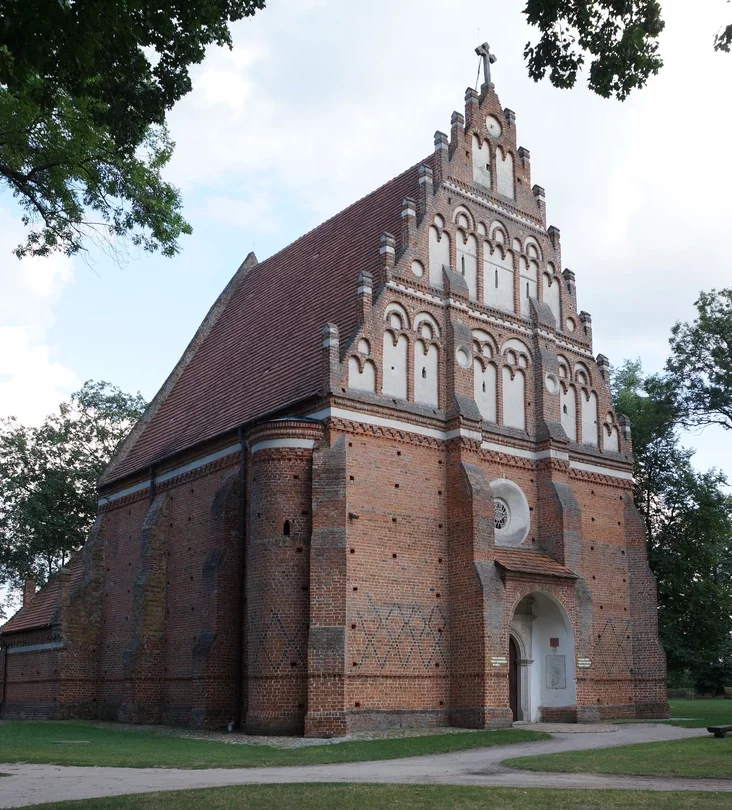
It's worth making this trip just for this one church. In all of Belarus, there are only a few churches from that era: Synkavichy, Muravanka. The Kodan church is among them.
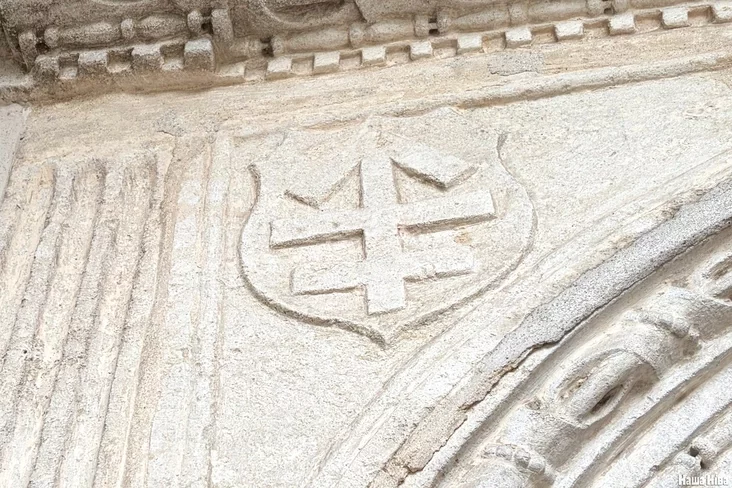
I didn't know before that it was built by architects from the circle of Bartolomeo Berrecci — an Italian architect who moved to Krakow from near Florence around the same time that Sigismund the Old married Bona Sforza, and Skaryna, after studying in Padua, printed his first books in Prague; this was the time Michelangelo worked in Rome.
It's easy to imagine Italians directing the masonry of this church, and in the evenings, sailing in boats to the other bank, to Straličy, and there teaching Margarita Liauchuk's great-great-grandmother the carnascialesco popular that season in Florence.
Slavatyčy
Slavatyčy (this is opposite Damachava on the Belarusian side) stands empty, because the border crossing is still closed, but it still looks prosperous, having thrived on border trade.
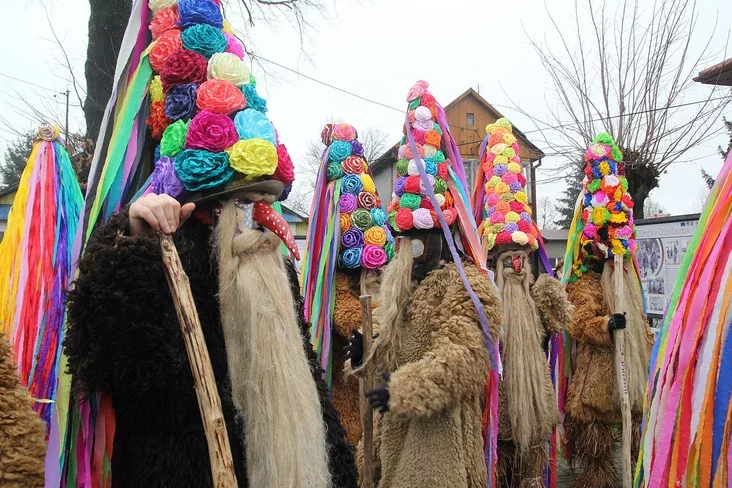
It's interesting to come to Slavatyčy for the Hahaty — this noisy and vibrant ritual has been preserved here, a tradition of revelry on Shchedry Vechir (Generous Evening/Malanka). Here, carolers would dress up as 'bearded men' and thus walked around, caroling.
Yablachyn
Yablachyn perhaps touched us the most. The monastery itself is like a mini-arboretum with low buildings, integrated, even overgrown, into the surroundings.
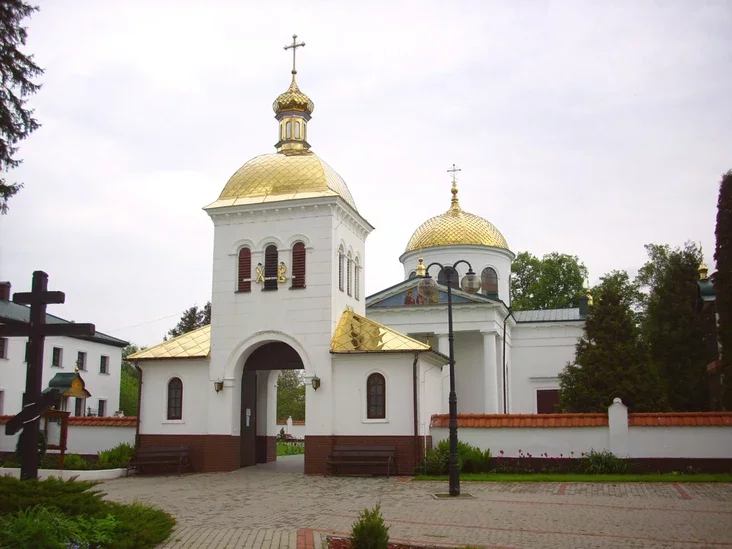
For evening vespers on a non-holiday, about 10 people stood there — either from nearby villages or random tourists. The service can be heard everywhere: it is broadcast in all buildings.
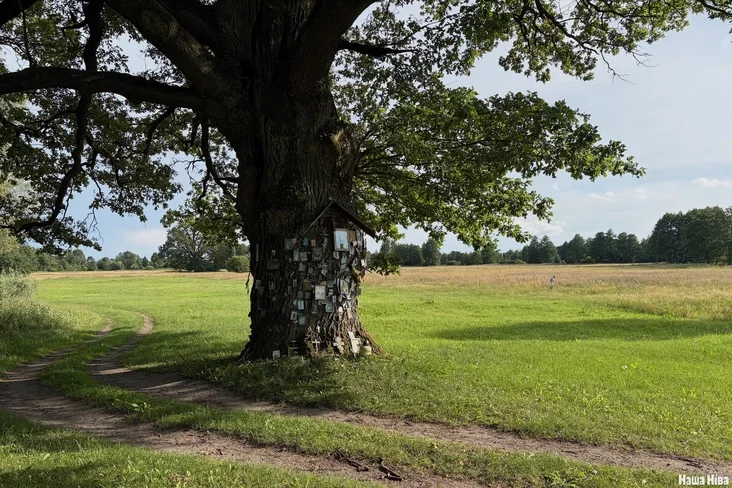
And around there, the Bug River valley has been preserved as it was for centuries, and which is almost nowhere to be found on the Belarusian side due to land reclamation, collective farming, and the closed 800-meter border zone. Field roads wind among oxbow lakes, groves, meadows, majestic solitary oaks. It must be especially beautiful in these floodplains in June, but perhaps also in autumn. So we stood, took photos near an old veneration oak. And if there had been time, we would have just liked to walk around there. It's as if you are transported to another century.
Valadava
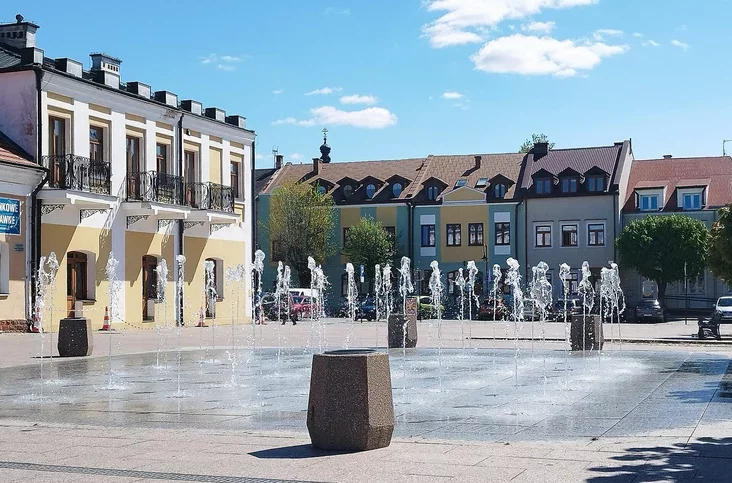
Valadava (this is opposite Tamashoŭka on the Belarusian side) — in its old center, it's like a Jewish town from the 1930s.
In the Market Square, everything that should be in a respectable Jewish town's Market Square, and even hung copies of hundred-year-old posters about a craft school for Christian youth. Well, and a 'Żabka Café' with fries and pizzas too. How could it be Poland without a 'Żabka Café'.
We looked for a high place to see Belarus and the meeting point of three states — Belarus, Ukraine, and Poland, but couldn't. From Castle Hill, it used to be visible, but now trees have grown up the slope. Though perhaps you could see it in winter.
Holya
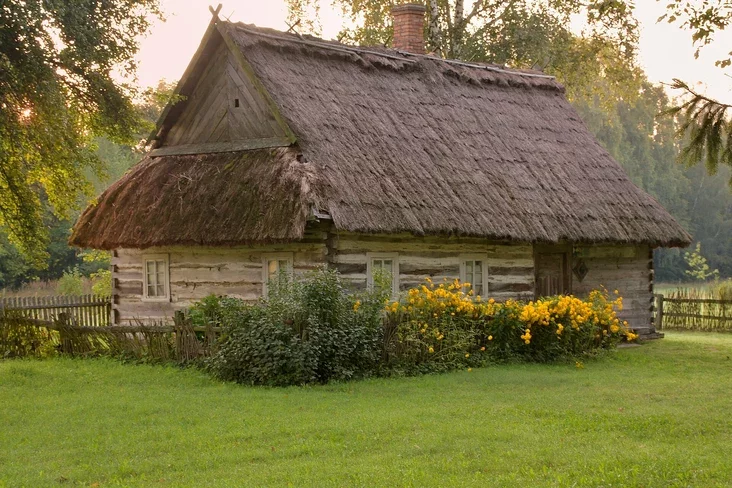
Towards evening, we reached Holya — an open-air museum (skansen) created by the family of Ukrainian intellectuals Tadey and Alina Karabovich. Tadey taught in Lublin, Alina was a teacher. There's an old house, a windmill, barns. People live right nearby. The village itself is quiet and remote, but alive. And much there has remained authentic, including the old church.
We didn't cross paths with Karabovich himself, he was busy that day. And I remember 'Nasha Niva' in the late 1990s, in the pre-internet era, translated his free verse from Ukrainian.
It's nice in Holya, you want to stop here for a day, just walk around and sit. And the old 19th-century house, and the windmill, and the wicker barn, moved from the very same Kostamloty, are here in their natural environment. There is neither that silly sweetness nor golden domes.
And a protest banner stands against the construction of a gigantic solar power plant somewhere nearby: 'it will destroy the landscape'.
The places beyond Valadava are deserted: forests, forests. As Doctor of Sciences Oleg Latyshonak later told us: "It's terrifying there. after people were evacuated in 1947, everything remains a wasteland."
We spent the night, and on the second day, we walked around Belaya Padlyashskaya a bit and then drove along the Bug to the northwest of Brest.
Belaya Padlyashskaya
Belaya County — quite monotonous, but clean, rich, like all of the Polish province. Radziwill Castle has been carefully restored, but there's not much for Belarusians to see, there are no Belarusian traces here, although it is historically Podlachia — unless you're interested in the history of the Radziwills, but I'm not.
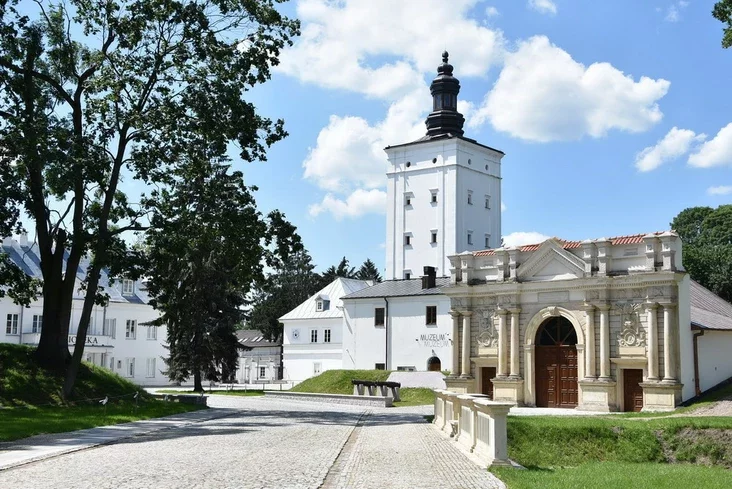
The kids ran around a bit in the restored hornbeam (from the word 'grab', a type of tree, not 'grob' meaning grave) labyrinths of the castle alleys. We ate rassolnik, khaladnik, and fried potato dumplings in the Belsk canteen on the Market Square: for city dwellers, it might have been a strange place, but we liked it. Rassolnik as it should be, and khaladnik classic.
Pratulin
Afterwards we went to Pratulin — this is a sanctuary on the site of the death of thirteen Uniates who in 1874 did not allow an Orthodox priest into their church.
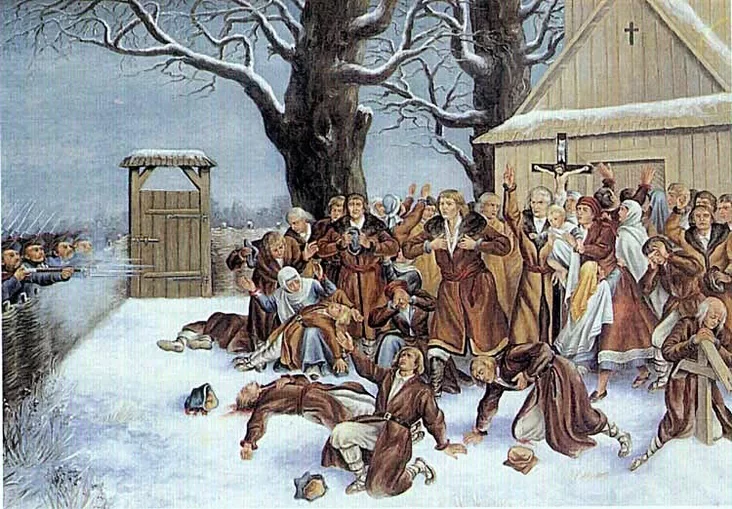
Pratulin lies approximately opposite Matykaly on the Belarusian side, in a picturesque, undulating and exciting Bug valley.
The place is special because this small village, through the efforts of its owner Paweł Franciszek Sapieha in the 18th century, for some time acquired city rights (it was possible for some to do so), held fairs, although it remained a village. (The village was historically called Hornava, but Sapieha renamed it Pratulin from the Latin word 'pratum', meaning meadow, floodplain.)
Residents of former towns and small towns often retain a special pride and dignity, an unconscious identity. I observed the same in Haradnaya of Stolin district, in Motyl of Yanaŭ district. Perhaps the memory of the urban past, burgher pride, contributed to why the resistance to conversion to Russian Orthodoxy was particularly fierce here.
The place is tragic, and that tragedy is especially acutely perceived against the backdrop of the idyllic Bug River valley. But here too, all this is done and presented in such a way that it does not reveal the historical truth.
The history of the Uniates of Podlachia is a complex history, not understandable to everyone, of people who so much did not want to become Russians that they became Poles, just to avoid being Russians.
Unlike the Uniates of Belarus and Volhynia, who were converted to Orthodoxy in 1839, the Uniates of Podlachia and Chełm Land were not converted, because these territories belonged to the formally autonomous 'Kingdom of Poland' (a formality, perhaps, but it shaped consciousness). Their conversion was only undertaken in the 1870s, but 35 additional years of upbringing in the Uniate tradition, which was already a time of more developed education and peasant liberation, influenced their consciousness. Moreover, during that time, many peasants clearly saw what Tsarist Russia was truly like. Furthermore, people here were influenced by the close coexistence with Catholics, who in their daily life and language differed little from Uniates then: most had the same customs, except for the form of worship. (In 1861, within the Pratulin parish, there lived 1850 Uniates, 1251 Roman Catholics, 62 Jews, 32 Protestants, and 14 Muslims.)
Therefore, in many places in Podlachia, the conversion to Orthodoxy provoked significant resistance. And most importantly, when 30 years later, in 1905, Tsar Nicholas II, under pressure from the revolution, allowed freedom of religion but did not allow the Unia to be restored, many — but not all (Kostamloty, Kodan, Holya are examples) former Uniates of Podlachia and Chełm Land converted to Roman Catholicism, just to avoid remaining in Russian Orthodoxy.
For Poles, this is a moment of cultural triumph: Uniates voluntarily converted to Catholicism, which at that time was synonymous with Polishness here.
For Belarusians and Ukrainians, this is an ambiguous story. Unlike Belarus, where Catholicism became an important part of national identity, a nation-forming distinction from Russia, where many classics of national culture, ideologists, and politicians came from Catholic families, in present-day Poland, non-Polishness has been preserved only where Orthodoxy exists. Along with the conversion to Catholicism, national differences were erased within a few generations, and complete Polonization occurred. Now in Pratulin, you will find no difference between the descendants of those 1850 Uniates and 1251 Roman Catholics.
Everything is exclusively in Polish, only the surnames in the cemeteries are all 'ours', ending in -uk. Just like on the other side of the Bug: the surnames in the cemeteries are the same, Krauchuk, Parfianyuk, Dzmitruk… Only everything is in Russian. Like in the Brest Fortress, where one episode of history, convenient for the dominant nation, is elevated to an absolute, and there is no mention of other events that took place here, of people for whom this land was their own.
And is this even fair from a Christian point of view, when an entire tradition, an entire separate world, is erased like this? Is this what the martyrs wanted, who clung to their Uniate faith, to their Liturgy of John Chrysostom, but with local, not Russian, traditions?
On the site of that small church, near which those Uniate martyrs died (it's gone, perhaps it was dismantled under the tsar? because under the tsar, an Orthodox church was also built for the Orthodox, across the road from it? I found no information), a wooden Catholic church with a purely Catholic interior was erected, relocated from near Lublin. Nowhere is there a word about the Uniate, Eastern tradition or local dialect.
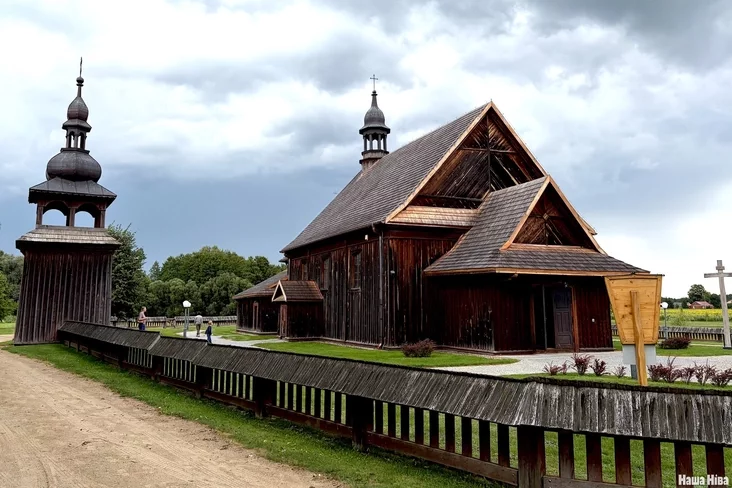
It's regrettable how diversity is erased where it could be the greatest richness, where it peacefully formed for centuries.
Luhi
Nearby is another picturesque settlement — Luhi, a dam leads to it. We drove there because I remembered that many photos from there were in a beautiful photo album about the Bug River region, which lay in the house where we stayed, in Belaya.
This album is not trivial. It's called «Bug. A Nostalgic Landscape». It was created by a photographer named Artur Tabor. He was from Radom, but studied in Siedlce and fell in love with the Bug, where he bought a house and settled. He was a photographer somewhat similar in style to Kleshchuk: he loved and knew how to photograph old people, and landscapes. And he created a film about the Bug. He died at 56, while photographing nature in Mongolia: he fell from a cliff.
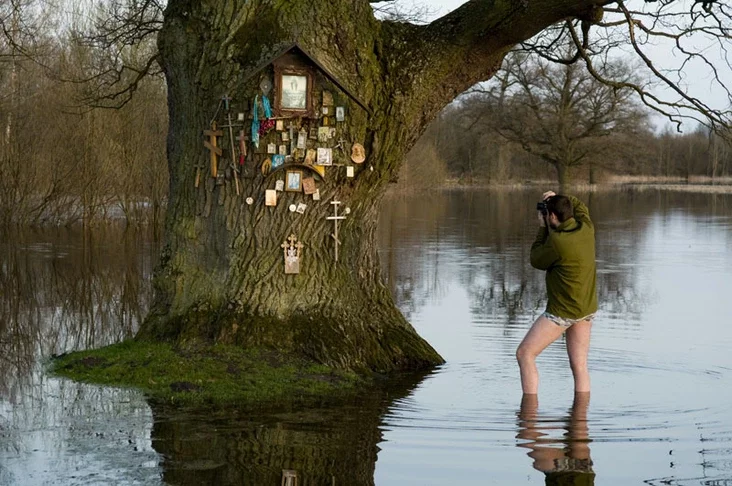
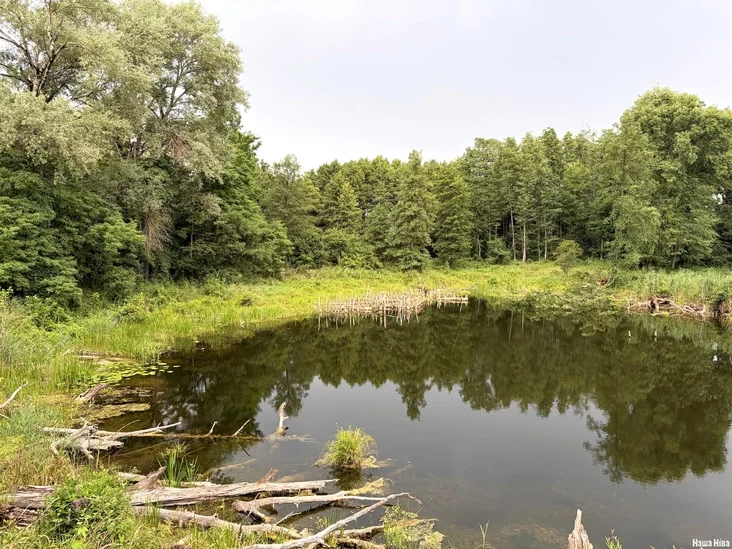
On the way from Pratulin to Luhi, an old oxbow lake with a structure for storing barrels of pickled cucumbers in winter has been preserved. The water level is low this year, so they are sticking out of it.
Yanaŭ Padlyashski and "Bug River Switzerland"
Then along the Bug — this bank is called "Bug River Switzerland" for its hills — we went to Yanaŭ Padlyashski. One of a whole string of charming towns along the Bug.
A peculiar feature of these towns is that they would gain, then lose, then regain city status (Yanaŭ, in particular, had it returned once again in 2026, in hopes of revival). And in all these towns — Yanaŭ, Kodan, Darahichyn, Melnik — there are now either as many people, or many times fewer, than lived there in the 16th century, which was their golden age. This is their charm — they are frozen in time: the same rectangular market squares in the center, and in the center of those squares — single-story rectangular market stalls, the same roadside crosses, the same small Jewish shops.
Yanaŭ was the residence of the Catholic bishops of Volhynia. They had temporarily moved here sometime in the 15th century after the Tatar invasion of Lutsk. But nothing is more permanent than the temporary.
In Yanaŭ, in one corner of the central square, a young man poured us white naliv (a type of apple): he had collected them after returning home from work, so they wouldn't go to waste, and here we were strolling. It was a wooden house like that — we would have collected apples like that ourselves, so they wouldn't go to waste, if we were returning to our house under such an apple tree. He saw us watching him collect and offered us some (he spoke with a strong stutter) — and I watched him collect because I remembered that Sveta Kurs's last post before her death was: 'Are white nalivs already being sold?'
At the confectionery on the same square, we bought two kinds of cone-shaped pastries for the evening, brown and reddish, and a white meringue cake with roasted almonds.
On the same square, in another corner, a prehistoric 1928 gas station has been preserved. And on the same square, in its fourth corner, was the former seminary. Because Yanaŭ was developed by those Lutsk bishops; their palace has been preserved there, now housing a five-star hotel, people come for the beauty and the unique horse stud farm, which has existed here for 200 years.
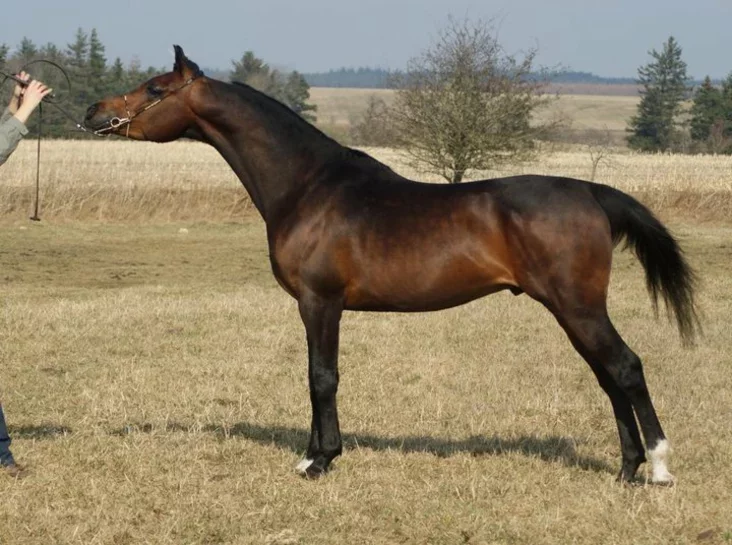
It was a discovery for me that the local people publish the magazine «Bug Country».
Hnoyna
From Yanaŭ, we went to Melnik. All the villages here are well-maintained, there are absolutely no abandoned houses, no poor people, which is a contrast to the Belarusian side.
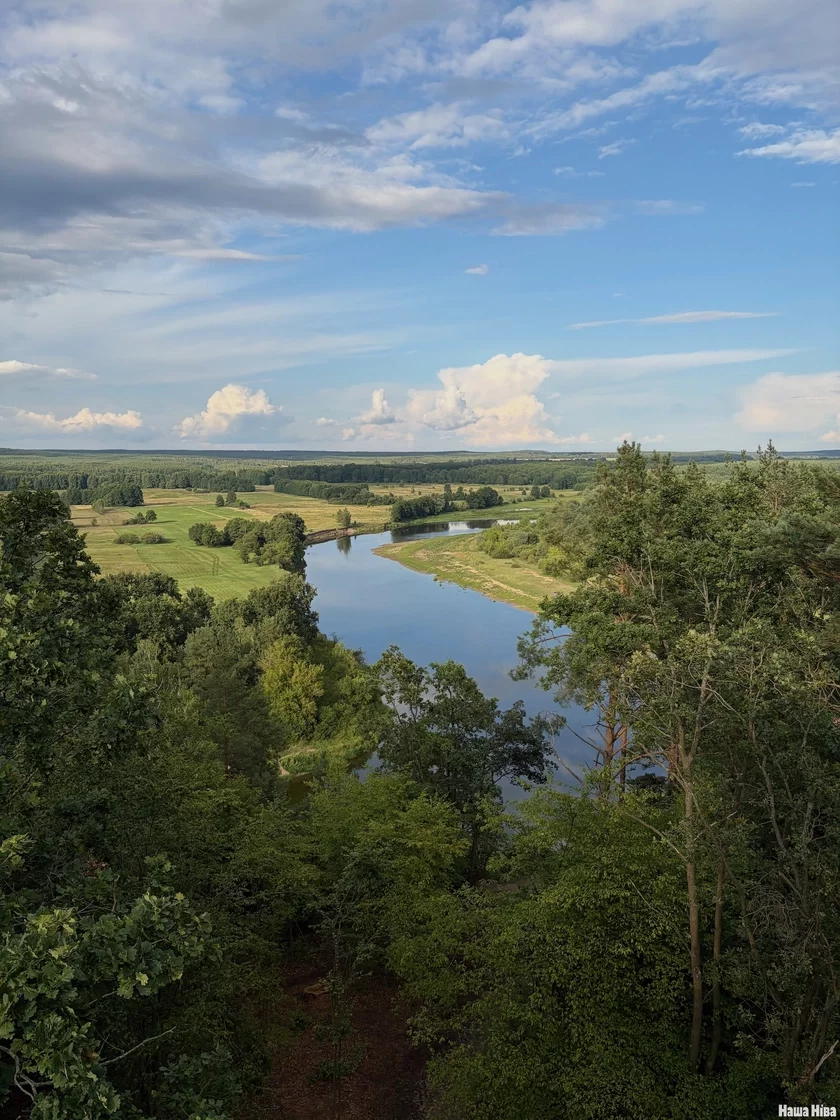
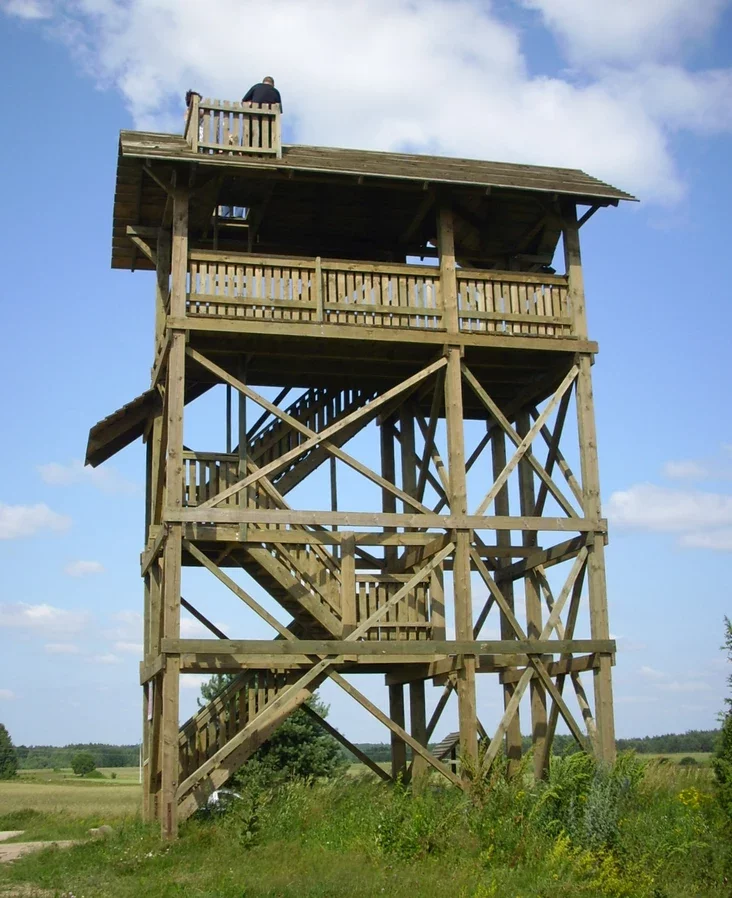
On the road in Hnoyna, there is an observation tower with a view of the Bug. Many such observation towers have been built in Poland, but this one, from the high, steep bank, offers the most beautiful view. It's worth visiting.
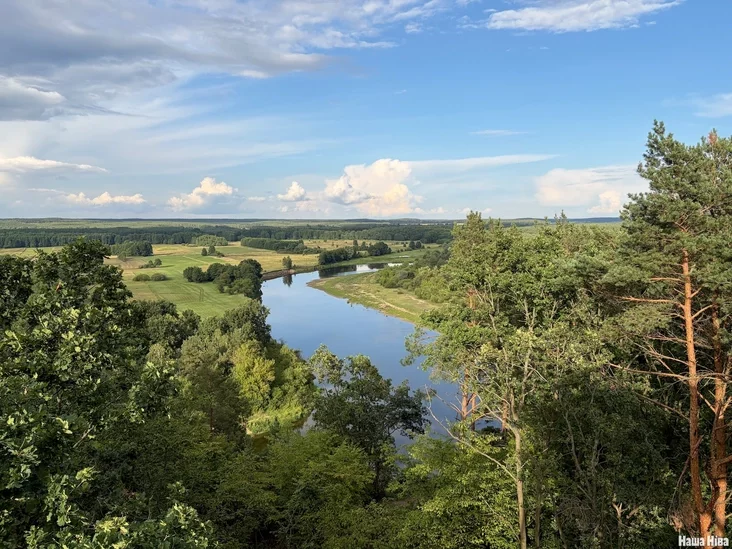
After that come the villages of Barsuki, Serpyalitsy, Klepachoŭ, Zabuzhzha — for some reason, they are terribly popular, with many super expensive houses. Perhaps it's because they are no longer right on the border, but a bit further away, and between the Bug and the forests.
From Zabuzhzha to Melnik, there's a ferry, a hand-operated one. Another one goes from Darahichyn town to an area called 'Buzhyski'. But we couldn't take the car on the ferry because this year in the Bug, as in the Danube, Rhine, Pripyat, and Vistula (but unlike the Vilija, Neman, and Dzvina), the water level is low, and from July 7th until further notice, ferries only transport pedestrians, bicycles, and motorcycles.
Melnik
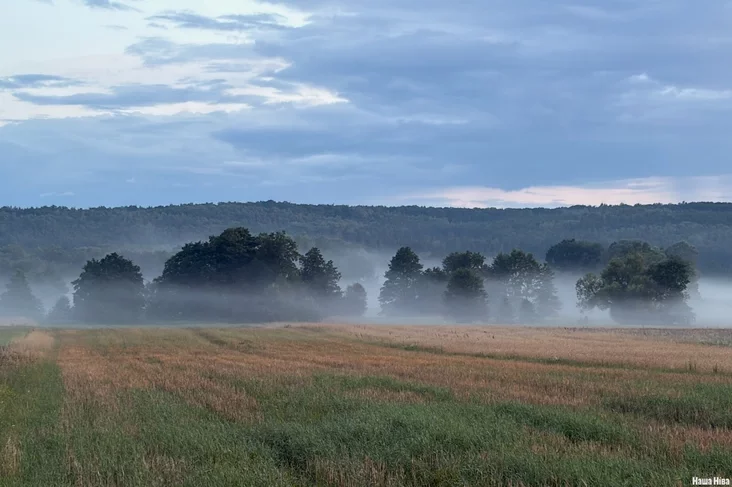
A great discovery of this trip was Melnik — a settlement that was once a Rus' town and through which a road ran from Volhynia via Brest to Yatvyaz: it is mentioned a couple of times in chronicles as a place where Volhynian princes prayed before campaigns against the Yatvingians or hid at the edge of the land during Mongol invasions.
Melnik is named so because it stands on chalk mountains, and chalk deposits are still being developed there.
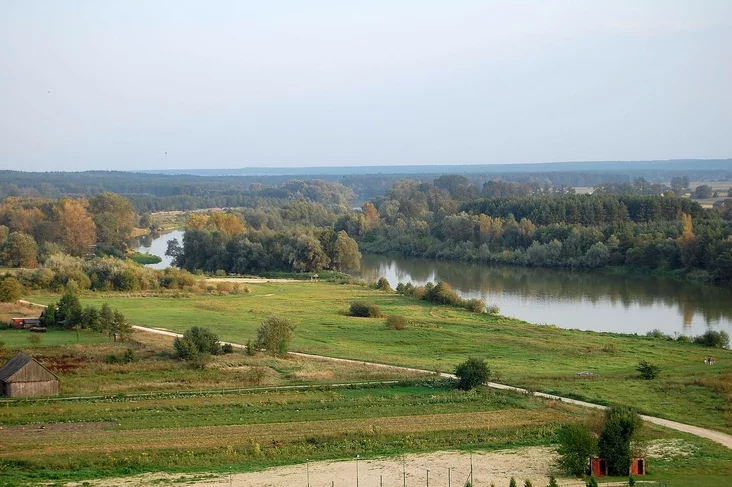
The area is remote, sparsely populated, with the mighty Bug on one side, and chalk mountains on the other with vegetation characteristic of arid, water-poor chalk hills.
There's even a term for them: xerothermic vegetation, beautifully called 'murawy' in Polish.
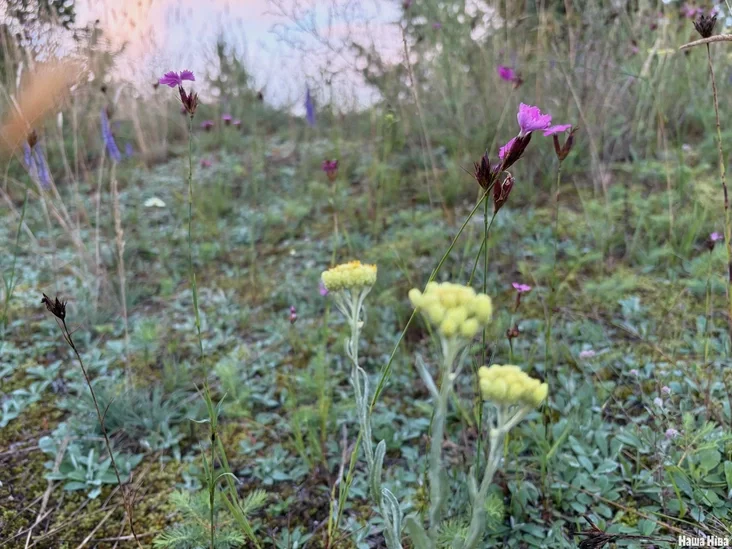
In the past, the hills stood bare because sheep and goats grazed them, but now there's a problem: they are overgrown with shrubs, because people no longer keep sheep.
We gathered thyme, oregano, and caraway on one of the hills for winter.
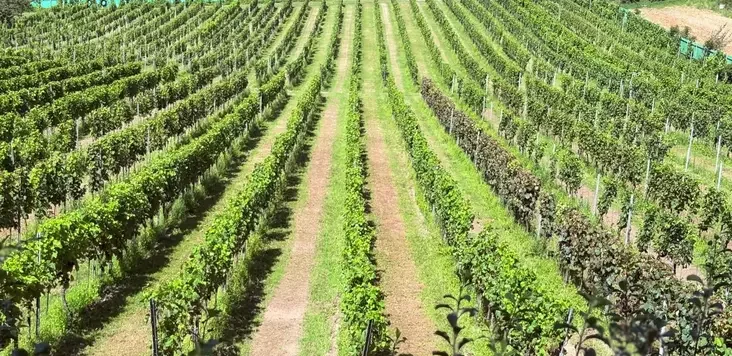
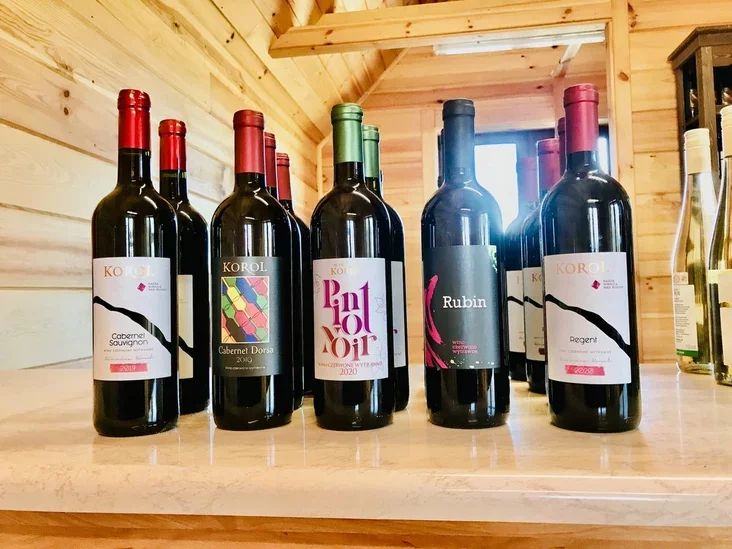
A local man, Mikalay, with the distinctly 'ours' surname Karol, planted an industrial vineyard in a hollow between the hills and opened a winery.
Orthodox compete with Catholics in the number of crosses erected.
On a well-kept house, a sign: 'The Soltys lives here'.
Cats everywhere.
I drove one of us early in the morning, because the cycling tour started from there, and at seven o'clock near the church, four men were hanging out — not drunkards, just men. It turned out they were waiting for the mobile shop.
Darahichyn
Darahichyn is notable in history for being the place where Danylo Romanovich of Halych was crowned King of Rus' in 1253. And it is precisely known that this happened in this castle on a high hill, against which even the mighty Bug breaks and turns, as far as possible from the Mongols. Simultaneously with Danylo, as part of the same diplomatic offensive by Rome, Mindaugas was also crowned. Where — historians have not yet discovered.

Darahichyn, as a relative described it to me before our trip, is sleepy. On Castle Hill, there are still four faded Polish flags, a monument to Poland's renewed independence — and not a single mention of who was crowned here. Such a silencing of history — although the opposite could be a tourist highlight.
All these eastern lands, except for those with a significant proportion of Orthodox residents, have voted for the nationalist-conservative PiS in recent decades, rather than the liberal Platform.
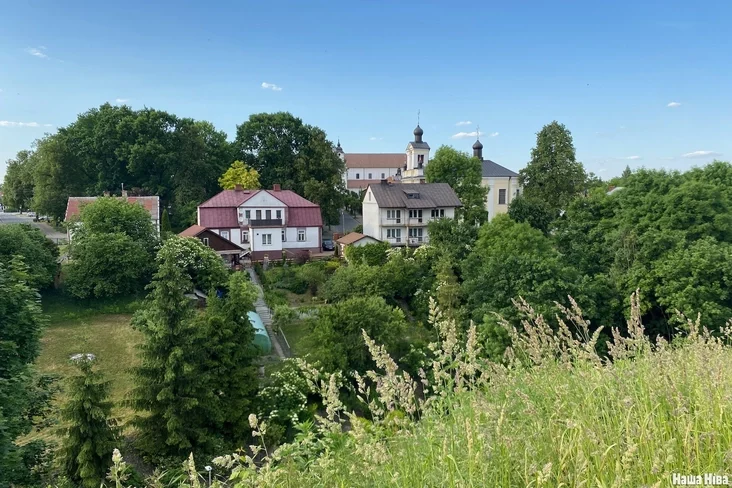
In Darahichyn, they also spoiled the magnificent view from Castle Hill: they are building a bicycle-pedestrian bridge across the Bug there — cheap, provincial.
However, the view on the other side is unchanged: human homesteads on the historical settlement, an Orthodox church, a Franciscan church. And in the valley between the castle and the town — also a perfectly preserved giant Soviet pillbox of the Molotov Line.
Syamyatyčy
We spent two nights in Syamyatyčy: they are lively, 'almost a local metropolis,' as a friend wrote to me, whom 2020 threw into Kyiv, and 2022 — into Warsaw. (Friends rent a cottage in Podlachia for the summer, 'we feel almost like in Navahrudak region,' he says.)
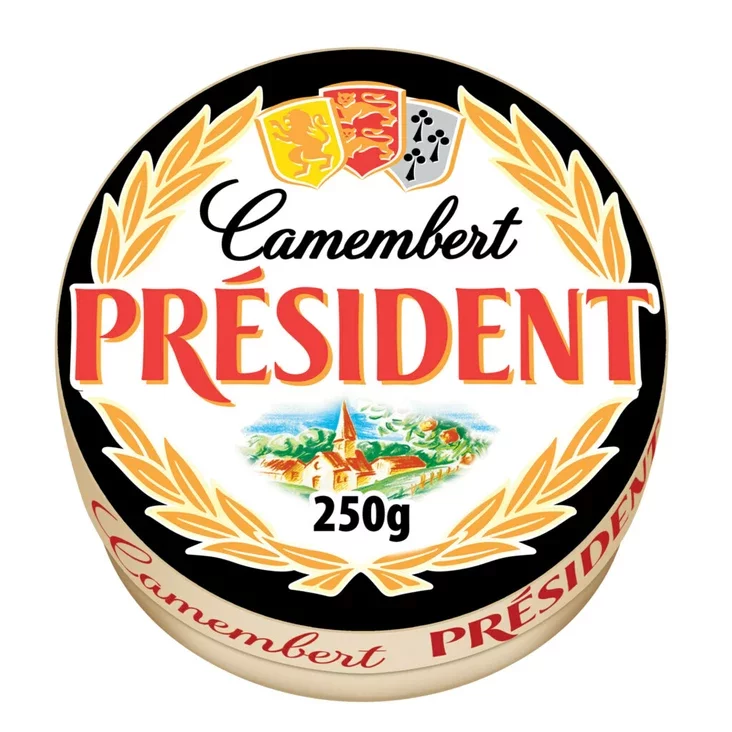
In Syamyatyčy, 'President' Camembert cheese and 'Arlempus' frozen vegetables are produced. Many zucchini are now planted in Podlachia, zucchini everywhere, zucchini — by the hectare.
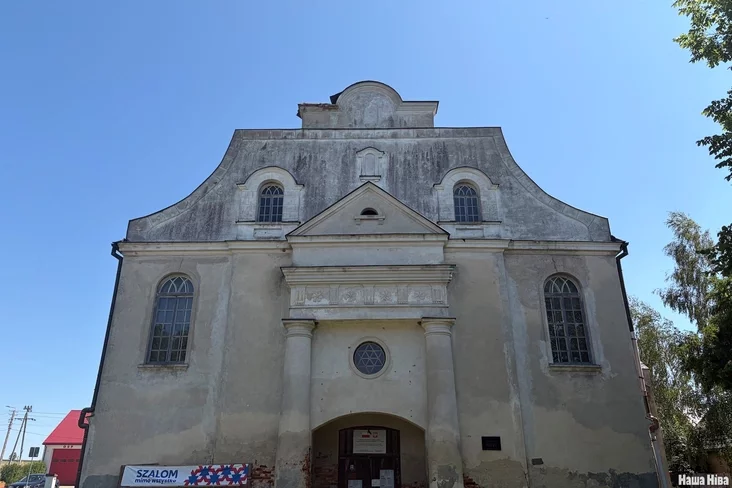
Grabarka
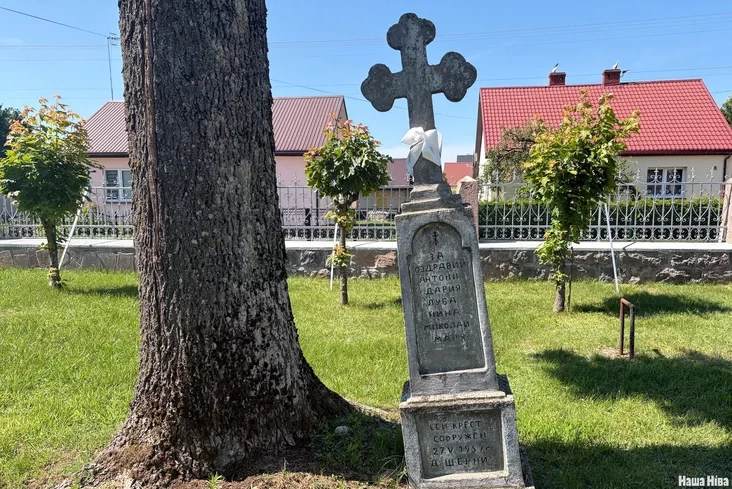
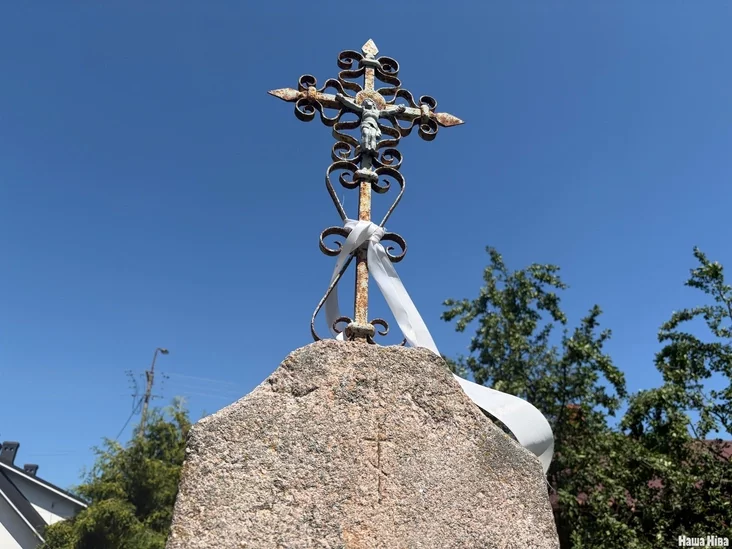
On Holy Mount Grabarka, it's quiet and charming, though improvements, European money, reached there about ten years ago, allocated by the Polish government.
Below the mountain, there's a small market. Local people sell herbs, honey, mushrooms, and berries to tourists.
Church officials struggle with votive handkerchiefs, trying to prevent them from being hung on trees — an eternal story.
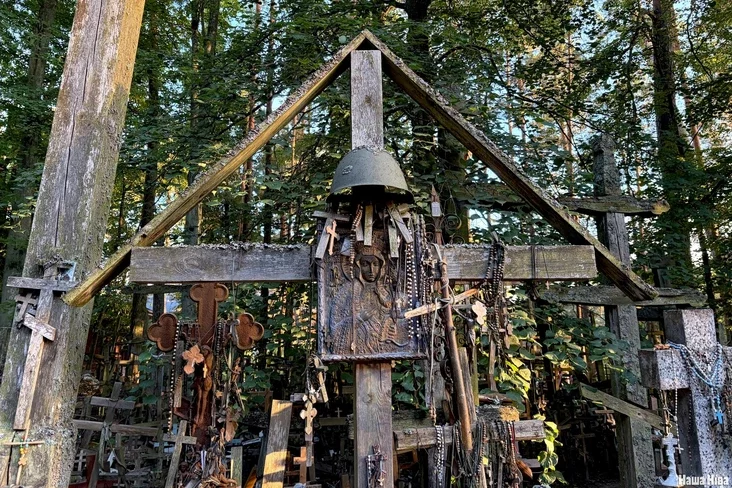
In Belarusian, the stress in the word «Grabarka» is on the first syllable.

Zaleshany
The next day we also visited Zaleshany, burned in 1946 during the raid by 'Bury' Rajs's partisans. There, the local people themselves, with great tact, preserved the memory: the sites of those houses where people were beaten and burned were left undeveloped.
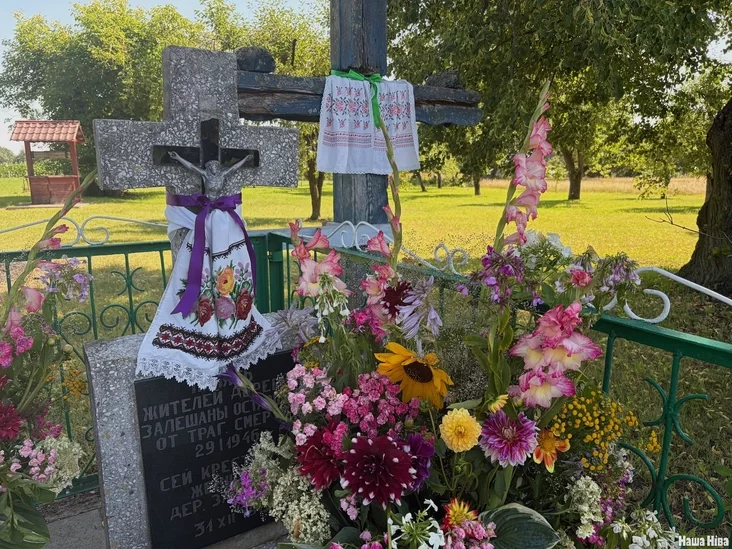
The village was rebuilt, but amidst it, like gaps in a mouth, gape those two empty plots — only mown gardens, without houses.

The granddaughter of one of the killed created a small women's monastery in Zaleshany. She herself took vows in Greece, so she built this monastery in the Greek style.
Bielsk
Bielsk region is already "Bug Country." Here it's already "Narew Country." But also the heart of Podlachia.
In Bielsk, we ate at the Vietnamese café 'Hanoi' in the Market Square in front of the Town Hall. It's located next to the house where Jerzy Hoffman filmed the cult classic 'Znachor' (The Quack) based on the novel by countryman Kastus Shytal, Tadeusz Dołęga-Mostowicz.
Very delicious, really very. And giant portions, and speed, and kind service, unlike in a typical Minsk café.
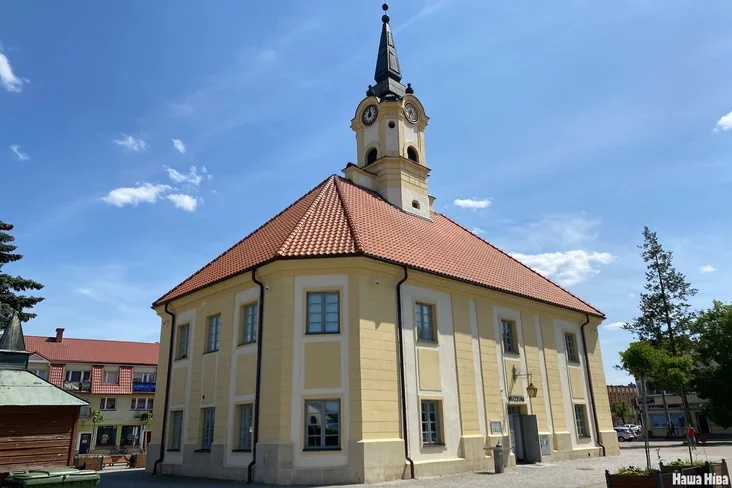
In Bielsk, a fortified settlement (hillfort) from the 11th-13th centuries has been preserved.
The town is not small, in the center there's a park, and in the center of the park — a now fashionable tężnia solankowa in Poland — a mini-graduation tower, but in reality, an installation-fountain where salty water constantly flows over blackthorn or hawthorn, creating 'sea air'. People come to breathe the sea air there. Such is the fashion, such a new custom.
The Belarusian Lyceum named after Branislaŭ Taraškievič is going through tough times after 2022: the Belarusian language has ceased to be in demand among young people. Who will go to Belarus to study now?
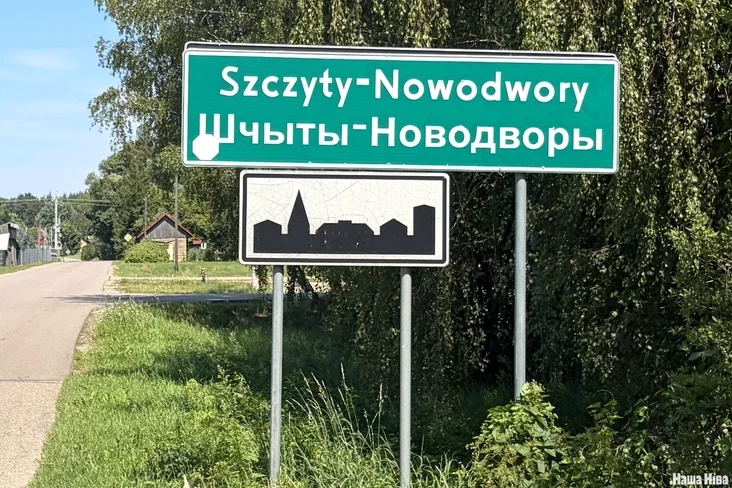
Zabludaŭ
Recently, news broke that three previously unknown copies of the Ostroh Bible were found on Mount Athos. For its creation, the printer Ivan Fiodorov, a native of Belarus, used Skaryna's texts. Before Ostroh, Fiodorov had worked in Zabludaŭ, then part of the Hrodna povet (district), for Hetman Hryhoriy Khadkevich, where, together with another Belarusian printer, Piotr Mstsislavets, he published the 'Didactic Gospel' with texts by Kirill of Turaŭ.
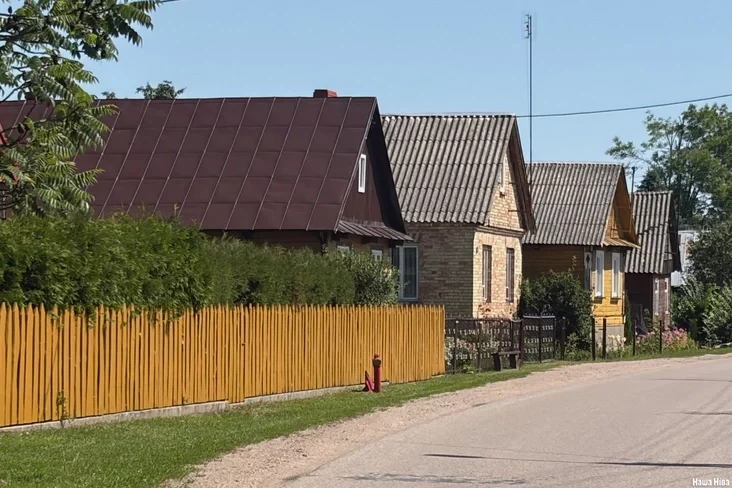
Suprasl
And then we also visited Professor Oleg Latyshonak in Suprasl. There, too, it was pastoral: charming houses by the Suprasl River, a majestic monastery.
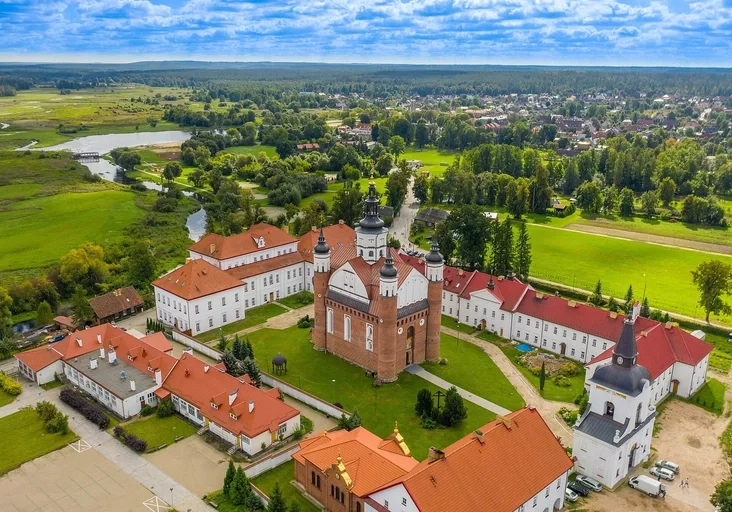

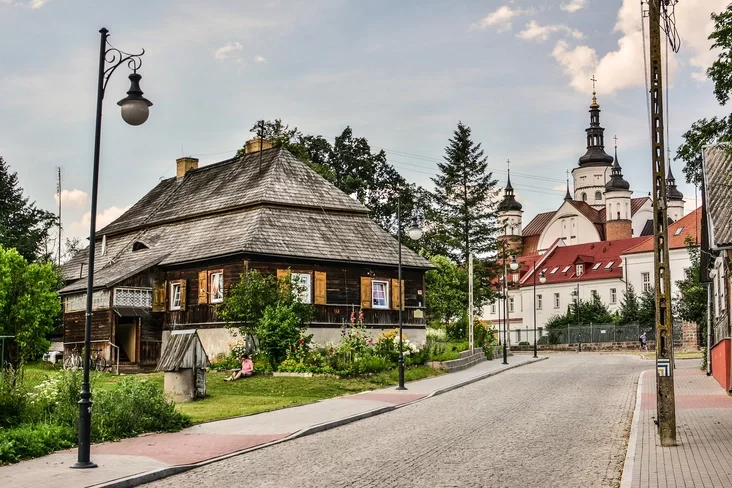
The professor points out: previously, this entire street was summer cottages of Belarusians, from his father's generation. Now, he says, people have already mingled.
Latyshonak told many amusing stories about old and new Belarusians. He is quite skeptical about the "new emigration." He says: they don't unite, they don't create student unions, there are few organizations. I say: now everything is a bit different, we are now an online community, Belarusians communicate on social networks; social networks are now the fabric upon which that part of the nation that found itself in dispersion is strung. The time is different.
Among the positives: Latyshonak has started writing 'The History of Podlachia'.
The Belarusians of Podlachia are hardworking, intelligent, and 'proper,' as our mothers used to say.
A handful of those Belarusians of Podlachia do a tremendous amount: both socially and culturally.
In Podlachia, there's an opportunity to seemingly return to the Belarus of the past — the landscapes, the crosses, and most importantly — the psychology and ethics of the people, things that have been lost within Belarus itself.
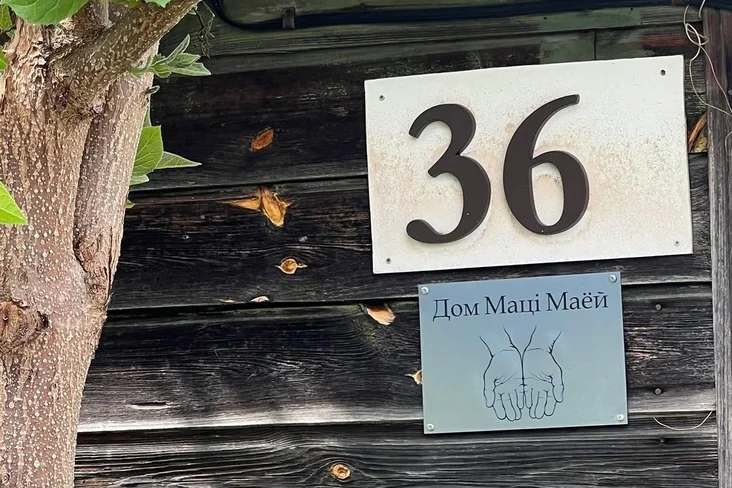
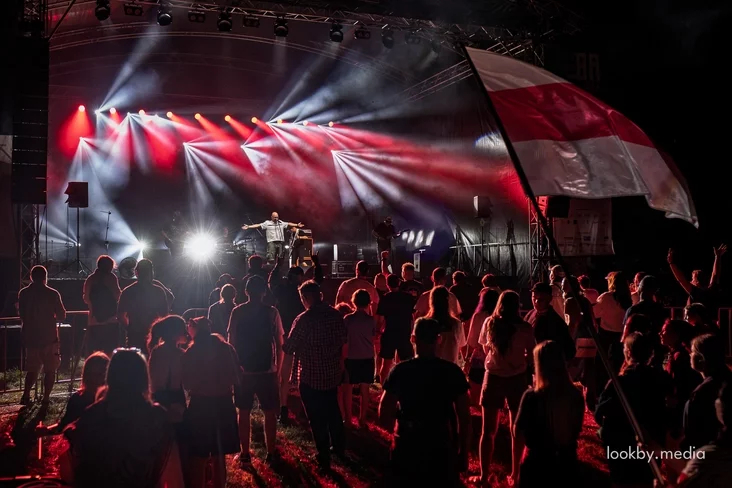
And they have considerable property for public needs. It is very important to organize summer camps for children, like scout camps, Belarusian ones, says Oleg Latyshonak. And there are places to hold them, only organizers are needed.
Latyshonak's son, by the way, is called Klimok, Klim.
We thought about going further to Sakolshchyna — the homeland of Aliaksey Karpyuk, Bolesław Hrabiński, Siarhei Prytytski, and from the latest generation — Urshulya Shubzda. But we got delayed on the roads, so we drove home by highway.
But please, don't say 'Kastamłoty', 'Hajnówka', 'Drohiczyn', 'Gródek'. Say: Kostamloty, Hainauka, Darahichyn, Haradok. Let's not Polonize them. To Kostamloty, a Belarusian pilgrimage from Warsaw goes annually, by the way. Go on a pilgrimage or just take a trip to Podlachia. It's good to find paradise — even if it's a lost paradise.
«Nasha Niva» — the bastion of Belarus
SUPPORT USNow reading


"I am not a saint, but I didn't have a reliable shoulder next to me": Ksyusha's mother with SMA may be deprived of parental rights, but she argues that she is capable of improving


Comments
А чаму не напісалі хто праводзіў тую аперацыю?
Раю ўсім, хто пісаў ды абараняў АК, з’ездзіць у тыя краі ды паглядзець. Як беларусаў ды ўкраінцаў стагоддзяці спрабавалі рабіць з аднаго боку рускімі, з іншага - палякамі. Дзялілі па царкоўнай прыналежнасці. Таму цяпер нашыя прозвішчы на ук/юк з польскага боку пішуць польскай лацініцай, бо за сто гадоў касцёл зрабіў сваю справу. Пра дзеянні рускіх і размовы няма - там поўны гамон ды імперскае цемрашальства дагэтуль.
Таму выснова адна, каб не растварыцца сярод русскіх ды палякаў, трэба мець сваю ўласную царкву - не маскоўскую, і не польскі касцёл! Украінцы гэта зразумелі. А беларусы не, беларусам дагэтуль прасцей зрабіцца “рускім ці палякам са знакам качэства і без акцэнту”!
[Зрэдагавана]