


"In one country, there is everything, it's even unfair." A Belarusian woman has lived in Chile for several years and says it's heaven on earth
Devby.io spoke with Liza, a software engineer and interface developer, about life on the other side of the world.
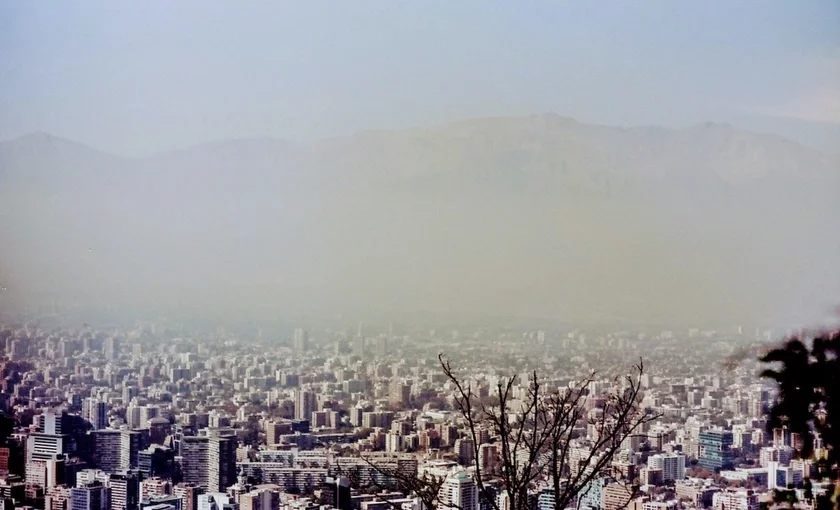
— I see a winter Chilean morning through your window.
— Winter this time around has been very strange, atypical — cold and rainy. It's been raining and raining for two months straight.
— But there's no central heating system in Santiago, is there?
— Yes, and now it's a real problem. Sometimes at night it's +12°C outside, you wake up — and it's +12°C in the apartment. The only option is to buy heaters and pay for electricity.
— Is it expensive?
— For comparison, in summer we pay about 40 euros for electricity, that's the maximum. But last month, with the heater, the bill came to 130 euros. But it's worth it.
The country's currency is the Chilean peso; one euro is 1075 pesos.
In general (and for me, this is a big advantage) — the sun is here almost all year round. Eight months a year, you don't even check the weather forecast.
"Came to Chile for vacation - and the country closed"
— You have an atypical start for a developer — a linguistic education at BSU. Usually, this path leads more to HR, PR, SMM, etc.
— When you enroll at 17, you usually don't even think about what this education will bring you in the future. It just happened that way, and I decided to study languages. When my assignment ended, I had to think about what to do next. One of my friends worked in IT — the company opened in 2017-2018, and they actively hired testers even without experience. And in that company, everything immediately started going very well for me.
I worked like that for about four years — and then came a moment when it was time to move forward: it was already somewhat boring, plus the financial factor. I decided I would go to study to become a developer. The company supported me: "Go for it, you'll definitely succeed." I went to specialized courses at IT-Incubator, which is a very strong Belarusian school.
By then, I already knew that I would soon be going to Chile.
— Why Chile?
— I moved to live with my husband, he is Chilean.
My story with Chile began when I came here on vacation in 2020. That's when the pandemic started, and after 10 days, the country closed for exit.
Instead of a vacation, I ended up living here for eight months. When I was stuck here, I didn't know what to do with my job in Belarus. But the company said: buy a laptop and work.
Then I didn't want to leave Chile anymore, but there was no legal way to stay, so I had to return for a while. I used that time to learn programming. And at the end of 2021, I moved back to Chile — and was already looking for a job there.
— How long does the flight from Belarus to Chile take?
— In 2020, the borders were not yet closed. I traveled to Vilnius, then by low-cost carrier for about three hours to Rome, from Rome in 12 hours to Santiago — there used to be such direct flights.
Now, you have to fly from Minsk to Istanbul, which is 5 hours. From Istanbul, you can buy a ticket to Santiago with a layover in Amsterdam or Paris. And in Buenos Aires, most likely. This is approximately a day of travel.
"Marriage does not give you an advantage in legalization. And in general, the system works poorly"
— You probably already have citizenship?
— It's not like marriage immediately gives you any advantages in legalization here. Both those who work here and those who are here by marriage are in the same position. Perhaps with work, it might even be easier in some ways.
Any newcomer must first apply for a temporary visa, which serves as a residence permit here. Regardless of your reasons — after submitting documents, you join a common queue.
The next stage after a temporary visa is a permanent one. This is like permanent residency. And again, you join the same common queue and wait.
The only advantage marriage gives you is a shorter period after which you can apply for a passport. I applied at the beginning of 2026, but now I need to be patient — it's unknown when I will receive it.
There are some official deadlines, but these deadlines have long meant nothing. Even if it takes five years, it won't be surprising.
However, the Chilean passport is top-tier; with it, you can travel to the EU and the USA without visas.
— Chile is one of the wealthiest countries in Latin America. Do many immigrants from other Latin American countries come there?
— Very many. Especially young men from Venezuela — due to political events.
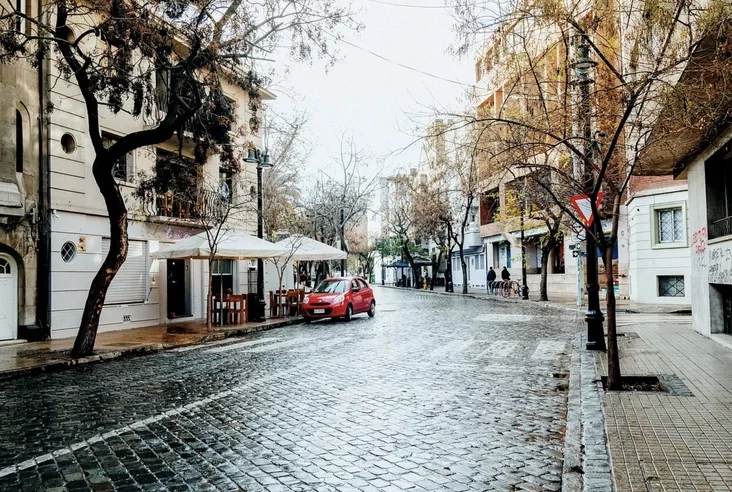
Chile is considered a country of opportunity; people strive to get here, and now it's not so easy. You can come, of course, they don't need a visa here. But staying is more difficult. Previously, it was simply "come," and now it's more like "come, but with a folder of documents."
— Maybe that's why legalization is stalled?
— Yes. The system simply doesn't work, and the worst part is you can't simply call and get the necessary information. You can only write a complaint and receive an automated reply.
I received two visas, and both had problems. We reread all the forums and found ways to contact someone directly — otherwise, I might still be waiting for the second visa. Such moments, of course, are very difficult.
— How about bank accounts?
— When you get your first visa and the associated plastic ID card, you are assigned a personal number — then you can open a basic bank account. Before that, you cannot.
— And did you get a Chilean driver's license?
— No. I wanted to get a license here, but for that, you need confirmation that you have a basic school education. And I don't understand how to get that confirmation. I even thought about taking a local school exam. Or somehow through the embassy. By the way, there is no Belarusian embassy in Chile, the closest one is in Argentina. But I'm not dealing with that yet.
"I have even more money now than when I worked for the USA"
— Do you currently work for a Chilean company?
— Yes. It's a local outsourcing company, and it also outsources me within Chile. My clients are a large network of shopping centers. And although they are located in Santiago, I don't go to the office; I work almost remotely, but sometimes there's live communication with colleagues, corporate events — I really like that.
— In your opinion, how does Chilean IT differ from Belarusian IT?
— This is my first job for Chilean employers, so I can't give a super-objective picture.
Actually, for a very long time, I didn't want to work in Chile and preferred foreign clients, because I thought the salary here was much lower, vacation was short, plus the Spanish language.
But after my previous job, I was then invited for an interview at this Chilean company. I decided to go and see. And it turned out that they offered more or less the same salary I had while working for a company from the USA. Of course, when the States outsource to Latin America, they don't pay American salaries to local employees. But, nevertheless, I thought the difference would be noticeable — and it wasn't.
What are the advantages? Here, I work on a contract, not B2B. Accordingly, I don't have to pay taxes myself — the company does it for me. And there are other perks, like health insurance. It turns out these expenses are now eliminated, and as a result, I even have more money left than when I worked for the USA. This was a pleasant surprise for me.
People here are very friendly. You come into any team — and everyone immediately loves you. That stressful factor is gone, where you might be criticized, given a reprimand. It just doesn't happen at all. When asking about tasks, the manager asks: "Don't worry, I'm not pressuring you, but what do you think, approximately when could you finish this task?" And they all talk like that. This is a very strong contrast for me. Thanks to this, I feel relaxed at work.
And it's not just at work. It doesn't matter if you come to a store or to the tax office — they will help you, and you don't have to be afraid to talk to anyone at all.
— Have you, a foreigner, already managed to become "one of them" for your colleagues?
— In fact, there was no alienation at all. On the contrary, Chileans gravitate towards you — they are interested in who you are and where you're from, they ask you to talk about your country. I have the feeling that they automatically accept you into their team, into their family, as soon as you arrive.
I see that I am treated very well, and it's not because I am some unique person. I'm sure anyone arriving here would feel the same way. It's really great.
Overall, society here has a very high tolerance. And it's actually considered bad manners to be intolerant of other nationalities.
I can't say that I've made any very good friends here, but I didn't set such a goal for myself either. However, I have a lot of acquaintances whom I can visit — and feel that they were waiting for me, they are happy to see me, and they love me.
By the way, I'll share an observation: here, in one circle with IT specialists, there are usually many people from other professions. You know how it is in Minsk: you gather with a company — and almost everyone there is from IT or wants to get into it. In Chile, it's not like that.
— Do IT specialists in Chile also earn significantly more than other Chileans?
— I would say this: an IT salary in Chile is probably higher than the salary of an average Chilean. But IT here is far from the only way to earn and live decently.
— What is the average salary in Chile now?
— A middle-class family with two working people lives here on an amount from 2000 to 3500 euros. This is an income that allows for comfortable living. There is a small percentage of people whose income is significantly lower.
At the same time, I no longer have a very good idea of the gap with other countries, I don't know where people live better or worse.
Sometimes I think that something is expensive in Chile. And then a friend from Poland tells me how much a haircut costs there, and I realize that ours is cheap.
Although restaurants here are very expensive. A dinner for two in a completely ordinary place will cost 40 euros for some burger and a drink. In my opinion, that's expensive. Groceries in stores are also expensive, and they are constantly getting more expensive. For example, a sore subject is eggs. A carton of 12 eggs costs 4 euros. I think that's very expensive.
On the other hand, such an important expenditure item as clothing is very small here. Guys from Argentina even come to us with suitcases for shopping.
Overall, with a salary level of a Belarusian IT specialist, you can live well and comfortably here.
"The most beautiful country in the world of those I have visited"
— Do you remember your first impressions of Chile?
— When I didn't even know I would live here, I thought: "It's unfair that one country has everything."
From Santiago, you can easily reach the mountains or the ocean in an hour and a half in one direction. Before we were put under quarantine, I managed to go to the ocean, to the mountains, to the vineyards. 10 days isn't much, but it was enough for me to feel shocked by the beauty of this country.
I still believe that Chile is the most beautiful country in the world of those I have visited. It is located in very different climatic zones and is very diverse. Glaciers, mountains, blooming deserts... A step to the left, a step to the right — and you have a new landscape, some new cultural program.
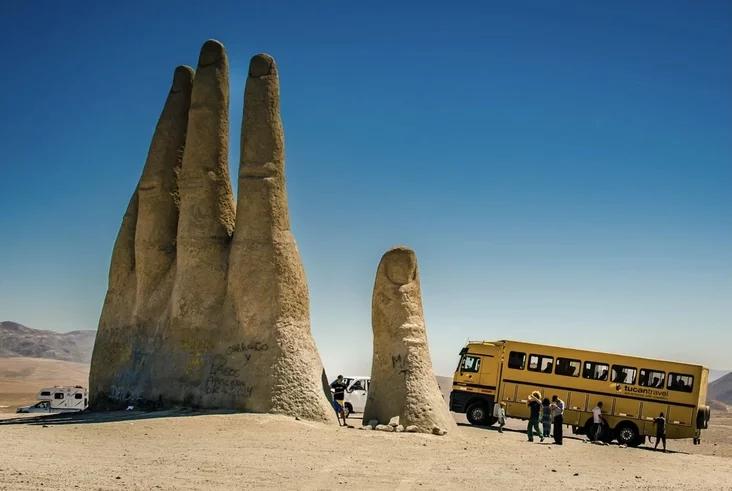
And I haven't even been to Patagonia with its glaciers, nor to the Atacama Desert. I'll also visit Easter Island, which belongs to Chile, someday.
— Were there any everyday shocks not related to the country's beauty?
— There were no super strong shocks. At first, it was unusual that everything actually closes on Sundays. Or that there's a lot of music in public transport — people earn money that way, they come with their microphone, speaker, someone sings, someone raps. Sometimes you don't even want to get into the train car or bus because it will be very loud. But then you get used to it.
At the same time, many imagine all Latin Americans to be loud, noisy. But Chileans themselves are not noisy at all — it's part of their culture, they live in a way that doesn't bother you at all.
— Where do you go to the ocean?
— To small towns, villages. You arrive in a village — and there's a good beach. Our favorite place is El Tabo. You rent a small house and live quietly on the beach. By the way, our ocean is cold; you just come to sit on the shore. But it's perfect for surfers.
— Have you traveled to neighboring countries yet?
— I've been to Argentina, and we also visited neighboring Uruguay — but I haven't traveled enough within Chile itself yet.
— And when you go to Europe, how much does the flight cost?
— The last time I flew to Europe was in 2023. What are our options? From Santiago, the most popular flights are to Barcelona, Madrid, Paris, Amsterdam. If you buy in advance, several months ahead, you can fit within 1200-1300 euros round trip.
"You don't need to stand by the road with a valuable item"
— Tell us about the area where you live.
— Santiago is divided into communes. And each commune is a separate world with its own rules and perks. If a commune has a good mayor — he can organize some free swimming pool, for example.
Your level of wealth is immediately visible by the commune where you live. There are several simply very wealthy communes. They have their own universes there. Usually, they are further from the center. The center itself is a cluster of street vendors and not the safest places, not something prestigious.
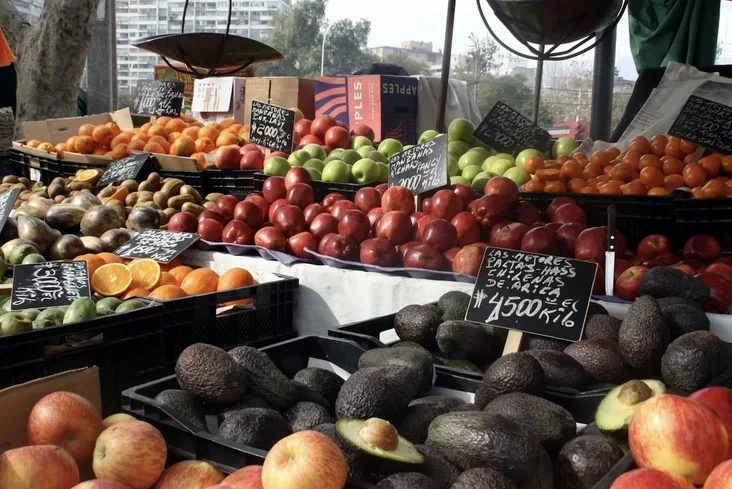
Our Providencia is not the coolest area, but one of the best. I don't like the word "youthful" — but active people live here. Many restaurants, cinemas, theaters, shopping centers. You can actually walk to any place I need.
— How about safety in Santiago?
— This is probably the only thing I would classify as a significant disadvantage. I wouldn't say it's unsafe here. But you need to know where to be on your guard.
A couple of weeks ago, I saw a tourist girl in hysterics; she was standing at a traffic light, and her phone was snatched. For me, this is already ABC: don't stand by the road with a valuable item. Avoid walking through certain areas at night.
It seems to me that a similar situation exists in many countries in Europe.
However, the metro here is very cool. A ride costs about 0.8 euros (depending on the time of day) — you pay for one trip and can use the same QR code for two hours, change lines 10 times, and use different types of transport. For example, you can go one way by metro and return by bus (the buses must be on different routes). The metro has many lines, everything is very convenient and clean.
And Santiago is generally very clean. You know, people usually say that about Belarus too, they're proud of it. When I came here, I thought Santiago might be different. But no.
— While you've been living here in Santiago, have there been any earthquakes?
— No serious ones. And if you're shaken a little — that's normal here. It doesn't shake so much that things fall off your table. You see, for example, that the floor lamp sways slightly.
To be honest, many things in life scare me. But here they told me — "nothing to worry about," and I'm like "okay, nothing to worry about." I believe in Chilean building codes. Chile always prepares for earthquakes, especially after the devastating Great Chilean earthquake of 1960.
"In Poland, buying your own apartment can be a problem — but not here"
— I believe that apartment rental prices here are very reasonable, no higher than in Belarus. We rent our apartment, about 45 m², for 600 euros.
An interesting point. By law, rental rates here are tied to inflation and recalculated according to an official formula. The price increases by perhaps 20 euros a year. As far as I remember, we started renting this apartment five years ago for 480 euros, and now it costs 600. Overall, it's not like the landlord comes and says: "Yesterday it was 500 euros, and today it's 800."
Utility services are paid separately, and the concierge also needs to be paid a salary. Concierges are everywhere here. And new buildings often have swimming pools and gyms, which are also additional expenses.
I know that in Poland, for example, it can be a problem for Belarusians to buy housing. But here, a mortgage is a completely real thing. Prices are adequate, as are interest rates. And taking out a mortgage for an apartment will cost approximately the same amount as renting a similar apartment.
— What are the current mortgage rates in Argentina?
— 4-5% annually.
— Is the Chilean currency that stable?
— Right now, it's quite stable (the euro is currently worth about 1000 pesos, so I speak about Chilean prices in euros, it's convenient to convert).
But generally, for all rental things and housing costs, they have another unit — UF [Unidad de Fomento, "Conditional Calculation Unit"]. You take out a loan in Chile not in pesos, but in these conditional units. When inflation starts, the peso's exchange rate against the UF fluctuates slightly, recalculates. In fact, the UF is more strongly protected from inflation.
"Medicine is very affordable"
— How is the Chilean healthcare system structured?
— There is free public and paid private medicine. I gained access to public insurance after submitting my first tax declaration: the first visa appeared (analogous to a residence permit), I opened a sole proprietorship and started paying taxes.
During a doctor's visit, I place my finger on a device to register, and a fairly large discount is automatically applied. And if there is also private health insurance, these discounts are combined. As a result, you might end up paying three euros for an appointment with a gastroenterologist. Without discounts, such a visit would cost 30 euros.
Overall, medical prices here are quite affordable. It's not like you get sick and just die.
"Sometimes in meetings, they don't turn on their cameras because they are rocking children to sleep"
— Is the distribution of roles in a Chilean family similar to that in Belarus, or is it different here?
— From what I see in my own family (now I'm talking about the extended family in the Latin American sense), I can conclude that there is equality here. In all areas: in the budget, in the distribution of responsibilities.
In my team, there are several men with small children. Sometimes in meetings, they don't turn on their cameras because at that moment, for example, they are rocking these children in their arms. If someone in a meeting says "excuse me for speaking softly, I'm with a child right now," everyone treats it normally.
One of my colleagues has three children, and his wife works. Not remotely, but goes to work. And he sits at home with a very young child, takes two children to school, cooks food — and still works. And no one is bothered by this.
"Society is very politicized, but families don't quarrel"
— In Chile, there are still many people who perfectly remember both the construction of socialism under Salvador Allende and the brutal right-wing dictatorship of Augusto Pinochet. Surely, Chilean society is quite politicized?
— Here, no one is indifferent to politics, and every Chilean has their own political stance.
By the way, participation in elections is mandatory in Chile. You cannot abstain or not go; there's a fine for that.
On the other hand, based on my observations, there are no family quarrels over politics here. A common situation is when parents hold more right-wing views, "like before," while the youth support some socialist views. Often someone stands quite radically on their position. But without quarrels between generations.
I was also interested in the opinion of the older generation, who experienced both the time of Allende and the Pinochet dictatorship.
For many of them, the period before the coup remained in their memory as a difficult time: there was a shortage of food, it was difficult to live and raise children. After the coup, from a daily life perspective, things became easier for some people, so in the older generation, the right is often associated with economic stability.
The youth have a different view. They didn't live under Pinochet, but they know well about the repressions and human rights violations, so they don't want that to happen again. And they often associate left-wing ideas not with communism, but with more affordable education and medicine, increased pensions, and the protection of minority rights.
It turns out that different generations simply have different fears: some are afraid of facing economic problems again, while others are afraid of restrictions on rights and freedoms.
"This is not a place where you can go home on the weekends"
— Have you met any other Belarusians in Chile?
— Well, I haven't seen them with my own eyes. Someone always tells me they heard about some Belarusians.
— Is Chile an interim stop for you?
— I love Chile very much and want to stay here forever.
— What advice would you give to Belarusians who are considering Chile for a possible move?
— If you have such an opportunity, I would advise you to try. But there is one point: you need to understand that Chile is not a place where you can go home on the weekends. Or where someone can easily visit you. It's not simple, it's not cheap.
— By the way, what's it like to celebrate New Year and Christmas in summer?
— Probably, these are the only days of the year when I miss being home. I usually make some Olivier salad for myself, turn on New Year's films to see snow. I miss all that usual festive atmosphere. It's hot, you walk around in a T-shirt and shorts, it gets dark late — some Christmas tree in a shopping mall here won't help create a festive mood.
-
Overnight, a jet drone flew over the Gomel region again
-
Yaroslav Pisarenko: One day I woke up, looked at myself in the mirror, and realized I couldn't live like this anymore
-
"I am not a saint, but I didn't have a reliable shoulder next to me": Ksyusha's mother with SMA may be deprived of parental rights, but she argues that she is capable of improving
Now reading


"I am not a saint, but I didn't have a reliable shoulder next to me": Ksyusha's mother with SMA may be deprived of parental rights, but she argues that she is capable of improving


Comments
В Италии и Испании нет отопления, на западном побережье США его нет, что не мешает людям хорошо жить.