


WSJ: US Deal with Venezuela on Oil Seemingly Copied from 'The Godfather'. But Agreements with Illegitimate Presidents Have Questionable Value
The unusual form of Washington's oil deal with Caracas and the political status of the Venezuelan leadership raise questions about how durable it will be, writes the financial circles publication in an editorial comment.
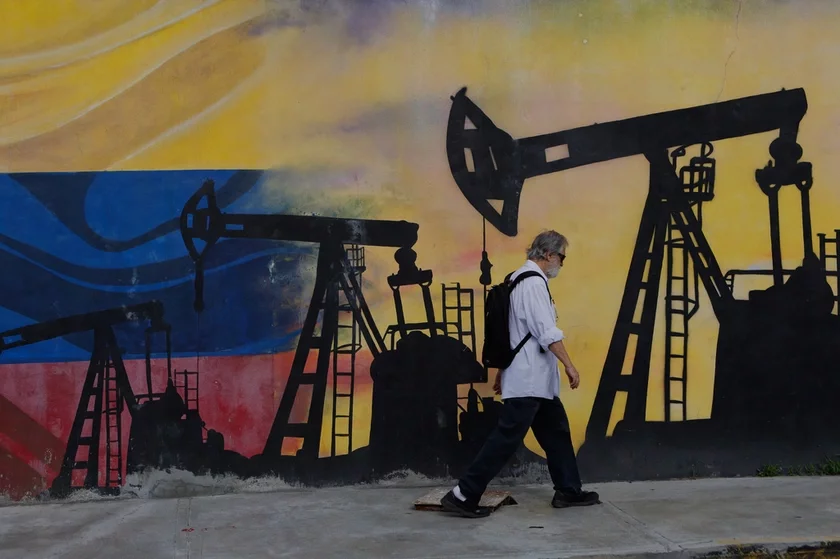
US President Donald Trump has long said that in the event of American intervention abroad, one should "take the oil". Now, as notes The Wall Street Journal editorial board, he is trying to implement this principle in Venezuela.
On August 28, Trump announced that the US had concluded an agreement with the Venezuelan authorities, giving the American side control over the development of fields with more than 65 billion barrels of proven oil reserves.
The American president called the agreement historic and stated that it would more than double US oil reserves, increase supply, and potentially lower gasoline prices. He also wants to use Venezuelan oil to replenish the Strategic Petroleum Reserve.
However, the WSJ notes that this bears little resemblance to a typical commercial deal.
According to the publication, the US will acquire a 35% stake in North American Blue Energy Partners — a private company managed by Venezuelan businessman Alejandro Betancourt, close to the country's leader Delcy Rodríguez. The company will gain the ability to develop fields, and the US will have the preferential right to purchase 20% of the extracted oil at cost.
It is also unusual that the Pentagon will act as an investor from the US. According to the WSJ, the scheme will allow it to acquire a stake in the company without significant taxpayer expenditure. At the same time, the publication draws attention to a legal question: it is unclear whether the US Department of Defense has the authority to become a co-owner of a foreign company.
In the opinion of the editorial board, the Pentagon already has enough tasks.
Oil is there, but it won't be extracted quickly
Another problem is the state of the Venezuelan oil industry. Currently, the country extracts about 1.1 million barrels per day, and a significant increase in production will require years and large investments.
Trump has already called on American oil companies to invest in Venezuela, but they have shown little interest. According to the WSJ, businesses are deterred by the lack of sufficient legal and contractual guarantees. Meanwhile, Chevron, which has long operated in Venezuela, remains one of the few large American oil companies maintaining a presence in the country.
Therefore, the WSJ notes, the main practical question remains open: who exactly will finance the development of these reserves.
Agreement with a government whose legitimacy is disputed
The publication calls the political part of the deal even more complex. It was concluded with Delcy Rodríguez, who came to power not through elections. As a result, Washington effectively becomes a business partner of a non-democratically elected Venezuelan leadership and a private entrepreneur associated with it.
The agreement could, meanwhile, strengthen the position of Rodríguez herself, who seeks to retain power and simultaneously avoid opposition demands to begin the process of holding new elections.
The agreement is criticized by representatives of both main political camps in Venezuela. Left-wing supporters of the Bolivarian movement see it as a concession to the US and may use the theme of "American imperialism" in future election campaigns.
The democratic opposition opposes it for another reason. They consider Rodríguez an illegitimate leader who has no right to dispose of national resources in this manner. Opponents of the government also fear that the oil deal will make Washington less interested in holding new elections. Critics of the agreement are already raising questions about its compliance with the Venezuelan Constitution.
This also creates a long-term risk for the US itself. Trump will not be president forever, and a future Venezuelan government may question obligations undertaken by a leadership whose legitimacy is disputed.
"Much still remains unknown, but all this looks like an example of how the Trump administration is extending its creeping 'crony statism' beyond the US. In 'The Godfather' saga, the Cuban dictator received a golden telephone from his guests, but soon lost power," the publication concludes.
-
Buried Underwear, Blew Noses, Made a Splash-Free Urinal, and Stepped on Snakes — What the Ig Nobels-2026 Were Awarded For
-
Ratko Mladić's body brought to Serbia on a government plane
-
Estonia transferred 70 million euros to an Italian company for the purchase of ammunition for Ukraine. Zero shells in the end
Now reading


They didn't want to take her to music school, but at 14 she played at Carnegie Hall in New York. Belarusian violinist — about life in London, earnings, and how a Stradivarius violin worth 14 million euros differs from an ordinary one


Comments
І гэта яскравы прыклад для ўсіх трампістаў у антылукашэнкаўскім асяроддзі, якія згодныя на сколь заўгодна кабальныя бізнэс-дамовы Лукашэнкі з Трампам з фальшывай надзеяй на то, што гэта неяк прагарантуе незалежнасць Беларусі. Таму што па-першае калі глядзець у гісторыю - у Нікарагуа праамерыканскага дыктатара Самосу змяніў прасавецкі дыктатар Артэга, а на Кубе праамерыканскага дыктатара Батысту - прасавецкі дыктатар Кастра. А па другое - калі Крэмль прапануе асабіста Трампу досыць шчодры адкуп за Беларусь і працяг права трампаўскіх кампаній на драпежнае выпампоўванне беларускіх недраў (а падобны досвед у Крамля ёсць і ён мае назву Ямал-СПГ, а пра Казахстан нават і ўзгадваць залішне) - Трамп здасць незалежнасць Беларусі адразу ж.