


The Spider-Man Everyone Forgot. Why "A New Day" is simultaneously the best Marvel film in years and still the same old story
Tom Holland did what his predecessors could not.
Attention: this text contains spoilers for the film "Spider-Man: A New Day" and previous installments.
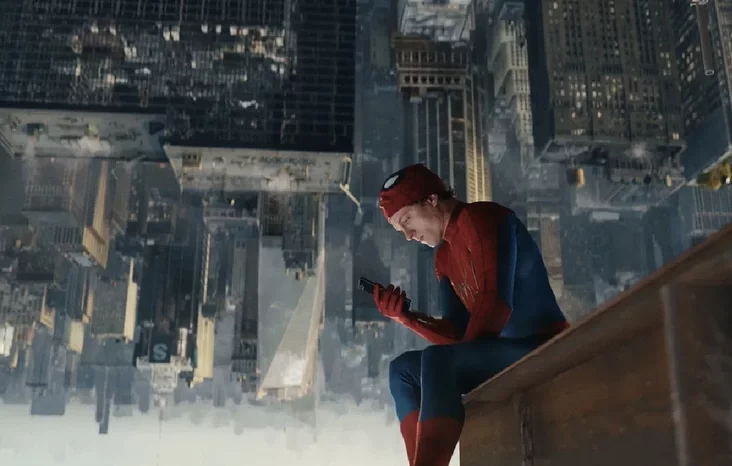
In the finale of "No Way Home," Peter Parker got what superheroes usually fear more than death: the world was saved, but in this world, there was no one left named Peter Parker. His friends, his beloved, his teachers, state registries — everyone forgot him. Aunt May died. Tony Stark's suit, technological gadgets, and status as a junior Avenger were things of the past. In a small apartment, he sewed himself a new red and blue suit and stepped out into the snow like a true, classic Spider-Man: poor, lonely, and needed by no one without his mask.
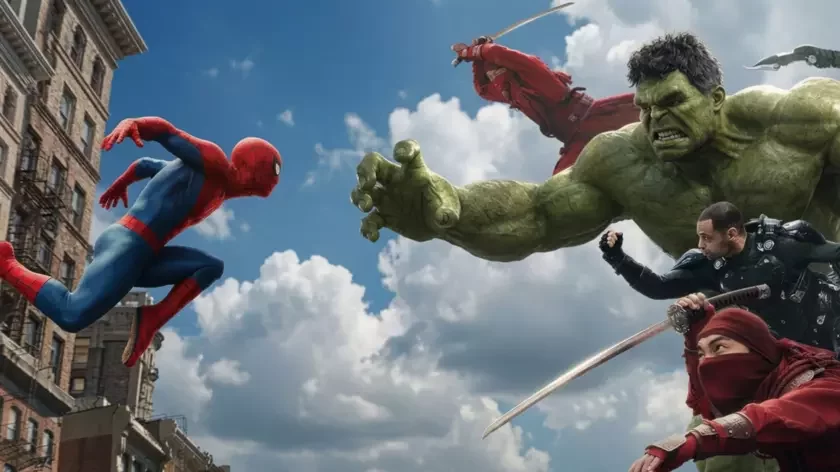
It was an almost perfect beginning to a new story. And at the same time, a trap that Tom Holland's fourth Spider-Man film inevitably had to fall into. Is Marvel capable of leaving its most profitable hero alone with his life? Will it allow him to save not the multiverse, but a few specific people? And can a film featuring Hulk, Punisher, Yelena Belova, a new Jean Grey, and dozens of hints at future projects truly be called "a new day"?
The answer turned out to be paradoxical. "A New Day" is one of Marvel's most vibrant and human films in the last five or six years. But its novelty primarily consists of very skillfully assembled old details.
The Kolobok did not let Spider-Man into Belarus
The world premiere of the new Spider-Man took place on July 31, but the film reached viewers in Belarus and Russia via a separate, rather absurd route. Initially, screenings in CIS countries were expected on August 6. On the same date, Russian distributor "Atmosphere Kino" rescheduled the family blockbuster "The Last Bogatyr: Kolobok," and together with the Association of Cinema Owners, asked venues not to show the new "Spider-Man" until August 20. Officially, this was called an "anti-piracy initiative" and a desire to "effectively distribute resources." Those who disagreed might face difficulties obtaining future releases.
In Russia, Sony has officially stopped releasing its new films since the full-scale war in Ukraine began, so Hollywood hits are shown there in a grey area as "pre-screening service" for short films. But the Russian distribution calendar also affects us. As a result, "A New Day" appeared later in Belarusian listings – from August 13. Thus, Belarusian viewers also found themselves in this struggle between Spider-Man and Kolobok.
The initiative yielded an almost caricatural result. Pre-sales for "Kolobok" in Russia failed, and after its release, the film was hit by a wave of protest-driven low ratings. In Belarus, the film didn't appear in distribution at all: it has not yet been approved by the Ministry of Culture. So, even before "Spider-Man" began, the story got a plot twist in the best Marvel traditions: the industry tried to remove the hero from the road, but in the end, only drew more attention to him.
And now — to the film itself and Peter Parker, whom, unlike the audience, the whole world truly forgot.
A World Without Peter Parker
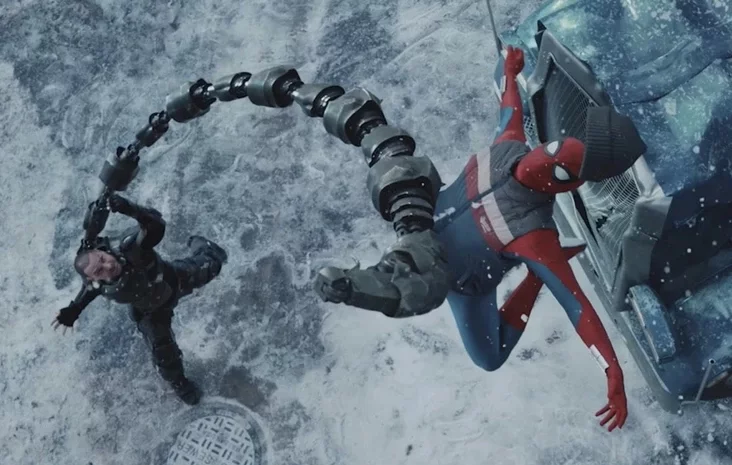
Four years have passed. Peter lives alone and effectively works as Spider-Man full-time. The very first shots show how much has happened without us: Scorpion, Boomerang, Rhino, and other villains appear for a few seconds, like the covers of old comics suddenly coming to life. The film doesn't stop to give each one a biography and a fifteen-minute origin story. They exist in this New York, Spider-Man fought them — that's enough.
This is one of the main principles of the film. Tom Holland once also entered the cinematic universe as an already established Spider-Man: the audience wasn't shown the radioactive spider, the bite, and Uncle Ben's death for the third time. Now, Punisher, Yelena Belova, and Bruce Banner naturally enter the plot. Fans know their past and will notice additional meanings. For newcomers, understanding their functional role is enough: Belova gathers information, Punisher is a good shot and has no moral problems with killing, Banner knows what it's like to live in a body that can go out of control.
Not all details are equally accessible, however. Frank Castle's closet with family photos works much more powerfully for those who know the Punisher's story.
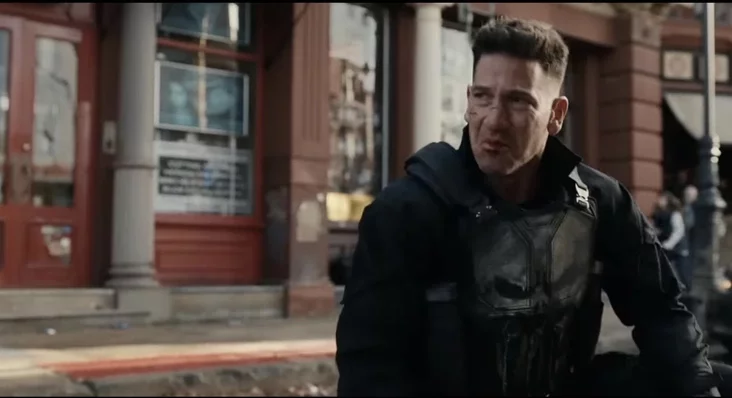
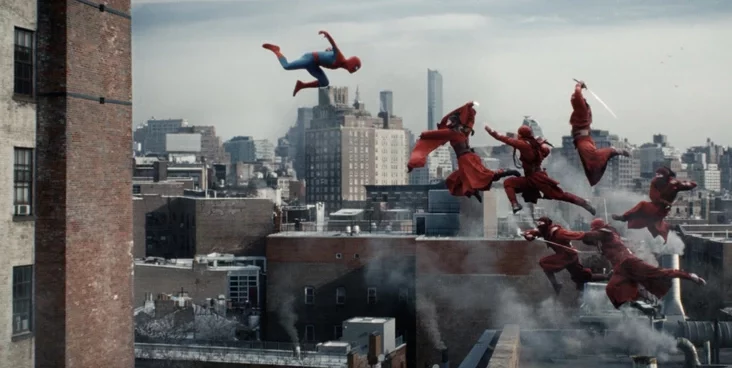
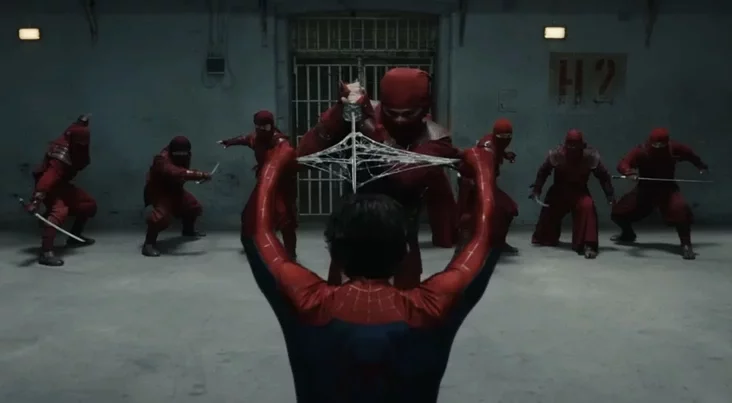
The Red Ninjas of the Hand don't appear out of nowhere — the organization was already in the Daredevil series, but not everyone will decide to rewatch several seasons of a series to understand one film. Marvel has long turned the interconnectedness of stories into a marketing model: watch everything, otherwise the next segment will be less clear.
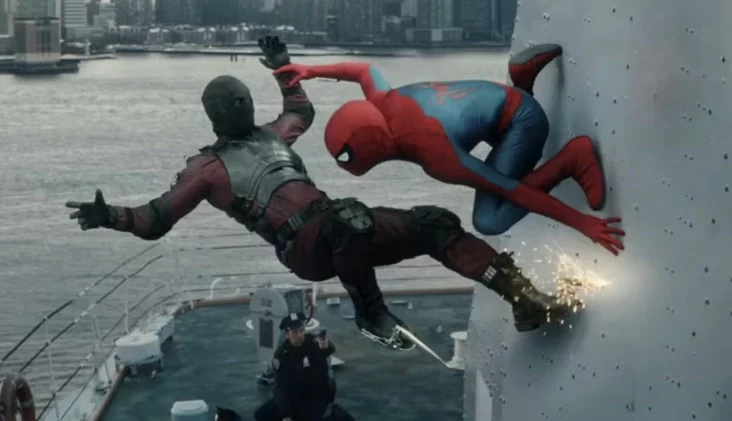
"A New Day," fortunately, so far stays on the right side of this boundary. Other characters here primarily serve Peter's story, rather than replacing it. But in the finale, the boundary begins to blur dangerously.
New Birth in the Fourth Film
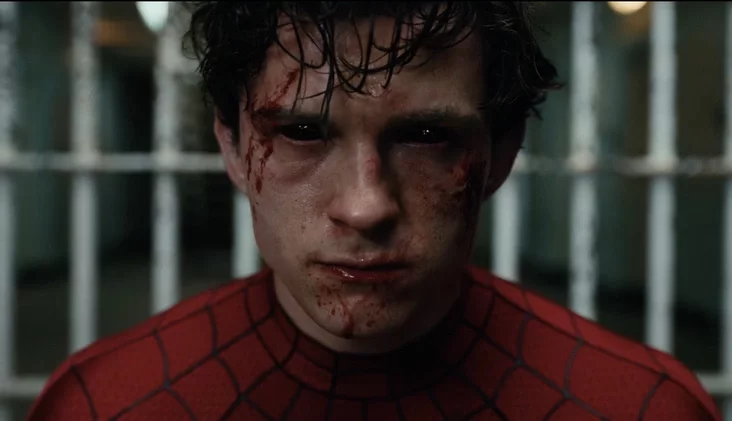
The main irony of the title is that Holland's Spider-Man gets his own origin story only in his fourth solo film. We didn't see him first learning to climb walls. But now his body changes anew: organic webs begin to shoot from his hands, his spider-sense becomes painfully acute, and with strength, aggression grows. Peter falls again, crashes into obstacles, and tries to understand which gesture makes the webs work.
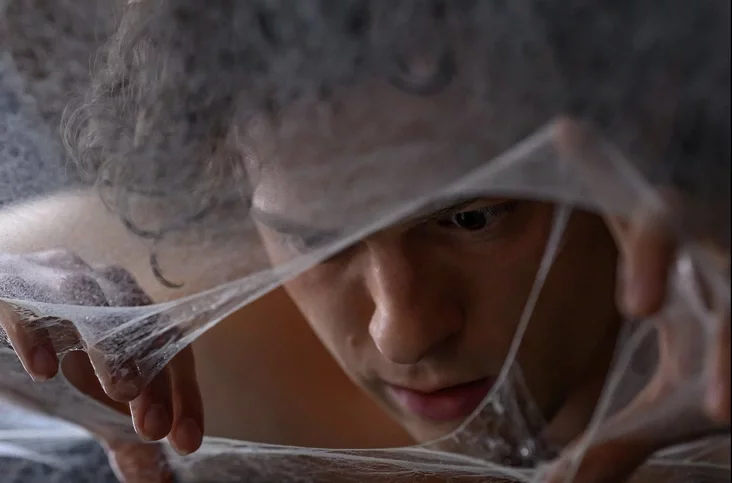
This is a clear nod to Tobey Maguire's version from Sam Raimi's 2002 film. There, Peter also cautiously examined the strange changes in his wrists and tried various gestures until he learned to shoot webs. But in "A New Day," the repetition has a different meaning. Then, the body was telling the teenager that he had become special. Now, it reminds the adult hero: one cannot endlessly suppress pain, longing, anger, and the desire to be close to loved ones.
Peter decided that self-sacrifice required complete isolation. He observes MJ and Ned from a distance, monitors their lives, and calls it caring. In essence, he does the same thing as the large corporations and state structures in this film: illegally collects data on people, convinced that he knows what they need better than they do. His nobility gradually becomes a form of control.
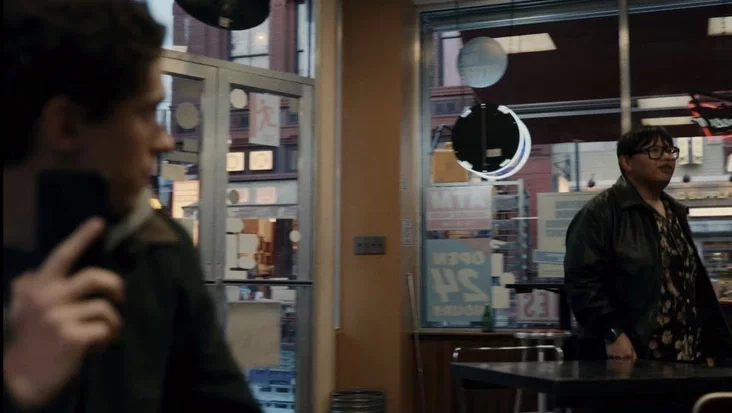
The body rebels against this control. In this sense, "A New Day" is almost a light body horror: emotional trauma literally grows through the skin.
Three Men Who Don't Know How to Handle Anger and Pain
Bruce Banner and Frank Castle are needed in the film not only as recognizable faces. They show Peter two possible outcomes of living with unaddressed trauma.
Banner suppresses the Hulk with technology and builds a calm life as a university professor. It seems he has finally learned to control his other self. But beneath this intellectual and cozy facade, accumulated rage still lurks — and a creature that wants to smash everything around.
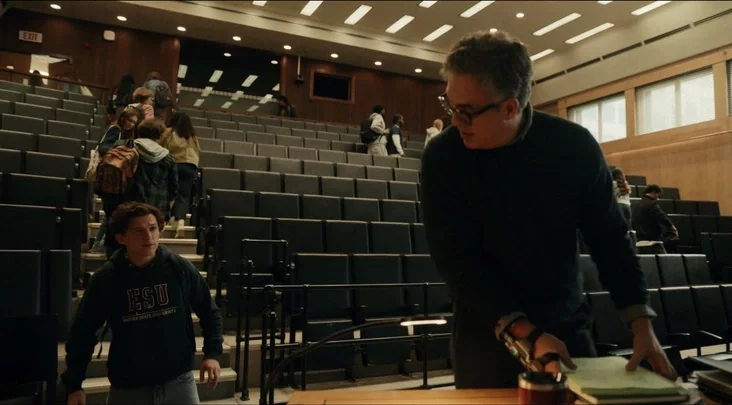
When the true Hulk finally returns, the film surrenders to pure childish joy for a few minutes. Before us is no longer the thoughtful, intelligent "Professor Hulk," but the same enormous green goliath who creates a powerful wave with a clap of his hands. This signature move of the hero hasn't appeared on screen for a long time.

The filmmakers understand well: sometimes the audience doesn't need complex explanations and reinterpretations, it's enough to finally let the Hulk smash something.
The Punisher, on the contrary, suppresses nothing. He turned the pain from his family's murder into a method: if a problem can be shot, why talk about it? That's why Frank and Peter's pair works so well. Frank is ready to kill first and ask questions later, while Peter even in a fight tries to listen to his enemy. In this film, Holland's Peter has become quieter and doesn't crack jokes as often. But in a duet with the grim and ruthless Castle, his gentleness and unwillingness to respond to violence with even greater violence are particularly evident.
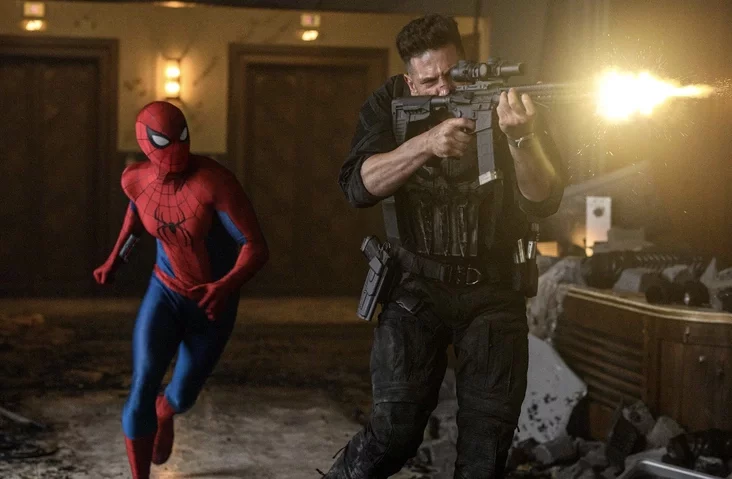
Their dynamic is not only dramatic. The Punisher, who pulls on Spider-Man's mask in the hospital, is one of the funniest episodes of the film. This same play with superhero conventions continues in the sauna scene: the hero is ready to strip almost completely, but would never remove his mask or reveal his face. The old comic book tradition is here taken to absurdity: unlike Iron Man, who willingly revealed his identity to the whole world, other superheroes would rather boil in a sauna than give up their secret.
The Film is Assembled from What We Already Loved
There have already been several versions of Spider-Man in cinema — first Tobey Maguire's Peter Parker, then Andrew Garfield's, and then Tom Holland's. And it was Holland who became a unique case for the franchise: he lasted through four solo films, with each subsequent one being received more warmly by audiences. His predecessors had the opposite dynamic: a bright start gradually turned into disappointment, and the film had to be rebooted.
"A New Day" is very difficult to call original, and equally difficult to accuse it of being unable to use borrowed elements. The film works like a good DJ set: it takes recognizable elements from different eras and combines them into a rhythmic composition.
Almost every one of these techniques has already appeared in previous superhero films. Organic webbing and Peter's clumsy attempts to master new abilities allude to Sam Raimi's trilogy. Peter's increased aggression recalls the third installment, where the black suit also brought out the character's worst traits. Shots through Spider-Man's eyes already worked effectively in films with Andrew Garfield, and the slow-motion dodging of shurikens simultaneously recalls Neo dodging bullets in "The Matrix" and Flash similarly avoiding Batarangs — Batman's metallic weapon — in "Justice League." The choreography of some fights looks as if the camera temporarily switched to a Spider-Man video game.
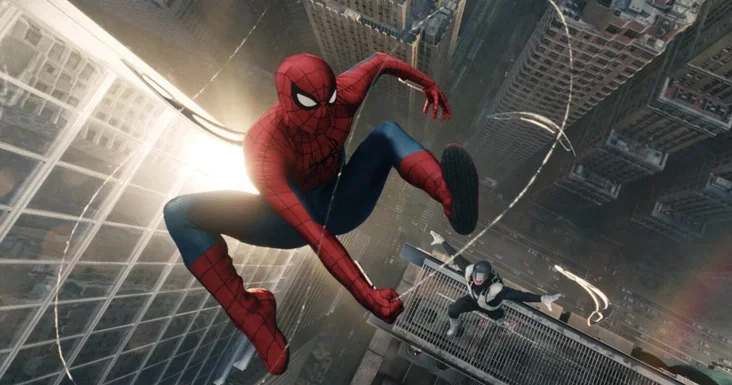
Even the large web with which the hero stops a helicopter brings to mind the 2002 "Spider-Man" teaser: in it, a criminal helicopter hung in a web between the towers of the World Trade Center. After the September 11 attacks, the advertisement was pulled, and the scene was not included in the film itself.
The film uses not only images from previous adaptations, but also jokes that have lived on the internet for years. In a lecture, students ask Bruce Banner why Thanos, instead of destroying half the universe's population, simply didn't create twice as many resources. Marvel fans have been asking this question since "Infinity War." Now, the creators have finally injected the old internet debate into the cinematic universe itself and turned one of the main criticisms of Thanos's logic into a short joke for their own audience.
For comic book adaptations, such an approach is entirely natural. The best superhero films rarely transfer one specific story frame by frame to the screen. Usually, they take a motif here, an image there, a conflict from a third story, and assemble their own version. Familiar elements can sound new if the creators infuse them with a different meaning.
In "A New Day," this doesn't always succeed. However, the film's main metaphor — mutation as a physical embodiment of suppressed feelings — truly connects disparate borrowings into a coherent story.
The Perfect Mechanism and Its Predictability
The film's dramatic structure is quite simple. The first half-hour shows Peter's lonely life. Then the hero refuses to accept the changes within himself and seeks a way to suppress them. A new threat seems like an evil that must be fought. Later, it turns out that the supposed enemy needs to be saved, and the danger comes from a system that fears people it doesn't understand. Finally, Peter accepts his own nature, stops trusting the technological "muzzle," and in the finale classically saves the girl (but not the one you most likely thought of).
This is a hero's journey, finely tuned like clockwork. The surprise here is not where it will lead, but in the small twists of the mechanism. Director Destin Daniel Cretton, known for the Marvel film "Shang-Chi and the Legend of the Ten Rings," knows how to make a fight an extension of character. Therefore, the action in the best episodes reveals drama and shows which characters have lost control, who chooses killing, and who is still capable of stopping.
The problem arises when the machine begins to serve not this film, but the next ones. The Department of Damage Control transforms from a team cleaning up superhero destruction into almost a mutant-hunting police force. Banner's technology, which Peter modifies to control himself, becomes a prototype for a device to suppress mutant abilities. And Sadie Sink's character turns out to be Jean Grey — one of the central heroines of the "X-Men."
Thus, an intimate story about Peter's loneliness suddenly becomes a gateway to Marvel's mutant era.
Jean Grey: heroine or presentation of the next franchise?
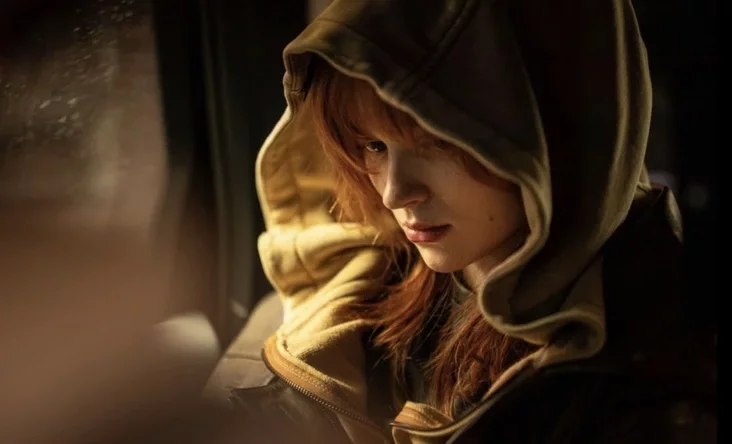
Thematically, Jean is accurately integrated. Like Peter, she remains alone with a power she doesn't understand and that others fear. Both erupt with aggression, but not because they are evil; they simply have no safe way to process grief. Both face a system that calls violence care and wants to make the extraordinary controllable.
But industrially, her appearance is also a huge billboard: "The X-Men are here." Marvel simultaneously tells Peter's story and lays tracks for years to come. Yelena Belova deciphers materials about secret experiments, the Department collects data on mutants, a post-credits scene hints at another Spider-Man — possibly from another reality or from space.
It is here that optimistic and pessimistic reviews of the film diverge. For some, this is the best feature of a living comic book world: characters live in the same New York and logically meet. For others — proof that Marvel cannot finish a sentence without simultaneously starting three more.
Does the Film Not Undo Its Own Tragedy?
The most delicate part is the return of MJ and Ned. The ending of "No Way Home" was powerful precisely because of the irreversibility of the choice: Peter promised to explain everything, but saw that his friends were safe without him and remained silent. If "A New Day" simply brings back the old company with a magic button, the previous sacrifice will turn into a cheap trick.
Fortunately, the film doesn't instantly undo the spell. Ned and MJ don't receive their old memories ready-made. Peter has to enter their lives as a stranger — awkwardly, painfully, and without guarantee that they will love the same person again.
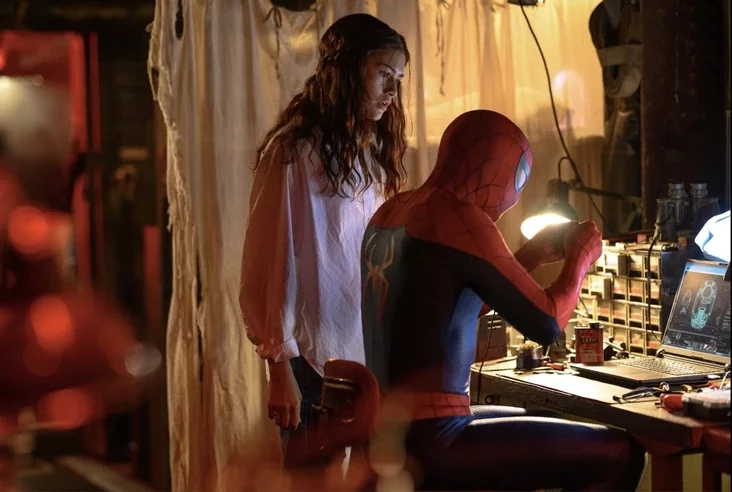
This is a more interesting challenge than mechanically "restoring memory": can the same relationship be rebuilt from scratch if the shared history has vanished?
Here, Zendaya's performance works particularly well. Her MJ is not a prize for saving the city, nor a girl the script is obligated to return to the hero. She feels an inexplicable closeness but has the right not to know Peter and to move on.
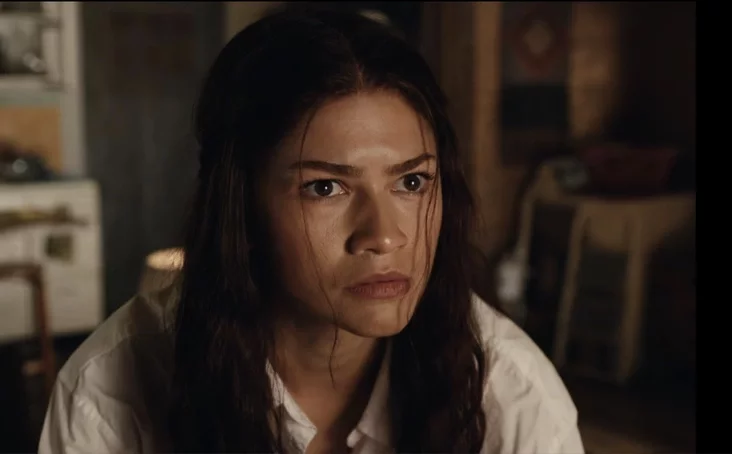
The real-life story of Holland and Zendaya inevitably adds extra-textual weight to the scenes: audiences have watched the actors grow together for almost ten years, and now their on-screen characters are asked to meet for the first time.
Why Everyone Still Loves Spider-Man
In the Marvel universe, there are stronger heroes, richer billionaires, and more majestic gods. But Peter Parker remains the most human of them. Unlike other superheroes, he has neither money, nor influence, nor a successful career. He is not Clark Kent — a successful journalist and simultaneously Superman, next to whom is his beloved Lois Lane. Nor is he Tony Stark — a billionaire, owner of a huge corporation, and Iron Man with an entire arsenal of high-tech weapons. Peter is an ordinary guy from a modest family in Queens, an orphan who constantly struggles with money, studies, and his personal life. Spider-Man may be adored by crowds, but Peter himself sometimes has nothing to pay for his apartment.
Holland's version deviated from this formula for a while. He received a billionaire mentor, a technological suit, and instant access to the Avengers. "A New Day" finally takes away Tony Stark's gifts and leaves the guy with what always made Spider-Man Spider-Man: responsibility without reward.
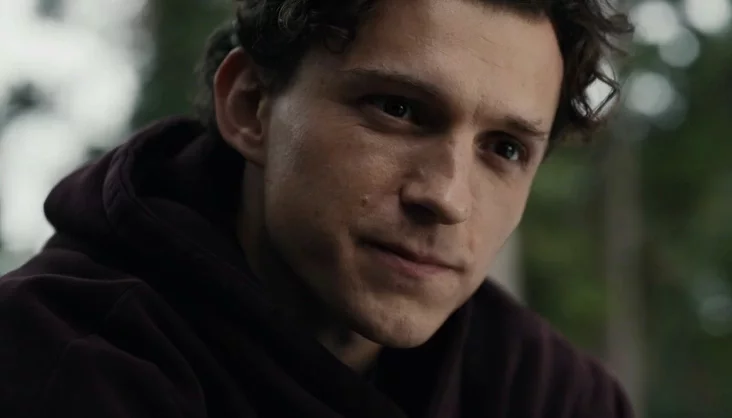
There is another reason for the box office phenomenon. Each of Holland's solo films ends with a question that is impossible not to carry with you. In the first film, Aunt May found out who was hiding under the mask. Then the whole world found out who he was. Then the whole world forgot Peter. Now Ned begins to recognize the person he shouldn't remember, and MJ is on the verge of the same discovery. This is the structure of a very expensive TV series: "What's next?" — the franchise's main superpower.
A New Day We've Already Seen
American press received the film mostly well, but without unanimity. On Metacritic, it scored 66 out of 100. Some critics call it the best MCU film in years and Holland's best work as Peter. Others see a missed opportunity: the finale of the previous installment freed the hero from all baggage, but the studio again burdened him with familiar characters, sequels, and obligations.
Talk of "the best Marvel film in years" says a lot about the state of the studio itself. After "Avengers: Endgame," it released projects at almost conveyor-belt speeds, simultaneously expanding the cinematic universe with TV series. Stories and new characters became more numerous, while full-fledged films among them became fewer. Some films looked only like prologues to future events, others required familiarity with several TV series, and still others again offered the same threat of world destruction under a layer of uneven computer graphics. Even successful projects were increasingly perceived as exceptions against a backdrop of general Marvel fatigue.
"A New Day" wins simply by bringing a specific human back to the center. Peter doesn't need to save the world; he needs to cope with his own loneliness, aggression, and inability to be close to those he loves. After several years of projects overloaded with connections and preparations for future franchises, such a simple human story indeed feels almost like a new beginning.
Therefore, both sides are right.
"A New Day" gives Spider-Man his heart back. The stakes here are primarily personal, not cosmic. Holland stops being a talkative teenager among adult superheroes; now he plays a man whose good intentions begin to border on self-destruction. The Punisher and Hulk don't just wave to the audience from neighboring franchises; they embody different ways of living with pain and anger. Even Peter's mutation turns out to be a metaphor for the fact that feelings cannot be suppressed indefinitely.
And yet, the creators don't quite dare to preserve the intimacy of this story to the end. The film begins as a tale of a boy no one remembers, and concludes with the setting up of pieces for "X-Men," new "Avengers," and the next Spider-Man. It promises a new beginning, only to assemble it from previous films, comics, games, "The Matrix," "Justice League," and Marvel's own catalog.
Perhaps this is its essence. "A New Day" as a very well-made issue of an old comic: with a bright cover, an unexpected guest on page five, a fight in the middle, and a final frame after which you have to buy the next issue.
And we will buy it, of course. No, not because Marvel has once again promised to change the entire universe; that's already tiresome. More interesting is that Peter Parker still doesn't know how to live in this universe tomorrow.


Comments
ЧП был снят уже давно и с лучшим целовальником по версии MTV Тоби Магвайром, против него ещё был мужик Доктор Зло руки-базуки из лаборатории. Смотрели на VHS с девчонками, девчонки залазили под стол от страха когда ЧП попадал в передряги.
Даже американцы сняли пародию на ЧП и уже успели о ней забыть, где в лаборатории с насекомыми человек в каталке похожий на Хокинга, что со своей сомнительной ухмылкой пытался припарковаться к упругим попам студенток, как бы невзначай, и настойчиво предлагая им посидеть у него не коленях. Что было тогда просто смешно, но сейчас когда стало известно о похождениях Хокинга на рабских островам Эпстина, то намёк сценаристов этой пародии стал абсолютно ясен, явно у них была инфа сотка о Хокинге. И в результате этих навязчивых практик со студентками человеку в каталке похожему на Хокинга абсолютно случайно помогли въехать в аквариум с кодлом пчел - убийц. Все потом бегали и кричали по лабе. Было весело. Девчонки ржали.
А эти - кто они такие? Какой юный ЧП? Сколько можно! Он за тридцать лет уже опух и обрюзг и снялся в Вавилоне.