


Specialists explained why wild horses were so attracted to a bus stop in the Valozhyn district
In Naliboki Forest, several Tarpan-like horses began to regularly come out to a bus stop and interact with people. Photos and videos of the animals repeatedly appeared online. Now these horses have been placed in quarantine, and afterwards, they are planned to be relocated to another place, writes BelTA.
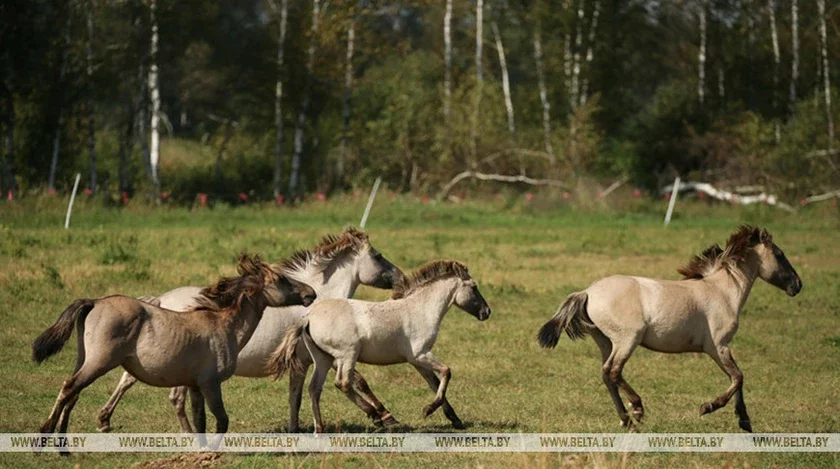
As reported by the Ministry of Forestry, Tarpan-like horses completely disappeared from the wild nature of Belarus a long time ago. In 2019, they began to be returned to the country to restore the population and natural processes in ecosystems. At that time, 151 animals were brought to Belarus from the Netherlands.
After studying various territories for their settlement, Naliboki Forest was recognized as the most suitable. The horses adapted well there and began to reproduce. Currently, there are about 250 Tarpan-like horses in the forest.
Some of the animals have already been relocated to other places. Such projects were implemented in Belovezhskaya Pushcha, Sporava Reserve, and also in another part of Naliboki Forest — in the floodplain of the Western Berezina. This year, another 15 horses moved to Tatarstan, Russia.
Specialists note that these animals are quite willing to make contact with people, often out of curiosity. However, the main reason for their approach to populated areas is the easy food offered to them by people.
Some "well-wishers" feed the horses bread, fruits, sweet products, and even chips. Such food can harm the animals' digestion, and regular feeding changes their natural behavior. After tasting treats a few times, the horses remember the place and return there in search of food.
This is how several horses began to come to the bus stop. This created a danger not only for the animals themselves, but also for passengers, as well as for vehicles moving on the nearby road.
In addition, contact between wild horses and people and their venturing outside their natural habitat increases the risk of contracting viruses and other diseases. If an infection enters the population, it can spread among a large number of animals and even lead to their mass death.
To prevent such a development, the horses that were coming to the stop were placed in quarantine. After its completion, they are planned to be relocated to a new territory. Where exactly the animals will be sent has not yet been decided.
Specialists urge people not to feed wild horses. They can be observed and photographed, but animals should not be accustomed to human food. In Naliboki Forest, there is enough natural forage for them, necessary for a healthy life.


Comments