


The politician and former political prisoner, in his new essay, published on his Telegram channel, touches upon the unusual topic of harvest.
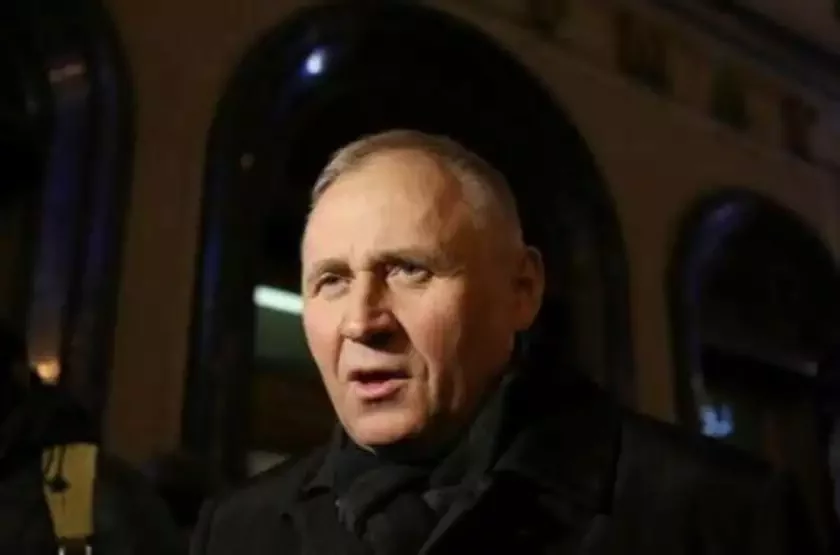
«Information in detention is scarce. Especially when you've been in solitary confinement for years (this is the equivalent of a SHIZO in a colony for particularly dangerous repeat offenders). I haven't even seen a TV the whole time I was there. There are no independent socio-political newspapers or magazines left in the country. I even had to subscribe to "Sovetskaya Belorussia". Moreover, the skill from Soviet times of extracting information from propaganda has not disappeared. The information obtained in this way often raised big questions for the propagandists' clients.
For example, a couple of years ago, in the weekly supplement to that same "Sovetskaya Belorussia", called "Soyuz" (Union), I read that Belarusian-bred wheat is widely used in the Bryansk region of the Russian Federation. I also read there that the average yield of this wheat throughout the region is 80 centners per hectare.
And in the newspaper itself, without the supplement, it was written that the wheat yield in the Mogilev and Gomel regions of Belarus, neighboring Bryansk, is about 20 centners per hectare. 4 times less! Immediately a lot of questions arose. Where does such a colossal difference come from?
Soil? Similar, almost identical.
Climate? Similar, maybe it should even be slightly warmer in Mogilev and Gomel regions. Because in our region, the further East you go, the colder it gets.
Equipment? Should be enough, as MTZ and "Gomselmash" probably don't know where to put their tractors and harvesters anymore.
People? Well, in the Bryansk region they are supposedly the same — descendants of the Radimichs, who still considered themselves Belarusians at the end of the 19th century. In my lieutenant youth, I met soldiers from the Bryansk region who spoke good Belarusian, although they were surprised when I told them about it.
Strong agricultural traditions? Well, in late Soviet times, the Bryansk region, along with the Smolensk region, was almost an example of the destruction of agricultural production and rural degradation.
Seed material? In this case — both there and here it's Belarusian-bred wheat, unless it has already been replaced by Chinese wheat here.
So what is the reason for such a huge difference in yield now?
I haven't been following closely, but it seems that the Kremlin bosses don't teach farmers how to grow bread on TV, they don't fly over fields in helicopters. And it's dangerous to fly there now — they might get shot down. Despite the war with Ukraine, they don't wage a "battle for the harvest" in the Russian Federation, they don't create penal battalions specifically for this "battle", they don't conduct mobilization in institutions and enterprises for it. Even the best combine operators don't share their advanced experience from every radio receiver.
But as a result — they have 80, and we only have 20.
Or perhaps, this is precisely the reason: that they don't teach, don't interfere with public advice, don't fly, and don't wage battles, but simply don't prevent people from doing their ancient work and earning a living?
To be honest, I did not hide this conclusion of mine then. On the contrary, I widely shared it with my neighbors from the SHIZO and in solitary cells.
I don't know, maybe that's why data on wheat yields in the eastern regions of Belarus have been so hard to find ever since. Because they listened to me carefully there. For example, one could tell a real anecdotal story to cellmates in the SHIZO, and then, upon returning to solitary confinement, hear it from the radio point already retold by a well-known character. Maybe that's why now only data on yields in individual advanced agricultural enterprises and in the western regions of the country, which were lucky enough to be liberated 20 years later, are published.
But all this does not answer the question: why, after all, is the yield in the neighboring, once neglected, region of Russia 4 times higher than ours? This question arises every time you accidentally stumble upon numerous reports about the harvest, on television lectures from the chief bosses to farmers on how to work, on interviews with leading harvesters. But instead of an answer, for some reason, a joking proverb, again from my lieutenant youth, spins in my head: "The problem wasn't with the reel, a slacker was sitting in the cabin."
-
"Failure, I think. It's over." Seviarynets recounted how Milinkevich conquered villagers and foresters right on the border with Russia
-
Palchys urged not to rewrite the history of 2020: Do not look for false versions of the past
-
Bialiatski: Joining the European Union — it's not a question of "I want it or not", it's a matter of the survival of Belarusians as a nation
Now reading


In Belarus, rules for the evacuation of valuables in case of war approved: bricks from Brest Fortress with inscriptions will be saved before paintings by Chagall and Soutine

In Belarus, rules for the evacuation of valuables in case of war approved: bricks from Brest Fortress with inscriptions will be saved before paintings by Chagall and Soutine


Former Gazprombank Vice-President Volobuev – on serving in the AFU, connections with the "Black Spark" underground, and abandoning his family in Russia


Comments
А то вспомнился анекдот:
— Доктор, мне всего 51, но в постели я уже практически ничего не могу. А Рабиновичу 70, и он говорит, что для него два-три раза за ночь — обычное дело. Как быть?
— А вы тоже говорите!