


The reason for the anomalous phenomenon was explained in an interview with BelTA by Viktor Dzyamyanchyk, an employee of the National Academy of Sciences of Belarus.
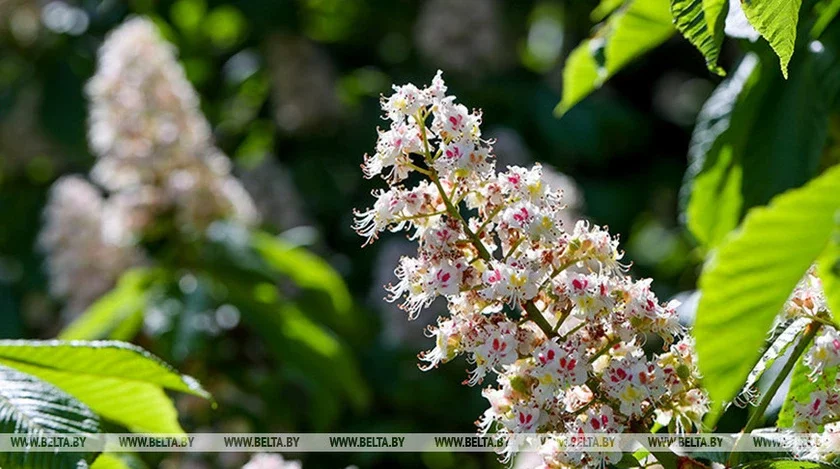
"The chestnut tree is very connected to the seasonal dynamics of the climate. Winter for it is complete sleep, spring is the beginning of awakening, sap movement, and vegetation. But this year, at the moment when the trees should have entered the active phase of flowering and leafing out, a drought occurred. And the plant blocked all biochemical processes typical for a normal spring, due to increased dryness," the scientist noted.
He explained that the dry and hot spring blocked the normal course of vegetation processes. Some of the buds went into anabiosis. "Only after the normal climatic phase resumed did they wake up and begin to bloom. This is why these trees are blooming so late," Viktor Dzyamyanchyk noted.
He suggested that other trees might also bloom for the same reason. Primarily, this could affect apple, plum, and bird cherry trees.
Such an anomalous phenomenon is possible under certain conditions. "For example, in a modern city, conditions for chestnut trees are not the best: there is a lot of asphalt and concrete. Heat comes not only from the sky but also additionally reflects from the ground. This does not happen in natural conditions," the scientist emphasized.
Now reading


Belarusian warehouseman with a swastika on his shoulder was treated for alcoholism in Siberia and went to fight for Russia, but was left without payments or work


Comments