


A direct Russian invasion of Europe is unlikely because NATO has a clear military advantage. That is why Moscow is banking on sabotage, believes Alexus Grynkewich, Commander of the Joint Armed Forces of the Alliance in Europe.
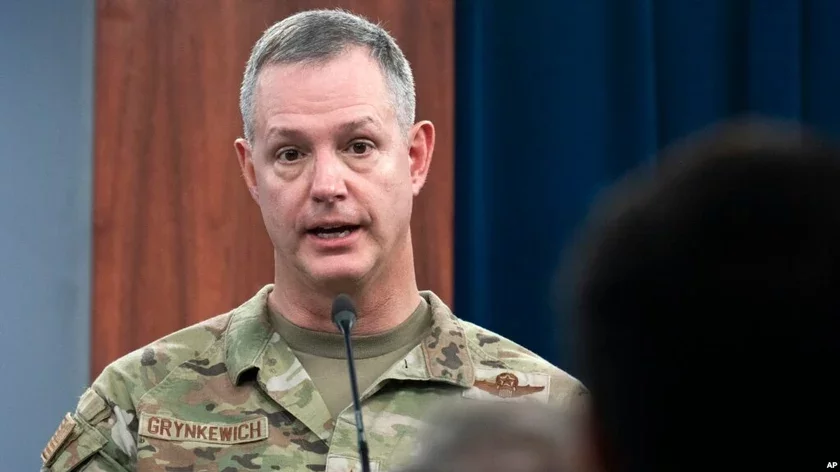
The North Atlantic Alliance has a clear military advantage over Russia. This is the conviction of Alexus Grynkewich, Lieutenant General of the US Air Force and Commander of NATO's Joint Armed Forces in Europe.
“The military capabilities we would deploy in the event of a large-scale conflict significantly exceed Moscow’s capabilities,” Grynkewich stated in an interview with the German weekly Der Spiegel, published on October 16.
According to the general, Russia's arsenal lacks modern F-35 fighter jets, as well as the number of modern destroyers and submarines that NATO possesses.
In this regard, Grynkewich is confident that Russia will not launch a large-scale attack on European countries using conventional weapons.
“Putin resorts to other methods, such as sabotage, because he has no other options. Putin does not want a direct conflict,” — noted Alexus Grynkewich.
He clarified that he refrains from using the term "hybrid attacks" to describe such actions by Moscow.
“One must call things by their names: sabotage, arson, or terrorist attacks — these are precise definitions to which there are specific responses,” — Grynkewich explained.
To the interviewer's question of whether Europe is already at war with Russia, the NATO commander replied:
“This is a dangerous game by Vladimir Putin. He wants to convince our citizens that supporting Ukraine is dangerous and that it could lead to war with Russia. But so far, it's not working.”
Commenting on Moscow's recent threats, which stated that the isolation of the Kaliningrad Oblast would lead to a direct military conflict, Grynkewich once again stressed that NATO is a defensive alliance and acts only in the event of an attack on it.
However, due to the war in Ukraine, Russia's positions in the Kaliningrad Oblast have noticeably weakened, while NATO has strengthened its positions in the Baltic region, noted the commander of the alliance's forces in Europe.
“From a military point of view, the situation there (in Kaliningrad. — Ed.) is unfavorable for Russia,” — said Grynkewich.
Commenting on the sabotage at Leipzig/Halle airport, which Russia is accused of organizing, the NATO general stated that the attempt itself was "crossing a line."
“If the attack had been successful, several fully fueled 'Antonov' planes would have exploded, and there would likely have been fatalities,” — noted the general.
He refrained from making predictions about how NATO might act in such a case.
“We need enormous quantities of disposable combat drones, cheaper cruise missiles, and much more,” — he added.
A few days prior, at a security conference in Warsaw, Alexus Grynkewich presented a new NATO concept called Theory of Victory. According to it, the defense of the alliance's territory in the event of possible aggression should begin even before the adversary opens fire.
The concept envisions three stages of military defeat for a potential aggressor. In the first stage, NATO forces must stop the attack (Block). If the adversary continues combat operations, it is necessary to break its offensive momentum and prevent further advance (Blunt). If this is not enough, the document envisages the defeat of enemy forces and the entire military system that supports and controls them (Break).
In the event of an attack in the first stage, the main role is assigned to NATO's ground forces on the forward lines. They will have to stop the advance, engage, and destroy attacking formations.
Simultaneously, air and naval forces, supported by space and cyber assets, must ensure air and sea superiority as quickly as possible.
If the adversary, which is not named in the concept, continues the offensive or introduces additional forces, NATO plans to deliberately incapacitate its military machine.
Now reading


"He invited me on a date and came with a bag of tomatoes instead of flowers." What they remember about Jan Pamedor Reutski, administrator of a multi-thousand community of Belarusians in Poland


Comments
Но, имеете ли политическую волю и любую другую волю, применить это преимущество ?!!
Если смотреть за теми, кто находится у власти стран членов НАТО, а если смотреть на тех, кто рвётся к власти в странах членах НАТО, то, кроме самого Гринкевича, желающих применить это преимущество на деле и нет совсем !!!