


Is it enough to just rinse a water bottle? Experts explain why this is a dangerous habit
Reusable water bottles have become a common item: people take them to work, to the gym, and on trips. However, if not washed properly, bacteria and fungi can multiply inside. Experts explain why a simple rinse is not enough and how to properly care for your bottle.
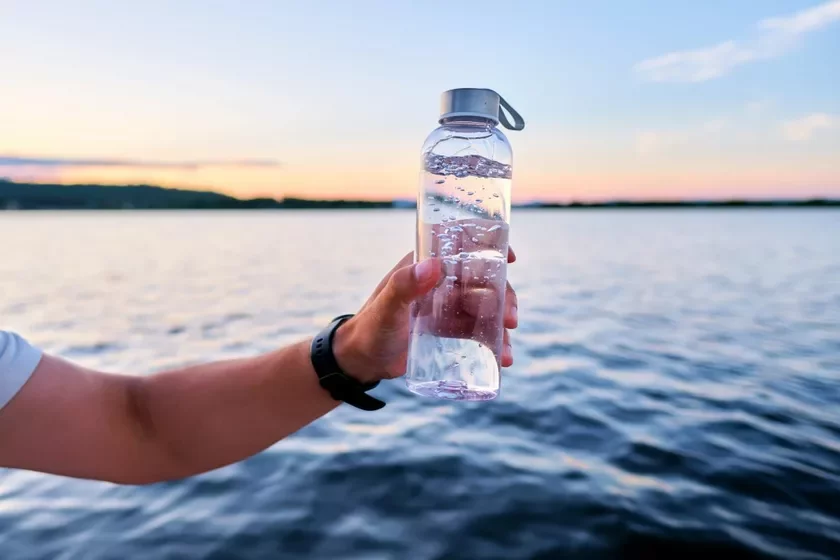
Even if only plain water is poured into the bottle, it must be washed every day. As explained by experts from the German Consumer Protection Center of North Rhine-Westphalia in a comment to the German Press Agency (dpa), bacteria, fungi, and yeasts constantly enter the container through the mouth, hands, and air.
In a moist environment, they can multiply rapidly and form a biofilm — a stable layer of microorganisms on the inner surface of the bottle. Some of these microorganisms are capable of causing gastrointestinal disorders.
Especially a lot of contaminants can accumulate in hard-to-reach places: on spouts, seals, and drinking straws. Therefore, simply rinsing the bottle with clean water is not enough, as it is impossible to remove all microorganisms this way.
How to properly wash a bottle
Experts advise washing the container daily with hot water and dish soap, using a special bottle brush. Small brushes may be needed for spouts, straws, and other hard-to-reach parts.
After washing, the bottle should be thoroughly rinsed and completely dried. It's best to place it upside down so that any residual water can drain. If moisture remains inside, microorganisms can continue to multiply.
Cleaning tablets and dishwasher
For additional cleaning, you can use special tablets, similar to those for cleaning dentures. They help break down biofilm and bacterial membranes. However, after using them, the bottle still needs to be cleaned with a brush and thoroughly rinsed.
However, special cleaning balls that need to be shaken inside the container are less effective. They can remove residue from the walls but do not provide proper cleaning for spouts, straws, and seals.
The bottle can also be washed in a dishwasher, if permitted by the manufacturer. The opening should be wide enough for water to properly enter. Experts recommend placing the container upside down in the bottom rack, where the water stream is stronger. Removable parts should be washed separately.
When to replace the bottle
Reusable bottles do not have a strictly defined lifespan. Experts advise paying attention to their condition: if scratches, cracks, or other damage appear on the surface, microorganisms can more easily accumulate in them, which are difficult to remove during washing. Therefore, it's best not to use a heavily worn container anymore.
The bottle should also be replaced if, even after thorough cleaning, an unpleasant odor or residue remains that cannot be removed.
-
Airbnb service banned requiring guests to clean apartments and wash dishes
-
Pryluki near Minsk on a wave of hype — Belarusians massively went there for photos in the "Twilight" style. Locals are not thrilled
-
Brazilian man sold all his property and traveled 2000 kilometers for a woman. But he faced a harsh disappointment
Now reading


"Around 70% of Russian visitors turned out to be 'vatniks'." Ex-guide from the Museum of the Great Patriotic War, detained by his own tour group, is now popular in Warsaw — we talked to him

"Around 70% of Russian visitors turned out to be 'vatniks'." Ex-guide from the Museum of the Great Patriotic War, detained by his own tour group, is now popular in Warsaw — we talked to him


Tsikhanouski ironizes about his wife: Lukashenka helps and cares for her, even when there was a threat to children, all information was passed to Poland


Comments
для якіх ваша "всё харашо прекрасная маркіза" - гэта пытанне на $мільярды.
А "незалежных даследвальнікаў" ім *для вас* арганізаваць амаль нічога не каштуе.
.
а наконт мыючых сродкаў - пачытайце што-небудзь, напрыклад, пра прычыны перманентнага павелічэння % алергікаў