


Andrei Fedarenka wrote an essay about Yanka Bryl, but it's more than just about Bryl or literature
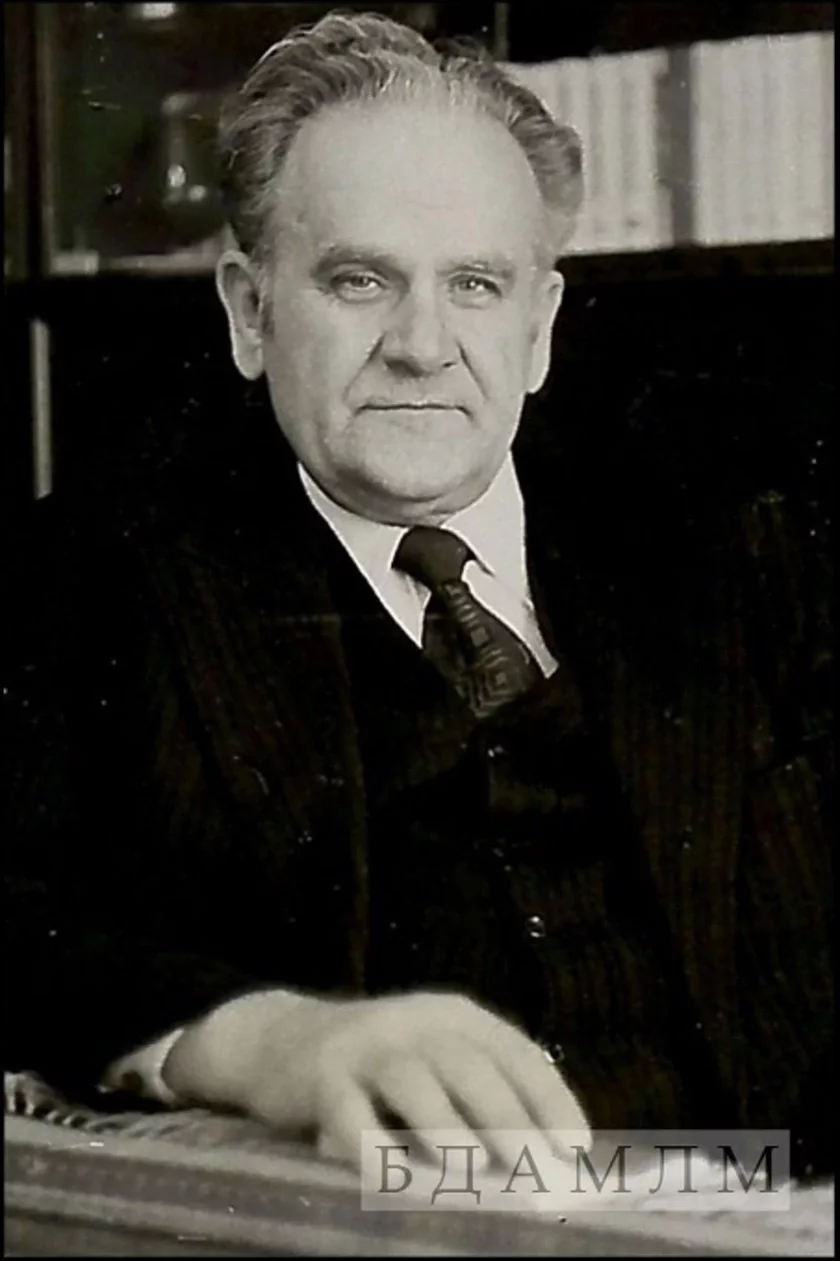
Yanka Bryl is a classic, the pride of our literature, a philosopher, humanist, intellectual, an unsurpassed master of short prose, author of countless excellent texts that have become poems in prose or resemble, according to the apt expression of Anatol Sidarevich, "Japanese-style poetry." At the same time, he is, perhaps, the most enigmatic Belarusian writer, starting from his biography and ending with the fact that he is the only known — at least to me — prose writer whose work cannot be measured by the usual literary yardstick. This is how Andrei Fedarenka begins his essay , published in "Literary Belarus." However, he then shifts the conversation to the basic, fundamental.
For example, one cannot say, this is stronger in him, and this is weaker; here he writes interestingly, and here it is boring. And the "fault" for this is precisely the form of his works - the short genre.
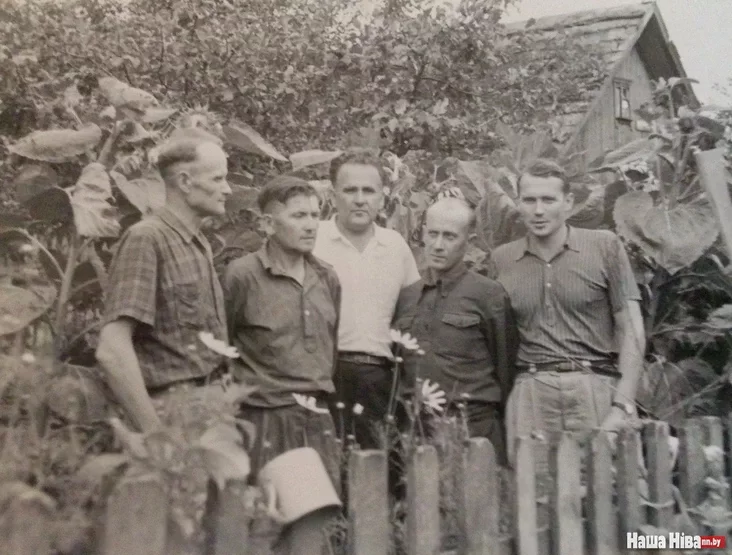
It's easy to evaluate a novel, a novella, a short story. But how to evaluate a cycle of short, asterisk-separated miniatures, sketches, diary entries? How to approach a separate aphorism, thought, detail, observation, even if they are artistically succinct? Moreover, the algorithm for presenting material is quite monotonous: got up - saw - remembered - wrote down (which even led to the emergence of a harmless joke in the writers' circles: ah, Bryl! He writes everything as if he got up, looked out the window, remembered beautifully how he and Maksim /Tank/ and Valodzya /Kalesnik/ once mowed that meadow by the Neman with clanging scythes, and then freely, amusingly drank fresh milk from three-liter jars).
Narrative-conversational style, first-person entries in the present tense, emphasizing that everything was real, that it's a bare fact, pure truth... But how to evaluate pure truth, by what criteria?
And yet another distinctive sign of Bryl's prose is its excessive optimism. Elevation and joie de vivre flow like a spring, as if trying to fully realize Kupala's: "We must give cheerful, vigorous songs!"
— Why do I need your stench? — Ivan Antonovich reproaches someone, not quite correctly, simply, for a very sincere confession. — Let's have something more cheerful instead!
And that's true. You can't argue with that.

2
The riddle of who Yanka Bryl truly was, and how and what he wrote, emerged at the very beginning of his creative path, grew with him as he matured, strengthened — but even now there is no answer to it, just as there wasn't during his lifetime.
K. Simonov recalls how once, in Stalin's presence, there was a conversation about Bryl's novella "It Dawns in Zabaloćcie," which was praised and called good. Stalin skeptically asked:
— Why good? Are all the peasants good there? Are all the collective farms advanced? Does no one argue with anyone? Is there no class struggle? Everything is good, so the novella is good? Is that it? And artistically? Is it a talented book as an artistic work?
He couldn't evaluate it himself. And only when he was convinced that the book was indeed artistically written, did he agree to its nomination for the prize named after himself. But what about Stalin — our beloved Uladzimir Karatkevich, in his essay about Ya. Bryl "My Friend and My Land," after mentioning and praising the novella "Lower Baiduny," still couldn't help but say:
— It's no novella at all.
The Polish translator of "Lower Baiduny," Jan Huszcza, also called this work in the afterword not a novella, but "rather a book of free conversations."
Of course, this bothered the author. For he retorted to both of them:
— With all due respect to my Belarusian and Pole, I don't dwell on it: I wrote as if I exhaled with all my chest!
And he had to defend and justify himself more than once:
— Someone writes differently from me, differently from what I would like. So what?
Or this, addressed to Yanka Skryhan:
— Each of us has our own melody of style. Why do you insist that I must sing exactly as you do?
And somewhat even defiant, addressed to all potential readers:
— I speak as I want, and you can't do anything about it, you will listen to me, flow with me wherever I want!

3
Yanka Bryl had been one of my most favorite Belarusian, and not just Belarusian, writers since school days. At first, I eagerly read "Lipka and Klyonik" (Linden Tree and Maple), "Zialyonaya shkola" (Green School), later "Memento mori," "Ptushki i hnyozdy" (Birds and Nests), "Ya z vohnennay vyoski" (I Am from a Fiery Village)... Of course, back then I didn't just like all of it — I generally considered every printed word Sacred Scripture, and all these national and great Mieželež, Kolas, Bryl, Šamiakin, Čorny, Bykaŭ as Apostles, to criticize whom would be sacrilege. And I certainly couldn't even imagine that one day I would find myself in a situation where I would have to evaluate the work of Y. Bryl himself.
I was working at the "Polymia" magazine, having just moved to the prose department. I knew Ivan Antonovich, of course, but I was editing his work for the first time. Well, what does "editing" mean? — I just read his small, less than a page, latest series of sketches-miniatures for August (by unwritten tradition, each national writer had their own month when publication was guaranteed: Šamiakin in January, Baradulin and Navumenka in February, Bykaŭ in June, Bryl and Pančanka in August, Tank in September, etc.).
Pure text. Easy to read. Everything talented, witty, truthful, wise. But at the same time, a feeling persisted that everything seemed familiar. As Tolstoy wrote about Vronsky when he began to *entice* (Y. Bryl's word) Anna: "Everything in her pleased him, but it had already pleased him so many times!"
My editorial work came down to correcting a couple of typos, missing and extra punctuation marks, and also, as I remember now, I underlined the words "lastachka" (swallow) and "radziska" (radish) and wrote in the margins the dictionary forms "lastaŭka" and "radys". But I didn't even want to make these remarks. I already knew, to put it mildly, Ivan Antonovich's skeptical attitude towards any editing, I remembered his witty and biting aphorism:
— A telegraph pole is a well-edited pine tree!
When Ivan Antonovich arrived, I showed him the galleys: "Very clean!" He took them but didn't look. He sat on the edge of the table, like any ordinary author. The workday was ending. We were alone in the large office. And suddenly, very quietly, he asked:
— And how do you find it in general? Overall?
I was embarrassed. This question, commonplace on the lips of any other writer, was a complete surprise to me. Of course, I had long ceased to consider writers, even national ones, as apostles, or their work as Sacred Scripture. And yet Bryl's authority for me was so high, and he himself, as a person, so untouchable, that he seemed to be beyond human feelings, even beyond good and evil, let alone literary evaluations of the "like or dislike" level. Could he also be just like us, ordinary mortals? Did he also experience that uncertainty so familiar to everyone who writes?
However, something had to be said. And I said, for some reason avoiding his eyes:
— As always with you.
He remained silent. I hastened to add:
— Could it be otherwise with you?
Ivan Antonovich continued to sit and remain silent. I didn't even understand what he was waiting for. An endless minute of mutual silence passed. Finally, he stood up, said goodbye, and left. And as soon as the door closed behind him, it finally dawned on me what I had done. I should have said: "As always with you — excellent." And the second sentence: "Could it be bad with you?" As it was, in my version, it turned out that there was nothing to talk about and nothing to discuss.
Besides, I remembered how warmly Yanka Bryl always treated me, how he praised my novella "The Village," calling it a European novel; how, when I was in hospital with eye problems, he sent me greetings through his wife, comforting her, asserting that eye problems in a writer are a common occurrence, almost an occupational disease, worthy of respect, and one can even be proud of it, just as Bunin, for example, was proud that his right shoulder was higher than his left from long writing.
And I couldn't find a few kind words for him. Not necessarily laudatory, even less flattering, but simply — normal, human words. Fully deserved by him, by the way. Or, if it came to that, at least brought what was said to a grammatically correct conclusion.
Yes, I began to think. A blunder had occurred, a misunderstanding. Annoying, but correctable. Perhaps, I told myself, the right words couldn't be found because it was just an excerpt, a small selection taken out of context. Should I read it in a book, where among other sketches and miniatures it would find its place and be perceived entirely differently?
And I vowed to myself — to buy the book as soon as it came out, to read it carefully, with a pencil, to memorize it if necessary, but to find the words, spoken, and even better, written, and thereby try to atone for my fault before a wonderful person and an outstanding writer.
4
Often, one only needs to want it, and then everything falls into place. The book reached me surprisingly quickly, even before it appeared in bookstores. At the "Mastatskaya Litaratura" publishing house, a part of the honorarium was "paid" in books; one could choose oneself. And so, among other classics — Haretski, Zaretski, Kolas — I unexpectedly saw Y. Bryl's new collection "Z lyudzmi i sam-nasam" (With People and One-on-One). It had just been published by the same "Mastatskaya Litaratura." A charming, neat little volume. Small format, as the author liked. The book was pleasant to hold. Thick white paper. Clear, quality print. Structured like a diary, by years — from 1996 to 2003. Inside, everything was traditional: short, asterisk-separated entries of one to two paragraphs, rarely a full page. The selection I had edited for "Polymia" was also there.
Naturally, I immediately grabbed the desired book, and at home, without delay, began to study it. I must immediately confess that I am not a professional reader at all, unlike Yanka Bryl himself, whom M. Straltsoŭ called a "professional reader." I have long held the opinion that books generally cannot be read; they can only be re-read. Therefore, at first, to give the book time to get used to me, and me to it, I simply familiarize myself with it, stroke its cover, slowly turn the pages, skim the text diagonally, picking out key words and sentences, looking from the middle to the end, then from the end to the middle, then "Japanese style" — from top to bottom, stopping anywhere it opens.
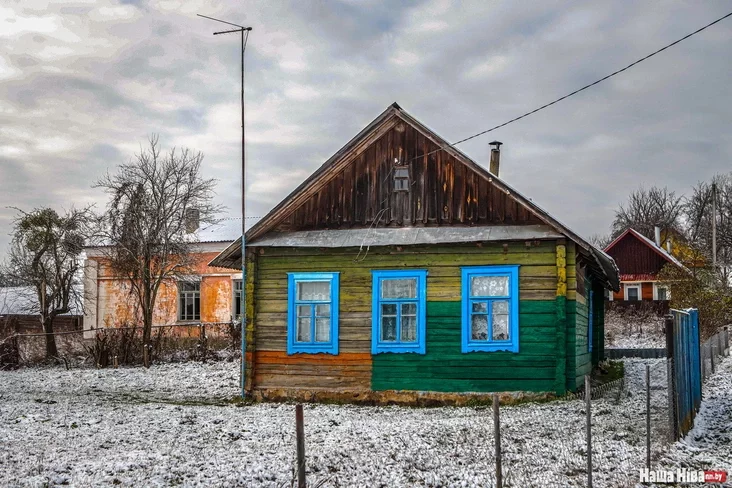
So, running my eyes and fingers over Y. Bryl's book, I repeatedly came across old familiar words, descriptions, and events. For example, the word "khorasha" (beautifully/well) in its Russian meaning of "khorosho" (good) flashed as often as before, even more often — "patseshna" (amusingly) in the meaning of "zabawna" (funny). "Karshun" instead of "korshak" (kite instead of goshawk), "klyavau" instead of "dziaubau" (pecked instead of pecked – a dialectal variation). There was also a place for mowing:
"...how the three of us, our Misha, Valodzya, and I, before breakfast, laid out a good meadow by the Servach for old Kalesnik — that morning, that dewy meadow, efficient scythes, young strength, and our bright friendship all came back to me..."
There was the same adoration of life, nature, and self:
"The sun sets — a whole smokeless fire, far beyond the sparse trees. Still the nightingale. And during the day, two cranes flew low, cooing — you'd want to run after them."
There was the same, lifelong pleasure from the physical act of writing:
"My soul feels somehow like a song. Even writing it down is pleasant."
But gradually, I moved on to ordinary chronological — page by page — reading. With a thin, finely sharpened pencil, I underlined, made excerpts, drew arrows, put "ticks," and made notes in the wide margins, as if left specifically for this purpose. The book bristled with bookmarks of different colors and sizes. Many excerpts accumulated. The author appeared before us, the readers, as a universal storyteller, like those found in any male company, a kind of Nesterka, but not the folk-classic joker, but simply an intelligent, observant, worldly-wise man, sometimes sarcastic, sometimes modest, who loves and knows how to talk and who has an endless bag of stories on all topics and for all occasions.
Here, for example, is a humorous story. Once, at a performance, he was asked if he considered himself a great writer.
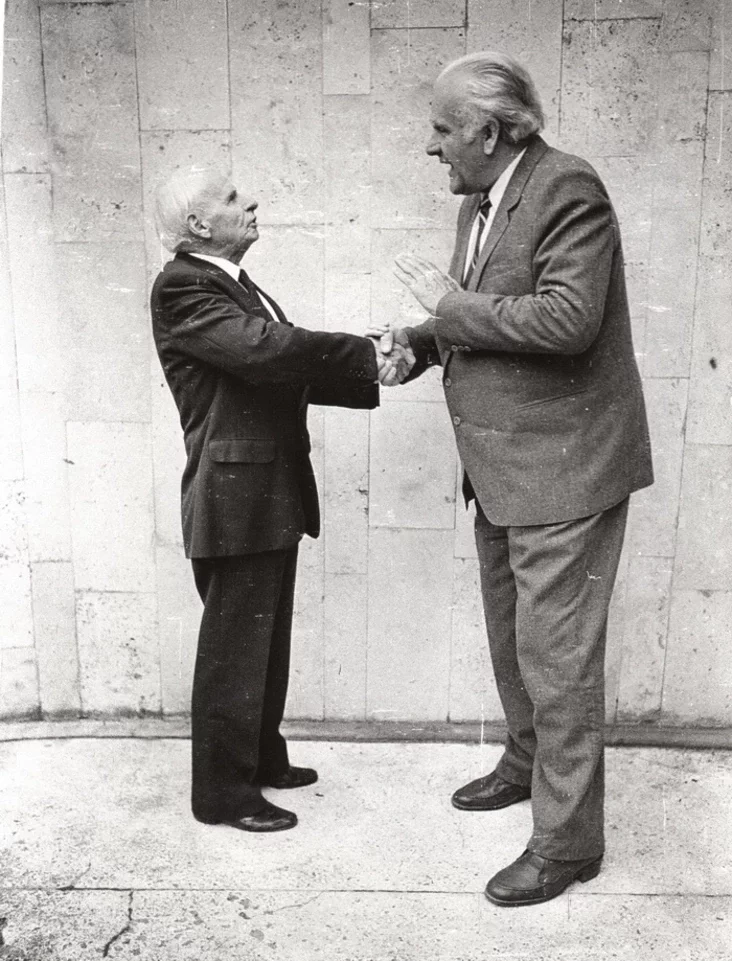
— I do, — he calmly replies. — And I've suffered from it all my life. One meter eighty-seven cm and an average of 105 kg. Can't find ready-made clothes or shoes. — Here he was interrupted by laughter and applause.
Or this.
"Answering one of the questions: which of my works do I like best, it just came out: 'War and Peace' — but then I remembered that I didn't write it. Laughed heartily with the listeners."
"Bought a ribbon for my typewriter in the shop, and an unfamiliar cheerful man asked:
— Going to write memorials?
About memoirs. He knows they're in fashion."
"At the end of '79, in Bratislava, I was introduced to a local correspondent, I think from 'Komsomolskaya Pravda,' being told that he was of Belarusian origin. The rather elderly comrade politely said, somewhat in a folksy manner, that he had read 'Paleskiya rabinzony' (Palesse Robinsons) and my other works back in school. I had to thank him with a smile."
Here Yanka Bryl is a subtle lyricist:
"Like a distant, barely audible, thrillingly long-awaited rumble, a harbinger of much-needed rain, I felt the restrained echo of an artistic word... If only it would come, return to me too!" (Here the internal rhyme simply tenses the text like a sail and moves it: thrillingly - awaited - harbinger - rain - felt...)
Here he is a dramatic chronicler of everyday life:
"The other day I was told that the moustached illegitimate son of our partisan and the farmstead aunt, who danced so beautifully at the village festival, has already been strangled in his Minsk apartment, most likely by friends who knew he had 'big money' for some purchase.
Two days later, an acquaintance had a funeral. Two young men invited his 14-year-old only daughter on a motorcycle; they hit something, joking, both alive, but she — died instantly. So much of such and worse, even without war, but only relatives, if they have any, feel the pain..."
Here he condemns himself for talkativeness:
"An old person should maintain decency and not blabber too much."
"One bore is not so bad, but imagine several of them on a long bench, sitting, puffing, and dully, importantly silent. You'd feel awkward being overly talkative and cheerful in such company."
Or, on the contrary, he wants to express himself:
— The day before yesterday I thought, yesterday I wrote down: a little bit to warm up with graphomania, and today I applied it in practice, rewriting two miniatures.
And immediately checks himself:
— I've talked so much in my lifetime that when I want to tell something, even if it's appropriate, I'm afraid: perhaps I've already told it?
— Notes, jottings, confessions... Save us, literary sense, from senile and feeble striptease, and even more so — from toothless, black malice.
Then whole arrays of names and surnames appear, and then suddenly:
"Yesterday I somehow saw more clearly the vulgar pettiness of literary everyday life, of which there is no small amount in my notes. Already now I need to weed out and sift what is not interesting, unnecessary to the imagined reader, and if one thinks more broadly — who will again find interesting, or even necessary, that fussing with many names, with sketches of people, who even when they existed with their excessive pretensions, had nothing real in their souls..."
The book contained both old and new, which was personally most useful to me. I was then starting to write my "Sechka" (Chopping), and I was interested in everything on that topic. And so I gleaned from Y. Bryl:
1) — the phrase "tamou nazad" (back then) — instead of the never-understood, truncated "tamou" (back/ago). (Two years *ago*... To whom?)
2) — **ukrau**, not skrau (stole, both mean 'stole', but 'ukrau' is more standard in some contexts).
3) — **u chas**, not padchas (in time, not during).
4) — inversions; "reproached an old friend for not visiting when often in Minsk, and the friend began to justify himself:
— Forgotsy, Vanečko, your domer noma (house number). In their village, one can hear Bieraluś for Bielaruś, Raulyn for Lauryn, Yaprova for Rap'yova..."
Such variations exist in our Polesian villages too.
5) — a young announcer: "because of this it cost to go there." A Radio Svaboda correspondent: then they dressed him in handcuffs. And then even better, so much so that one fears it won't be believed: he dressed his boots. It's all the same from one nadzyavać (to put on).
6) — "Belarusian writer, writing in Russian. This is exactly what the modern government seeks not only for our literature but for the entire nation."
7) — a bitter, 100% fulfilled prophecy:
"The 'Knihazbor' one-volume edition of Natallia Arsenneva. <...> And a disturbing thought, by the way, reading that even our 'Knihazbor', for all we know, will be reached by bosses — something like this daringly scathing volume won't be forgiven by publishers, it won't pass."
And yet, what touches most in the book are not so much people and their relationships, as nature and our smaller brethren. Here Y. Bryl achieves perfection. So much warmth, light, kindness, poetry, everything so poignantly touching, that one begins to understand why the author had such a happy literary fate, why he is read and reread and so often called a favorite writer, why his prose will never grow old, as long as our language exists.
Here about a dog:
"Old Šaryk, who came to us from the village behind the forest, who is already slow and deaf and barks reluctantly — he is very afraid of thunder. He presses himself, asks to come into the house, to people."
Here about a cat (now they would write **kotka**):
"A city stray cat with a modern maternity mentality. They made her a den downstairs, but she carries her four kittens one by one under the doors on the second floor, near which there are rugs. They take the little ones downstairs again, but she soon carries them back."
Nightingales.
"I went to our riverside grove with a swampy ditch to cut the sticks my wife asked for, and I stopped there immediately, and I wanted to laugh, raising my eyes to the still sparse foliage of the willows, to laugh joyfully at the duel, as Karatkevich would say, of two nightingales, so close and so passionately, in a brave or daring proximity to man."
(I would only remove the word *vyaršnyaku* here: firstly, it's regional-colloquial, secondly, simply superfluous — it distracts attention, forces one to stop and imagine this *vyaršnyak*.)
Swallows.
— Did you sit down to talk? — I ask three swallows on the white frame of the open window, stopping in the dewy grass.
And more.
"And one must understand how two swallows, sitting close on a wire, against a blue background, simply and happily keep silent."
Woodpeckers.
"In the heat, a woodpecker landed on the edge of a full barrel... Once from this bench I observed how... he stealthily pecked strawberries... first took about a dozen sips of water, and then decided to bathe."
"To the woodpecker, passing by his pine on a gloomy cold morning:
— Peck, peck! That's not helping starlings on the upper branches of our sweet cherries!"
"The woodpecker landed on the bed, stomped among the strawberry foliage, and with his hammer or chisel didn't peck, but playfully snatched — one after another — the first ripe berries. When I cheerfully shouted at him from under the linden tree, the speckled little thief didn't immediately understand what was happening. I had to bang my fist on the tabletop."
Frogs.
"Near the well is a kettle with water. It's so dry every day, every night, that frogs jump into that tall vessel, seeking salvation. Three mornings I splashed them out of the kettle, already weakened by the cold. Then I was lucky enough to see one sitting on the edge of the kettle, contentedly resting. One has to figure it out. Out of trouble."
Once I wrote about I. Ptashnikaŭ who pitied a viper. Bryl — a frog. Old Šamiakin cried watching winter on TV, and when asked what happened, he answered, wiping his eyes: "Just imagine what it's like for the Chukchi in their yarangas now!" This gift of being able to pity everything — both abstract and concrete, this unfashionable humanism, in my opinion, forms the basis of literature and is one of the main keys to its irrational, mystical essence.
5
If I were asked, as once in childhood, what this book is about, I would honestly answer:
— About everything. About everything in the world.
And so it was. Nevertheless, neither an essay, nor a review, nor even just a response came out. Something interfered, prevented it from unfolding. A wise thought, an apt detail, a brilliant aphorism, a talented sketch, bright and gloomy vignettes... Some were complete works in themselves, small masterpieces, others resembled drafts, outlines, as if raw material for a large, coherent novel. But all together still lacked some core, a thread on which all this could be strung. The same thing happened as once with the magazine selection. Collected in a book, under one cover, placed side by side, the works looked even more chaotic, disparate, than they once did in "Polymia." Artificially linked together, they resembled a colorful quilt, or as when driving quickly through a forest, and everything becomes a blur — a feeling of a kaleidoscope, an overly rapid change, and everything one after another, without warning, without preparation, without development or conclusion.
Very aptly, the author's words here slipped in:
"When I was 50 and 60 years old, I did something as if offhand, as if approximate."
Precisely approximate. And all the time there was a purely physical sensation of the absence of an editor, internal or real, alive, who would have compiled a novel-autobiography from this incredibly rich, but chaotically scattered material, or even better, a novel-pseudo-autobiography, the so-called novel-autofiction, which are now so in vogue. And the fact that such a work - large, integral - was desired to be written, many lines attest.
— Will there be time to regret most keenly that something you could and should have done, you didn't do? For example, to finish the integrity of the story of your life? (Highlighted by me. — A. F.)
I didn't know what to do. And then, in the magazine "Dziejasłoŭ," as if in reproach to me, implying "learn how to write," a thorough review by A. Sidarevich titled "Expected and Unexpected" appeared for this same book by Y. Bryl. Our venerable critic noted everything that needed to be noted, highlighted everything that didn't, arranged everything neatly. He explained that the leitmotif, the famous core, on which everything rests, which I was looking for and couldn't find — these are the manifestations of the poetry of life. Or, in other words, everything rests on one beautiful word, which can be found in Lastoŭski and Karatkevich, namely on **reverence**.
"Reverence for all manifestations of life — perhaps that's how one could define the main tonality of the book."
And I cooled off. As probably anyone in my place would, if they were about to write something, and then saw that it had already been written by someone else, and better than you.
6
It so happened that I returned to the book "With People and One-on-One" after a long eight years. The Master had long since left us, but my guilt towards him had not vanished. On the contrary, now I was obligated by his memory to finish what I had started, to bring it to fruition one way or another. If an essay, a review, or a response doesn't work out, then at least write a Word (and it's a pity that such a genre as Word has disappeared).
This time, the core, the driving force of my work was to be a thesis borrowed from A. Sidarevich. Y. Bryl's book is not creative chaos, not variegation, not a kaleidoscope, not a blur in the eyes, but — poetry, an ode and praise to the most diverse manifestations of life. Or, perhaps: the system of his writing, style, and presentation of material is in the absence of a system. He understands this himself and seems to be proud of it, citing Tolstoy as proof.

"The book is written on Tolstoy's principle: whatever is remembered most vividly, without thinking about literary canons, freely in digressions and details..."
I again began a chronological reading. Trying to skip what my eyes had previously dwelled on and what I had excerpted. And immediately a completely different text descended upon me. Not poetry, but the most prosaic prose. If the first part could conditionally be called optimistic, then the second was unequivocally, entirely pessimistic.
"...Today my writer's title cannot be taken away from me, what I have done is done, but now I keenly felt that painful fear again, which visited me at the very beginning of youth, fear that without literature, without my participation in it, I am nothing... Why did I feel so bitter and scared today, as if I have nothing again, not even hope, as in the beginning?"
"For the occasional needed solace from excessive self-reproach, let us recall human complexity and the great ones from whom we learn."
"...The light of your flashlight in the hidden quiet searches and finds your long-familiar, known sins, lingers on one or another of them, so that you again bite, chew yourself, though not for the first time, but with a fresh pain of helplessness in the despair of acknowledging guilt..."
"If some malicious intellectual told me that I write little and poorly, I could answer: — I know this myself... with the difference that it is painful to me."
Some excessively harsh confessionalism, quite uncharacteristic of such a cheerful author with a wise twinkle in his eye. Biting oneself, chewing oneself, fresh pain, painful... Acknowledging guilt... Self-reproach... But where did this self-reproach come from?
With an almost saintly life, with such spiritual, and physical, purity (e.g., Yanka Bryl, by his own admission, "never drank alone in his life")? With such an incredible literary career — from the Stalin Prize to the Lenin Prize and to People's Writer, and if he had lived a little longer, I have no doubt, even the Nobel. It would seem, live, write, and rejoice.
But no. The author continues to torment himself and us, the readers.
"Posthumous Complete Works. Is it to punish my memory with proof of how much unnecessary and harmful I have written?"
"Little and not with full effort has been done by me, and better and more will not be done anymore."
From R. Rozhdestvensky's notebook:
"Buddhist hell. The most terrible execution, the most awful punishment: a person's own life is replayed many times in a row, endlessly repeating pages of missed opportunities." "To some extent, this is familiar to me too," Ivan Antonovich admits.
Oh, these great ones! It has long been observed, and not by me, that everything in them is great: talent, sins, pangs of conscience... But start to delve — and it will turn out that 50 years ago he didn't give up his seat on transport. He offended a girl, a desk neighbor at school — pulled her ribbon. And now there are pangs of world scale. Sleepless nights. Self-reproach. In our case, also with a refrain — too little was written, poorly written, not as he wanted and could have.
"I became a professional writer thanks to my entry into **Soviet** reality, sometimes out of naive sincerity, sometimes out of patriotic duty, learning to become, to be a **Soviet** writer, because I couldn't be otherwise."
"Sometimes in my behavior there is a bit, or even more than a bit, of former **pro-Soviet** fear and caution, including in my notes. I catch myself at this, reproach myself..."
"It was sharply felt that my somewhat autobiographical work, first and foremost 'Birds and Nests,' should have been written with complete unreserved sincerity, which I did not do to the fullest, but with that caution, circumspection, that fear, which also conditioned my **socialist realism**..."
So that's what it's all about, it turns out! This is what hindered full writing; this is what creative suffering was connected with — the inability to get rid of Sovietness, to untangle oneself from the chains of socialist realism. All his life he believed, wanted to become a Soviet writer, couldn't imagine otherwise, became one — and then, suddenly, perestroika, glasnost, he had to retrain...
I remember, I think it was 1988. The hall of the House of Writers was packed. People stood in the aisles and foyer. On stage, Y. Bryl alone at a small table, piled with notes. He unfolded them, read them aloud, and answered with satisfaction, though briefly. One of them was – "What is socialist realism?"
— Once Gorky was asked the same question. To which he replied: "The devil knows! (The hall burst into laughter and applause.) It seems it's about being well written and for Soviet power."
Further, I remember, Ivan Antonovich added that, as it were, there is good literature and bad, and no -isms, — approximately so. He said this good-naturedly, with a smile, and it was clear that socialist realism meant very little to him. An atmosphere of love and respect for the famous writer prevailed in the hall; there were many young people.
It turns out that already in 1988, socialist realism was completely harmless and meant little to the author. I think in 2003, when the book "With People and One-on-One" was published — even less. I will be bold enough to say: socialist realism meant little even in the distant years of writing "Birds and Nests." It was precisely then, during the seemingly total dominance of socialist realism, that masterpieces by I. Mialiež, M. Stralcoŭ, V. Bykaŭ, and finally, all the works without exception of our literary idol U. Karatkievič were created... And conversely, when the long-awaited freedom from censorship arrived, how many literary geniuses were born who, by theory, should have sprung up like mushrooms after rain?
It seems to me that all these talks about socialist realism, about Sovietness — yes, it's throwing dust in the readers' eyes. Not a very convincing self-justification. I am somehow convinced that Y. Bryl's "self-reproach" has not so much political, social reasons, as creative ones. And if it comes to that, his weak point is not in socialist realism, but in his beloved short form, that famous small "diary" prose, which with its deceptive lightness has misled more than one writer. By the way, "Birds and Nests," by and large, also resembles a series of interconnected short episodes; the novelistic-epic breath, for example, of "People in the Marsh," is not felt there.
So, on the one hand — an illusory lightness: look out the window and write what you see; on the other hand — overly rigid frameworks of short prose, a confessional style, the demand for "truth and only truth" — all this impoverishes the writer, limits him no worse than any -isms. Not to mention the ingratitude of the small form — it takes too much soul and time and gives too little in return. You write and write, look back — there's almost nothing there.

7
And another interesting point. It clearly shows how so-called truth in fiction can do more harm than good to a work. Paradoxically, the most truthful things somehow turn out to be invented, and conversely, those drawn from life often look like pale contrivances. Perhaps that is why many writers in their old age begin to, as it were, be ashamed of their earlier "life-based" plots and make excuses for them. For example, Ivan Alekseevich (Bunin) in his old age ardently insisted that he invented all his works, rather than taking them from life. Something similar happens with Ivan Antonovich (Bryl).
"When I became a dacha-dweller, it turned out to be very difficult to find a stove-maker. One was recommended in a not-too-distant village. When he was told who needed him, the amateur stove-maker almost exclaimed:
— Ah, Bryl! Our main liar!
He refused to build the stove and oven..."
This is not the end of the sketch. It's interesting how Ivan Antonovich reacted to such, it would seem, not entirely honorable title. "Somehow at a jubilee family feast, a full 19 years later, we cheerfully recalled that stove-maker, with his 'main liar'."
The unexpectedly precise date, exactly 19, though it would have been simpler to round to 20, shows that Ivan Antonovich recalled the sharp-tongued stove-maker more than once, and recalled him with pleasure, not without pride.
Another similar entry:
"Vasil Zuyonak, to whom I signed my library volume, even approvingly surprised me at our next meeting:
— And how much you remembered!
I didn't have the courage to answer: and how much fiction, my own, I added to the heroes and situations. Because it is there, and not a little, and in this lies my secret joy: to hit the right note, to invent what is appropriate." (Highlighted by me. — A. F.)
If I had read something like that from another writer, I wouldn't have paid attention, I would have taken it for literary coquetry. But Bryl accustomed us to believe him unconditionally. And therefore his confession even somewhat embarrasses. It makes one think. Some things begin to seem not so unambiguous. Questions arise on their own. For example, his strange instruction-bequest: to open the manuscripts of recent years only five years after his death. Why after five? What can change in five years? Or one is tempted to look differently at the confusion in his biographies. According to one, in 1941, Yanka Bryl escaped from German captivity, returned to Belarus, and joined the Soviet partisan movement. According to another, from the words of Belarusian figure A. Adamovich, Yanka Bryl did not escape from captivity, but was released for loyalty, lived for some time in occupied Minsk, worked in the historical museum, and was published in "Belarusian Newspaper."
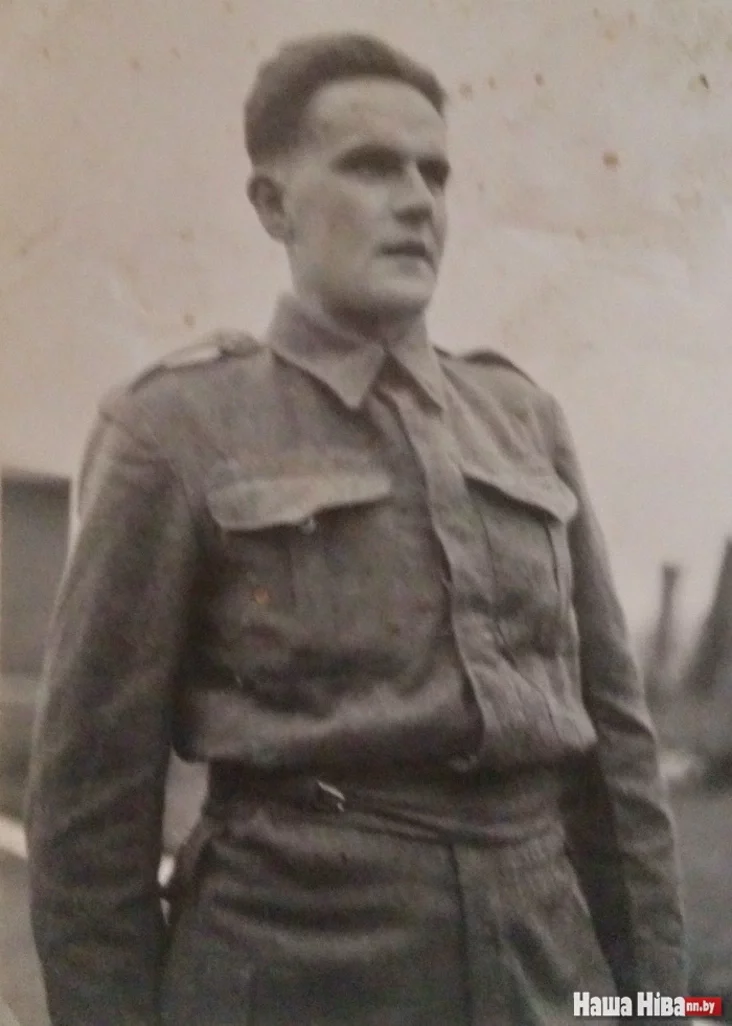
For any other Soviet writer, not only similar facts but even rumors of such facts would have been enough to at least ruin their life, or even cost them their life. Yanka Bryl, to our Belarusian fortune, was born with a silver spoon and came out dry. He himself never anywhere, neither in writing nor verbally, denied or confirmed this. And it is understandable. After all, no writer has ever been harmed by a certain personal mystery, mysticism, secret — if not real, then at least invented — where outsiders are forbidden entry. It is entirely possible that the testament to publish manuscripts five years after his death is also a small trick, an innocent writer's ploy to warm up readers' interest in future publications.
8
Even then, I couldn't manage my work. I couldn't write anything coherent. Again, I had to put the book aside for a long time.
Years passed. The book lay on the shelf. From time to time I would pick it up, leaf through it, reread some of my favorite pages, then put it back. I had long since reconciled myself to the fact that it wouldn't yield to me, I had given up the desire to write anything about it. It had become for me simply a pleasant memory, almost a symbol, like a dried flower from a herbarium.
So, not a few, but 23 years passed. When I acquired the book and began grappling with it, I was just over 40, and now I am over 60. One day, I was once again reviewing, barely deciphering, my old, faded pencil marks and underlines. And suddenly, out of editorial-proofreading habit, I began to notice that the underlined sentences containing the word **milk**, besides being frequently repeated, also appeared with a certain periodicity — approximately once every ten pages.
"Having brought milk from the village...", "Here I brought morning milk from the village...", "The other day, when I went for milk...", "On the bench by the house wall, as always in the morning, jars of fresh milk gleam...", "Apart from trips for milk, twice already I walked in the evening for a stroll...", "I come to the village for milk daily at seven past...", "In the morning I walked from the village with milk...", "Having read early (B. Akudzhava's short story, — A. F.) before leaving for the village for milk, I felt a prayerfully pure mood", "One of the dacha neighbors, driving from the village, gives me a ride with milk from the village...", "Departure day. I went for milk earlier than usual...", "With a dacha neighbor, for a kilometer and a half of daily unhurried walk from the village with milk...", "And what, returning with milk, we stopped again...", "The dog... in no way gives in to urging to come to the bench where I sat with milk, under my hand..."
And so, as a refrain — no less than 30 mentions on 300 pages. Throughout almost 10 years covered by the book. Every summer, every morning, in any weather, a person walks from the dacha to the village for milk, there and back. It's clear that this is not just a trip, it's a whole journey. Unexpected encounters, memories, impressions, thoughts... From each trip, a sketch, a vignette, a miniature...
In one place it's explicitly stated — that's when Ivan Antonovich was telling his wife how on a cool, only six-degree, morning "a black *funny* kitten cleverly settled down next to a warm jar of milk," to which his wife smiled, as if slightly mockingly:
"Oh, there'll be a miniature!..."
And when I imagined all this, suddenly something in my head seemed to flip. So this is... the core, on which everything rests! These trips for milk, journeys to the village and back, are the plot! The very one I had been searching for and wanting. So what, it turns out... a novel? Divided by years — chapters, and linked by the plot — trips for milk?
It was so obvious that I couldn't understand one thing: why hadn't I noticed it before? Was it, as the Belarusian proverb says, that I hadn't grown up yet? "You'll grow up — you'll understand everything," adults taught in childhood. And the book, it turns out, patiently awaited my maturation and understanding.
Literary critics advise rereading classics every ten years: the text is the same, but the reader changes. I did approximately that. The first time, the optimistic, cheerful, lyrical-poetic part caught my eye; the second — the pessimistic, dramatic part, gathered from reflections, torments, anxieties; on the third — I felt the integrity, and the core, and the plot, and the novel's framework...
But is that really not all? Will another discovery be found with each new rereading? What awaits me in the next 8-10 years?...
We'll live and see.
Reprinted from the almanac "Literary Belarus", July 2026


Comments
Трэба яшчэ і Андрэя Федарэнку прачытаць.
Дарэчы, Янка Брыль для мяне з дзяцінства стаіць адасоблена сярод іншых пісьменнікаў Беларусі.