


The 18th-century Italian garden in Mir Castle has been restored. It will open in September
The second phase of global reconstruction at Mir Castle is nearing completion: the restored Italian garden will welcome its first visitors in September 2026. Times.by found out when the reconstruction of the English landscape park will begin, what is planned to open in the palace of the last owners of Mir Castle, and how they intend to establish a railway connection by rebuilding the narrow-gauge railway.
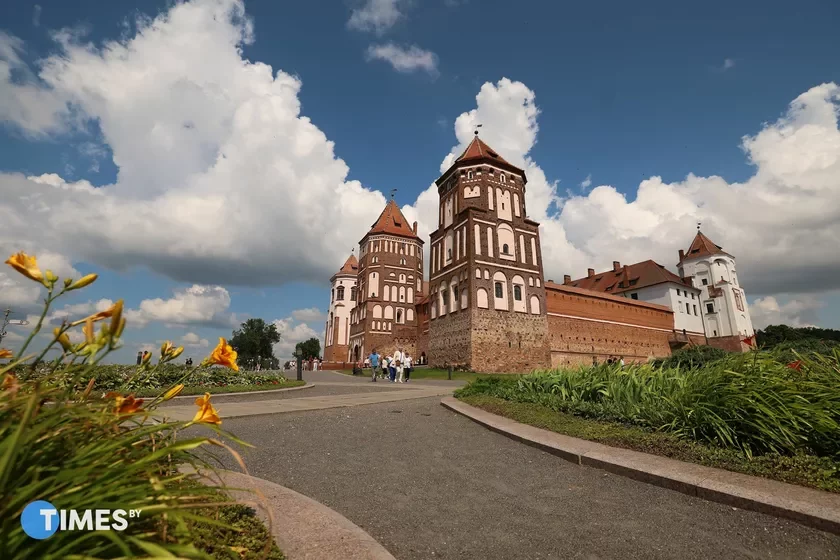
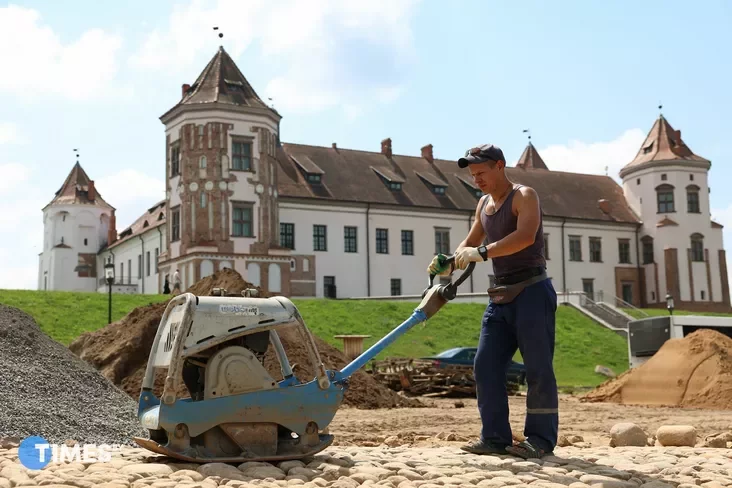
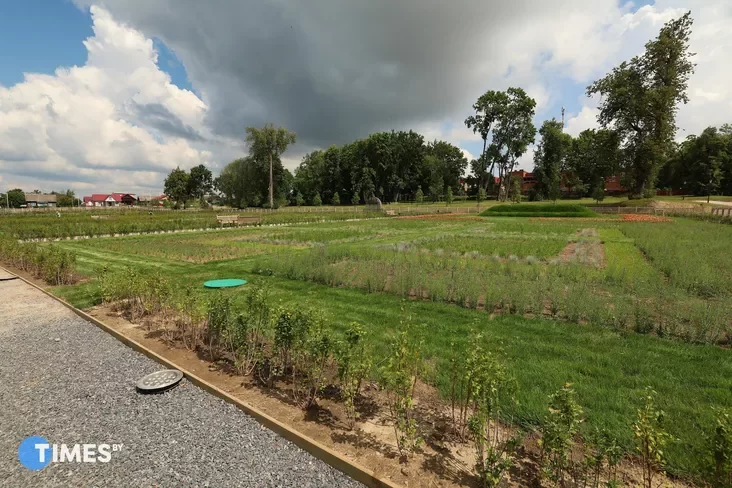
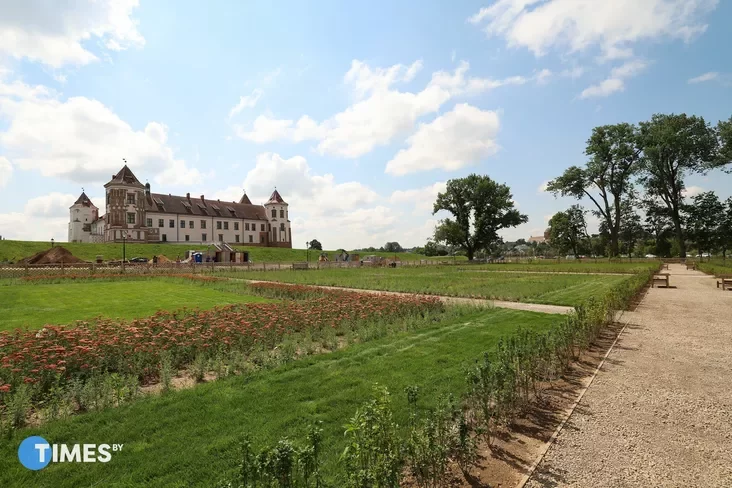
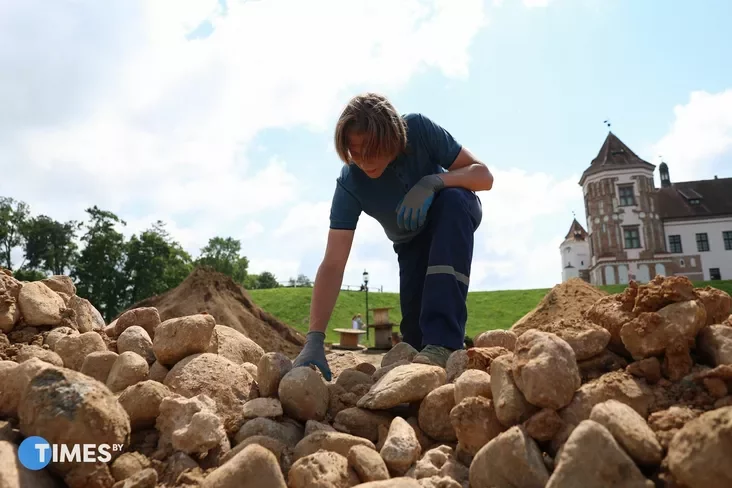
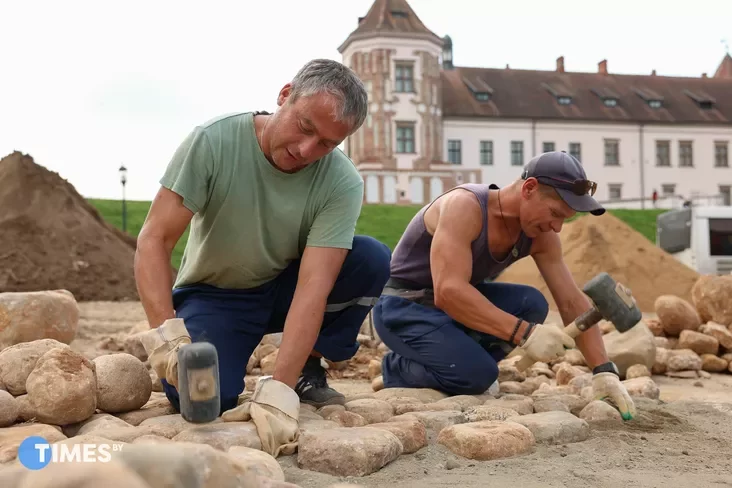
Currently, on the approaches to the restored garden, dust rises in columns — workers are laying paving stones that lead to the future central alley. The distinct geometry of the garden is already clearly visible: 95% of plants, shrubs, and trees have been planted — both inside and out.
The entire territory of the museum complex covers 26 hectares, of which the English landscape park occupies 16 hectares and the Italian garden 5.7 hectares. According to preserved records, it was laid out in the 17th century under Karol Stanisław Radziwiłł the Just.

Photo: Pavel Arlouski, Times.by
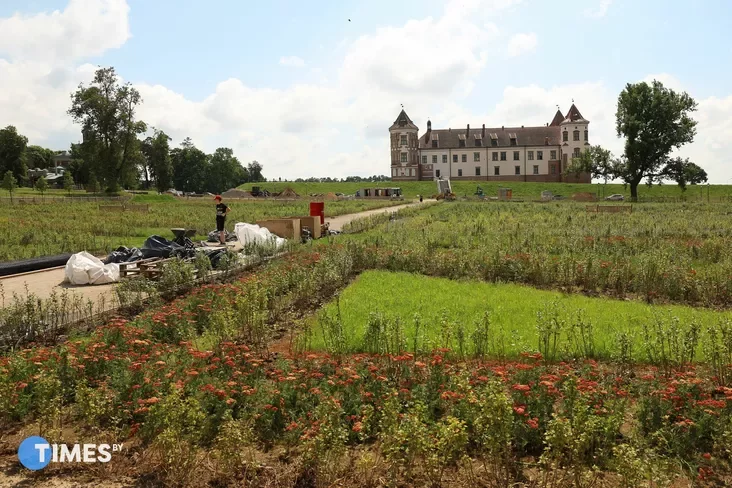
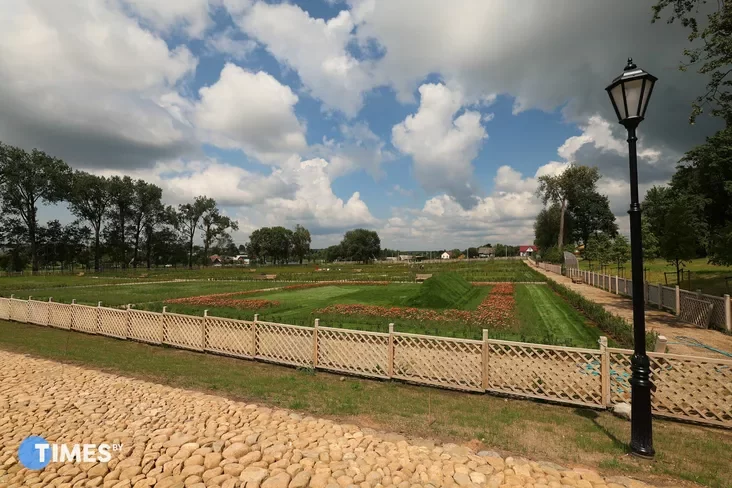
“The first mentions date back to 1692,” clarifies Olga Novitskaya, Deputy Director for Scientific and Educational Work. “Seven years later, the amount paid to masons for the bridge connecting the garden with the palace part was recorded. But a complete inventory with a description of the layout and plantings, which was taken as the basis for the reconstruction, dates to 1746.”
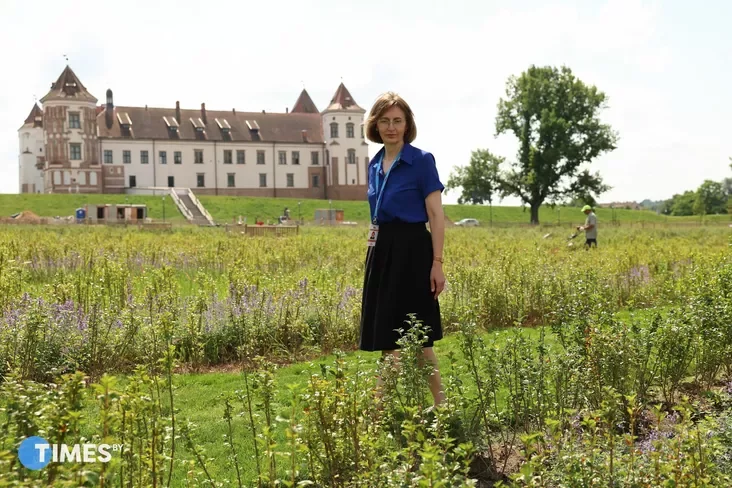
Paths and hedges divided the Italian garden into 25 squares, where fruit trees, berry bushes, medicinal herbs, and vegetables grew. Some of them lay fallow to allow the soil to rest.
“In winter, the orangery became the center of attention for guests,” our interlocutor clarifies. “According to the 1778 inventory, there were about 40 orange and over 150 lemon trees, as well as myrtle, cypress, laurel, boxwood, and fig trees.”
The restored fragment is more modest in area: 18 squares with plantings, without an orangery, gardener's house, or utility buildings. Roads built to Stolbtsy in the 19th and 20th centuries significantly reduced the garden's area.
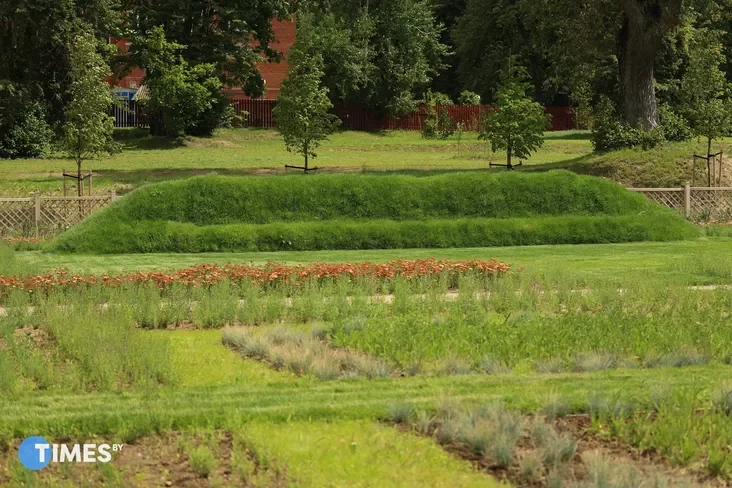
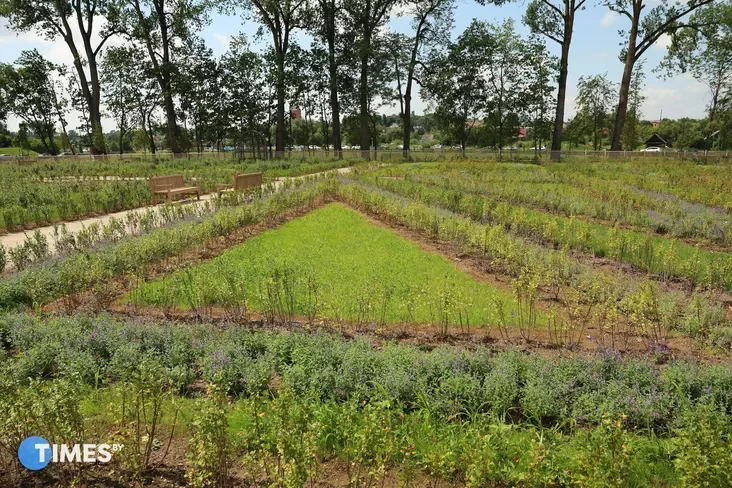
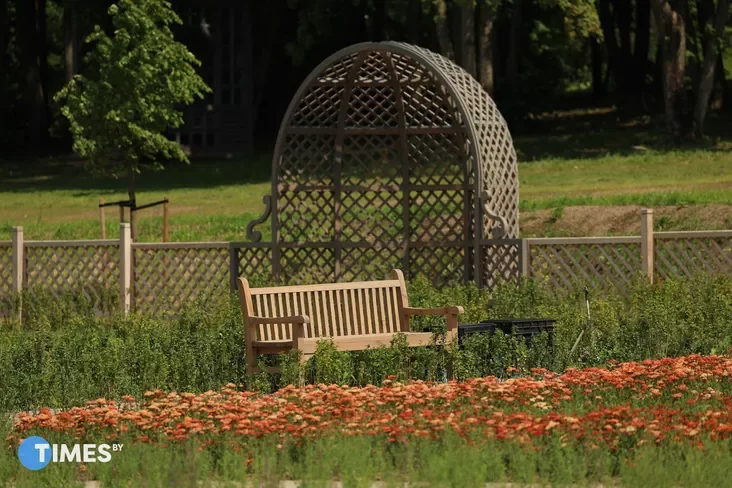
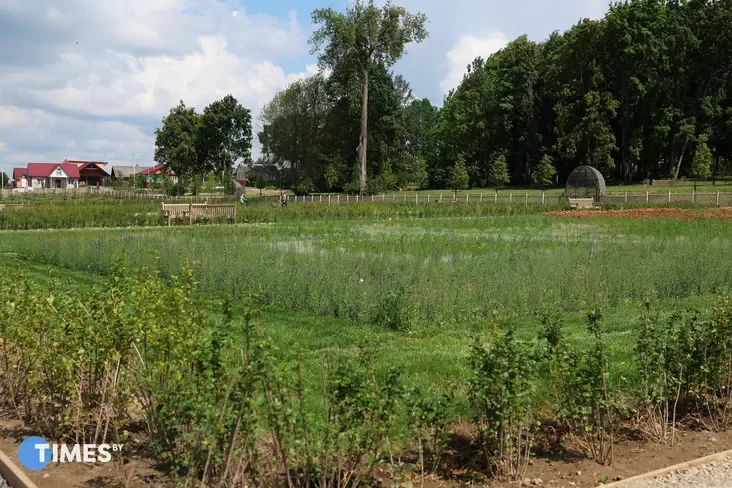
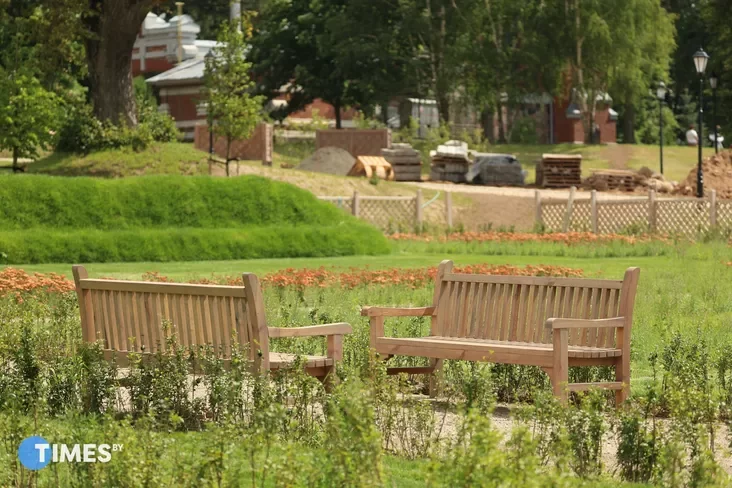
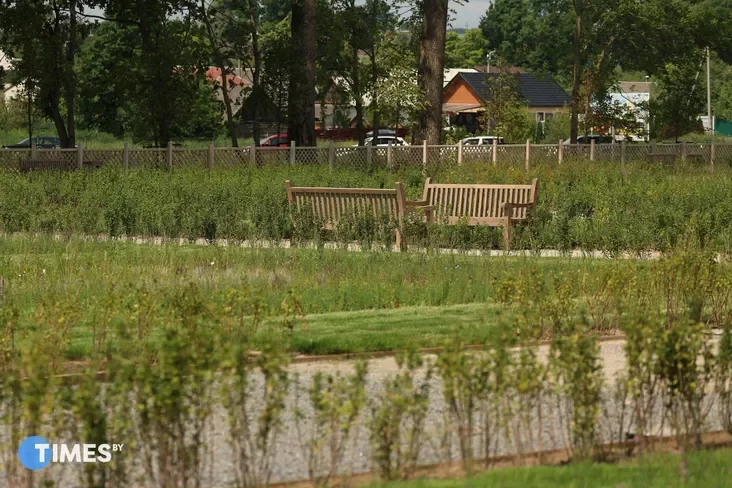
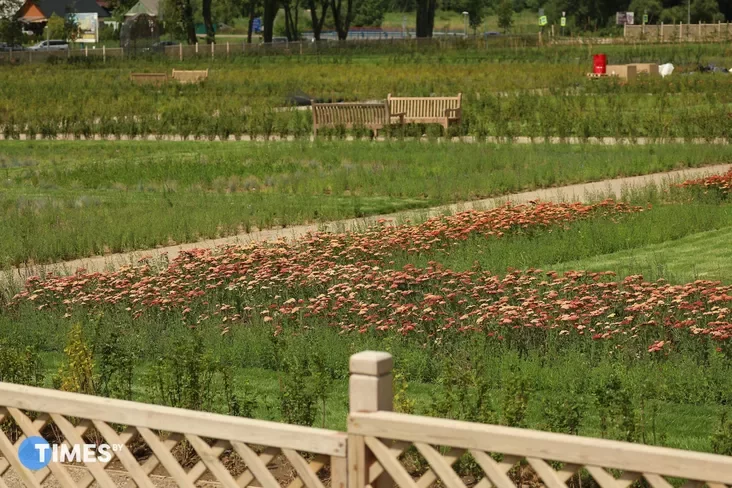
Lime trees were planted along the outer perimeter. Slightly further away are larches, hornbeams, and maples. In the central area of the garden, a hedge of currants and gooseberries forms squares, inside which grow blue flax flowers, purple hyssop, white sage, and red yarrow. Several squares are allocated for apple and cherry trees.
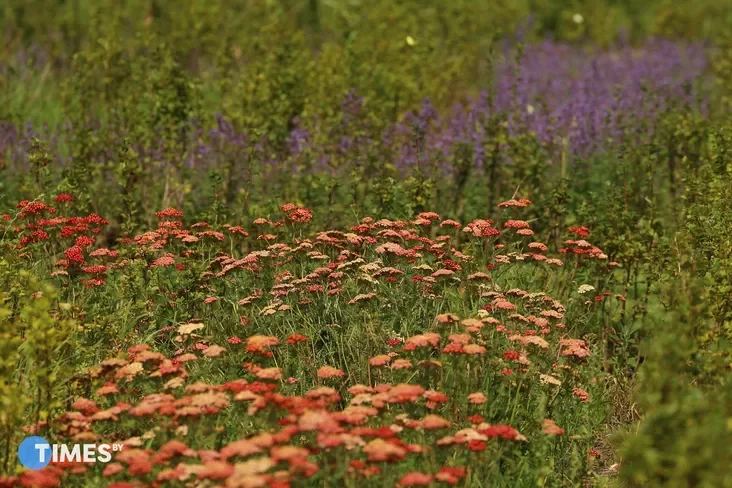
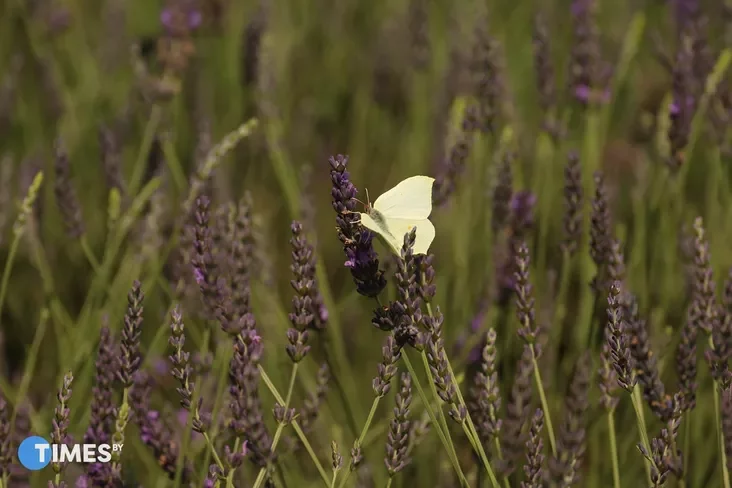

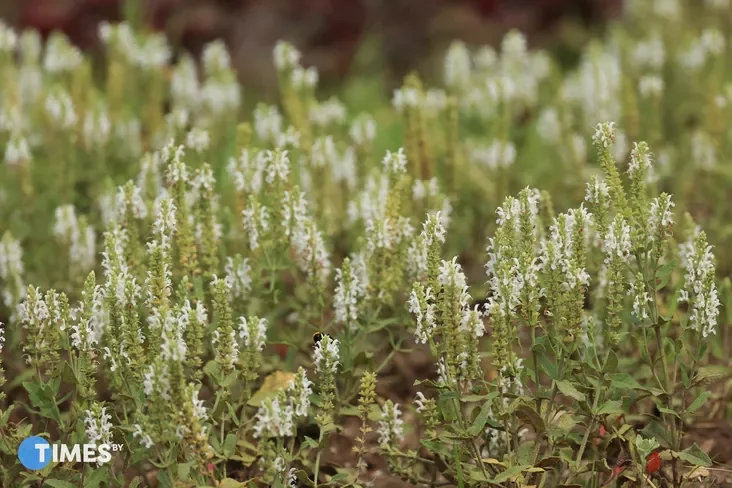

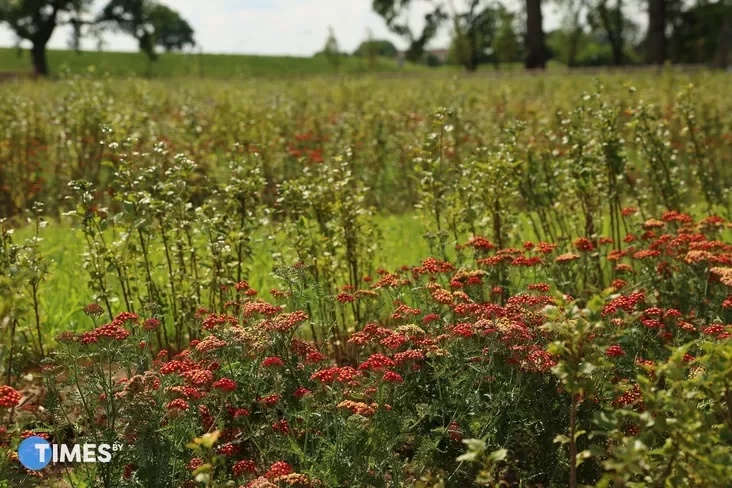
The plants chosen are unpretentious: they thrive both in dry summers and harsh winters. More than 50% were planted a year ago, so their frost resistance has been tested.
The full beauty can be appreciated in about five years: both trees and bushes need time to reach their full potential.
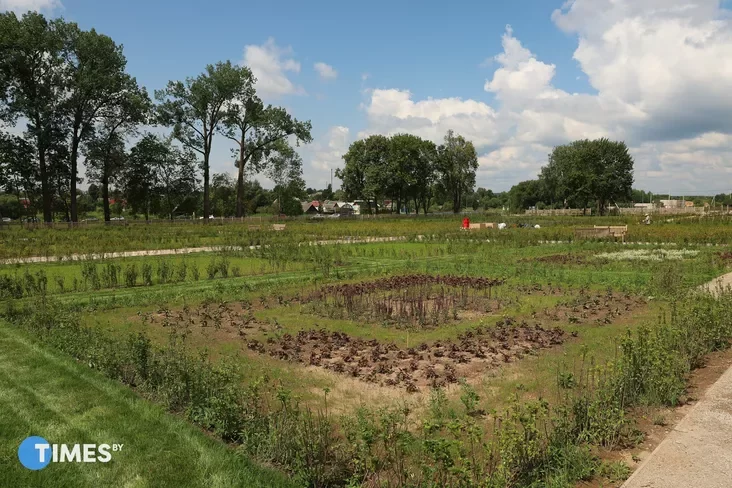
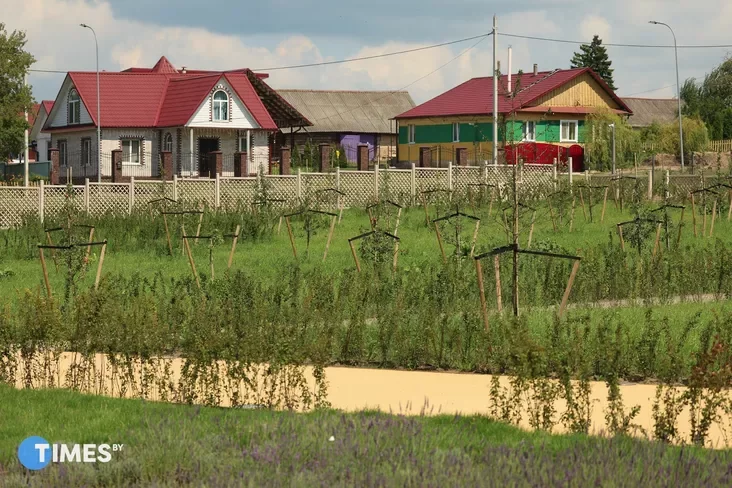

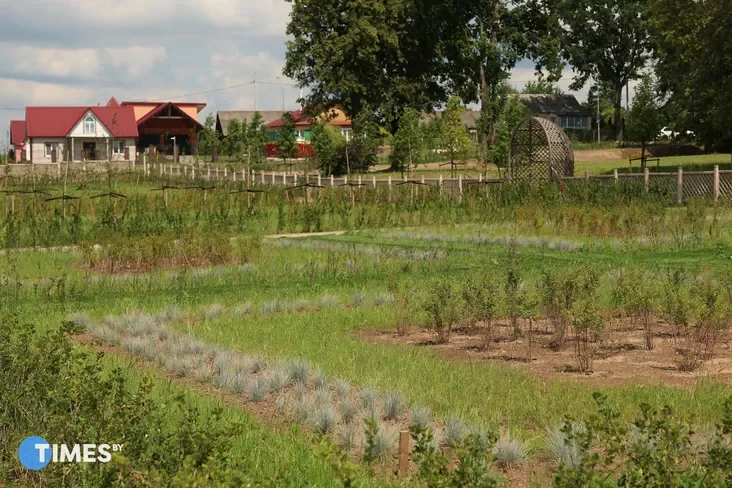
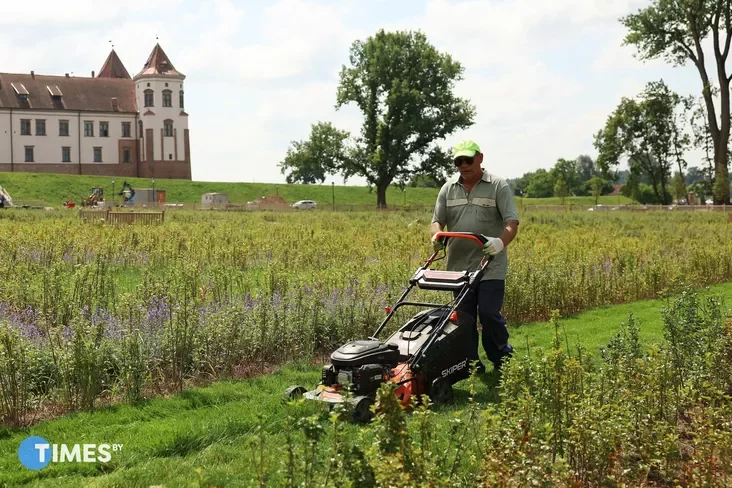
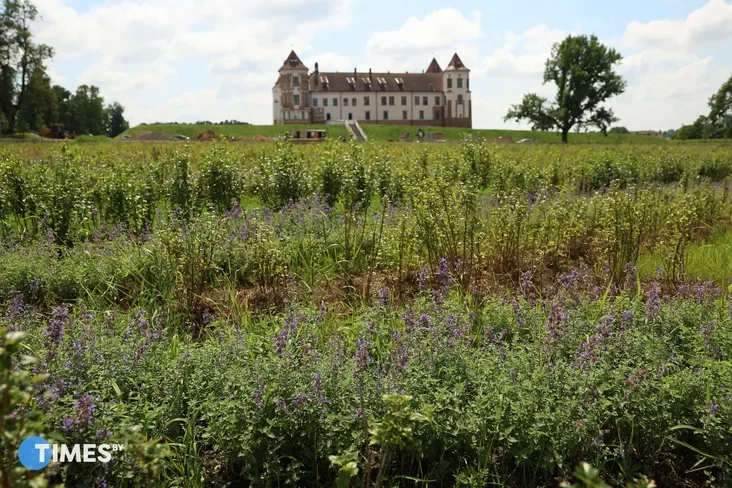
The paving stones lead from the bridge to the main garden gates.
“The paving is currently in progress — we lay about 15 meters a day, and 12 people are engaged in this — six masters and six students assisting — it's labor-intensive work,” comments Sergey Belarusov, foreman of BU-145. “We lay the stones on a special screed. The main difficulty is that they only look even and aligned on paper in the project. In reality, each stone has to be manually selected and laid.”
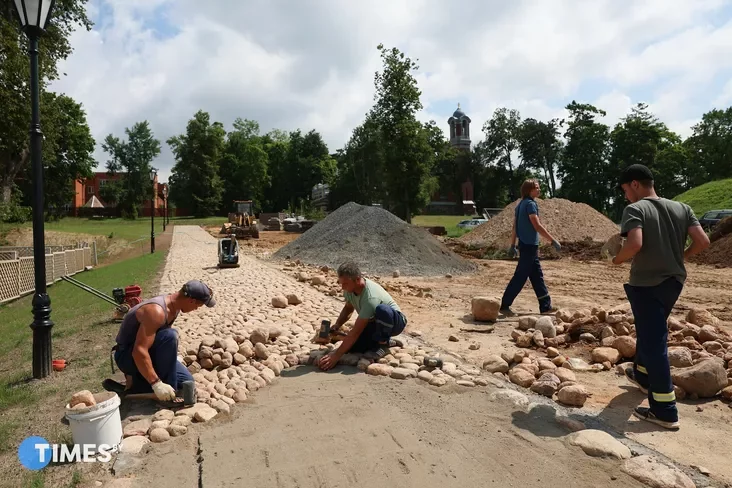

Another difficult stage of work, according to the interlocutor, is laying rolled lawn. Emerald grass not only fills the space between the plant squares but also covers some paths that are not covered with sand mixture.
The list of architectural objects that will diversify the landscape includes 31 benches, four gazebos that will be entwined with plants. The lighting in the central park area consists of round in-ground recessed luminaires, and around the perimeter beyond the fence, there are lanterns on wrought-iron bent legs.
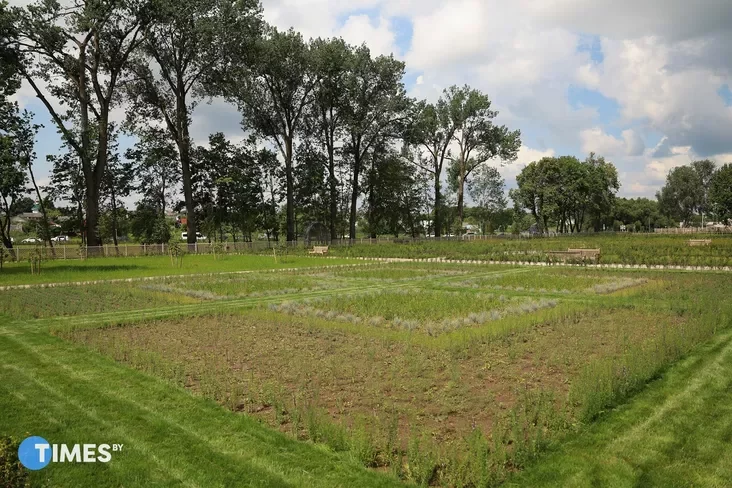
The restoration of the Italian garden is the second phase of the Mir Castle reconstruction; the third is the English landscape park. Work is expected to begin in 2027. The main scope of work is the restoration of the bridge across the stream, which will complete the walking route around the man-made lake.
Olga Novitskaya clarifies: there was previously a wooden bridge here. The new one will be made of reinforced concrete and wider. Whether it will be straight or arched with a slight rise is still being coordinated.
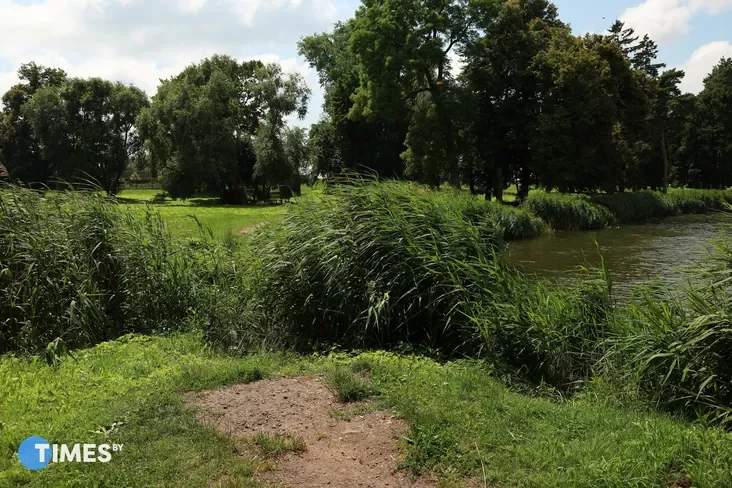
The green spaces in the park will not undergo global changes. Especially since the main tree plantings were done during the first stage of the complex's reconstruction and in subsequent years.
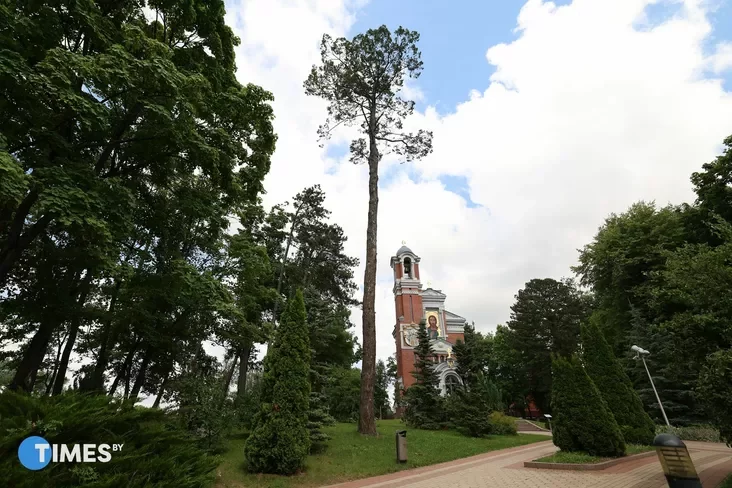
“It's gratifying that some of the original trees have survived to this day and look majestic, attracting attention from afar,” says Olga Novitskaya. “A Douglas fir soars upwards in front of the church entrance, a larch on the left, and a black pine reliably guards the entrance to the tomb.”
The pine alley on the south side, which was part of the walking route around the lake from the palace of the last owners to the castle, has also been preserved.
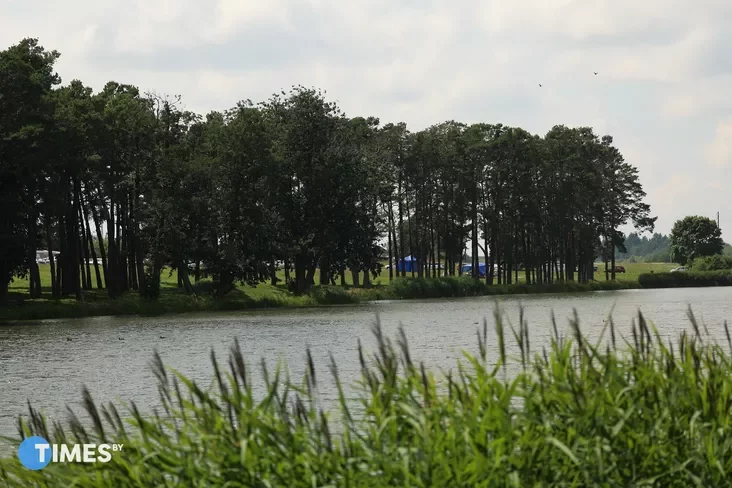
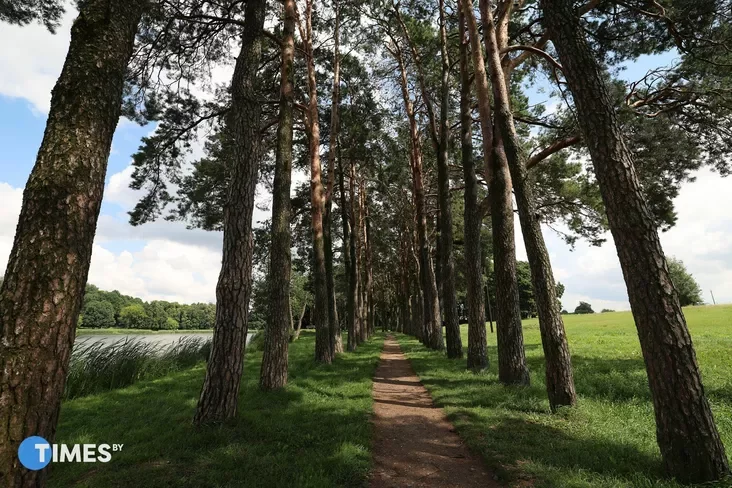
“Unfortunately, time did not spare the Fraser fir, Siberian fir, Engelmann spruce, Siberian stone pine, and many other trees that were used in the plantings of the English landscape park. Some of them froze in the harsh winter of 1939-1940 or were cut down during the war and in the post-war period,” adds the interlocutor.
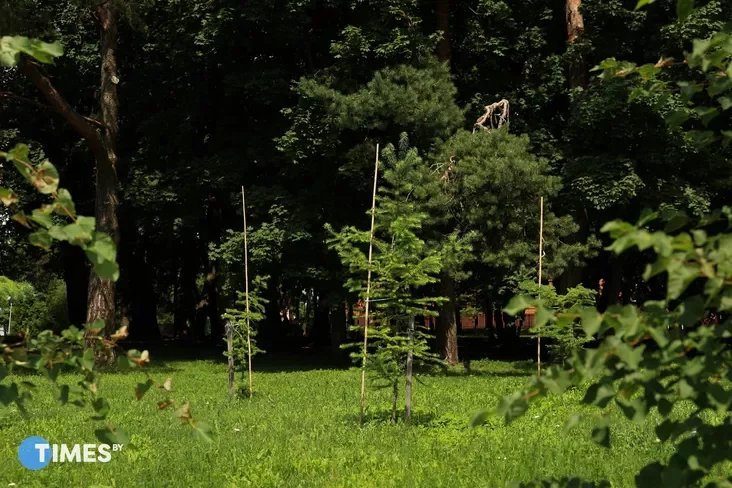
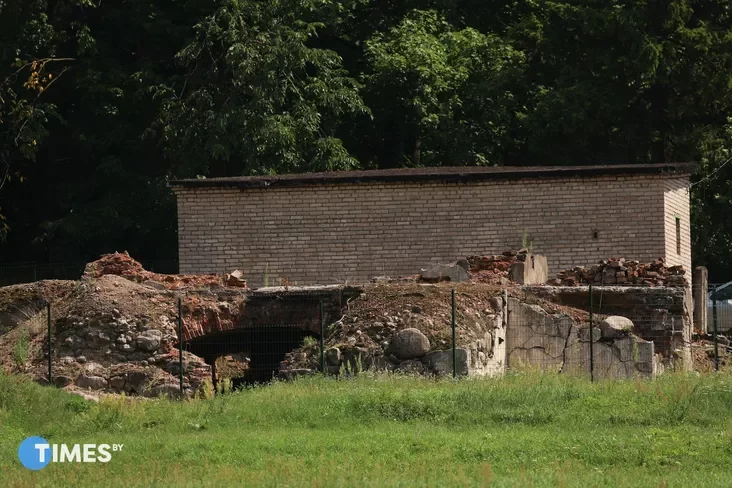
The restoration of the Svyatopolk-Mirski Palace is the fourth phase of the reconstruction. Only the foundation and a wing have survived to this day.
“The front line of World War I, which passed nearby, left the palace no chance — it was burned down in 1917,” says Olga Novitskaya. “A photograph exists showing the palace on the third day after the fire. And only in the middle of the 20th century was the building completely dismantled.”
The internal layout of the rooms and their furnishings, according to her, are known thanks to the memoirs of Maria Svyatopolk-Mirskaya, daughter-in-law of Prince Nikolai Svyatopolk-Mirski. On the first floor there was a corridor system with four rooms with all amenities, a large dining room, a billiard room (which also served as a library), and a small living room. On the second floor — a large living room, bedrooms, the prince's study, and next to it, his bedroom.
The restored palace is planned to house a hotel with 40 rooms in the style of the 1920s-1930s.
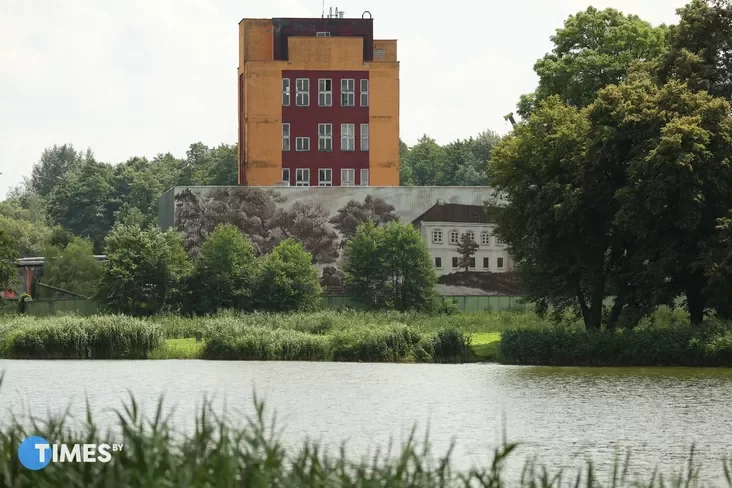
Project documentation for this stage is not yet available. But tourists can already see what the palace looked like: a mural depicting it is located on one of the buildings of the distillery.
The management of the castle complex does not plan to limit itself to the accountable territory alone. One of the most ambitious plans is to restore railway connections.
“During World War I, there was a narrow-gauge railway here – 12 kilometers to Haradzeya,” says Alexander Loika, the museum director. “For now, these are plans at the dream level: we have voiced them, but there is no concrete decision yet. We hope that the Belarusian Railway will support this initiative, and investors will be found. Imagine how great it would be: from Minsk to Haradzeya by electric train, and then we transfer to an authentic steam locomotive and begin a colorful journey through time.”
The restoration of railway connections is needed not only for local charm. The interlocutor does not hide: logistics are difficult. One can get there either by private car or by a tour agency bus.
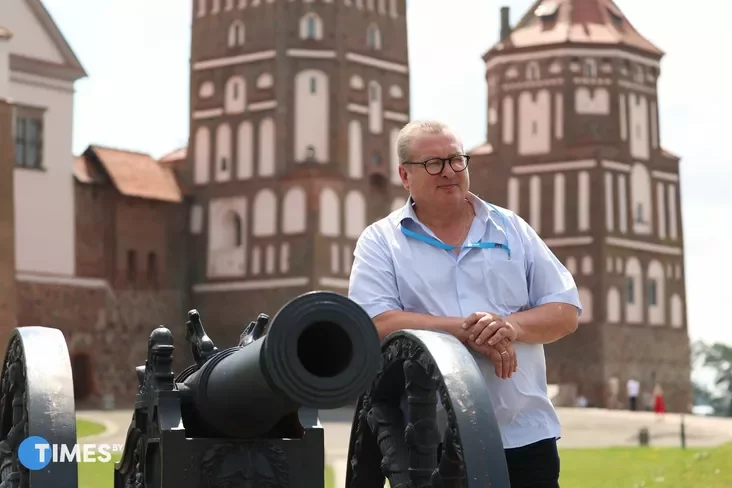
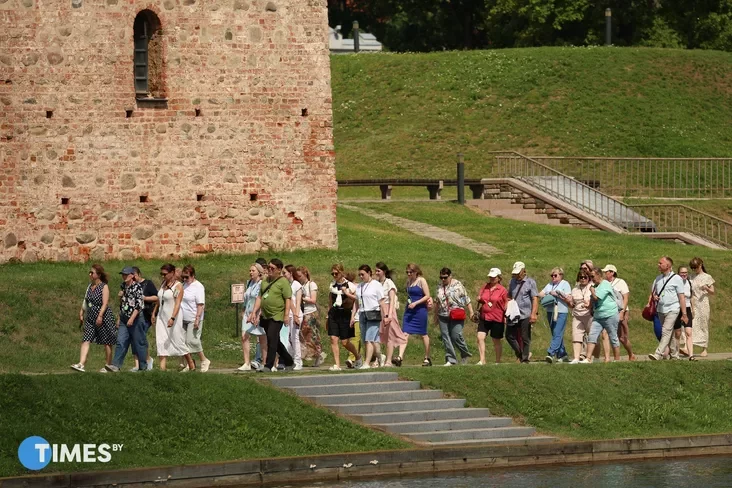
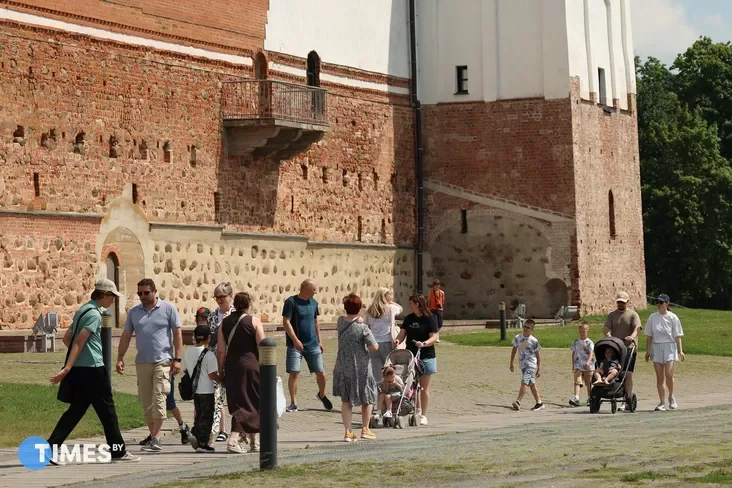
In 2025, Mir Castle welcomed more than 450,000 guests – and these are only those who bought a ticket and can be physically counted.
“And there are thousands of other people who come to stroll through the park, admire the castle's architecture,” notes Alexander Loika. “And we are grateful to everyone who votes with their ruble by buying a ticket. The funds received go not only to replenish the collections – today the number of artifacts exceeds 5,000. Many restoration works are also carried out using extra-budgetary funds. In essence, buying a ticket is an investment in the future, so that this guest can come back for impressions and history in a few years.”

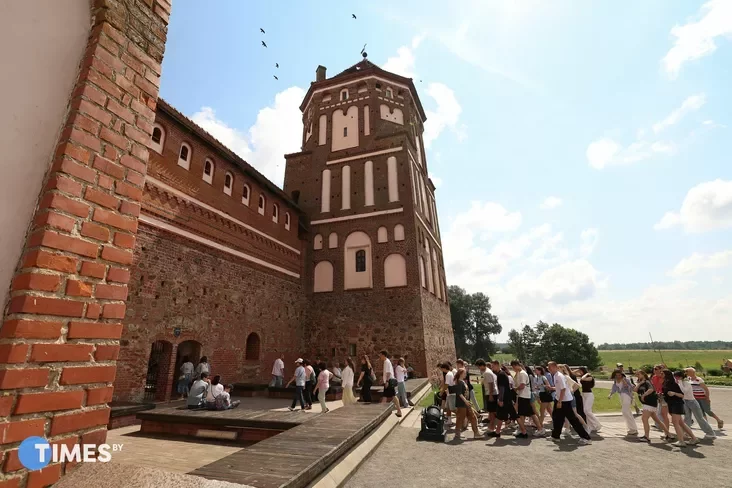

In November 2026, a tower clock is planned to be installed on the Entrance Tower from the inner courtyard side.
And next year, Mir Castle celebrates its 500th anniversary. The actual birthday is April 8, but large-scale festivities are scheduled for June 4-6 under the general name "Mir Castle – the embodiment of Belarusian history". Performances by historical reconstruction clubs, craft trade rows, a rich concert program, and fireworks are planned.





Comments