


Visitors noticed a large flock of storks at Lesnoye Cemetery in Minsk district. More than thirty birds gathered on the asphalt and lawns near the parking lot. A video of the unusual scene appeared on social media and quickly attracted the attention of users, writes Blizko.by.
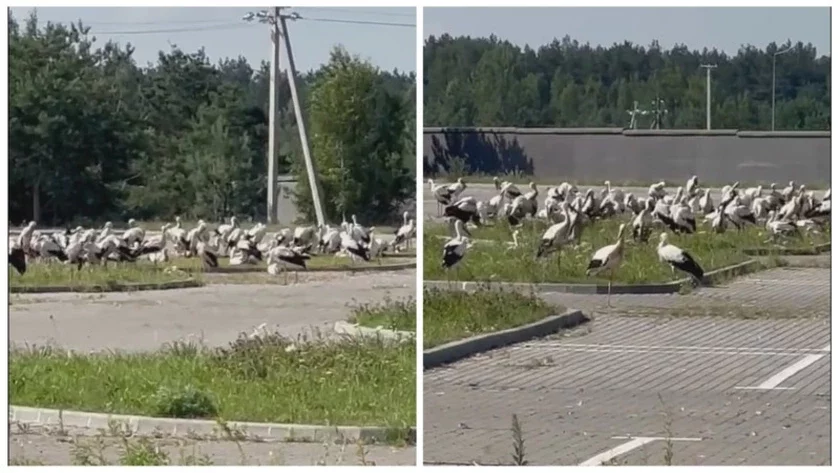
The author of the publication jokingly wondered why the storks chose this particular place for their gathering. In the comments, users also joked, offering various theories – from a "symposium" and a "tourist rally" to preparation for migration to warmer climes.
Ornithologists note that such gatherings of storks are a common phenomenon in mid-to-late summer. After the nesting period, young and adult birds unite into large flocks before the autumn migration. They can gather in open areas, fields, meadows, and other spacious territories where they rest and feed before the long flight.
Therefore, the unusual gathering of storks at Lesnoye Cemetery is most likely related to their natural behavior on the eve of seasonal departure.
Now reading


"Nadzeya Stsyapanawna." Mikita Naydzionau Published a Poem Born in Zhodzina Prison. Such a Poetic Epic Has Not Yet Existed in Belarusian Poetry of the 21st Century.

"Nadzeya Stsyapanawna." Mikita Naydzionau Published a Poem Born in Zhodzina Prison. Such a Poetic Epic Has Not Yet Existed in Belarusian Poetry of the 21st Century.

"There are people in Belarus who don't like the Russian flag, the Soviet flag." A Russian man's BMW X7 with German license plates was damaged in Minsk


Comments
Сімвалічная карціна - шмат буслоў на могілках. Прынеслі дзяцей, але на могілкі. Гэта значыць дзяцей мёртвых, ненароджаных, абартаваных, выкідышаў.
Гэта сімвал цяперашняга дэмаграфічнага стану ў Беларусі: зніжэнне нараджальнасці ў два разы за апошнія некалькі гадоў: са 100 тысяч дзяцей у год да 50 тысяч. І павелічэнне колькасці бясплоддзя, бясплодных пар, якія ня могуць зачаць дзіця, ці вынасіць.
У тым ліку праз працэдуру эко (эмбрыён гіне). Хто ведае, колькі такіх эмбрыёнаў загінула....Рэдка хто адразу з першай спробы эко зацяжарвае, яшчэ радзей - нараджае.