


Pompeii Restores Ceiling Frescoes That Haven't Existed for Two Millennia
Almost two thousand years ago, the painted vaults of a Pompeian villa's banquet hall collapsed under the unbearable weight of volcanic ash and stones. Italian restorers managed to piece them together into a single composition, deliberately leaving gaps for fragments still awaiting their time in the earth.
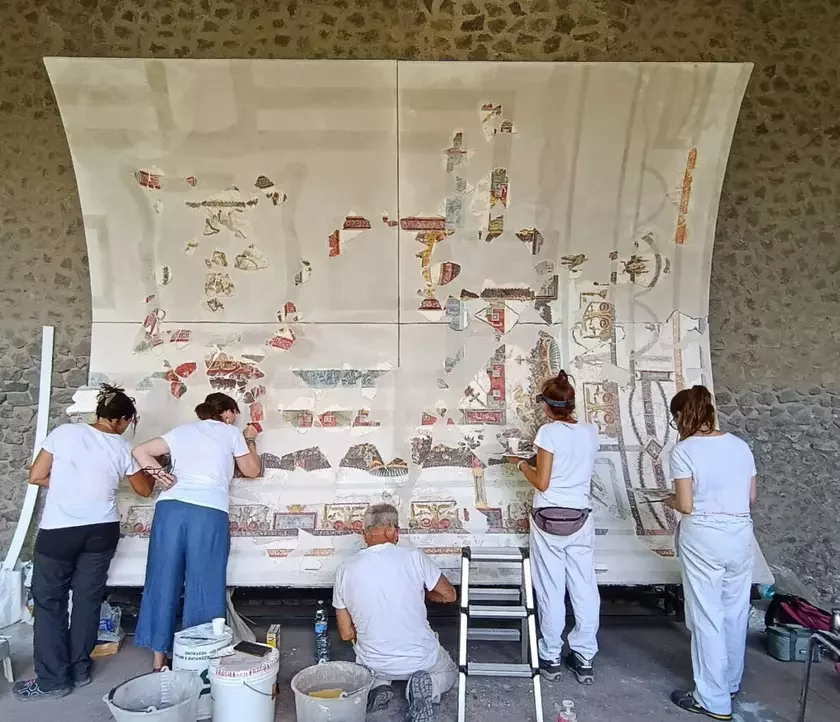
As reported by The New York Times, scientists presented the restored fresco from the so-called House with the Bakery (Casa con Panificio), located in the ninth district of Pompeii. This monumental painting once adorned the ceiling of a banquet hall on the upper floor of a wealthy villa, which likely belonged to the local magistrate Aulus Rustius Verus. In 79 AD, the eruption of Vesuvius turned the luxurious interiors into rubble mixed with ash.
The ceilings of Roman houses were usually made in the form of false vaults: a wooden frame was covered with reeds and plastered, onto which the painting was then applied. The organic base is vulnerable to rot and fire, so preserved ancient ceilings are an exceptional archaeological rarity. Today, only about two dozen such objects are known.
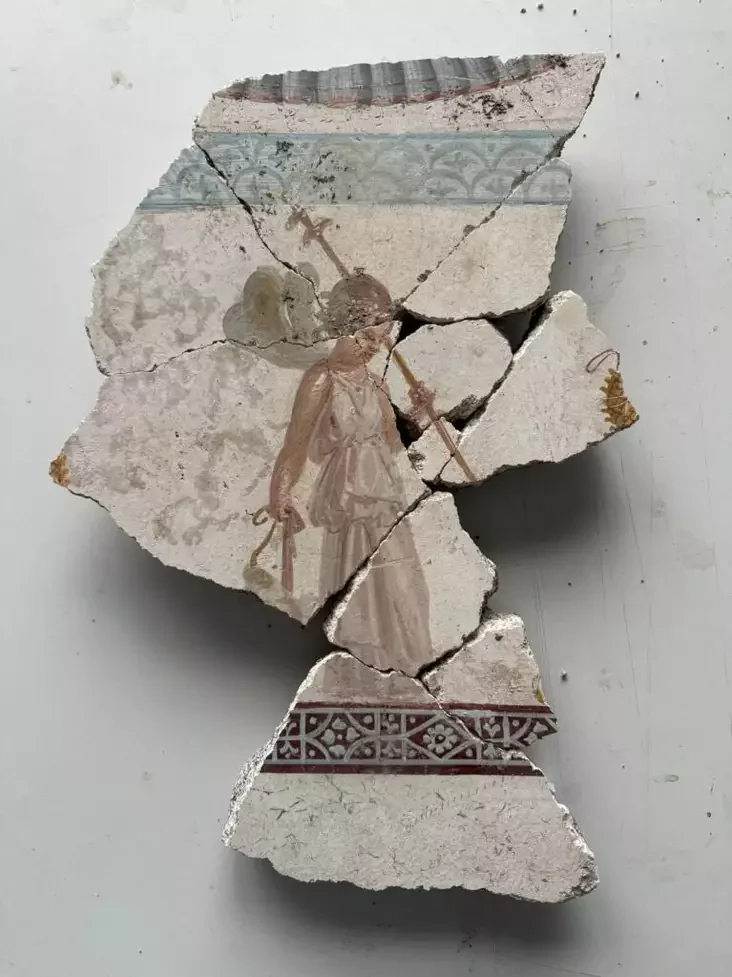
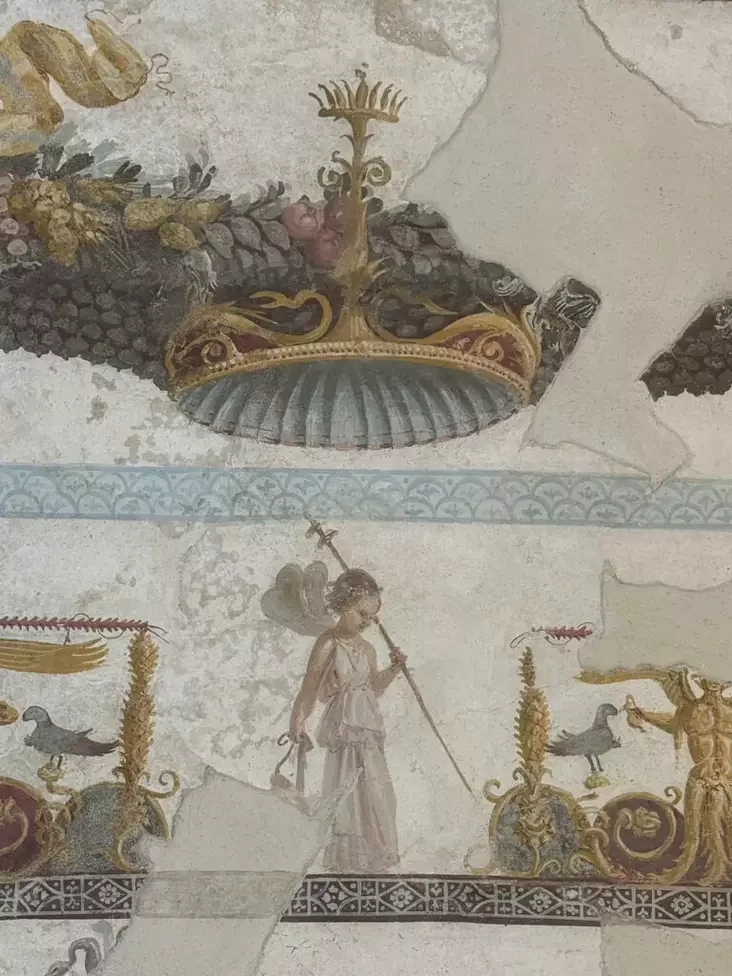
On the canvas assembled from a thousand pieces, a scene of hieros gamos unfolds — the sacred marriage of Dionysus and Ariadne. The god of winemaking rests on a chariot pulled by two musician centaurs, while the Cretan princess plays the harp accompanied by Eros. Ancient masters generously adorned the central panel with plant garlands, figures of winged genii, and ritual vessels, creating an ideal setting for endless banquets.
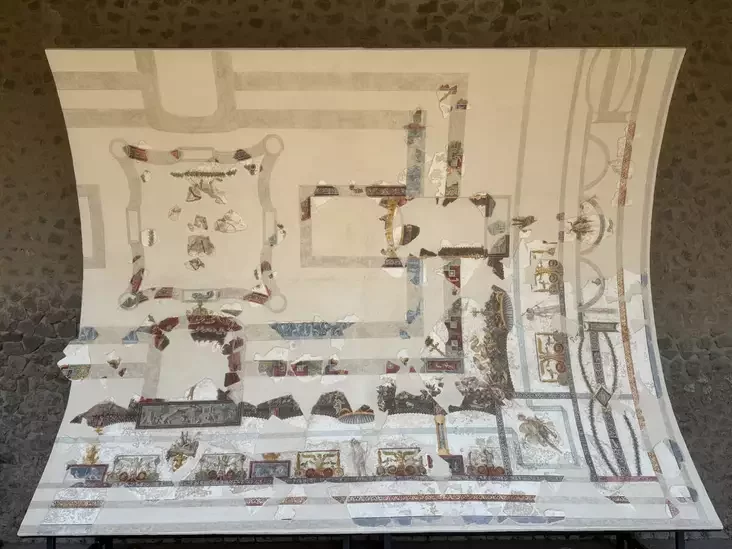
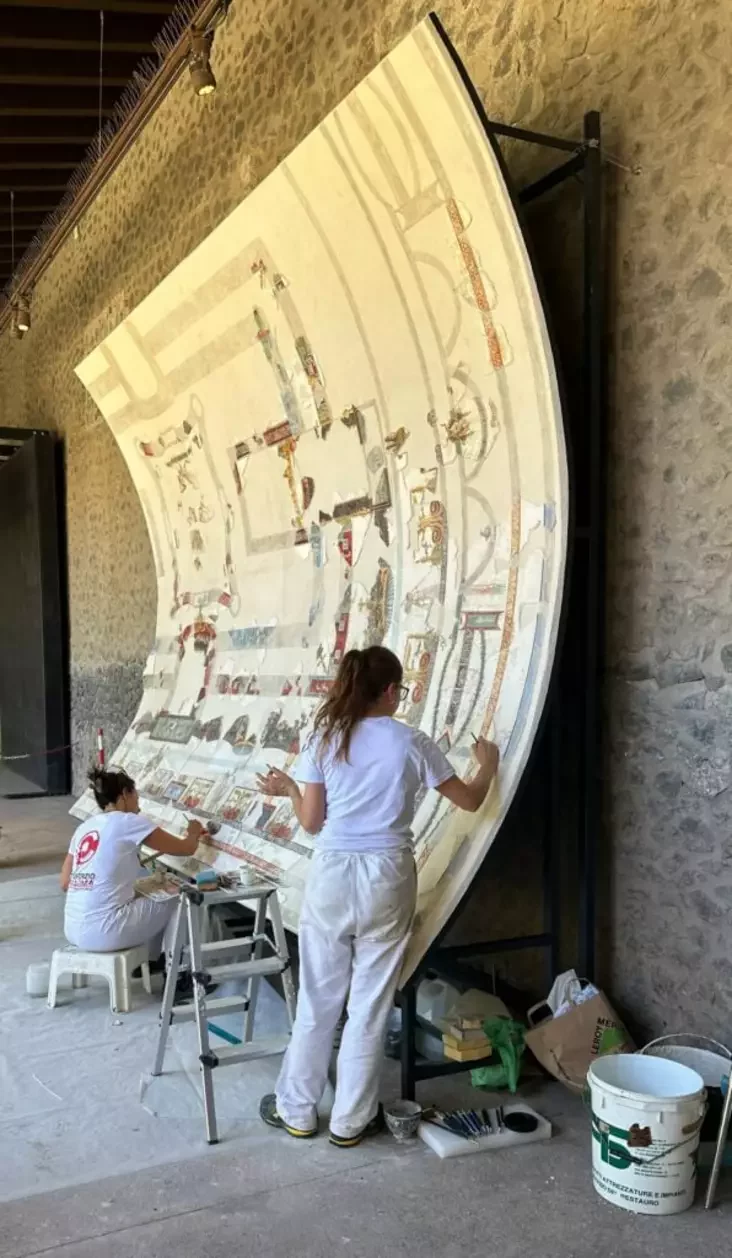
The main challenge for the restorers was not the number of details, but the geometric peculiarities of the vaults. Any researcher with good motor skills and patience can assemble a flat mosaic, but the vault of the House with the Bakery had a complex curved shape. To restore the fresco's original three-dimensionality, Italian engineers abandoned standard flat panels.
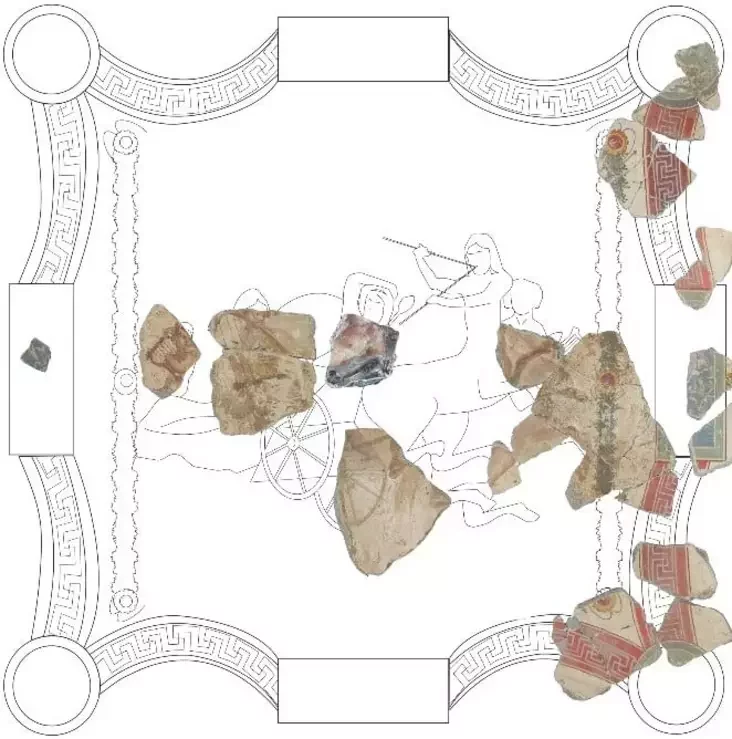
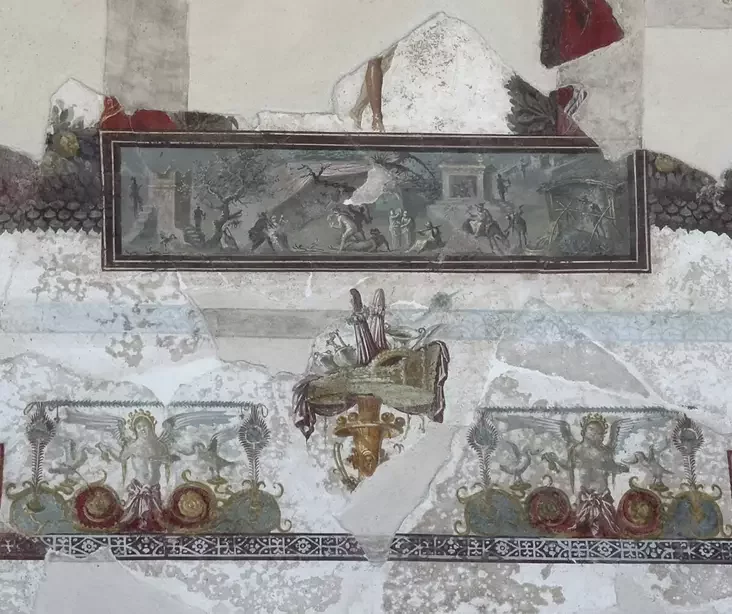
Parallel to cleaning and sorting the fragments, they developed an innovative modular frame. This structure literally changed its contours during the work process: only the gradual joining of original fragments allowed them to accurately calculate the radius of the ancient ceiling's curve. Each new piece of plaster dictated the form of the supporting framework to the modern technicians. As a result, a unique matrix was created that replicates the historical form.
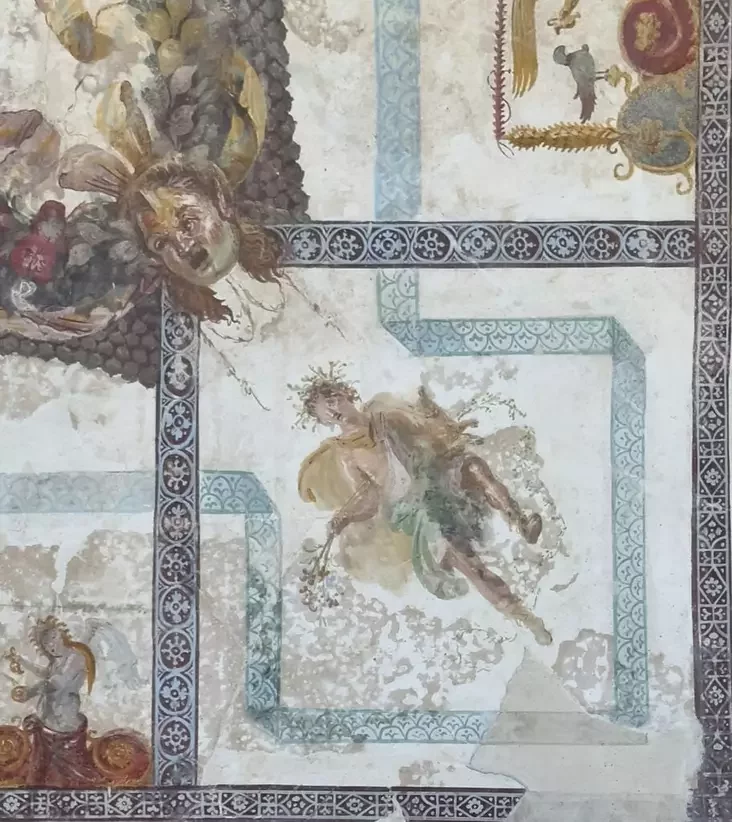
Today, specialists have managed to restore only about a quarter of the original composition. Many identified fragments still lie in laboratory boxes, and hundreds of others await their discovery in the unexcavated rooms of the villa. The modular mounting system has another strategic function — it is open to future additions.
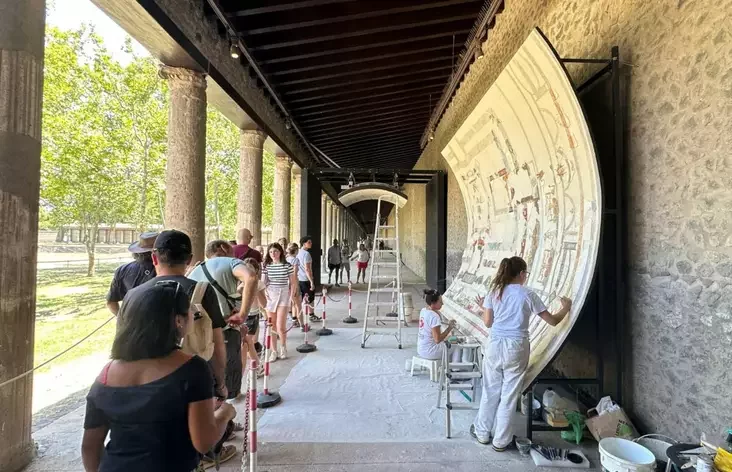
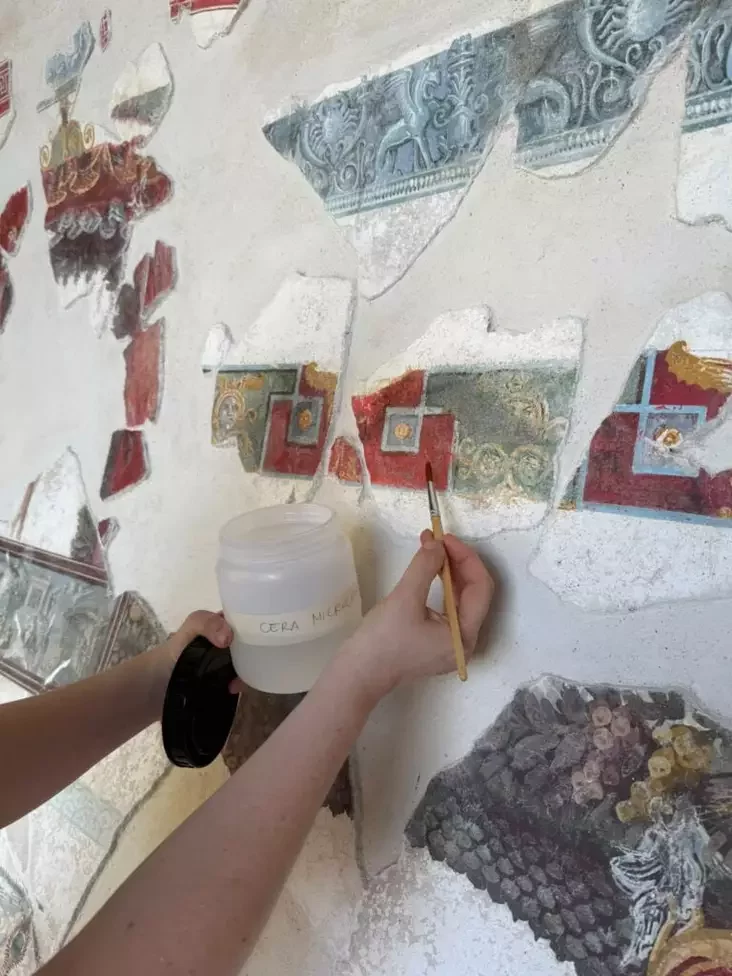
The restorers did not seek to simulate completeness. The new frame allows for newly found pieces to be added to the overall mosaic at any time without dismantling previous ones. The restoration process will last for years, following the progress of the excavations.
The restored part of the fresco is already on display in the Great Palaestra of Pompeii.
Now reading


The Return of Kaschei, the Abolition of Rusalkas, Navie from Polotsk, Kopsha and Vegelmof. What the First Belarusian Guide for Fantasy Translators Offers


Comments