


Ultraconservative Candidate Leads in Colombian Presidential Elections
Abelardo de la Espriella, who advocates for war against crime and guerrillas, is narrowly winning the second round of the presidential elections, according to official data. His opponent, Iván Cepeda, however, stated that he would demand a recount, writes the BBC.
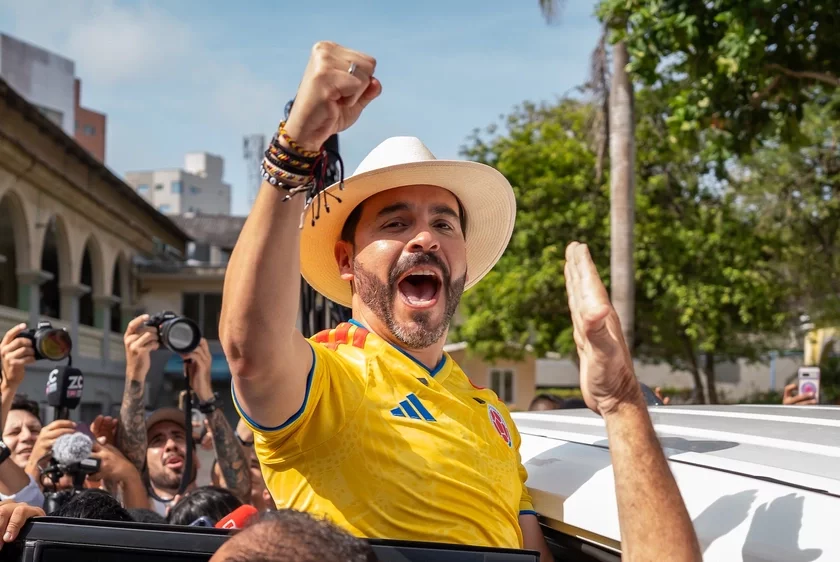
Abelardo de la Espriella in a Colombian national football team jersey, playing in the FIFA World Cup. Photo: Leonardo Castañeda/Getty Images
After counting more than 99% of ballots, de la Espriella garners 49.65% of votes, while his leftist opponent Cepeda has 48.70%. In absolute figures, they are separated by about 246,000 votes, Reuters reports.
However, Cepeda stated that his campaign headquarters would demand a recount of ballots from 33,000 ballot boxes.
Before the elections, US President Donald Trump expressed full support for de la Espriella's candidacy. The US provides Colombia with billions of dollars in military aid, primarily for combating drugs. Relations between leftist President Gustavo Petro and Trump were at times strained.
US Secretary of State Marco Rubio has already congratulated de la Espriella on his election victory. "This result reflects the will of the Colombian people and their commitment to democracy," the US State Department stated.
De la Espriella, a 47-year-old lawyer who holds both Colombian and US citizenship, was until recently far removed from the Colombian political establishment.
He earned millions from his legal practice; among his clients were bosses of armed drug-trafficking groups, fraudsters, and football stars.
The politician, who readily calls himself "The Tiger" (El Tigre), advocates for the free carrying of weapons, permission for oil fracking, the construction of mega-prisons, and the dollarization of the economy (similar to El Salvador). His victory continues the trend of success for ultraconservative politicians who sympathize with Donald Trump in Latin American countries.
The greatest consequences of de la Espriella's victory may be for the long-standing peace process in Colombia. In 2016, a peace agreement was signed with the FARC movement. The war with it claimed a quarter of a million lives in the country. However, armed groups that broke away from the rebels, as well as drug cartels, still control part of the country's territory.
Cocaine exports have reached a historical record, notes AFP.
In 10 years of peace, Colombia has experienced a notable growth in prosperity, but its results have been very unevenly distributed.
De la Espriella promised to immediately halt negotiations with groups that refused to disarm and to launch a 90-day bombing campaign against them with US support.
Now reading


Who are the two characters who didn't drink in interwar Vilnius, how Zoska Veras was awakened from lethargy, and is the tale about Karatkevich and the restaurant true?


Comments