


18-year-old Mikita from Rechytsa, who was captured by Ukraine on his very first combat mission, recounted why he rushed to war
"Come home, sunshine. We love you very much and are waiting. Please, I beg you. You silly boy…" — his mother pleads to him on YouTube. But the young man is not against an exchange and a new deployment to war — he needs to earn money.
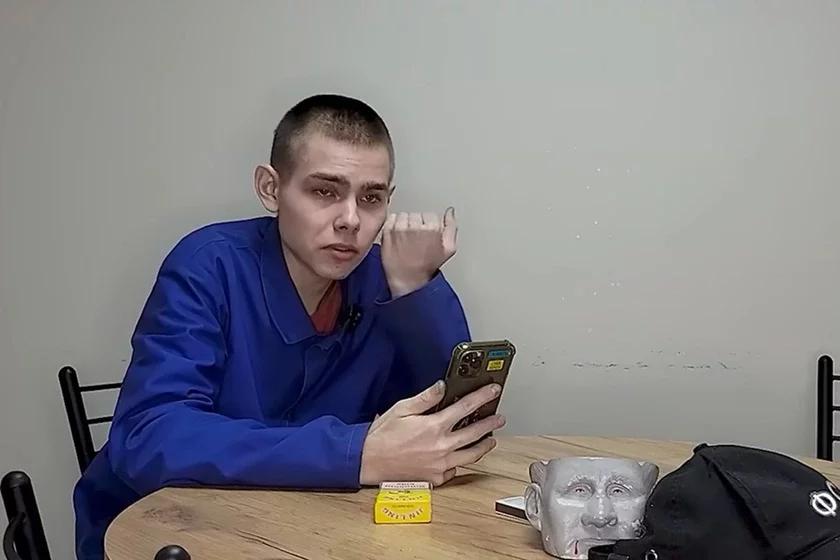
The hero of the new episode of Dmytro Karpenko's YouTube channel "Apostol" was an 18-year-old Belarusian prisoner, Mikita. He was born on July 29, 2007, in Rechytsa. His parents divorced when he was about ten years old.
According to Mikita, he has an older brother, who is about 31 years old, and a cousin. His older brother lives separately and, according to the young man, barely helps their mother. His cousin also went to war in Ukraine, and Mikita claims he heard that his cousin died after seven months of service.
Mikita performed poorly in school. He only completed nine grades of secondary school No. 10 in Rechytsa. His average grade was approximately 4.5 out of ten. He admits that he did not like to study, "fooled around," played a lot, and had little interest in academics. He knows the Belarusian language poorly, even though he studied it in school.
After school, in 2023, the young man enrolled in Zhlobin State College, specializing as a tractor driver-welder for agricultural machinery repair. He lived in a dormitory.
During his studies, Mikita started working part-time with friends. They took on various odd construction jobs: plastering, helping on construction sites, responding to advertisements for needed workers. For a few days of work, according to the young man, they could earn 100 to 200 Belarusian rubles. They spent this money on daily needs.
However, in 2024, an incident occurred that strongly influenced his life. Together with two friends, he started stealing bicycles, removing their lights, speedometers, and other parts. In total, the group stole about six bicycles. They hid them in the garage of one friend's private house. The scheme lasted several months. During one of the episodes, someone from a nearby house noticed them from a balcony and called the police. The next day, officers came to Mikita's home and took him to the station.
A criminal case was initiated against him and his friends under Article 205, Part 2 of the Criminal Code — theft committed by a group of persons. Initially, the prosecutor and the court considered the possibility of imposing actual imprisonment. Mikita himself could have received about a year in a penal colony. However, in the end, the court sentenced all three to one year of restricted freedom.
He continued to attend college, lived in the dormitory, but had to strictly adhere to a regimen and report to the police. After three months, he was granted amnesty, and the punishment was lifted. By early 2025, his criminal record was already cleared.
The Path to the Front
Around the same time, his cousin was already at war in Ukraine. According to Mikita, his cousin went to fight for money. Mikita himself maintained contact with him and even wanted to join the same military unit. He said that after the criminal case and his studies, he began to consider participating in the war as an opportunity to earn money and change his life.
His brother promised to help with the paperwork and found an intermediary for him — a woman named Yana, who organized the arrival of new volunteers in Russia.
Mikita never saw Yana in person. All communication happened through correspondence. According to him, contact began after he turned 18, in the summer of 2025. He didn't know what to write, so his brother sent him a ready-made message text. Mikita simply copied it and sent it to Yana. In response, she informed him that she was starting to process the necessary documents for his relocation and service.
Yana organized his contract and handled travel arrangements. At first, she didn't want to buy tickets, but Mikita informed her that he had no money. As a result, the tickets were paid for by the organizers. At that time, the young man was still studying at college and attending classes.
Mikita claims that he actually received only about 500,000 Russian rubles (about $7,000 at the current exchange rate), although he was promised five times more.
After receiving his tickets, the young man left Rechytsa by train. The final destination was Voronezh. It was there that his further deployment into the recruit training system was to take place.
Mikita recounts that he did not tell his mother about his decision for a long time. Only when he was already on the train heading to Russia did he confess where he was going. His mother tried to dissuade him and asked him to return home. She called him a fool and insisted that he not get involved in the war. However, Mikita did not listen to her and continued his journey. His older brother found out about it from their mother.
Upon arrival in Voronezh, he was met by car and taken to the "Blue Screen" camp. Previously, it was a pioneer camp, but during the war, it was used as one of the collection and accommodation points for new contract soldiers.
Mikita spent about two weeks at "Blue Screen." The young man says that not only citizens of Russia and Belarus were there, but also people from other countries. He particularly remembered the presence of Africans who also passed through this center. He did not know how many Belarusians were exactly there, as he did not particularly get to know anyone or inquire about the origin of other recruits.
Then, according to Mikita, he was sent to a training ground. He spent about two more weeks there, undergoing the standard initial training course before being sent further to war.
After two weeks of training at the Pogonovo training ground, Mikita was sent directly to the combat zone. According to him, he signed the contract on November 6, 2025, and on December 10, 2025, he was deployed to the Kremennaia area in Luhansk region. Up to this point, he had never participated in combat operations and had no real military experience.
At the Front Line
At the location, according to the young man, he stayed only a few hours before going on his first combat mission. He was issued an assault rifle, five magazines with ammunition, and two grenades. As he claims, all soldiers were given the same set of weapons. When asked how many people he intended to kill, Mikita replied that he did not want to kill anyone.
This mission became his first and only combat sortie. According to the young man, there were a total of eight people in the group, who were delivered closer to the front line on two buggies. For about forty minutes, they drove to a forest belt, where the route began. After disembarking, they were met by guides and led through the forest.
First, the group was led to a trench system. There, the soldiers waited for their turn to advance further. They moved out in pairs at night, wearing camouflage cloaks. For navigation, they used a special program on their phone, which Mikita calls "Alpinka." They were shown how to use it, after which they moved further along the route.
After some time, the group reached an area Mikita remembered as the Apple Orchard. There they spent the night in a basement. In the morning, they received an order via radio communication to continue moving. A drone — which the soldiers called a "bird" — showed them the direction. According to his story, it was based on the drone's instructions that they reached another house, near which there was a garage with a blue tractor. There they were met by another guide.
At this stage, the group was divided. Mikita's partner was a Russian serviceman with the call sign "Kaktus." Together with another soldier, whom he calls "Friga," they had the opportunity to warm up after a difficult crossing through a swamp. The guides gave them candles for warmth and fed them canned porridge.
After a short rest, they continued moving through forest belts and abandoned houses. According to Mikita, he constantly lagged behind and quickly got tired. The crossing through a large open field, which they had to run across under the threat of aerial observation, was particularly difficult.
Later, they found themselves in another bunker, where they were fed and allowed to rest for about four hours. After that, they received a new route based on navigation points. On the way, they were given the opportunity to stop several times. At one of these stops, the soldiers hid in a hollow, drank water, and smoked.
Approaching the final point, Mikita noticed the remains of destroyed fortifications and wire scattered on the ground. He did not understand their purpose — whether they were anti-drone barriers or just obstacles. Several times the young man fell, getting entangled in the wire and the remains of engineering structures.
Captivity
Finally, they approached the last position. His partner went ahead. He knocked on the bunker door and announced that they were from the 31st regiment and asked if they had come to the correct position. From inside, they replied yes and asked them to step back. In fact, as subsequent events showed, the position was controlled by Ukrainian servicemen.
According to Mikita, they were ordered to drop their weapons if they wanted to stay alive. Mikita and his partner immediately complied: they dropped their assault rifles, after which they were ordered to remove their body armor and other equipment. After that, they were led into the bunker, where they waited for further evacuation to the rear. This is how Mikita was captured.
In captivity, according to him, they were immediately fed. Later, they were held in a basement. He spent about two weeks there. When asked what he told the Ukrainians, Mikita answered very simply: "That I went to kill."
After discussing the captivity, Dmytro Karpenko decided to call the Ukrainian soldier who participated in the young man's capture. The soldier reported that in the first hours after his capture, Mikita said that his brother had died in the war and that he went to the front to avenge him. Moreover, he allegedly said that after a possible exchange, he would return to war again for this revenge.
After this, Karpenko directly asked Mikita who was lying — him or the Ukrainian soldier. The young man admitted that he was the one who lied. He clarified that his brother was alive and continued to fight at the time of his recruitment, and he himself simply wanted to join the same unit.
What's Next?
Then the interviewer organized a video call home. Mikita's mother and his older brother joined the call.
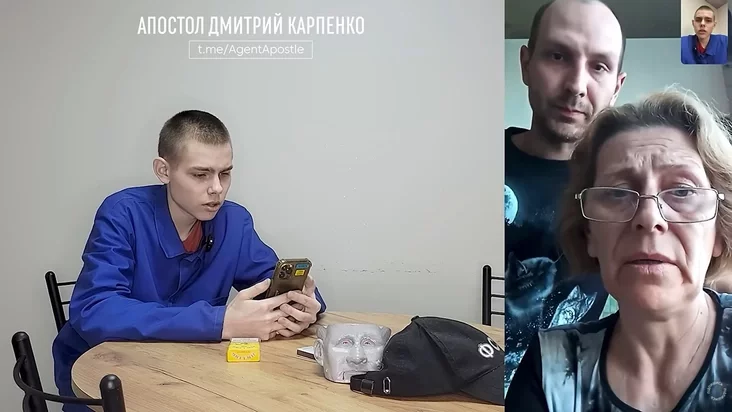
During the conversation, it turned out that the family had not known about his fate at all for a long time. Moreover, his friend had returned from the war and, literally the day before the young man's call from captivity, had informed everyone that Mikita had already died.
— Why did you go there, son? Why? Did you really need this, my child? You left everyone. You left. My sunshine, — his mother questioned her son.
— I wanted, in short, to earn money so you wouldn't lack anything, — he replied.
— I don't need anything. As long as you are alive. As long as you are all here. Son… Why did you do this, my kitten?
(…)
— Mikitka, do you understand now what you've done? What have you done? What have you done, my sunshine?
— I did a very stupid thing.
— Young, foolish, right? (…) Come home, sunshine. Come home. We love you very much and are waiting. Please, I beg you. You silly boy. (…) How could you listen to a friend? Look, Dima (points to the older brother — NN), served in the army, everything was fine. You could have gone to the army. Your profession was almost ready.
The young man admitted that he doesn't know what awaits him next. He voiced two possible options: either prolonged imprisonment in Ukraine, or a prisoner exchange followed by a return to the front. The young man spoke about so-called "second-timers" — people who had already been exchanged once, after which they were sent back to war and subsequently captured again.
His mother noted that her son had lost a lot of weight. Mikita explained this by the conditions at the front. He said that during his single combat sortie, he mainly ate snack bars and dry snacks. According to him, they were promised that drones would deliver food and supplies, but he never saw a single such drone the entire time.
According to him, when he was already captured and held in the bunker, shelling continued on that position. Russians are also shelling the place where he is currently held captive.
“Choose: ‘Cargo 200’ or 12 years. Cargo 200 means if you are exchanged, you will go to war a second time and be killed. Or 12 years,” Karpenko suggested to the young man at the end of the conversation.
“I would go for the exchange,” Mikita replied.


In Belarus, rules for the evacuation of valuables in case of war approved: bricks from Brest Fortress with inscriptions will be saved before paintings by Chagall and Soutine

In Belarus, rules for the evacuation of valuables in case of war approved: bricks from Brest Fortress with inscriptions will be saved before paintings by Chagall and Soutine


Former Gazprombank Vice-President Volobuev – on serving in the AFU, connections with the "Black Spark" underground, and abandoning his family in Russia

Former Gazprombank Vice-President Volobuev – on serving in the AFU, connections with the "Black Spark" underground, and abandoning his family in Russia

"Have you seen the wallpaper from the developer? It's a nightmare." Why is state-provided renovation in apartments for those on the waiting list criticized?


Comments