


"Everyone said it was impossible." A Belarusian woman managed to get visas for her parents in an unusual way
For the past few years, meeting her parents has been problematic for Tatsiana (name changed). The woman lives in Poland, and they live in Belarus. For a long time, she tried to get them invitations to open visas, but each time it failed. Until her story reached the Polish Ministry of Foreign Affairs. Now the visas have been obtained, the meeting is scheduled for autumn, and Tatsiana's case may create a precedent for other Belarusians. She shared the details with Most.
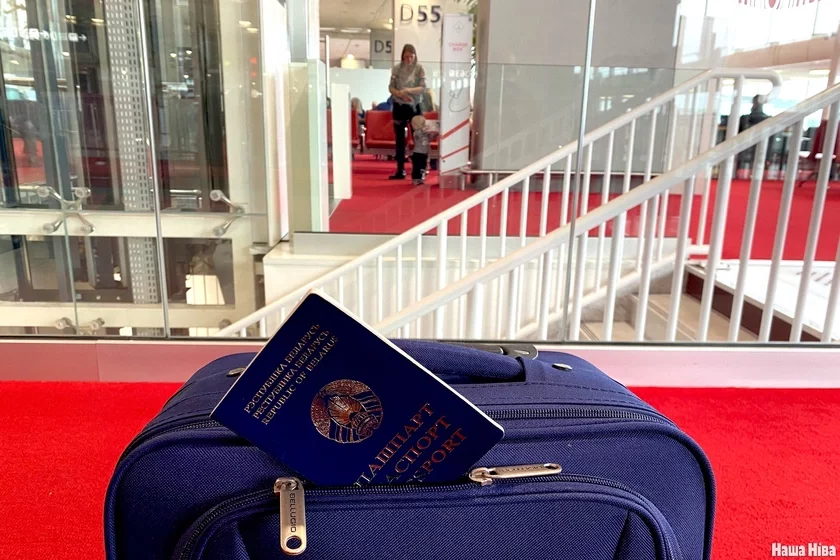
The woman does not travel to Belarus. To see their daughter, her parents tried to get tourist visas to other European countries. This year it didn't work out.
Tatsiana thought of arranging a guest invitation for them for a Polish visa. But she encountered a problem. A voivodeship invitation (which is entered into the relevant register) can be issued to foreigners with a permanent residence permit (permanent residence or an EU resident card) and those who have lived legally and continuously in Poland for the last five years. The woman does not fall into any of these categories.
Therefore, she arranged not a voivodeship, but a regular notarized invitation. But the Polish consulate refused to accept the document.
"I consulted with lawyers. Everyone said it was unrealistic — to get a visa with a notarized invitation," she recalls.
Intermediaries only offered to buy a voivodeship invitation from a third party for 1250 zlotys (about $335).
"This is some kind of loophole in the law"
Usually, a notarized invitation is sufficient for Polish citizens who want to invite a foreigner, and in some cases also for persons under international protection who have lived in Poland for less than five years.
Tatsiana does not have protection, but she is in Poland on humanitarian grounds — she came on a humanitarian visa, and then obtained a residence permit based on it. She believed that her case should follow the same logic as applied to persons under international protection.
"I realized this was some kind of loophole in the law," she says.
Then she began writing to various bodies that help Belarusians abroad defend their rights. She sent a total of 15 letters. But one worked — the one sent to the United Transitional Cabinet. The Deputy Head of the United Transitional Cabinet, Pavel Latushka, sent an inquiry with a description of the problem to the Polish Ministry of Foreign Affairs, and a response came from the director of the consular department, Justyna Chrzanowska.
"Regarding the situation of Belarusian citizens residing in the territory of the Republic of Poland on the basis of humanitarian visas, temporary residence cards obtained for humanitarian reasons, or additional protection status, I would like to specifically emphasize that the closest family members of these persons (parents, children, grandparents, grandchildren) have the possibility to apply for visas on the basis of notarized invitations," the response stated.
It also noted that the inviting parties must provide full information about the reasons for their stay in Poland, and not just a scan of their residence card.
An example for others
After this, Tatsiana re-sent a letter to the Polish consulate in Minsk, attaching a scan of the Ministry of Foreign Affairs' response. Finally, they called from there and scheduled dates for the woman's parents to submit their applications. As a result, they were issued visas until the end of Tatsiana's residence permit validity. The long-awaited family reunion is planned for autumn.
Now the woman hopes that this path will become possible for other Belarusians with humanitarian residence permits as well.
How to invite a relative if you are in Poland under international protection or on other humanitarian grounds
To issue a notarized invitation, it is sufficient to draw up a document in free form, indicating your passport data, PESEL number, decision on international protection (if any), address of residence, and data of the person you are inviting. And then — apply to a notary for its certification.
After that, it is recommended to send an email to the consul with the subject "Invitation for a relative from a person with international protection status (or other status)". Attach scans of the notarized invitation, documents confirming kinship, a copy of the inviter's passport or residence card, and the invited person's passport and registration.
In the letter, you need to describe the situation and ask to schedule an appointment directly at the consulate so as not to endanger relatives in Belarus. A consulate representative will contact the applicant and schedule a date for their relatives to submit documents for a visa.
After the date is set, the notarized original invitation must be sent to relatives in Belarus: they must submit the original document at the consulate.


Comments
шах и мат