


Both Lithuanians and Russians laid claim to the unique zodiacal ladle. But it turned out to be from Belarusian Slaŭharad
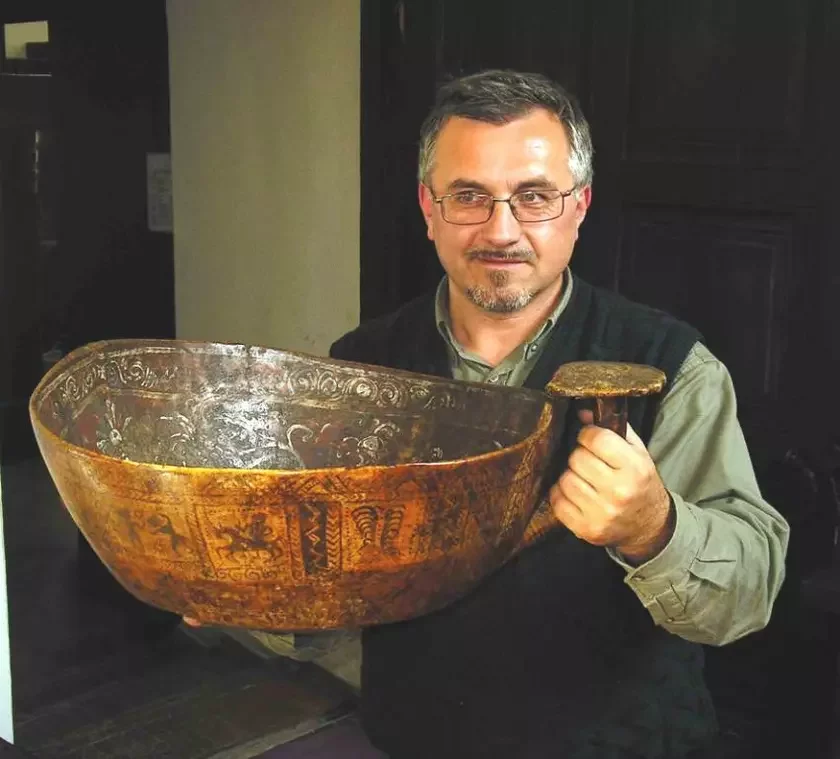
A true treasure is kept in the exposition of the Museum of Belarusian Folk Art in Akolitsa — a large wooden ladle with enigmatic drawings that many take for zodiac signs. For decades, this artifact has sparked debates among scientists and given rise to the most incredible theories. It was called the "Baltic zodiac," attributed Russian origin, and believed to have miraculously survived in the ruins of post-war Hrodna. However, a new comprehensive study by historians is changing perceptions of this unique monument.
The Destruction of the Hrodna Myth
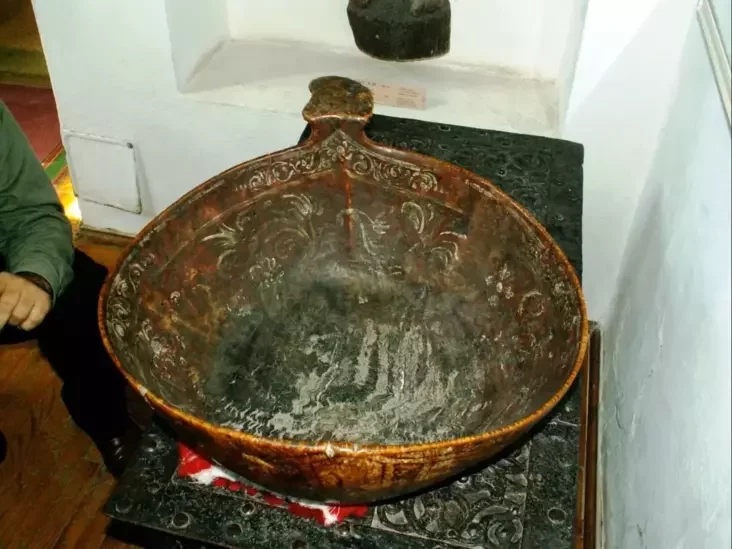
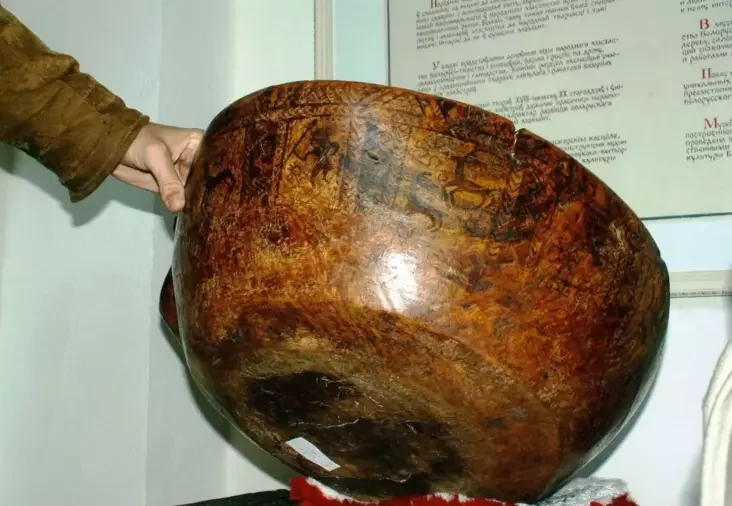
The ladle-bratina, currently kept in Akolitsa, is a massive vessel skillfully crafted from a single birch burl (kapa). Its main mystery lies in the twelve medallion drawings encircling its outer side: a horseman, a warrior, various animals, and birds. Many researchers see in them an ancient zodiac or a pagan calendar.
This artifact is considered absolutely unique for our region — there are simply no direct analogues in terms of form and painting, which has turned it into a real puzzle for historians.
For a long time, a beautiful legend circulated around the ladle-bratina, which made its way into scientific literature and excursion texts. It was believed that this unique item was found immediately after World War II in the basement of one of Hrodna's destroyed churches or monasteries. This version was solidified thanks to the well-known art historian Mikhail Katsar, who indeed studied Hrodna's monuments in the 1940s and was the first to publish a photo of the artifact.
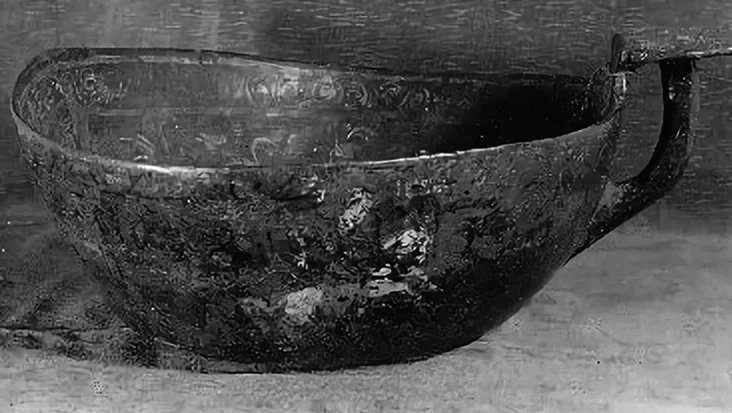
However, this myth was finally debunked. A breakthrough in the research was made by Stanislau Chavus, a senior researcher at the National Art Museum. In 2023, he published previously unknown archival data, including a photograph from the Federal Archives of Germany in Koblenz. Thanks to Chavus's findings and further analysis by Dzmitry Skvarcheuski and Illia Butau, the true path of the artifact was reconstructed.
The true journey of the ladle was far more complex and dramatic, resembling a detective plot. Researchers managed to trace its history back to the late 19th century.
It was revealed that before the revolution, the object was in the collection of the Mahilioŭ Museum. Then, in the turmoil of wars and revolutions, it ended up in Minsk, and during World War II, it was taken by the Nazis to Germany, where it was stored in the city of Koblenz.
After the victory, the valuable item was returned to the USSR and ended up in the Hrodna Historical and Archaeological Museum. It was precisely this fact — its arrival from Germany via Hrodna — that misled Soviet researchers, who mistakenly attributed a Hrodna origin to it.
The Prapoisk Trail
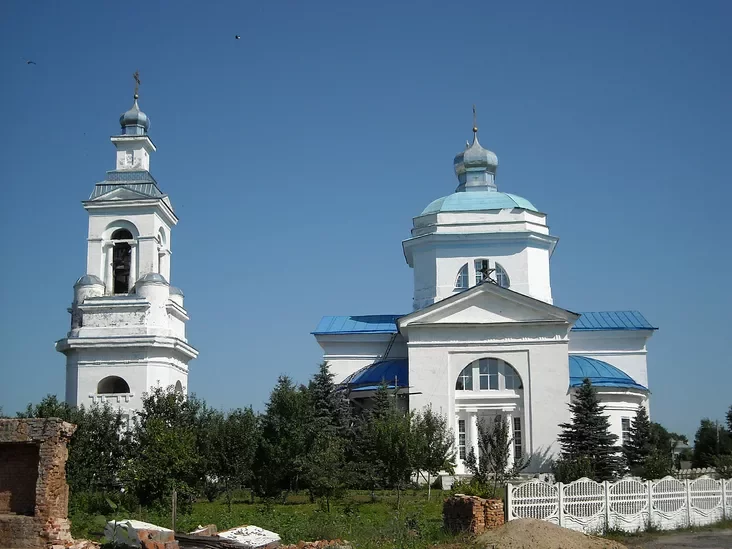
If the ladle's homeland is not Hrodna, then where is it? Archival data led scientists to eastern Belarus, to Prapoisk (modern Slaŭharad, Mahilioŭ region). According to an 1898 museum description, the ladle was transferred to the Mahilioŭ collection from the Church of the Nativity of the Theotokos in Prapoisk.
Moreover, a local legend existed that this vessel was gifted to the church by Russian Tsar Alexei Mikhailovich during the mid-17th century war. The authors of the study are skeptical of the version about the royal gift: the tsar was not in Prapoisk, the city was taken by Cossacks — but the fact of its origin from eastern Belarus no longer raises doubts.
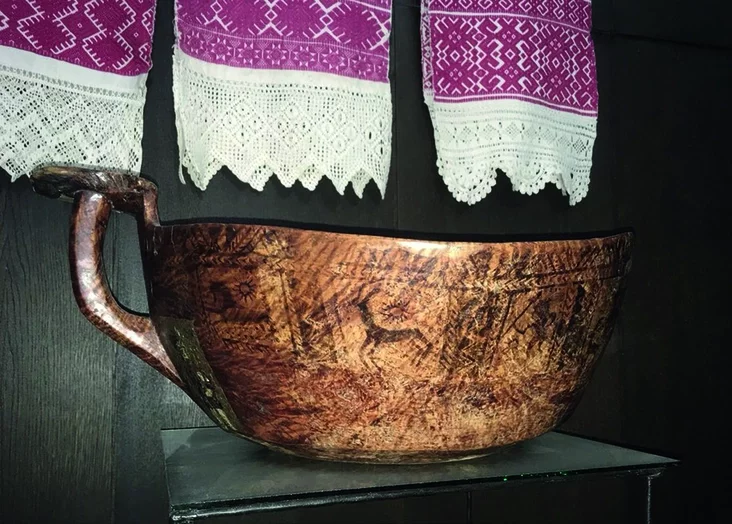
It is probable that in the 18th century, painted wooden vessels were used in local Uniate churches as ciboria (containers for the Holy Gifts).
Foreign or Our Own?
Around the origin of the artifact itself, spears were also broken (meaning, there were many disputes). Some scientists considered it a typical import from Russia, comparing it to well-known Volga or "Kozmodemyansk" ladles brought by streltsy or merchants. However, Skvarcheuski and Butau convincingly refute this theory.
Russian ladles were traditionally made from linden wood, had an elongated boat-like shape, and a sharp "nose." The Belarusian artifact, however, is made from birch burl (kapa), has a round shape, and a completely different handle design.
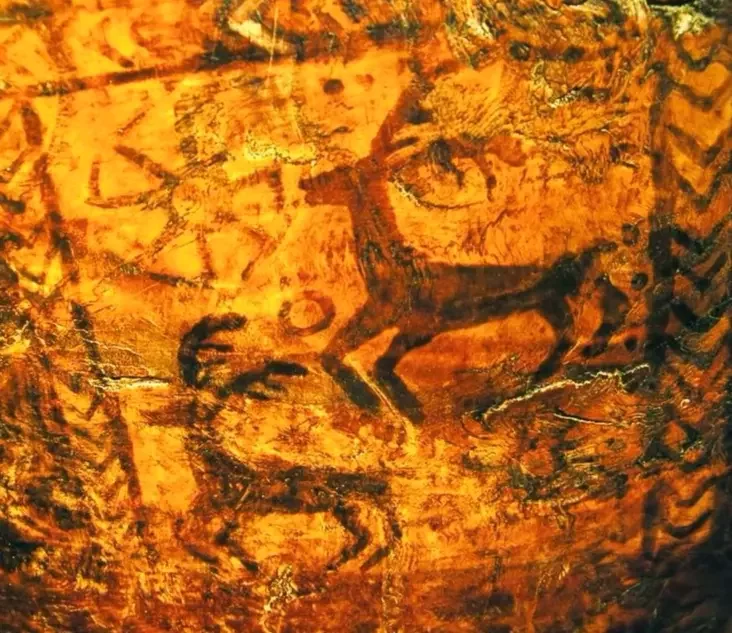
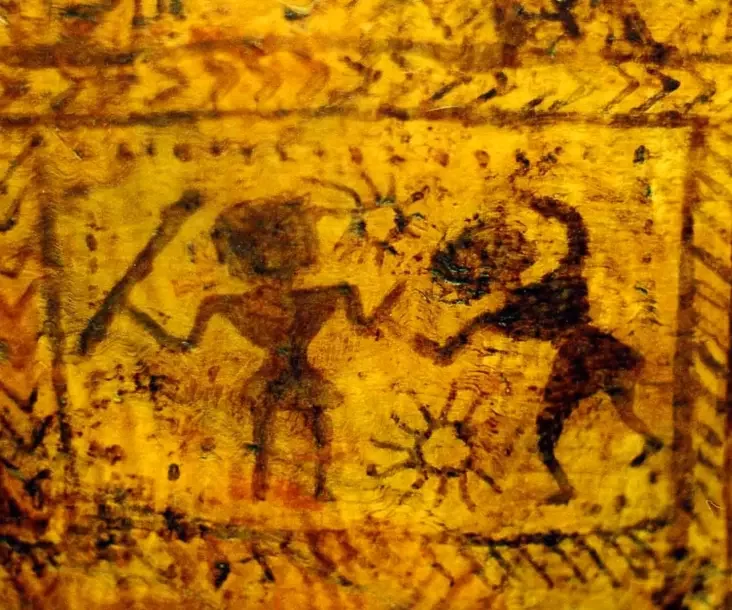
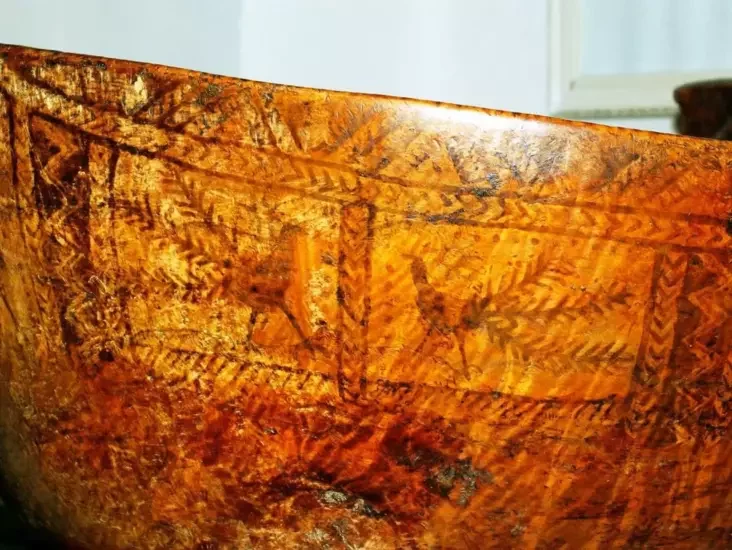
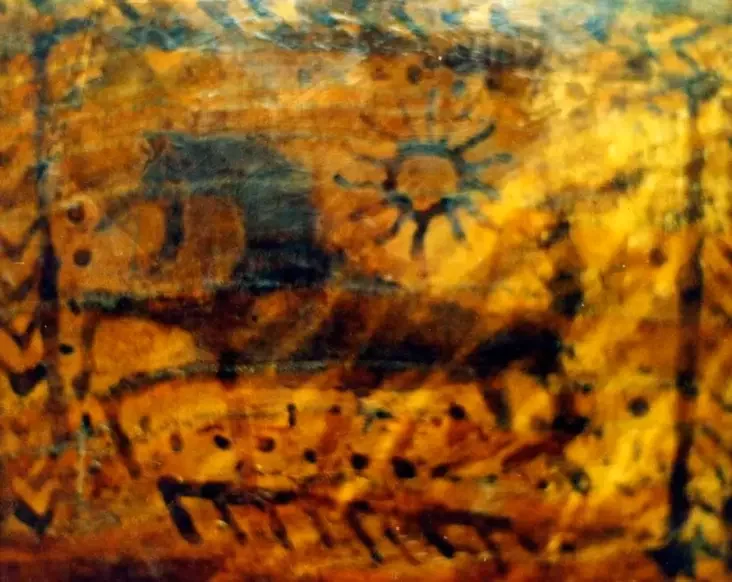
The other side of the dispute was represented by Lithuanian researchers, notably Jonas Vaiškūnas, who saw an ancient Baltic zodiac in the ladle's drawings and associated it exclusively with Lithuanian pagan tradition.
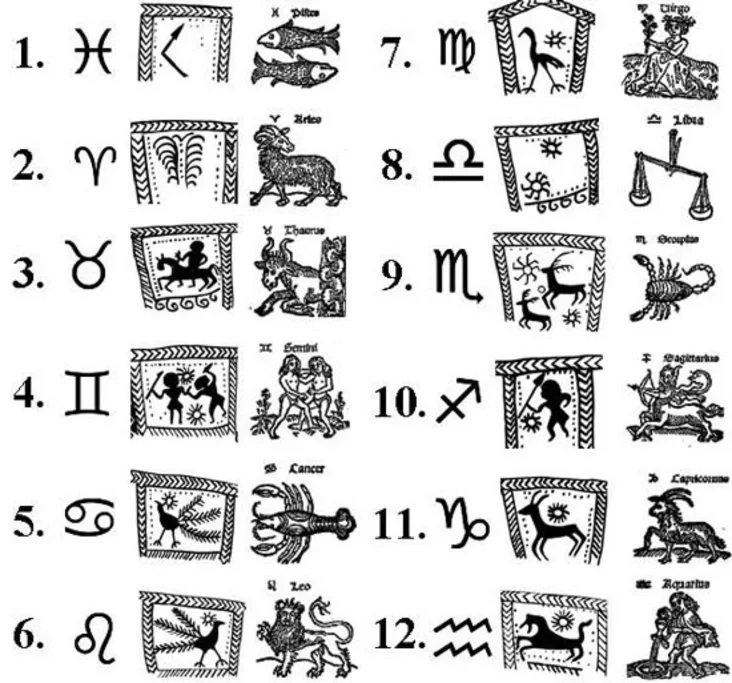
The authors of the new study acknowledge that the ladle indeed possesses features characteristic of the culture of the Grand Duchy of Lithuania, but insist on its Belarusian origin.
The main evidence came from analogous forms found — 15th-century silver cups from the famous treasure near the village of Litva, Maladzyechna district. The resemblance of the wooden ladle to elite silver vessels proves that we have before us an authentic work by local Belarusian craftsmen, created between the 15th and 17th centuries.
Lost Saints
Today, museum visitors see 12 mysterious figures: a horseman, a warrior, various animals, and birds. But it was not always this way.
When the ladle entered the museum, these drawings were hidden under a later layer of painting, likely applied in the second half of the 17th or early 18th century. Christian saints were depicted on the surface.
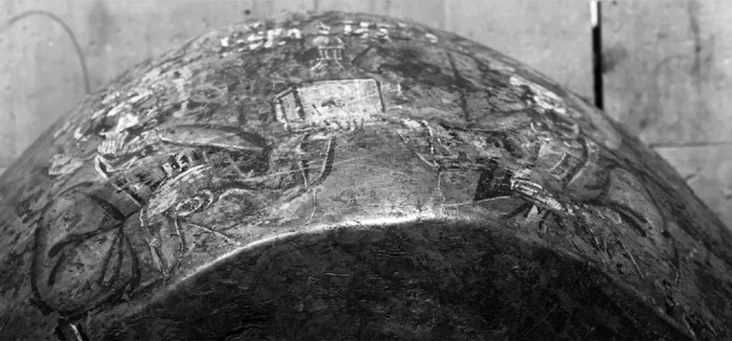
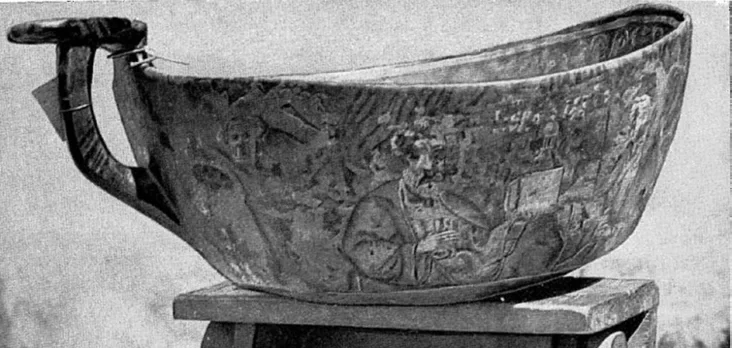
In the middle of the last century, restorers made the difficult decision to remove the upper layer to reveal the original "zodiacal" painting. As a result, the images of the saints were almost completely lost, but historians managed to reconstruct them from archival photographs.
It was found that above the pagan or secular symbols, Saints Peter and Paul, holding a temple, as well as Saint George on horseback and Saint Nicholas, were painted.
This indicates that the household or ritual vessel was reinterpreted over time and began to be used in the church, possibly for storing the Holy Gifts. The depiction of apostles holding a temple is very rare and emphasizes the high sacred status of the item in the past.
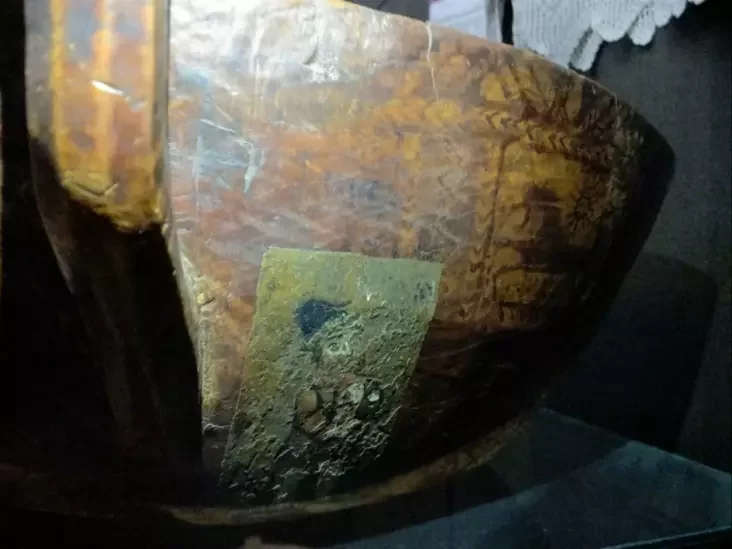
This research returns to Belarus one of the most enigmatic artifacts of antiquity. Now we know that it is not an import from Russia and not a trophy, but an example of our own decorative and applied art from the times of the Grand Duchy of Lithuania.
The form of the object allows its creation to be attributed even to the 15th-16th centuries, making it one of the oldest wooden art pieces in Belarusian museums.
«Nasha Niva» — the bastion of Belarus
SUPPORT USNow reading


"The main thing is not to forget to recharge not only your phone, but also yourself." How a Ukrainian soldier lives with two electrostimulators. And what about his sex life?

"The main thing is not to forget to recharge not only your phone, but also yourself." How a Ukrainian soldier lives with two electrostimulators. And what about his sex life?


The "Dutch architect" who rebuilt the Gate of Dawn and built himself a fortress-house in Gaitiunishki turned out to be no Dutchman at all. But his legacy is captivating


Comments