


«Nobody asked me». Wives of political prisoners spoke about what is not customary to discuss
Olga Vielichka's book about wives of political prisoners is soon to be released. Radio Svaboda spoke with its author about the widespread myth surrounding such women and about what they themselves should know when their husband returns from prison.
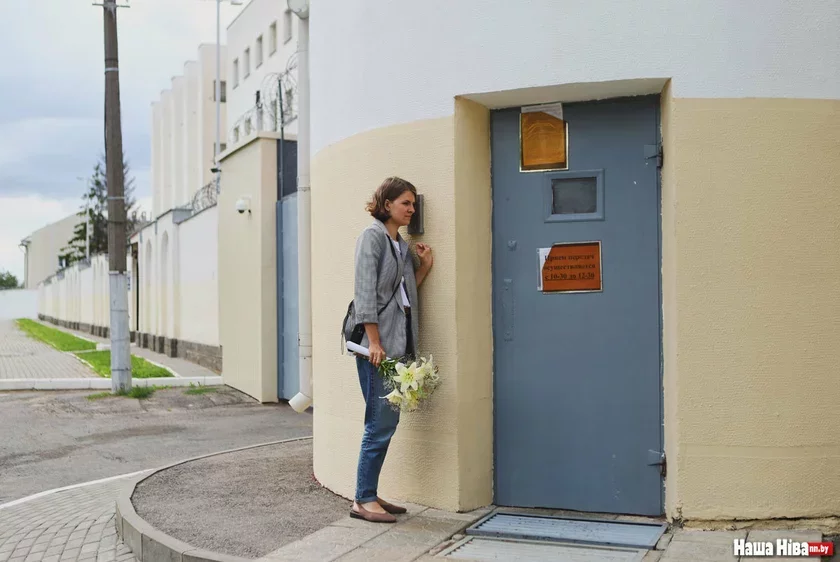
Psychologist Volha Vielichka has written a book about wives whose husbands are imprisoned for political reasons. The book is expected to be published by Gutenberg publishing house by the end of the year. This is the author's second book. The first one tells about the experiences of children whose parents are imprisoned for political reasons — «From 2 to 15: My Mom is in Prison». This year, it received the Ales Adamovich Prize.
«This book is about us, Belarusian women, in general,» says the author about her second book.
Wives who didn't choose this
Volha Vielichka began recording the stories of children and wives of political prisoners in 2022. She works as a psychologist with former political prisoners and their families. In total, she has worked with about a hundred such women. The book includes the stories of fifteen of them, some under their real names, others anonymously.
Among them are Sviatlana Tsikhanouskaya and Alesia Rak, wife of Radio Svaboda journalist Andrei Kuznechyk.
The author chose various stories and situations in which these women found themselves so that the reader could see the overall picture and understand how different their experiences can be.
«They are tried to be called invisible heroines, they are tried to be heroized, to impose on them what they supposedly are obliged to do,» says the author about the attitude of a part of society towards the wives of political prisoners.
She would like people, thanks to her book, to see «the fate of ordinary women, wives who did not agree to such a life».
«I did not meet a single woman who would say: 'Okay, I agreed to be the wife of a man who will serve a prison sentence.' This is a big myth that our society wants to see. We need heroes. Ideally, these heroes should be dead heroes. And next to these heroes should be women. This is the ideal picture for our society,» says the interlocutor with a touch of irony.
Volha Vielichka wanted to give a voice to women who, because of this myth, cannot openly talk about what they feel and what their lives are really like.
These women face entirely practical questions: «Where to get money?», «How to raise children?», «The school year is starting, and everyone wants something from me», «How to prepare my son or daughter so they don't tell at school that dad is in prison?», «What to do about sexual life?», «What to do if I want to become a mother again or want to become a mother at all?»
«Am I sacrificing my life and the lives of my children for what? I asked him to put family first, and he chose to fight,» the psychologist recounts the experiences of such women.

She notes that while some men consciously took risks and were more prepared for the possibility of going to prison, their wives usually did not choose this. However, they still had to deal with the consequences.
«Now I am forced to go through all this with him. Nobody asked me: am I ready, do I want this, do I not want it, can I go through this?» Volha repeats the words of such women.
Is it not the time to write about this?
The author of the book says that some people told her: now is not the time to write about the experiences of political prisoners' wives.
«And when will that time be? While the husband is in prison — 'not the time to write'. Then the husband gets out of prison — 'not the time to write'. Then he will adapt. But why write then? This is similar to a 70-year-old story when women waited for their husbands to return from war. It's always not the time to reflect a woman's fate,» says Volha Vielichka.
Volha Vielichka observes how after 2020 many Belarusians heroize and idealize political prisoners. However, political prisoners, according to the interlocutor, are a very broad group of people who have the right to behave differently from what might be expected of them and to express opinions different from the perceptions of other people.
«Stories of women who were raped by political prisoners after returning from prison, who were beaten by political prisoners, whom political prisoners forced to do various things. Of course, it's supposedly not the time to bring such things into the public sphere now. But who determines if it is the time or not?» Volha Vielichka ponders.
She gives a classic example from her practice.
«The husband came out of prison. The woman waited for him, cared for him, chose bread, cheese, sausage, salted lard. And she wants to talk about it, about the path she went through. The husband comes out with his sufferings and quite often tells her — I will quote one of my heroines: 'What did you do so special? That's the role of a normal, ordinary wife.' There's nothing new here. This is a patriarchal way of life: the man is the head of the family, 'as I said, so it will be', the wife must obey,» says the psychologist.
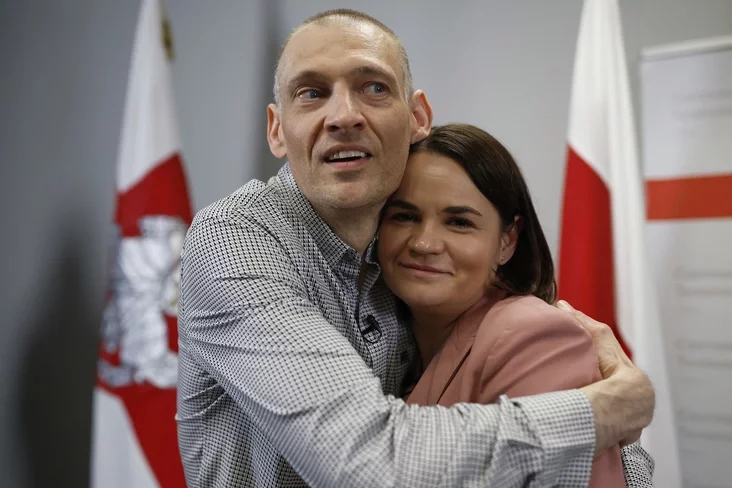
According to Vielichka, if a woman went abroad and saw a different attitude towards women in European countries, she would no longer agree to return to her old role.
The interlocutor emphasizes that she writes in the book not about exceptions, but about typical situations, having worked with hundreds of such stories.
The author asked married male political prisoners to read her manuscript and write a review. Four such reviews, including one from human rights activist Ales Bialiatski, are included in the book. The goal is to balance the female and male perspectives in the book.
«I really wouldn't want us to figure out who suffered more: the husband who suffered in SHIZA, or the wife who raised a child without a father. These comparisons are absolutely inappropriate. Everyone suffered. And it cannot be said that they suffered equally. Everyone suffered in their own way,» the psychologist is convinced.
«Nothing ends with the husband's release from prison»
An important idea in the book, according to the author, is that nothing ends with the husband's release from prison.
«With release from prison, everything just begins. Because a changed person returns – through suffering, injustice, bullying. The person was in abnormal conditions. And the wife, due to circumstances of forced loneliness, also changed. They think everything will be as it was. But adapting to a new way of life after imprisonment is a superhuman task, which, unfortunately, not every couple is able to go through,» the psychologist summarizes.
She notes that there are such couples who managed to do it. They can also be observed in the public space. The author describes in the book all the stages a political prisoner's wife goes through: from the search to transfer to the pre-trial detention center, trial, and preparation for transfer to the correctional colony.
«How correspondence happens, how relations with the mother-in-law happen, how sexual life happens. There are stories of women who described their lives after their husband's return: where people overcame the crisis; where people separated; where they moved to other countries,» she says.
Speaking about how women resolve the issue of sexual life when their husband is behind bars, Volha recalls a case where a husband behind bars allowed his wife to cheat.
«The husband, when he gave permission, said: 'You can even divorce me.' The wife was traumatized that she was doing everything for him, and he wrote her such a thing. 'If he writes me that, permission is given, so I'll go and do it.' Did she regret it later? Yes, she regretted it,» the interlocutor says.
There are also stories with humor, for example, the story of Alesia Rak and Andrei Kuznechyk.
«When we got married, I didn't want to take my husband's surname, because two Kuznechyks are not as interesting as Kuznechyk and Rak,» Volha quotes a fragment.

The book contains advice from the author to women waiting for their husbands to return from prison.
«A person who has physically changed will return to you. This will manifest in his body, in his face, in his actions, in his lifestyle. It will take him time to adapt to free life. During the time he was gone, you got used to living your own life: boiling the kettle, cooking porridge. You got used to running the household without him. A person will return who will require your care for some time,» Volha Vielichka shares the main conclusion.
She notes that it is important not to prolong this care. You should not turn your husband into a child. For example, for men who have served less than five years, adaptation takes six months to a year.
«It depends on the person's character. In almost five years of working on this topic, I come to the conclusion that prison does not change a person. It exacerbates all good and negative traits many times over,» comments the interlocutor.
«Hardly anyone is interested in the woman. They are interested in her husband»
The psychologist notes that people who are close to the wives of political prisoners also do not always behave in a way that helps them get through a difficult time.
When strangers approach on the street, hug, and express sympathy, not all women find this supportive, not all of them need it.

«Perhaps she needs someone to look after the children, to take the children to a club, to bring food, to cook, to invite her to a concert,» the interlocutor ponders.
Volha Vielichka emphasizes that often people, in conversation with wives of political prisoners, are interested exclusively in the fate of the imprisoned husband, but not in how the woman herself feels now.
«Hardly anyone is interested in the woman herself. They are interested in her husband. She, it seems to me, is not strongly obligated to report to society and calm society down. She did not agree to be a heroine,» the interlocutor explains.
Volha believes that idealizing the wives of political prisoners is also not worth it.
«I must, for fairness, say that there are women who use the situation with their husband for their own benefit. They are proud that their husband is a political prisoner, appropriating this as an achievement,» she adds.
The author of the book notes that her book tells stories that resonate with the stories of Belarusian women in different periods in a patriarchal society.
«I expect criticism from men. Any adequate discussion is good. So I will be glad if this book sparks a discussion,» says the author.
Now reading


"Didn't like the products on the shelf — and they write an SMS there." The Ministry of Internal Affairs called Threads a security threat and announced arrests


Comments
Пры чым тут патрыярхальны? Муж, у якога сядзіць жонка, жыве такое самае жыццё. Ходзіць на працу, у краму, гадуе дзяцей, піша і чакае лісты і сваю любую. І гэта роля нармальнага, звычайнага мужа.
Зусім ужо не ведаюць, куды яшчэ прыткнуць гэтую патрыярхальнасць