


17th-century coins found on the territory of the former Bernardine convent in Brest
In Brest, during the conservation of the ruins of the Bernardine convent, archaeologists and restorers found many valuable historical artifacts. This was reported by the Brest City Executive Committee, according to BelTA.
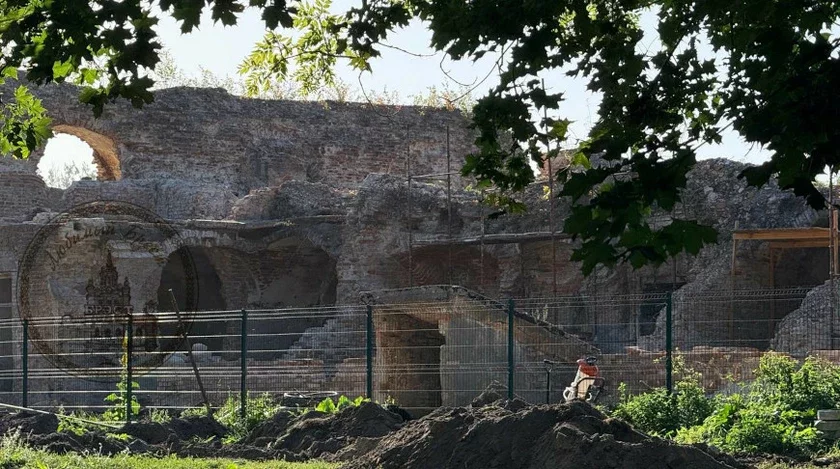
The ruins of the convent are located on the territory of the Volyn fortification of the Brest Fortress. Since late spring, conservation work has been carried out here: ceilings and foundations are being strengthened, and walls and floors are being restored. During the work, specialists are finding various objects related to both the medieval history of Brest and the Modern Age.
Among the finds, 17th-century coins, known as "boratinki" (or "baratinki"), are of particular interest. They were minted at the Brest Mint, which, according to archival documents, was located on the territory of the male Bernardine monastery. Therefore, scientists do not rule out that the discovered coins may originate precisely from this mint.
In addition to the coins, fragments of ceramics, including tiles, and other historical items were also found. In one of the rooms on the ground floor, restorers discovered glass flasks, bottles, and ampoules containing a transparent liquid. Approximately a thousand different containers were submitted for examination. Chemists determined that they contained codeine, morphine, and barbital, which were used in medicine, as well as camphor, phenol, and caffeine.
The collection of artifacts from the territory of the ruins continues. In the future, a museum space is planned to be created here. Scientists hope that the discoveries will help in a more detailed study of this area and will serve as a basis for further archaeological research of the Volyn fortification.
The Bernardine monastic complex in Brest was founded in the 17th century. Over various periods, the historical buildings were used for different purposes. Since the early 1990s, the site has been unused.


Comments
Але мяне больш зацікавілі вадкасці слоікаў. Гэта ж чыстая нарката! Проста прытон нейкі )))