


"Many people will become unnecessary." EPAM co-founder on friendship with Dobkin, wealth and inequality, life in Latvia, and nostalgia
EPAM co-founder Leonid Lozner, in a major interview with devby, spoke about life in Latvia while awaiting his return home, what he teaches his sons in the context of artificial intelligence development, and also discussed the "kill-zone" for young specialists.
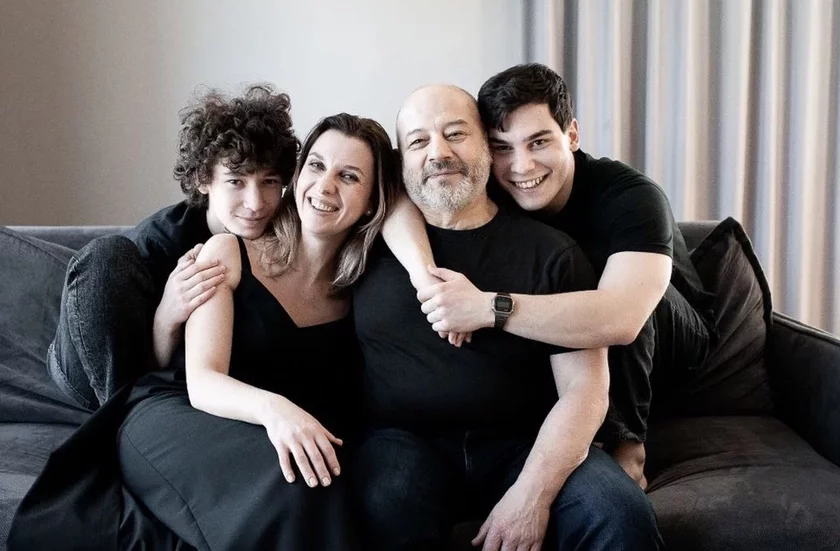
Leonid Lozner is a physicist, entrepreneur, and co-founder of EPAM Systems. Born in 1960 in Minsk, he graduated from the Physics Faculty of BSU (Belarusian State University), beginning his career at the Institute of Physics of the BSSR Academy of Sciences, where he was involved in automating physical processes.
In 1993, together with Arkady Dobkin, he founded EPAM. In the mid-2000s, he left the operational management of the company, retaining his shareholder status.
He calls himself a conservative investor. Nevertheless, in 2017 he became one of the first business angels of the agritech startup OneSoil, and in 2023 he participated in financing the biotech startup Gero.
In the 2010s, Leonid actively supported school STEM education, the development of robotics, and the popularization of exact sciences in Belarus, and was a board member of the "Education for the Future" association. He was one of the ideologists of the IT University project.
Since late 2020, he has been residing in Latvia. He is married and has two sons.
Currently, Leonid is an advisor for the Next 35 project, a new annual list of Belarusians under 35 who are building ambitious careers and launching projects at an international level.
About Latvia: "Some friends remain, but are already contemplating"
— Leonid, it's almost six years since you've been in Latvia. Tell us how you ended up there.
— Back in 2012, we bought a plot of land near the city of Cēsis. This is the heart of Latvia, surrounded by the Gauja National Park, a very beautiful place.
There is a beautiful ecological village here, Amatciems, conceived by a Latvian businessman during that good period when Latvia was quite friendly to Russian-speaking newcomers and actively sold them residence permits. It granted five-year documents to property owners and then extended them indefinitely.
During this time, we built a house here. Initially, we came here like to a dacha, and in December 2020, we moved permanently. We decided it would be better to observe from the side how quickly our homeland would return to a peaceful state. We are still waiting.
— How has the attitude towards you in particular, and towards Russian-speaking migrants in general, changed in Latvia over the past few years?
— From the state's perspective, it has become much more difficult. Many people I communicated with after 2020 are no longer in Latvia. My IT friends mostly live in Poland or Cyprus. Some remain in Latvia, but are already contemplating.
If I didn't have a European (Portuguese) passport, we wouldn't be able to live here.
In our village, the first changes became noticeable back in 2014: new Russian buyers stopped appearing, as Latvia tightened its real estate rules. At that time, it only concerned Russians, and from 2022, it also applies to Belarusians.
But we have already integrated into this life. The nature here is similar to that of Braslav or Naroch — my favorite places in Belarus. In this sense, I feel at home. The cultural environment is also quite close to me. But I still haven't learned Latvian, because I am still hoping to return to my homeland.
— Does the lack of language create discomfort?
— Practically none in everyday life. After all, Latvians are more tolerant of Russian-speaking newcomers than they are of their own Russian-speaking fellow citizens who haven't properly learned Latvian. In Cēsis, there is only one place, a stationery shop, where an elderly saleswoman grimaced when I first asked her something in Russian. Now I address her in English. True, she doesn't speak English very well, and she doesn't want to speak Russian. So, my most problematic purchase is stationery.
In other places, I don't feel any problems. I do know a couple of hundred Latvian words and always start a conversation with a greeting in Latvian. After that, with older people, I can switch to Russian, and this is always met with friendliness. With younger people, you should speak English right away, and everything will also be fine.
Those I've known for a long time know that I am Belarusian and would like to return to Belarus, which justifies me in their eyes. Waiters in cafes, of course, don't know this. But if they hear my wife and I speaking Russian to each other, they smile and switch to Russian if they know it.
On the other hand, they might well assume we are Ukrainian refugees. Overall, all these narratives are interwoven in Latvia in an incredible way.
— Summarizing the Latvian topic: you are in Latvia because of real estate, a similar mentality, and a familiar climate?
— The climate is precisely not the reason: it's great here in summer, but dismal in winter. It's 500 km north of Minsk, and the short daylight hours in winter are compounded by cloudy skies — it's a depressing thing.
In terms of climate, I prefer Portugal. A friendly and attractive country, but peculiar: very soulful people live there, poorly adapted to systematic work. I, on the other hand, was raised in a tradition of responsibility and discipline, and encountering a society where these concepts are extremely weakened is a nightmare and a misunderstanding for me. So, it's Latvia after all.
Here we have comfortable housing, and around us is very beautiful nature. You drive from our village to Cēsis for groceries, look around, and think: how beautiful!
Here I feel at home, almost like in the Lahojsk region, where I lived for the last 20 years before leaving. That's why I'm here.
— Do you miss your homeland?
— I do miss it. And I hope to return. But for now, I'm observing.
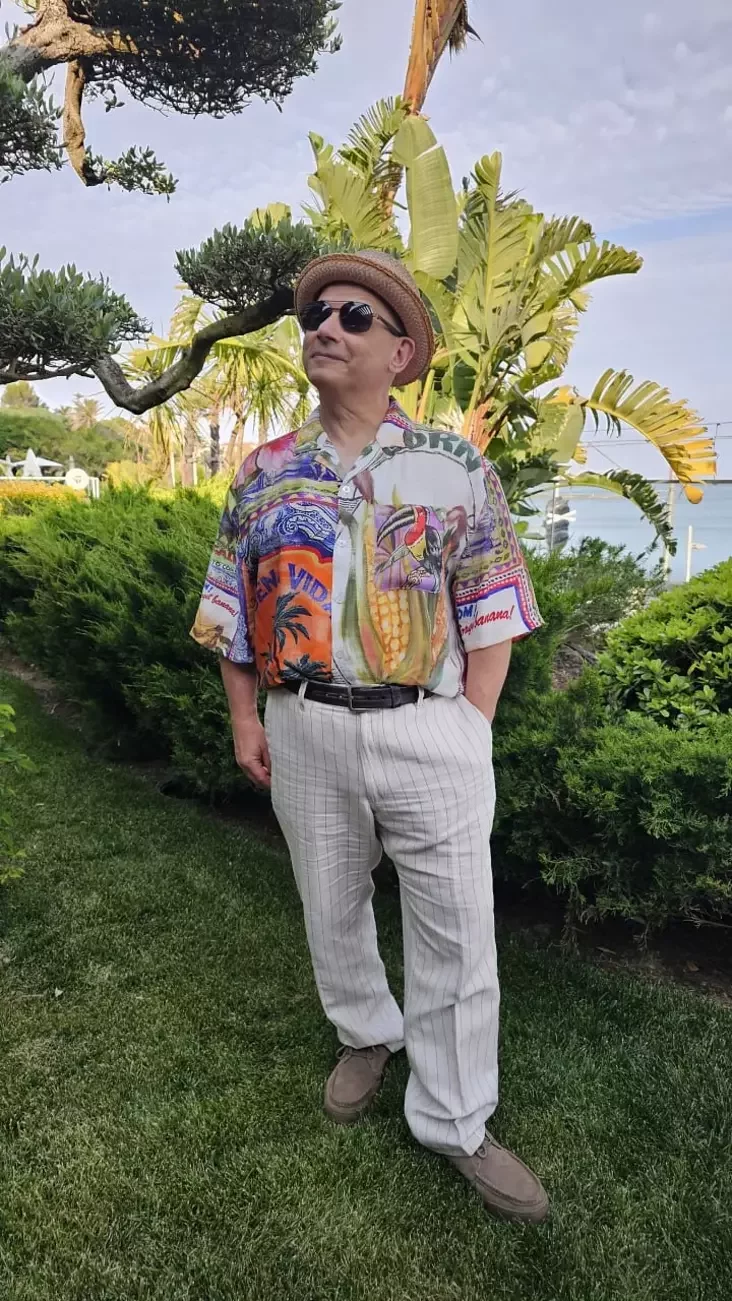
About current activities: "I still pick up checkers"
— What are you doing now? Investing?
— In 2017, I joined venture investing, but the universal vicissitudes of the last five years have led to a significant cooling of this interest.
I still sometimes pick up checkers, to use an old joke's phrase. Fortunately, I'm still able to write simple Python programs in the company of AI. I've been lucky to maintain creative contact with the leader of Gero, Petr Fedichev — this is the source of my naive pseudo-scientific creativity. And with the help of "vibe-coding," I model various simple ideas in the field of aging-longevity problems. Simply for my own intellectual amusement.
Also — again, in partnership with AI — I've written several short science fiction stories. They can be found on author.today — forgive me for the hidden, or rather, obvious advertisement.
And, of course, there's yoga: 18 years of dedicated practice, to which surfing was recently added. A healthy mind in a healthy body, as they said in my communist youth.
— You are also among the advisors for Next 35. Why this project for you, and by what criteria will you evaluate cool young people?
— About 20-25 years ago, I actively participated in supporting school Olympiad teams. I am very proud that I was also invited to the jury of the Republican Tournament of Young Physicists, where I found myself in the company of my university professors-lecturers and academic classmates. 20 years have passed, and it is a great honor for me to now evaluate the same generation, who are currently around 35, in such a worthy company of successful Belarusians.
— What is important to achieve by 35, and are these age cut-offs necessary?
— At 66, I don't think there are any life milestones by which one must achieve something. I think the main idea in life is not to be late at any age. Not to be late in the one and most important human endeavor — to be human.
About education: "I would prefer my sons to graduate from BSU Lyceum"
— In old interviews, you discussed Belarusian education: strong schools still exist, but they are fewer, the university system is degrading, and the reasons lie in material factors. Your youngest son is now 18. He managed to study both in Belarus and Latvia. Can you compare?
— When we moved, my youngest was 12. COVID was ongoing, and for the first year, my son continued to study remotely at a Minsk school. In the seventh grade, he went to Exupery International School here, with instruction in English. Its main contingent was children from Russian-speaking families, so the language of communication with friends was largely Russian. But also largely English.
After Exupery, he studied for a year at an English-speaking boarding school in Switzerland, and his final two years of high school were in Portugal, also in English. As a result, he became a modern boy who often switches to English when communicating with his parents.
— So your experience isn't very relevant; you can't compare a Belarusian school with a typical Latvian one. Let's ask differently then: did you find in international schools what you felt was lacking in Belarusian ones?
— My sons attended Gymnasium No. 50 — the one where I studied from third to eighth grade and where Arkady Dobkin and I became friends. My older son finished grades 7-9 there before studying in Europe, and at that time, it was still a great school. My younger son mainly studied at a tutoring center, largely staffed by teachers from Gymnasium No. 50. And also the best memories.
Before leaving, I collaborated extensively with BSU Lyceum, helping Belarusian teams with trips to international Olympiads. And I think it's one of the best schools I've ever encountered. I don't know what's happening there today, but as of 2020, it was an excellent school. Looking back, I would have preferred my sons to graduate from that lyceum.
— Why?
— In BSU Lyceum, the student body was formed by selecting the best boys and girls. At Exupery, the academic level was good, and the teachers were predominantly of Soviet schooling (yes, they teach in Europe and in English, but as educators, they formed during Soviet times), so I think the teaching level was roughly the same. But the student level... Exupery is just a private school: you pay and you study, no selection.
Surely there were good kids there, and they went to normal European universities. But it wasn't like the class where Yura Melnichak studied.
Once, Yura Melnichak and Andrey Avsievich remarked to me in conversation: "Well, we studied in the same class at BSU Lyceum."
I was surprised: "Wow, what a class you had!"
They: "You know another one of our classmates — Vanya Tabarovets."
And Vanya is a big infrastructure manager at EPAM (Vice President of Corporate Infrastructure and Strategy — devby). Also an absolutely excellent guy.
"Ah," I said, "there weren't just two of you, there were three such cool guys."
"And the others weren't bad either," they replied.
And I realize that this lyceum is an elite institution. Later, when I helped teams travel to the Young Physicists' Tournament, and these were mainly guys from BSU Lyceum, I saw there an even more elite of the elite. I wish I could have studied with such people!
I made this discovery at about 10 years old, when I played table tennis with boys at a resort in Druskininkai. Then I realized that if you play with those you win against, your game level slowly drops. But if you play with those you lose to, your level grows. And if you want to achieve something in life, you should start by playing with those you lose to.
About nostalgia: "It's not for Soviet power, but for the human spirit"
— You have often spoken warmly about the Soviet school and its teachers. Do you miss those times?
— From my point of view, the Soviet school was good. When I hear stories about teachers bullying someone, I'm surprised: my experience was completely different, I wasn't locked in a closet, I didn't cry in class. Well, alright, teachers vary. I was lucky; I had a fantastic physics teacher, Yury Dmitrievich Leshchinsky, who in 1975 had experience teaching in French at an Algerian lyceum. And all the other teachers were decent.
But under no circumstances should one conclude from this that I am a carrier of Marxist ideas. Absolutely not.
The fact is that during my Soviet childhood and youth, humanity as a whole was experiencing a scientific and technological boom, which, of course, reflected nothing other than the rivalry of two systems.
This I understand, looking back. But then, for me, a small person beginning an independent life, these big ideas were distant and not very clear. And nearby, at work and in my immediate environment, I saw that we wanted to do some cool things.
As a schoolboy, like many boys, I dreamed of being an astronaut. And in the ninth and tenth grades, my wonderful friend, who is now a professor at Harvard, and I could totally discuss whether humanity would be able to master distant galaxies, or if our maximum was the Solar System. I suspect schoolchildren today don't discuss that.
Moreover, I grew up in a Soviet intellectual family (my mother is a teacher, my father is a civil engineer), and this complemented the dreamy atmosphere in which some of the youth lived.
That is, civilization lived with the idea that we would fly somewhere far away. Yes, the source of this atmosphere was the arms race – no doubt. Later, it became clear that the exploration of space did not particularly affect our standard of living, but rather simply devoured money that could be directed elsewhere.
Well, what we direct it to today is a completely different conversation. And I, of course, don't like it very much, not to mention the big war.
The values that began to dominate civilization are somehow far from space flights. And I feel sad and bored because of it.
— Many children wanted to be astronauts, but then that dream disappeared somewhere.
— When I had to change schools because of a "D" for behavior and met Yury Dmitrievich Leshchinsky, I realized I wouldn't be an astronaut.
Instead, I started dreaming about physics, and my dream was to gain a grain of new knowledge for humanity. This is very immodest, but it's super motivation. That's why I say that working in science is similar to a religious idea. I would compare it to communicating with the Almighty, if I believed in Him.
Returning to the essence of your question: my nostalgia for Soviet times is not nostalgia for Soviet power, but nostalgia for the human spirit, directed far away, upwards — somewhere difficult to reach, and not simply towards an increase in material well-being.
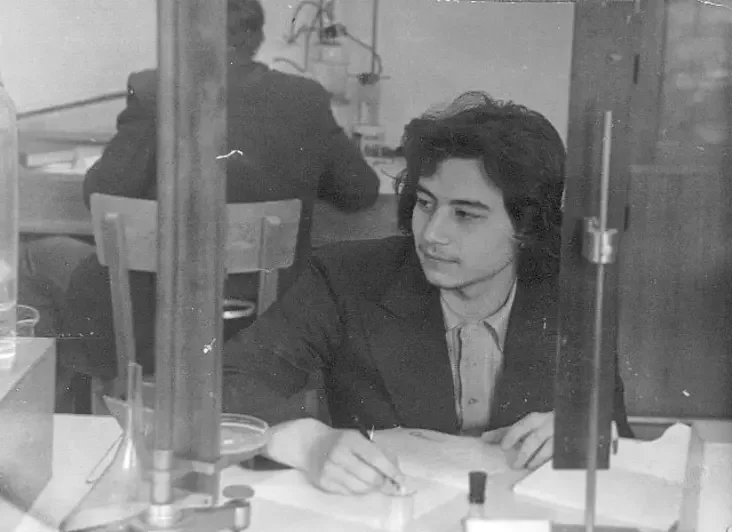
About the "D" for behavior: "I was such a cheerful boy"
— And why did you get a "D" for behavior?
— In school, I was prone to mischief — but not out of malice, rather a mischievous character. I was an "A" student, but my behavior earned me a "D." Once in seventh grade, I spent almost the entire lesson under the desk. And then I just crawled out — the teacher almost had a heart attack.
She asked me what I was doing there. I replied that I was looking for a pen. A completely idiotic joke, but that's what a cheerful guy I was.
Then came the summons of my parents to the principal — all according to the full program. And we realized we had to leave.
That's how I ended up in School No. 23, in a class with an advanced study of physics and radio electronics. Later it became one of the leading Belarusian-language gymnasiums.
— And Arkady Dobkin stayed at School No. 50?
— Yes. We studied in the same class from third to seventh grade. Arkady was already wrestling, making progress. And when I arrived, such a fluffy little boy who couldn't even do a proper pull-up, Arkady took me under his wing. As a result, I passed the GTO standards — I did eight or ten pull-ups. When I moved to another school, our friendship remained.
Among other things, we were united by our love for amateur football. We continued to play during our student years and later, right up until his departure, and then during his visits for EPAM tournaments.
About friendship with Dobkin: "Something in very deep roots"
— How did you manage to maintain your friendship with Arkady Dobkin, despite the big business?
— Running a joint business is, of course, a great test for friendship, and it's difficult to go through it without losses. And we also had disagreements. But to still call each other friends, putting aside disagreements and claims — I speak for myself — is allowed by a great common cause, a shared cultural code, and, perhaps, something in very deep roots. And most importantly, Arkady and I played in the same "backyard" football team for 30 years, while we were together in business for only about 20.
— Arkady Dobkin vaguely spoke about discrimination based on nationality in his youth: he wasn't assigned to where he wanted. Did it affect you in any way?
— I don't like to complain about discrimination, but not to acknowledge its existence would be ridiculous. After school, I applied to the Moscow Institute of Physics and Technology. I didn't get in. I think not everyone who got in was better than me.
Nevertheless, I also clearly understand my own mistakes that I made on the exams. I didn't get in because I wasn't good enough.
Perhaps my assignment after graduation wasn't quite what a graduate with my grades could have expected. But later, thanks to a few wonderful people, I ended up in very respectable collectives and was involved in physics, if not at a world level, then close to it. As much as was possible in a decaying Soviet country.
About non-emigration: "Life was simply comfortable enough as it was"
— Why didn't you leave for the USA, like Dobkin?
— A long time ago, I came up with a boastful answer about the emigration window: some people grow into it, some don't, and some outgrow it. And I, they say, am above the emigration window: I'm cool enough to make my life happy without that endeavor.
But without boasting, my life was simply comfortable enough without moving. Besides, I believe that a person's urge to move somewhere is a character trait, largely determined genetically. I didn't get that. I love to travel very much, but every time I want to return home.
As for moving to Latvia, it's not emigration. I consider myself a displaced person, a luxury-refugee — I don't live where I'd like, but with my standard of living, it's a sin to complain about it.
Why educate children: "Survival in the forest + modern skills"
— What should one learn in the second quarter of the 21st century? And what should one teach children?
— I am a proponent of the view that for successful progress in life, stable qualities and skills that have always been valued are important, combined with advanced knowledge that opens the way to a successful career. Among invaluable basic skills is the ability to survive a night in a frosty forest. To build a hut from branches, to make a fire.
— In case of a nuclear winter?
— No. Only to engage that important part of the brain responsible for survival skills, so that our brain doesn't shrivel like dry fruit. It's important to know that, if you find yourself in a winter forest, you won't panic, because you'll be able to survive.
This also shapes our social behavior. I believe that social dignity is largely linked to physiological self-sufficiency.
A person's ability not to panic in conditions of natural danger, let's call it physiological, becomes the foundation of resilience even in conditions of social challenge, and not necessarily in a negative sense. You will be able to survive — and everything else will also work out for you.
Therefore, it's important for parents to involve children in acquiring traditional skills. I was involved in sports tourism, so my examples come from that field. But it could be a good sport, horseback riding — anything.
And to this, of course, one must add modern skills. At some point, a child must get an iPad in their hands and start using ChatGPT (I use these names in a general sense). But then much more complex questions arise: at what exact moment, under what parental control, how to ensure these assistants do no harm? Because both a tablet and artificial intelligence can very quickly lead to a person simply losing the ability to think. I would call for a healthy balance, but how to find it?
But if a child is given a phone just so the parents can have free time, the result will be trouble. Try not to do that.
— Is it necessary to learn foreign languages if soon, presumably, cheap real-time translation will be available to everyone?
— I think the need to learn languages as tools of communication will disappear. But there is another huge value in learning a language — gaining a new perspective on the world. For example, when "I don't think so" is said in English, it means a polite "no." You start to delve deeper, and it becomes very interesting.
About juniors: "The main challenge for young people will be the 'kill-zone' between university graduation and starting work"
— What profession should one learn?
— Any that you like. Apparently, in the near future, the main challenge for young people will be the "kill-zone" — the dead zone between graduating from university and starting independent work. Bachelors and masters will be in direct competition with artificial intelligence. In places where they would be hired for inexpensive junior work and where they would have a chance for professional formation alongside experienced colleagues, it will be cheaper to hire artificial intelligence as an apprentice.
Although token prices haven't stabilized yet, and we don't know for sure.
For me, it's not yet clear that artificial intelligence will be cheaper. But it is a fact that experienced specialists will find it easier to use AI assistance than to bother with juniors.
As my friend, who once worked at EPAM and is now a senior executive at Google, says: if you love your work and dedicate yourself to it completely, then after 4-5 years of study, you will no longer be a junior.
But this means we are narrowing the professional field to talented people who truly love their work and are capable of toiling.
As someone who hired the first few hundred people at EPAM, I know for sure that diligence is a rare quality, talent is more common. And great talent plus great diligence is a unique combination that, in fact, produces champions.
How to choose a profession: wait for OpenAI and Anthropic to go public
— Your youngest son, it seems, took a break before entering university?
— One could say it more harshly: he's not applying anywhere. We understand that he would still like to get a higher education, but due to a combination of factors — overload from studying, not understanding what he loves and wants in life, and also the country he lives in — it turned out to be difficult.
My wife and I supported his decision. We could have told our son: "You said something about chemistry? Go ahead." But I understand that pursuing a profession you might not love, and then ending up as a useless graduate, would be a waste of time.
If general confusion prevailed in my son's arguments, my arguments also contained uncertainty related to AI. I hope that this year, the economics of artificial intelligence will become clearer, and this will help me formulate paternal advice.
When companies like OpenAI and Anthropic go public, they will form some publicly demonstrated business model, and the cost of replacing a programmer with artificial intelligence will become more or less clear. Understanding how much an AI junior researcher costs will influence my advice to my son.
If it turns out that an AI junior researcher is still three times more expensive than a living junior researcher, then graduates of decent universities still have a normal chance of employment.
And then I would recommend a natural science specialty to him — like chemistry.
— And if the opposite? If artificial intelligence turns out to be much cheaper than a junior, what then?
— Then I will tell my son in all seriousness: "You like to cook. Why not consider that career?" If you can reach a certain professional level in cooking and people say "I almost bit my fingers off – it was so delicious," then that's no less cool than discovering grains of new knowledge for humanity.
About the apocalypse scenario: "I don't think it will be like 'Terminator'"
— You are concerned about social upheavals that AI might bring and a possible nuclear catastrophe. Which risks are higher?
— I think the real consequences associated with the development of artificial intelligence now carry more uncertainty, and therefore more danger.
Regarding the nuclear threat today, there is no need to worry excessively. It is a familiar old threat that humanity has somehow dealt with before. Artificial intelligence is a new threat, unknown and unusual.
I don't think for a second that it will be like "Terminator." But I remember how first there was the ancient world, in which culture and engineering flourished, and then came the Dark Ages.
And the fact that many, many people will become unnecessary is already evident today.
About resources in the future: "It's not certain that there will be enough money"
— Will this be a material problem for them, or will there be enough resources/money for everything? And then "robots work — happy human"?
— I don't know, it's not certain there will be enough money. If there were enough, humanity would buy out the problem. And then the degradation of billions of people would occur in conditions of abundance and soft meaninglessness. With decent wealth, people could play computer games, consume alcohol, and engage in other foolishness, giving birth to fewer and fewer new people. You remember John Calhoun's "Universe-25" — experiments that showed the degeneration of mouse families placed in ideal conditions.
If there aren't enough resources, then the hungry will riot, and how they will be suppressed — by artificial intelligence or by those people who provide food — I don't even want to fantasize about. It's a pure nightmare.
— Speaking of resources: do you think pensions will still exist in 15-20 years?
— In conditions of an aging and shrinking population, as well as increasing life expectancy, a solidarity system definitely won't exist. Something else will have to be invented. And if artificial intelligence justifies its promises and provides a fantastic increase in labor productivity, then there will be conditionally free consumer goods and something like universal basic income.
About longevity: "Up to 120 is still fine, but immortality is nonsense"
— You invested in Gero. How do you feel about the race for longevity? How ethical is it to strive to live to 120 years, especially when the population is already aging?
— Up to 120, maybe it's still fine, considering I've passed half of that. But the ideas of immortality are simply ridiculous. And Gero in this sense is a conservative, not to say pessimistic, player in the market. Petr Fedichev as a physicist (and I completely agree with him) believes that 120 years is a natural scientific limit. And immortality is complete nonsense.
How ethical is it to live long? Well, I practice yoga; it's my way of racing for longevity, sincere and natural. My primary motivation is the desire to be healthy and functional.
But, of course, if wealthy people, especially the super-rich, have means to extend life that people of average income do not, let alone the poor, I won't like it.
However, the poor have many other problems. They simply won't live as long as people of average income due to the quality of their food. So, perhaps this ethical problem is already with us? After all, it has always been this way: people of high income lived longer.
In defense, I would note that people in creative professions traditionally lived the longest: scientists, musicians, philosophers. So it's not as important to be rich as it is (for many reasons, including longevity) to have a creative profession. Which is what I wish for my sons and all good people.
About the super-rich: "And what responsibility should they take, besides taxes?"
— How do you feel about super-wealth? How normal is a situation where billions or even a trillion, like Musk's, are in the hands of individuals? By the way, what do you think of him?
— I greatly respect Musk as a visionary and entrepreneur — it didn't just fall from the sky for him. As a person of excessive egoism and arrogance, I don't like him, because that's not my type.
To the question of material stratification in the world. From my point of view, this is wrong. But it is a natural result of the economically motivated scheme of civilization that we have built. And in that sense, I admit that it is an inevitable consequence.
What if we start building systems from which super-rich people are excluded by design? I lived through such a system, I spent half my life in it. And I would say that it experimentally confirmed its inadequacy.
Is there some compromise between that system, which has already failed, and the one that might fail in the near future? I don't have an answer.
Now reading


Tragedy in Borisov Hospital: patient's granddaughter says he received attention after six hours, when foam was already coming from his mouth — he died

Tragedy in Borisov Hospital: patient's granddaughter says he received attention after six hours, when foam was already coming from his mouth — he died


Former Pussy Riot Member Revealed That the FSB Recruited Her Under Threat of Imprisonment. With Her Help, They Wanted to Kill the Publisher of "Mediazona"


Comments