


Cuba's Authorities Begin Restructuring: 176 Changes in the Economic System
The plan envisages expanding private property rights for real estate, creating private banks, transforming some state-owned enterprises into commercial companies with equity participation, and easing restrictions for private businesses. According to the authorities, they want to use market mechanisms to increase the efficiency of the socialist system.
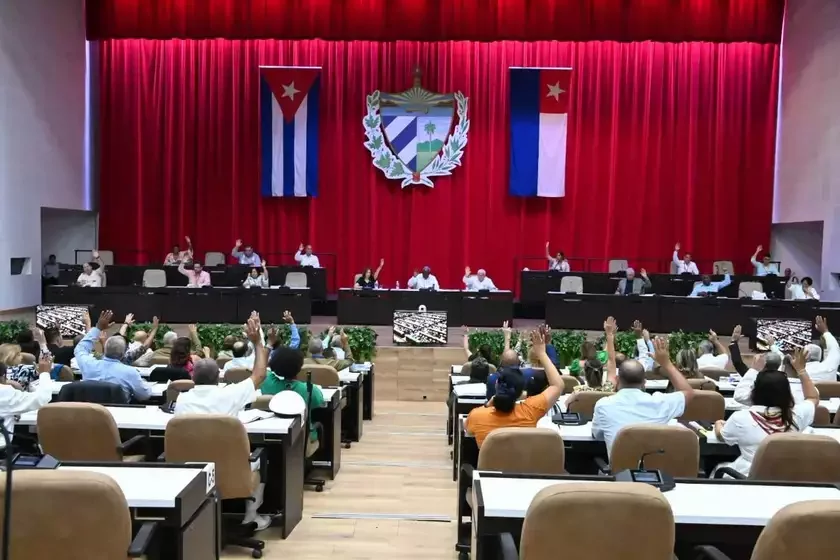
National Assembly of People's Power of Cuba. Photo: Presidencia Cuba / facebook
All this greatly resembles the beginning of Gorbachev's "Perestroika" in the USSR. On Thursday, June 18, during the third extraordinary session of the National Assembly of People's Power, held at the Convention Palace in Havana, deputies unanimously approved a plan for economic reforms. Prior to this, the document was supported by an extraordinary plenum of the Central Committee of the Communist Party of Cuba.
The plan includes 176 measures, grouped into 23 main directions. As reported by CubaHeadlines, Cuban President Miguel Díaz-Canel emphasized that the authorities are not renouncing socialism. According to him, the proposed measures should help the country overcome what the government itself calls the most difficult challenge since the "Special Period" of the 1990s.
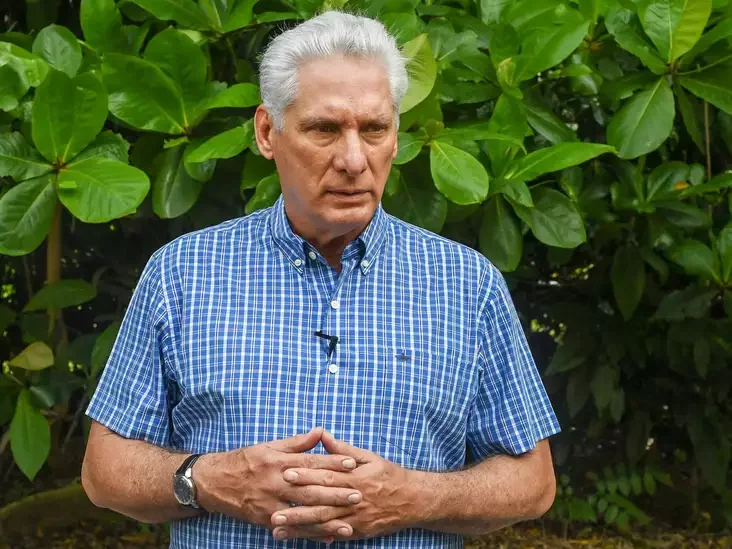
Miguel Díaz-Canel. Photo: Presidencia Cuba / facebook
In turn, the country's Prime Minister, Manuel Marrero Cruz, noted that the upcoming changes correspond to the logic of further socialist development. He referred to the market as "a tool for efficient resource allocation."
"The renewal of the economic and social model has the main goal of improving the quality of life for our compatriots," the Prime Minister stated.
Justifying the necessity of the transformations, Marrero cited Fidel Castro's words, spoken during the economic crisis of the 1990s: "Life, reality, the dramatic situation the world is experiencing, compel us to do what we would never do under other circumstances."
According to the Prime Minister, the Cuban government reviewed 390 proposals regarding economic and social reforms. As a result, 66.7% of the proposals were included in the final document and additional Politburo recommendations.
Contents of the New Reforms in Cuba
According to media reports, the reform package envisages the transformation of some state-owned enterprises into commercial companies with shares and equity participation, allowing private and foreign capital into new sectors of the economy, creating private banks under state control, and expanding opportunities for private entrepreneurship.
One of the most notable innovations concerns the real estate market. The authorities intend to allow the sale of state-owned properties to both Cuban and foreign natural and legal persons, including Cuban citizens living abroad. This is a serious shift for a country where the state has for decades maintained control over land and a significant part of the economy.
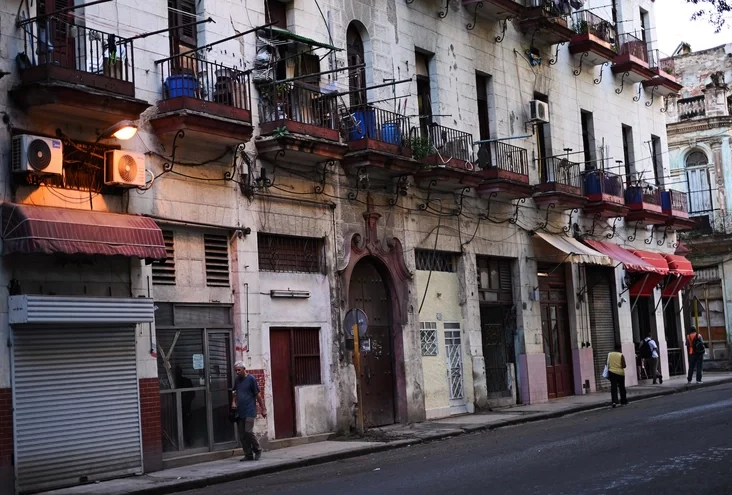
Havana. Photo: Zed Jameson / Anadolu via Getty Images
For the first time, Cuban entrepreneurs will be allowed to hire more than a hundred employees and own several private companies simultaneously. The private sector will be able to operate in more industries, and direct foreign investments in private business will be regulated by separate norms that will define issues of ownership, dispute resolution, and profit repatriation.
In agriculture, farmers will gain access to foreign currency and the right to directly import raw materials without the involvement of state intermediaries. Changes will also affect foreign trade: the requirement to conduct import-export operations exclusively through state-owned companies will be abolished.
To stimulate domestic production, tariff concessions on imported raw materials are being introduced, and logistical chains will be restructured with a view to increasing exports.
In the financial sphere, the authorities announced the creation of private currency exchanges, a real-time digital currency market, and a system of currency auctions designed to combat exchange rate distortions that negatively affect the country's economy. Companies in all economic sectors will have the right to open full-fledged foreign currency accounts in banks.
Municipalities will also gain more autonomy. Local authorities will be able to manage their own foreign currency revenues, develop joint projects with Cubans living abroad, and conduct foreign trade operations without the mediation of central authorities.
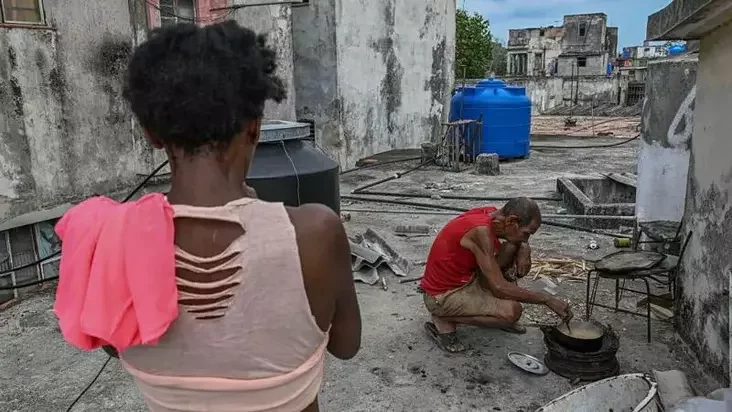
In Havana, a man cooks on a small stove during a power outage, May 13, 2026. Photo: AFP via Getty Image
The government also plans to gradually abandon the extensive system of product subsidies and transition to targeted support for the population. Other measures include a phased devaluation of the official peso exchange rate, a review of mechanisms for exchanging public debt for domestic assets, and a reduction in the budget deficit through tax increases and the elimination of inefficient expenditures. Among the planned measures is the gradual introduction of a value-added tax (VAT), which previously did not exist in Cuba.
A separate block of reforms concerns energy. Cuba plans to abolish taxes and customs duties on solar energy technologies, and foreign companies will be allowed to directly supply solar panels, batteries, and inverters to the local market.
The authorities also intend to abolish most administrative price controls. The government admitted that previous restrictions failed to curb inflation and only exacerbated structural imbalances in the economy.
It should be recalled that the reforms are being adopted against the backdrop of a deep economic crisis, increased US sanctions pressure, and an oil blockade, which worsened the situation of the Cuban economy, hitting tourism, fuel supplies, and the operation of state enterprises.
At the same time, as noted by Geo.tv, President Díaz-Canel emphasized that the decision to open the economy is not related to negotiations between Havana and Washington, which began earlier this year.
The new measures effectively repeal a significant part of the economic foundations that were copied from the Soviet system and introduced after the 1959 revolution. The changes were also supported by the leader of the Communist Party of Cuba, Raúl Castro. In a written message, which was first read to members of the Politburo and then to deputies, he called the reforms "useful" and urged their implementation as quickly as possible.
It is still unclear how quickly and through what mechanisms this massive package of transformations will be implemented. After all, in communist countries and repressive regimes, what is on paper and on television screens is often one thing, and reality is another.
Now reading


Remember the story of the American woman kept in a coma after death to prevent terminating her pregnancy? A year has passed: what is happening with the child now?

Remember the story of the American woman kept in a coma after death to prevent terminating her pregnancy? A year has passed: what is happening with the child now?


"Arms Dealer Serykh Could Have Kidnapped Kotov to Hand Him Over to Belarusian Special Services and Gain Lukashenka's Attention" — Stanislau Ivashkevich


Comments
Няўжо і ім, як кітайцам дапаможуць амерыканцы ?
Признали отказ от коммунизма в его Маркса-Энгельса понимании, практически взяли курс на построение социал-демократии на Кубе.