


Victims of Integration. Russia Lures Belarusian Children with Free Trips and Through Rossotrudnichestvo
The tragedy in Bryansk region drew attention to the fact that «for health improvement» and «educational projects» thousands of Belarusian children are sent annually to Russian camps and sanatoriums, despite the war. Among the offers are not only vacations on the Black Sea, but also training camps with shooting and studying combat robotics. «Nasha Niva» investigated who and why takes Belarusian children to Russia.
Trips Through Executive Committees and Lukashenka's Presidential Affairs Directorate
First of all, it is worth noting that part of the trips to the occupied territories are paid for by the Belarusian authorities. Thousands of vouchers are purchased with budget funds for sanatoriums of Lukashenka's Presidential Affairs Directorate — «Belarus» and «Belaya Rus» (Sochi, Tuapse), as well as for the «Belarusiya» sanatorium in annexed Crimea.
These vouchers are distributed to parents through health improvement departments. The conditions are very attractive: the child travels for free, while the adult pays only about 15% of the cost (approximately 500 rubles) for themselves. However, travel expenses must be covered independently.
Some institutions have separate agreements with Russian sanatoriums — as in the case of the Rechytsa Children's Sports School, whose children traveled to Gelendzhik.
Annexed Crimea and Russian World Lessons in «Artek»
A significant part of the work with Belarusian teenagers is carried out through large federal children's centers, which are directly subordinate to the Ministry of Education of Russia. These are «Orlyonok,» «Smena,» «Okean,» and «Artek,» well-known since Soviet times. In addition to traditional union cadet shifts, Belarusian children massively attend these centers for other thematic programs.
One of the biggest attractions is the international children's center «Artek,» located in annexed Crimea. Despite the war and regular shelling of the peninsula, Belarusian children continue to be massively sent there. Hundreds of schoolchildren from Belarus are taken there annually.
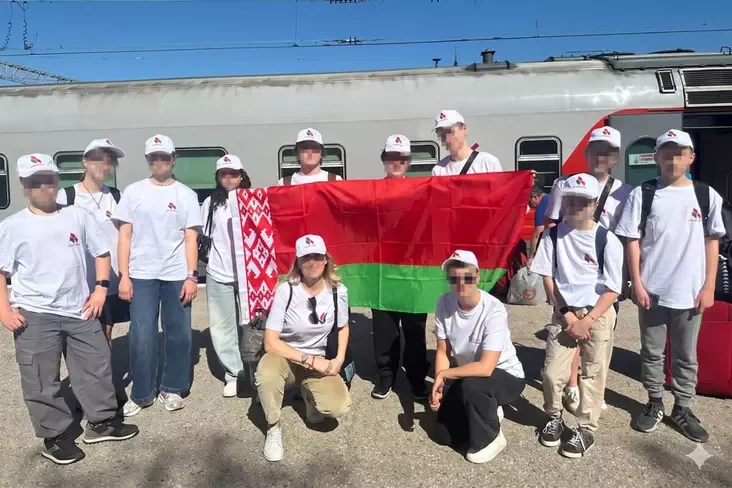
To get into «Artek,» one must pass a selection process. Vouchers are awarded through projects like «World of Opportunities» from the Russian party «United Russia» or the «Big Change» competition, as well as for good results in various contests. Among the mandatory conditions for high school students is conducting an «Artek lesson» for younger students.
Russia openly states that such trips are a tool for luring talented Belarusians to Russia. Alexander Alimov, director of a department at the Russian Ministry of Foreign Affairs, said that Russian is used in «Artek» as the official language of international communication to increase the number of foreigners who will later go to study in Russia.
Militarization Under the Guise of Union Brotherhood
A significant part of these programs is paid for by Russia. And one of the directions of work with Belarusian teenagers is ideological and military training.
A striking example is the All-Russian Children's Center «Orlyonok» (in the same Tuapse in Krasnodar Krai, which was recently targeted by attacks). Annually, a thematic shift «Historical Memory of Generations» takes place there, bringing together nearly a hundred cadets from Suvorov and cadet schools from Belarus.
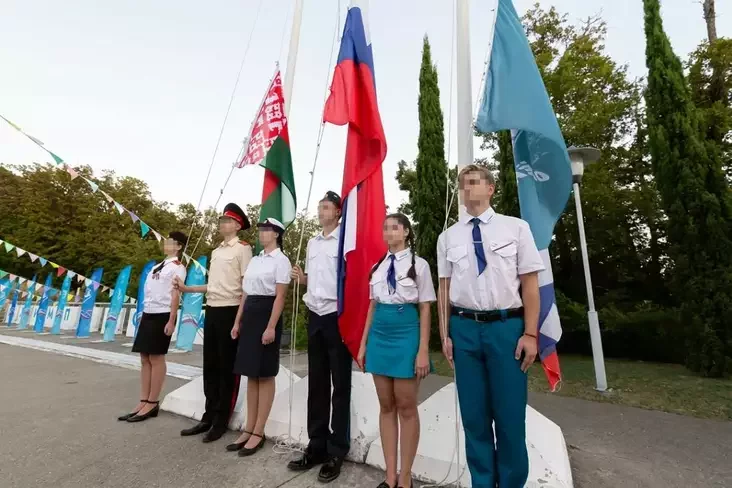
The program goes far beyond ordinary children's recreation. For schoolchildren, a military-patriotic course «Path to Victory» is organized, which includes:
- training in combat robotics,
- shooting sports and rock climbing,
- drill and military training.
The organizers do not hide the purpose of such gatherings: children are being prepared for the fact that «very soon they will be entrusted with the defense of the state interests of the Union State and their countries.»
In early August 2025, MAZ management sent 20 young Belarusians to Russia for the so-called specialized shift «Strength of Unity.» Teenagers spent two weeks in the military-patriotic Seraphim-named «Patriot» Park, which is located in Bashkortostan directly on the territory of a former military unit.
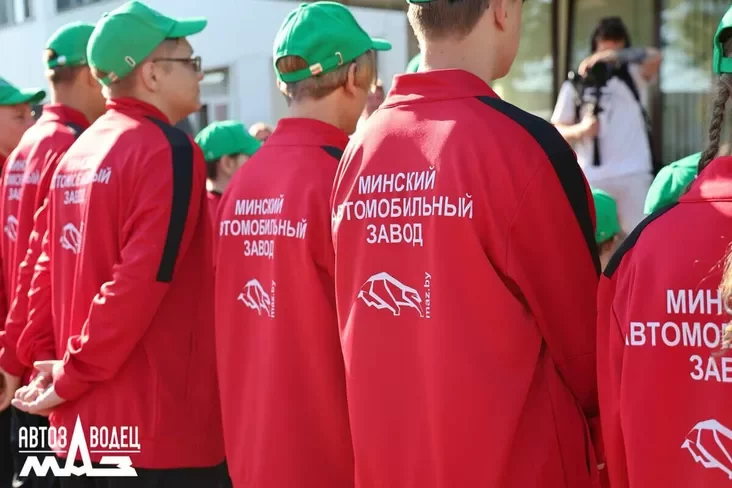
This trip was organized on the initiative of Konstantin Klimin, Bashkortostan's representative at the Russian trade mission in Belarus. His idea was personally supported by MAZ General Director Valery Ivankovich. Sending teenagers to Russia, the head of the state enterprise stated that the factory attaches special importance to «forming a patriotic worldview,» and the children themselves should become «ambassadors of friendship.»
Chernobyl Programs from the Union State
A separate direction of the budget of the so-called Union State has become a program for children from territories affected by the Chernobyl disaster.
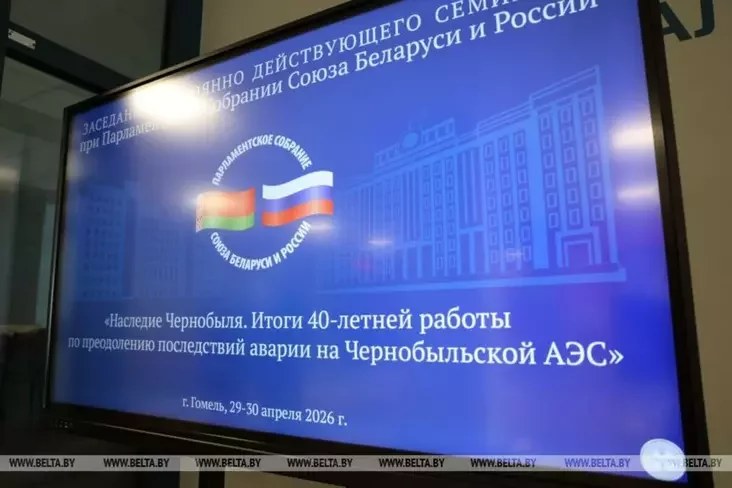
Since 2002, more than 30,000 children and teenagers have passed through it, thousands of whom are from Belarus.
And although four Belarusian institutions are formally involved in the program, the lion's share of vouchers traditionally goes to Russian sanatoriums and camps: for example, out of 2500 fresh applications, nearly 1800 are proposed to be directed specifically to Russian institutions.
Chernobyl victims are taken to the Russian coast — specifically, to the children's camp «Shakhtinsky Tekstilshchik,» which Russian officials call a «veteran in union themes,» where, in addition to the sea, children are offered ideological classes.
There are other programs as well — for example, the «Union State: The Art of Being Together» program, which takes place annually in Crimea near Sudak and invites schoolchildren and students from Belarus.
Free Cheese from «Rossotrudnichestvo»
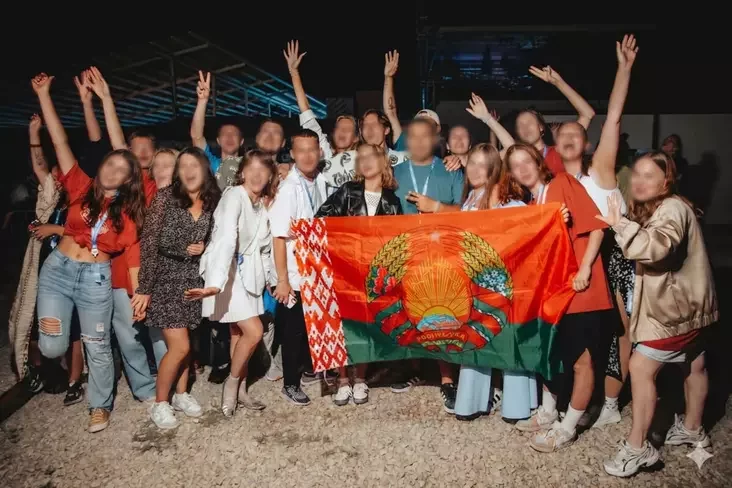
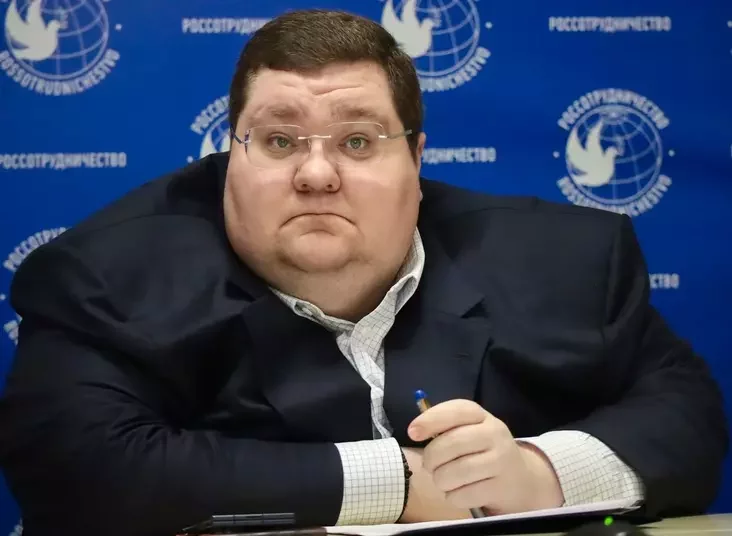
«Rossotrudnichestvo» (Russian House in Minsk) has cast a wide net for recruiting talented Belarusian youth. They offer not just recreation, but an entire career and educational ladder to draw promising children out of Belarus:
- Program «Hello, Russia!» Schoolchildren and youth aged 14—19 are lured into trips to Russian regions (Yugra, North Ossetia, Pskov region). To go, one needs to make a video for social networks or create an infographic about Russian history or science.
- Technological Shifts. For those interested in exact sciences, trips are offered to the Technopark of the Phystech Lyceum named after P.L. Kapitsa, with studies in biotech, artificial intelligence, plasma aerodynamics, and autonomous robotics.
- «Summer University.» A project for students based at federal Russian universities (Kazan, Yekaterinburg, Krasnoyarsk), which serves as a direct «soft power» channel under the auspices of the Russian Ministry of Science.
- University Quotas. Finalists of competitions and Olympiads receive quotas for free education at Russian universities.
Thus, Russia methodically and for relatively small money cultivates the loyalty of a new generation of Belarusians. Some gladly take advantage of such offers, ignoring the war.
«Nasha Niva» — the bastion of Belarus
SUPPORT US


A resident of Donetsk entered Ukraine via Belarus to change her passport and go to live in Europe. It turned out that before that, she fought for Russia

A resident of Donetsk entered Ukraine via Belarus to change her passport and go to live in Europe. It turned out that before that, she fought for Russia


"About 70% of Russian visitors turned out to be vatniks." An ex-guide from the WWII museum, detained by his own tour group, is now popular in Warsaw — we spoke with him


Comments