


Artist organized a free soup kitchen in Minsk, which has existed for almost 30 years
Alexander Chernitsky opened the first soup kitchen for the homeless in the capital in 1997. At that time, hot meals were distributed to homeless children, and after some time, they started cooking for adults as well.
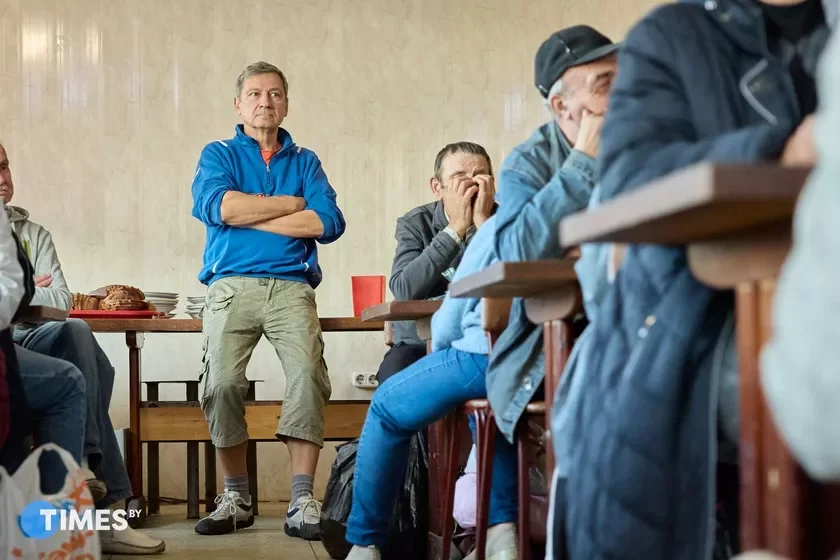
Who cooks for the homeless, how the project is financed, and why the soup kitchen has to move frequently, Alexander Chernitsky told Times.by.
Currently, the soup kitchen is located at: Rybalki street, 26. It receives the homeless three times a week — on Friday, Saturday, and Sunday. The meal schedule is available in the charitable project's social media chat, and more traditional paper announcements are posted at the Night Stay Home on Vaupshasava street.
Main rules: come sober and behave appropriately and politely.
“Sometimes quite wealthy people come to volunteer. This is their repentance, a plea for help, a conversation with God. And probably a desire to do good with the hope that it will return a hundredfold. Some use this as a way to teach their children. They bring them along to visually show a side of life different from where «everything falls from the sky by itself». Or how in one moment a comfortable existence can turn into hunger, cold, and homelessness,” says Alexander.
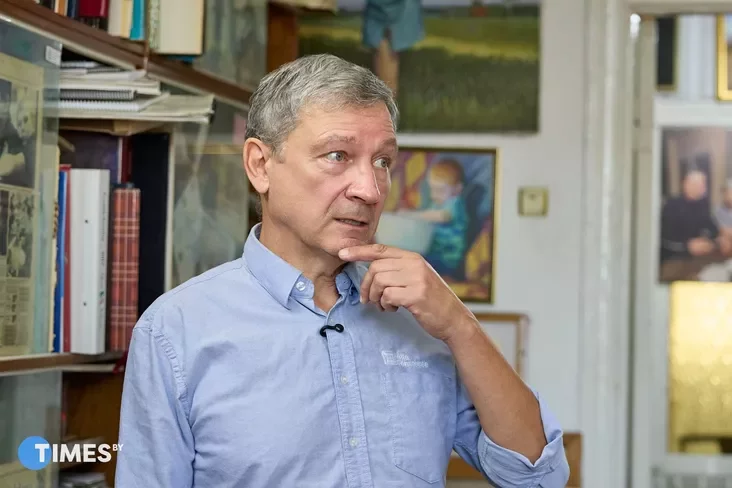
There is no permanent team: some leave, others come. Alexander understands: it's psychologically difficult. He wonders how he himself managed to last almost 30 years. He says that throughout its existence, the project has often been on the brink – but it has never closed due to lack of money for food. At the last moment, someone would transfer the necessary amount, or a dining hall would be found that agreed to host such a clientele.
The premises where meals are held change every few years: Alexander Chernitsky has to negotiate with an establishment to allow homeless people to come at a specific time, buy them set meals, and eat at the tables.
“During its existence, we've changed many locations: not everyone is ready to put up with such specific visitors,” Alexander explains. “Sub-tenants are dissatisfied, residents of nearby houses complain, other visitors wrinkle their noses. And the public catering administration is forced to show the homeless the door.”

The main funding for the soup kitchen comes from voluntary donations from caring individuals, as well as Belarusian churches. Sometimes Alexander manages to add money to the overall budget obtained from selling paintings.
Alexander Chernitsky always loved to paint. At 12, he joined Vasily Sumarau's art studio, and by 16, he was already selling his first paintings in an art salon that was then located in the «Yubileynaya» hotel.
“Unfortunately, I don't have an artist's diploma,” Alexander Chernitsky recounts. “I didn't have a Komsomol ticket: being a Christian, I didn't join the organization. And without it, it was impossible to get higher education during the Soviet Union. There was an unspoken discrimination based on faith. My documents were accepted, but then I was consistently failed in exams. So I gained knowledge at the Ilya Repin Academy of Arts in Leningrad, where I would come in the evenings as a free listener and paint alongside the students.”
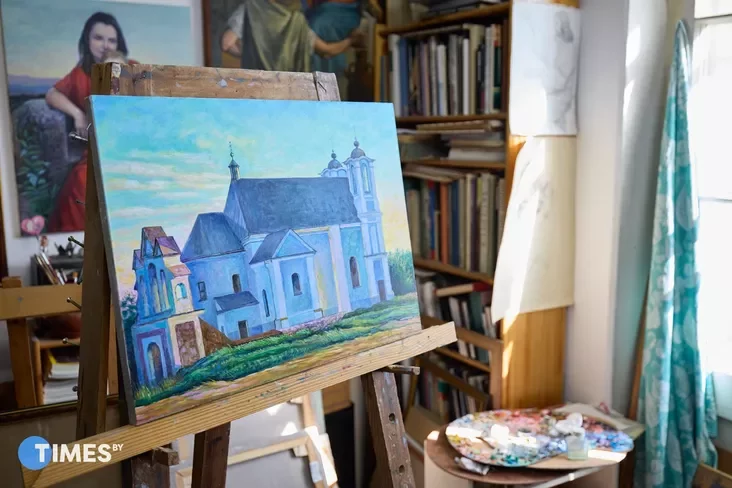
He then returned to Minsk, where he met a US citizen and lived between two countries for a long time. But he never truly embraced the American dream and finally returned to Belarus in 1995. At that time, there were many homeless people on the streets.
“Now we have a developed and well-functioning system of family-type homes, shelters, foster families,” the interviewee notes. “Back then, these children wandered the streets, ragged and hungry, sleeping in stairwells. I realized I had to help them to the best of my ability.”
Among the first were six brothers — from 6 to 14 years old.
The artist met them on the street, informed child protective services, and temporarily sheltered them at his home while dormitories were being sought for the children. And later, thanks to this story, he gained an adopted son, Denis.

In those years, Alexander Chernitsky collaborated with a Swedish charitable organization operating in Belarus. At work, he shared the story of the boys found on the street. Colleagues suggested how such people could be helped: by opening a free soup kitchen. The Swedes then financed the opening of this charitable public catering, which took place on December 1, 1997.
Initially, only children and teenagers came for meals. Then adults were invited too, and now the soup kitchen serves only them.
In summer, 70-80 people come; in winter, more than a hundred.
There is no exact number, so they always cook extra. If something is left over? Someone will take it with them.
Previously, they fed people five days a week with only meals from the dining hall, but then it became too expensive. Alexander gives an example: a few years ago, a set meal could be bought for 2.8 rubles, now – no less than 7-8.
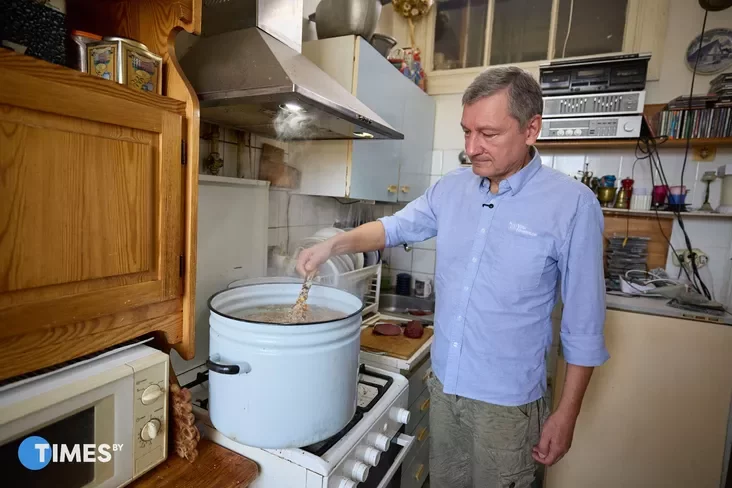
Therefore, meals are partially purchased ready-made, while buckwheat porridge with meat and vegetables is cooked at home by Alexander and his assistant Maria.
Boiled sausages are always served with the porridge, and milk is poured. In the cold season, tea and coffee are distributed instead of milk. Whenever possible, they try to treat their beneficiaries with fresh vegetables and fruits.
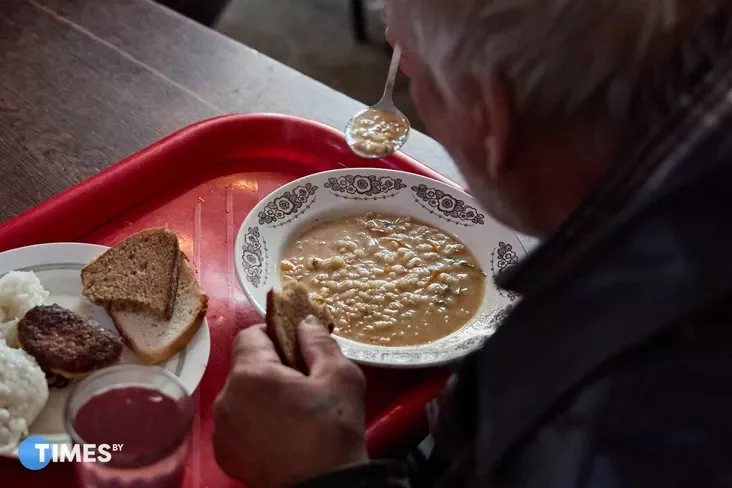
There is no list of regular visitors. Some come, others leave. Most look unkempt and smell accordingly.
The artist doesn't hide it: at first, he himself was disgusted, thinking: «It's not easy for anyone, but not everyone turns to drink because of difficulties.» Until he came to understand that not everyone is given the strength to be strong.
“Someone is weak, but you shouldn't despise them or pass by as if they are not a person, but an empty space,” the interviewee reflects. “Such people need help, guidance. Perhaps someone will come to their senses and try to change their life.”
There are those who, in their twilight years, found themselves homeless. Like a former math teacher, whom cunning tenants left without housing.
“The grandfather went to the hospital, the tenant came to visit, brought papers to sign: supposedly some important documents from the Housing and Utilities Office,” Alexander recounts the story. “The elderly man signed without looking. And when he left the hospital, the apartment had already been sold. Attempts to reclaim the housing through court led to nothing. And so he started living in a tent on the street, and came to the soup kitchen for the homeless for meals.”

Homeless by circumstance also come – that's what the interviewee calls people who have housing but are experiencing temporary difficulties with work. Elderly people drop in for lunch whose pensions go towards utility bills and medications, and there's not always enough left for food.
“Sometimes disappointment, frustration overwhelms me, that you can't help everyone,” says Alexander. “Sometimes you want to drop everything and just paint pictures for your own pleasure. But this is a short-term ‘fall of spirit.’ Then I remember that the soup kitchen has existed for almost 30 years. We – those who have supported the project all these years – are doing a very necessary and good deed. And this inspires us not to give up and to help those who are in such need. Especially since our idea, as it turns out, inspires others. I heard that another soup kitchen for the homeless has opened in Minsk – it operates on Wednesdays on Narodnaya street.”
Now reading


Former locksmith of a military unit in Pleschenitsy was heading for a record number of criminal convictions — but disappeared in the very first "meat assault"


Comments
І як такіх нашая Зямля носіць!?
NA MESTE TREBA BYLA JAK NIBYDZ DAPAMAGCZY ETAMY DZIADYLE RAZABRACCA U SITYACII !