


Will Streets Named After Losik and Intex-press Newspaper Appear in Baranovichi? Researcher — about the City's "Forbidden" Memory
Aliaksandra Rahotskaya is a third-generation resident of Baranovichi. In her childhood, she learned more about Baranovichi from her grandmother than from city signs or school textbooks. This led to a study on the street names of the city, which developed at a crossroads.
Grandmother as an Institution of Memory
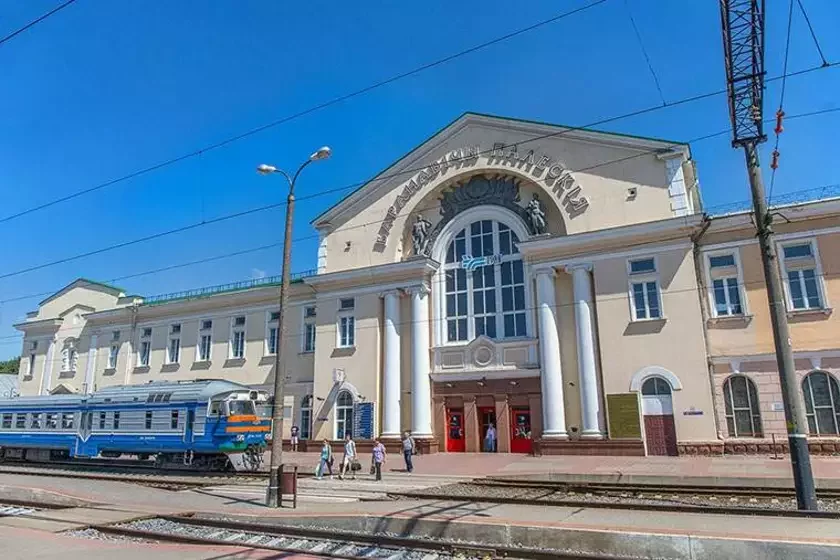
Ali's grandmother told stories about the cemetery in the city center — where the city executive committee is now. About Polish and Jewish Baranovichi. About the railway, which became a social lift for local Belarusians.
«In our family, my grandmother was the keeper of memory. My family, on one side, were railway workers. And that is the heart of Baranovichi, because the city arose around the railway,» the girl says.
Then Alia grew up and went to study in Poland. One day, when she tried to explain directions to a friend in her hometown, she suddenly paused mid-sentence:
«I say: 'There's the intersection of Lenin and Komsomolskaya, then along Sovetskaya...' And then it hit me: what kind of names are these? They aren't about the city. What's ours there?»
From this question grew Alia's master's thesis at the University of Warsaw on the urbanonymy of Baranovichi — about how street names shape the memory of the city and its history.
Baranovichi That No Longer Exist
Baranovichi is often perceived as a city without a great history: a young city, a railway hub, Soviet industry, two stations — and that's supposedly it. But Aliaksandra says: this is a deceptive impression. A hundred years ago, Baranovichi was completely different.
«Baranovichi emerged in 1871 as a settlement at the intersection of railways and began to grow with incredible speed. From a small village, within a few decades, it transformed into a city of tens of thousands of people. In interwar Poland, it was even called the 'Gdynia of the East' — a symbol of rapid development against the backdrop of neglected Novogrudok region. It was a kind of miracle for our territories,» she says.
Before the war, almost half of Baranovichi's population was Jewish. A significant part were Poles. Belarusians were a minority — only 10-15%.
«There was simply frantic political and cultural activity there. More newspapers were published than now. Parties, trade unions, printing houses, theaters, and radio stations operated in the city. Jews were represented in power. The Polish community created its own institutions,» Aliaksandra recounts.
Belarusian residents, according to the researcher, often remained in a weaker position — without Belarusian schools and wide representation, but with their own forms of resistance: railway workers' strikes, underground structures, 'Hramada'.
«But from official sources, the impression is that the city's history began in 1944,» Aliaksandra notes.
Memory Through Silence
According to Aliaksandra, this is not an accident. The authorities work not only through prohibitions, repressions, and lists of the 'extremist'. They can act much more quietly — through silence. It is not necessary to forbid memory; it is enough simply not to make it part of the official urban narrative.
Beyond this boundary of official memory in Baranovichi were the Polish period, the Jewish community, and Stalinist repressions.
Even the old Kladbishchanskaya street, which recalled the cemetery in the center, disappeared: it was renamed Lenin Street 'due to the absence of another name'.
«The city doesn't tell about this. And many people don't even know that these pages existed,» says the researcher.
From Soviet Times — 240 Streets, from Polish Times — 15
In her study, Aliaksandra analyzed 421 street names in Baranovichi. The result was very telling.
From the Russian Empire era, a few neutral names remained. From interwar Poland — only 15 streets. From Soviet times — about 240.
«When the USSR came, everything preceding it was simply rewritten. Only what suited the new order was left,» she says.
After 1991, there was no large-scale decommunization in Belarus, unlike in Ukraine or the Baltic states. In Baranovichi, the Soviet layer remained untouched; new names were added in new districts, but the old core was not rewritten.
This is especially clear in the center: Lenin, Sovetskaya, Komsomolskaya streets. But Polish, Jewish, pre-war, repressed Baranovichi remain somewhere outside the main route of urban memory.
Aliaksandra is convinced: if Sovetskaya remains in the city, then there must also be a place for other eras.
Furthermore, in her opinion, it would be worthwhile to honor the victims of Stalinist repressions in the urban space. For example, through the 'Krivoye Kolo' (Crooked Circle) — that was the name of the network of Baranovichi prisons, which became a symbol of repression. Thousands of people were tortured and shot there; participants of the Slutsk Uprising, political figures, and poets were imprisoned there.
In 1940, Polish families of landowners, officers, and policemen were exiled from Baranovichi — about six thousand people in a few months. In June 1941, during the German bombing, the prison wall was destroyed — and the prisoners were able to escape.
Later, activists tried to erect a monument to the victims of repression in the city center, but it ended up in a square where almost no one goes. People who brought flowers there noticed surveillance. And acts of vandalism were never investigated by the authorities.
«But Where is His Wife's Street?»
Another 'absent memory' — women.
In Baranovichi, there are hundreds of streets named after people, but female names are few: Krupskaya, Zoya Kosmodemyanskaya, Liza Chaikina, Rosa Luxemburg, Osipenko, a few heroines of socialist labor. And that's all.
At the same time, the land on which the city emerged belonged not to Jan Razvadouski, who is considered the founder of Baranovichi, but to his wife.
«And here in the city executive committee hangs a portrait of Razvadouski. But where is his wife's street? If there are 421 streets in the city, and only eight or nine of them are named after women, that's very bad,» Aliaksandra is convinced.
Airplanes Over the City
A separate topic is aviation.
«Baranovichi has historically been a place where troops were always based — literally since the city's inception. Aviation became especially important for the city, including an air base and an aircraft repair plant, which are now assisting Russians in the war against Ukraine. By the way, in their childhood, many Baranovichi children had their own 'parade': when planes flew to Minsk for official celebrations, they would fly over Baranovichi and display aerobatic figures in the sky,» Aliaksandra recounts.
This lineage also runs through street names — the city has streets named after Karvat, Marfitski, Zhuravlevich.
But here too, memory becomes political:
«After the catastrophe of pilots Andrei Nichyparchyk and Nikita Kukanenka, the authorities quickly immortalized them in street names. At the same time, many people received punishments for online comments about this tragedy.»
Losik, Varashkevich, Intex-press Newspaper
For Aliaksandra, the problem is not so much with Soviet names, but with the fact that they often have no connection to the city itself.
«I lived on Fiadzko Street. And even in school, I tried to find out who that was. Later, I dug up on Wikipedia that he was some Ukrainian Soviet military leader. And there are streets named after him in Moldova, Ukraine — and in Baranovichi. And I think: what does this have to do with Baranovichi?»
In her opinion, the city should tell its story through its own heroes.
«We have our own people, our own heroes. And memory should focus on those who did something for the Baranovichi land.»
For Aliaksandra, among such people is local historian Stanislau Shcharbakou, who wrote extensively about Baranovichi and published books virtually by his own efforts. Viktar Syrytsa — her first history teacher. Blogger Ihar Losik — as one of the most famous modern Baranovichi names.
A street named after the Intex-press newspaper could even appear in the city.
«True, first you need to revive the newspaper itself, which did a lot for Baranovichi, and then a street could be named after it,» the girl smiles.
According to Aliaksandra, the city also underestimates its recent cultural history:
«Since the 1990s, Baranovichi had a very strong rock, punk, and metal scene. Festivals, concerts, band tours, a community that existed separately from official culture, but very stably.»
From Baranovichi hails, for example, Ihar Varashkevich from 'Krama'.
«The City Was Taught to Speak Only in Permitted Words»
A street, according to Aliaksandra, is not just a sign on a house; it is an answer to the question: who is a hero here, whom does the city want to remember, and whom does it allow to be part of itself?
The main thing, she says, is to return to the city the right to a full biography:
«Today, Baranovichi looks like a book where not all pages remain. The Soviet part is well-stitched, highlighted, and included in the table of contents. But next to it are torn-out chapters about Jews, Poles, women, the repressed, the pre-war city, informal culture, family histories.
The city seems to be silent about all this. But in reality, it hasn't forgotten. It was simply taught to speak only in permitted words.»
Now reading


Natalia Kalegova spoke about helping Belarusian refugees, her family, her attitude towards Tsikhanouskaya. And explained who "beavers" and "hares" are

Natalia Kalegova spoke about helping Belarusian refugees, her family, her attitude towards Tsikhanouskaya. And explained who "beavers" and "hares" are


Back to pen and paper and smartphone ban: universities are forced to change the format of classes and tests, otherwise AI prevents both teaching and assessment


Comments
[Зрэдагавана]