


Women are naturally unsuited to giving birth on their backs, but this method of childbirth became standard for men's convenience
For centuries, women gave birth on their knees, squatting, or using special chairs. In these positions, physiology and gravity aid childbirth. Why has modern medicine shifted this process to a horizontal plane?
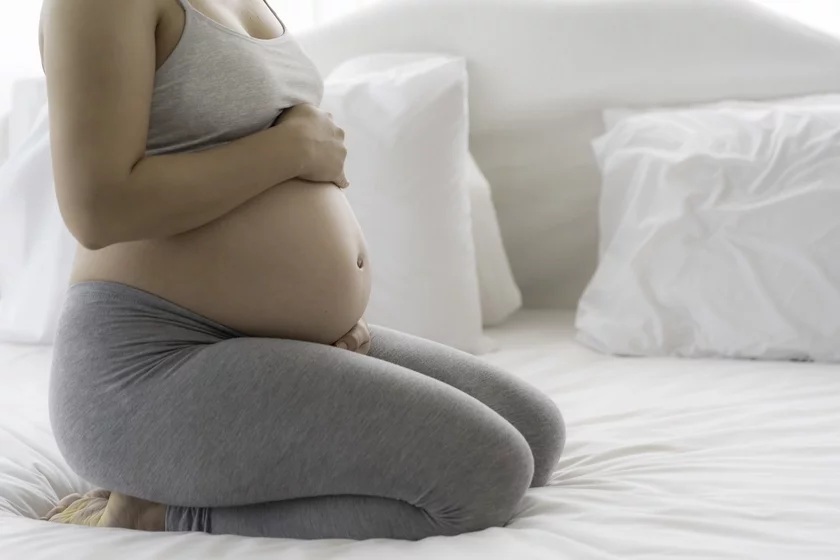
Researchers note that giving birth lying down is a relatively new phenomenon. It has only spread over the last 300-400 years. As explained by the BBC, the roots of this phenomenon trace back to the decision of a Frenchman who believed this method would be more convenient — for men.
The first to popularize this practice was the French physician François Mauriceau. In his 1668 book, he recommended childbirth in bed, claiming it was more convenient and avoided additional discomforts. Mauriceau viewed pregnancy as a state close to illness.
There is another version: the change in position might have been influenced by King Louis XIV of France. According to some research, the monarch enjoyed observing the moment of birth. However, vertical postures and traditional birthing chairs obstructed his view. To satisfy royal curiosity, the woman's position was changed to semi-recumbent.
Since the behavior of autocrats was copied by their entourage and society — just as Lukashenka's fascinations with hockey and firewood are today — the uncomfortable birthing position gradually became the norm, even though, as researchers note, no other biological species lies down at such a critical moment.
What Science Says
Modern science is unequivocally on the side of vertical births. A squatting position increases the pelvic diameter by at least 2.5 centimeters. Additionally, gravity works for the mother, not against her. When a woman lies on her back, the heavy uterus compresses the aorta, which can worsen blood flow and oxygen supply to the baby. If a woman is allowed to move freely, she instinctively leans forward, seeking support on her hands or knees.
A review of 25 studies involving over 5200 women showed that births in vertical and mobile positions reduce the risk of cesarean sections, require less pain relief (e.g., epidural anesthesia), and decrease the number of cases where infants need intensive care.
It is also noted that births in such positions are usually shorter in duration, and contractions are more effective. This also reduces the likelihood of using forceps or performing an episiotomy (incisions).
The only caveat concerns high-risk groups: some data indicate the possibility of greater blood loss in a vertical position, so close monitoring is required in such cases.
The environment also plays an important role. A 2011 study showed that in birthing centers with balls, chairs, and other aids, 82% of women choose vertical positions. In regular hospitals, where the main element is the bed, only 25% of women give birth in such positions.
Today, the situation is gradually changing. For example, British national guidelines (NICE) now advise doctors to discourage women from lying on their backs during labor and to encourage any other position the mother finds comfortable.
However, experts believe that a complete change requires not only medical reform but also education. Popular culture — cinema and television — still portrays women in labor as passive patients tethered to monitors. Knowledge that childbirth is an active process empowers women and gives them the right to choose what their own bodies tell them.
-
"The main thing is not to forget to recharge not only your phone, but also yourself." How a Ukrainian soldier lives with two electrostimulators. And what about his sex life?
-
Dyslexia in a child: what signs should parents not miss?
-
One injection was enough for 70 days. The US tested a new approach to obesity drugs
Now reading


On the Belarusian-Lithuanian border, a group of migrants emerged from a tunnel and attacked border guards. This was kept silent in Lithuania for over a week

On the Belarusian-Lithuanian border, a group of migrants emerged from a tunnel and attacked border guards. This was kept silent in Lithuania for over a week


"The main thing is not to forget to recharge not only your phone, but also yourself." How a Ukrainian soldier lives with two electrostimulators. And what about his sex life?

"The main thing is not to forget to recharge not only your phone, but also yourself." How a Ukrainian soldier lives with two electrostimulators. And what about his sex life?


The "Dutch architect" who rebuilt the Gate of Dawn and built himself a fortress-house in Gaitiunishki turned out to be no Dutchman at all. But his legacy is captivating


Comments