


Natallia Adamovich preserved unique recipes of urban Belarusian cuisine. You will definitely want to cook this too
Today, Natallia Adamovich , a person of great light and daughter of Ales Adamovich, a classic of Belarusian culture, passed away. Among the many things she did, Ms. Natallia also preserved her grandmother's family recipes — the mother of Ales Adamovich. In these dishes, with their subtleties — from imaginative cucumber appetizers to hot dishes with character, and delicate, nuanced pastries — culture and traditions were embodied. You will be impressed by the unusual combination of simple, ordinary ingredients (isn't that our national spirit?). Today we are reprinting these notes. In them, you will discover not only Hanna Adamovich (née Tyčyna), but also Natallia herself, who preserved the spirit of her family — and thereby the spirit of the Belarusian intelligentsia as such.

From childhood, I remember how in my friends' houses, old bulky sideboards held trays with open pies cut into squares, filled with jam, or cinnamon cookies "Zemelah" (they were usually prepared for a week, as shortcrust pastry wouldn't go stale)...
How on family holidays, jellied carp was served with a sweet and savory redcurrant marinade, sharply fragrant with allspice and bay leaf...
How I learned to stuff duck with pancakes and liver pâté at a classmate's grandmother's house... The culture of food was passed down from generation to generation, and recipes accumulated thanks to gatherings, after which hostesses, blushing from words of thanks and admiration, shared their secrets.
Four volumes handwritten
And now imagine a woman who not only collected successful recipes in notebooks but also systematized them and even made several copies for her descendants. And these are not thin student notebooks — these are general notebooks of 96 pages, written from cover to cover! The set consisted of four such notebooks and was copied at least six times.
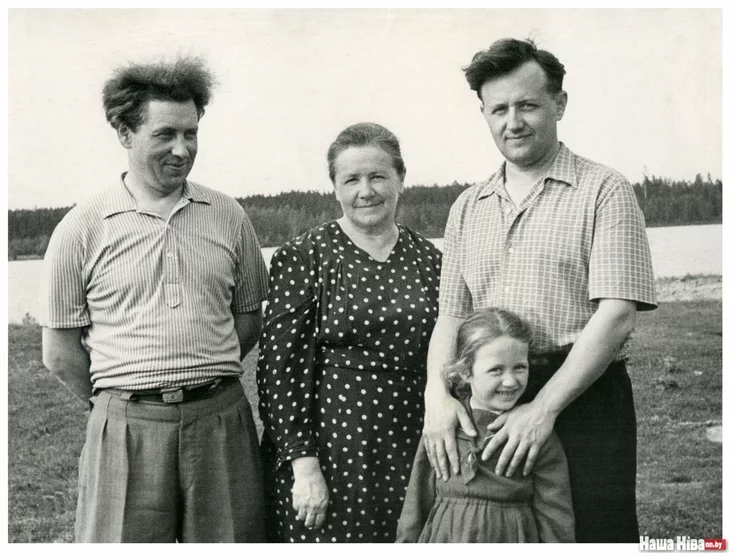
This domestic feat was accomplished by Hanna Mitrafanaŭna Adamovich (née Tyčyna), the mother of the famous Belarusian writer Ales Adamovich, who, by the way, was the prototype for the heroines of his novels "War Under the Roofs" and "Sons Go Into Battle".
She was a woman of incredible spiritual strength, intelligent and wise. It was impossible not to admire her. A gentle demeanor, a gentle manner of expression... She spoke to people as if the person before her was the most interesting in the world. No wonder that when she passed away, even distant relatives mourned her for forty days, as they would for a very close person.
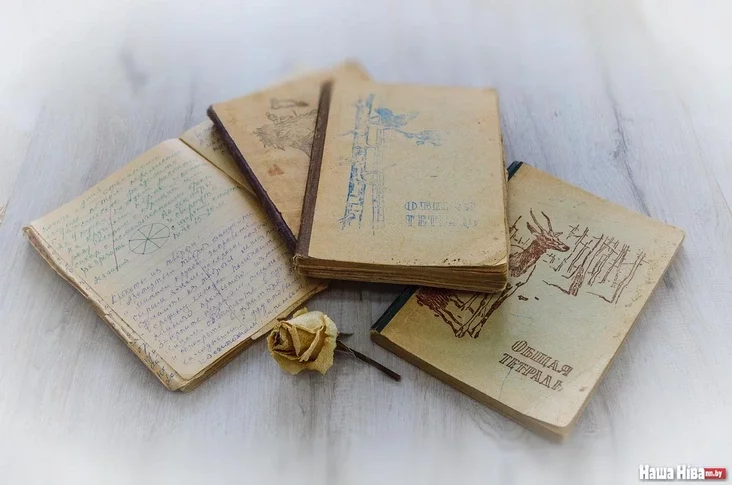
And these recipe notebooks are the materialization of her kindness, her long-term way of caring for those she loved. Such handwritten recipe collections were made by Hanna Mitrafanaŭna for her granddaughters Natasha, Halia, and Inna, for her niece Inna Tyčyna, and for the wife of her nephew Mikhas Tyčyna. Evidently, there was at least one more set, as the one we saw was also copied.
All notebooks are numbered. The recipes within them are also numbered, which is convenient, as recipes often have notes, for example, that one dish pairs well with another, and such pairs are easy to find by number.
Sometimes there are also remarks that a particular dish is not suitable, for example, for gastritis (Hanna Mitrafanaŭna worked as a pharmacologist). Or a reminder of which cookware is best for preparing it. Or an indication that more or less of a certain product should be used. After the contents, you can find tips on how to salt, fry, wash, soak, and sift.
Cucumbers stuffed with garlic, onion, and egg
The first volume contains fish and herring dishes, salads, "tasty vegetable caviar," soups, dumplings for soups, and a section "Cucumbers: stewed, fried, sautéed, as a side dish for meat dishes." In this section, from my modern perspective, there are quite unusual dishes: cucumbers fried in breadcrumbs; cucumber, butter, and vinegar stew; stewed and salted cucumbers, stuffed with garlic, onion, and egg.
How to soak herring
The first volume also features quite exotic — from a modern perspective — salads where ingredients simultaneously include herring soaked in milk, potatoes, carrots, eggs, pickled cucumbers, beans, and mayonnaise. By the way, several pages of these culinary notes are dedicated to which herring needs to be soaked and in what.
How to stew duck with cherry jam
The second notebook contains neatly copied recipes for potato dishes, cabbage, stuffed tomatoes and zucchini, solyanka, forshmak, herb seasonings, mushroom dishes, meat dishes, stuffing for chickens, pies and doughnuts with filling, sauces, and also "sauce as an appetizer".
The notebook begins with a recommendation on how to stew duck and goose: "Water with fried onions, to which a spoonful of cherry or lingonberry jam is added at the end."
There is another recipe with jam, which Hanna Mitrafanaŭna's granddaughter, Natallia Adamovich, also used to cook. This is a recipe for rice-meat cutlets, which are fried and then "finished" in a sauce made of flour, sour cream, and a spoon of cherry jam.
The third volume is inhabited by dishes made from carrots and cottage cheese, pancakes, "khruščy" (a type of fried pastry, also known as "khvorast" or "angel wings") and "wine-kvasses", "orange peel jam". One of the recipes is called "shortbread number 49 made from egg yolks left over after meringues".
The thing is that meringues, or "snežki", were the author's granddaughters' favorite treat in childhood. So she had to invent a recipe to use the egg yolks not needed for the meringues. There are also illustrations, for example, on how to cut dough to roll it for cookies. This notebook contains as many as 18 recipes for "khvorast"!
The last volume is dedicated to sweets. Here are recipes for cakes, biscuits, meringues, shortbreads, pies. In my youth, I myself cooked a lot from this book, and on its pages remain the names of cakes I invented, signed by my hand.
The Cook's Daughter-in-law
It must be said that Hanna Mitrafanaŭna was not the only exemplary cook in this family. The absolute ideal of a housewife for both the writer's relatives and house guests was Ales Adamovich's wife — Vera Siarhiejeŭna.
Despite constantly being busy with retyping and bibliographing her husband's works, she built a completely independent career — she worked as the head of the Book Chamber of the State Library of the BSSR, and later also taught Belarusian language at the Institute of Culture.
Vera Siarhiejeŭna stood out even in intellectual circles with her taste, intellect, and delicacy, which is why there were always many guests in the writer's house, with each of whom she knew how to maintain an interesting conversation. Together with my parents, I attended family celebrations where the cream of the contemporary intelligentsia gathered at the table: Vasil Bykaŭ with his wife Iryna Mikhailau̯na, Ryhor Baradulin, Valiantsin Taras, Uladzimir Boyka, Naum Kislik, photographer Yauhen Koktysh, and, of course, the writer's daughter Natallia, who worked her whole life in the Yakub Kolas House-Museum and did an incredible amount to popularize and republish her father's works.
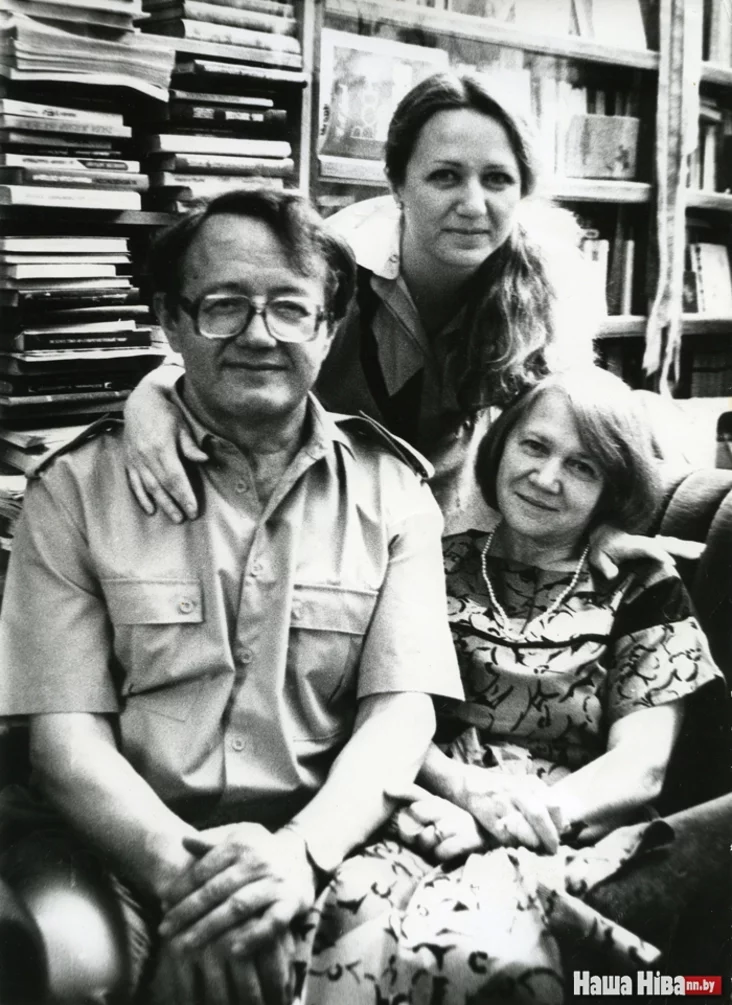
The company that gathered at the Adamovichs' home was not just interesting. It was the true Belarusian elite. At the table, literature and science were discussed (Ales Adamovich worked at the Academy of Sciences and had many acquaintances among scientists from various fields), as well as the problems of Chernobyl, and, of course, politics. And this is not to mention world-renowned stars: directors, writers, actors, who also visited this incredible family during their trips!
Vera Siarhiejeŭna knew how to host guests at the highest level, surprising them with elegant table settings, simple but fantastically delicious dishes, and a cozy family atmosphere. Her cuisine was never overly fatty, excessively fried, or overly sweet — the dishes seemed to match her restrained, delicate character.
In memory of her, I have several recipes, my favorite of which is the recipe for "rogoliki" (crescent rolls), which impressed me in my teenage years with their unsweetened, noble taste.
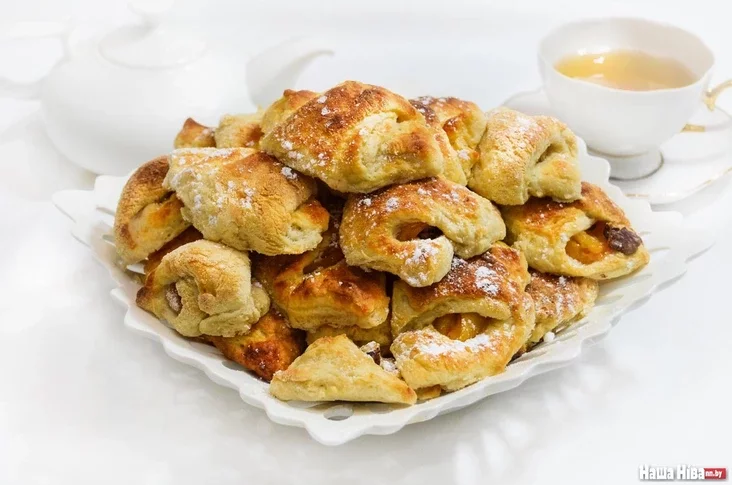
Rogaliki with dried apricots, recipe
- 1/2 packet of yeast,
- 200 g margarine or butter,
- 1/2 cup sugar,
- 1 cup milk,
- 1 egg,
- 3 cups flour,
- 200 g dried apricots or uruku (dried apricots with pits).
The first time I tasted rogaliki, they were made with uruku (dried apricots) and pits. Later, the kernels began to be replaced with almonds or walnuts.
Dissolve yeast with milk and sugar. Let stand for 20 minutes, add the egg, then flour, melted butter. Mix, let stand for a bit. The dough turns out very soft, so divide it into 4 parts. Roll out by hand into strips, about a finger's width and 0.8 cm thick. Cut each strip into 10 triangles. Make small knife incisions on the wide edge. Place one soaked dried apricot and two nuts on it. Roll up the rogalik, starting from the wide edge, the tail should be at the bottom. Place sparingly on a greased baking sheet, as the rogaliki grow significantly. Bake in several batches for 20-25 minutes with top and bottom heat at 180 degrees Celsius. The oven does not need to be preheated before baking.
Rice and meat cutlets with a spoonful of cherry jam, recipe
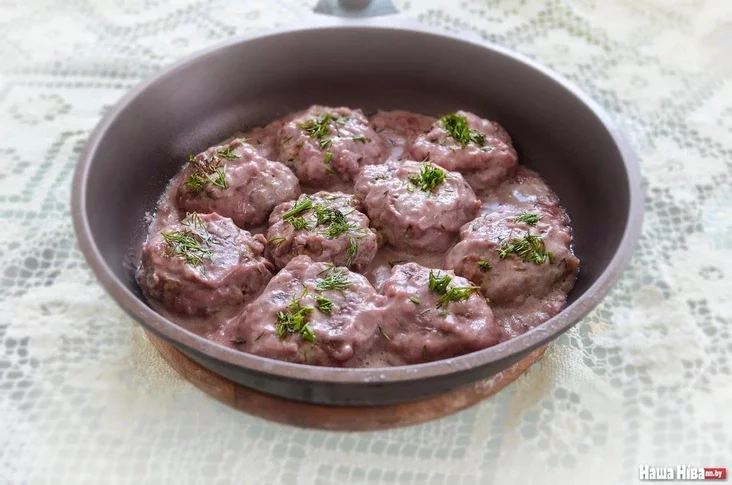
Pass 300 g of meat through a meat grinder, add one or two onions, boil two tablespoons of rice, mix with the minced meat, and pass through the meat grinder again. Add salt and pepper. Form into cutlets, roll in flour, and fry until cooked.
Pour sour cream sauce over them.
Sauce for rice and meat cutlets
In half a cup of sour cream, mix a tablespoon of flour, then dilute with 1/2 cup of broth or simply boiled water, salt to taste, add a spoonful of syrup from any jam (Natallia Adamovich traditionally adds cherry), mix everything, pour over the cutlets, and bring to a boil.
Meringues ("Snežki") from egg whites, recipe
Pastries that Hanna Adamovich made for her granddaughters.
Separate 4 egg whites from the yolks and beat with a whisk until foamy. Gradually add a cup of powdered sugar to the whites and beat until stiff peaks form. Spoon onto a baking sheet, previously covered with greased paper, and place in the oven or stove. Bake meringues well after pies for 15-20 minutes.
Enjoy your meal!


Comments