


Far-right brought their own sculpture of John III Sobieski to Vienna. The city refuses to erect an official monument to its liberator due to fear of Islamophobia
A long-standing dispute over honoring the memory of the Polish king and Grand Duke of Lithuania, who saved Vienna from the Ottoman siege in the 17th century, has escalated into street protests by far-right groups with their own monuments. The city authorities refuse to erect a monument, fearing that it could provoke anti-Turkish sentiments. Their stance has caused a diplomatic crisis with Warsaw and protests from the local opposition.
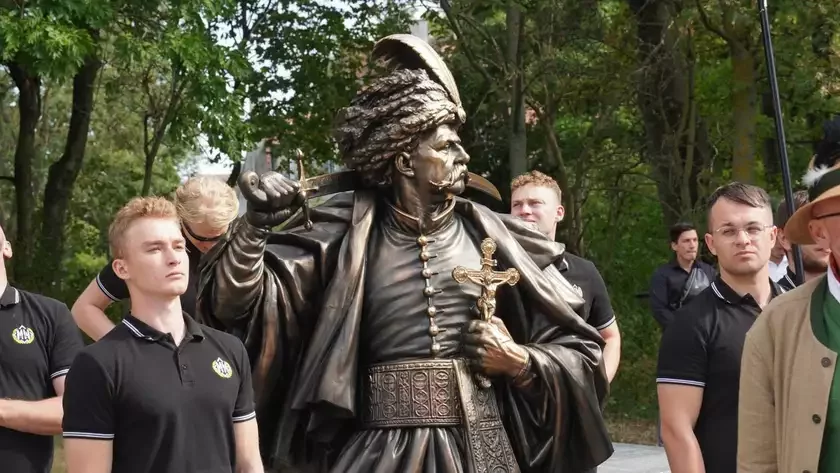
On Saturday, September 12, on the 343rd anniversary of the Battle of Vienna, an action took place on Kahlenberg Hill involving the Austrian "Identitarian Movement" led by Martin Sellner and the Polish radical organization "All-Polish Youth."
As reported by Der Standard, participants brought and installed a small bronze sculpture of John III Sobieski on Kahlenberg mountain. Later, activists staged a protest with flares and banners in front of the headquarters of the Social Democratic Party of Austria in central Vienna. The actions of the far-right groups took place under tight police supervision, which established a 150-meter buffer zone to prevent clashes with anti-fascists protesting in the Heiligenstadt district.

The Battle of Vienna in 1683 is one of the key events in European history. The united forces of the Holy Roman Empire and the Polish–Lithuanian Commonwealth, under the command of Polish King and Grand Duke of Lithuania John III Sobieski, defeated the army of the Ottoman Empire, lifting the two-month siege of the Austrian capital.
A decisive role in the battle was played by a massive charge of 20,000 cavalry, which struck the Turkish camp directly from Kahlenberg Hill. This victory permanently halted Ottoman expansion into Europe and became a turning point in centuries of confrontation, ensuring the dominance of the Habsburg Monarchy in Central Europe for decades to come.
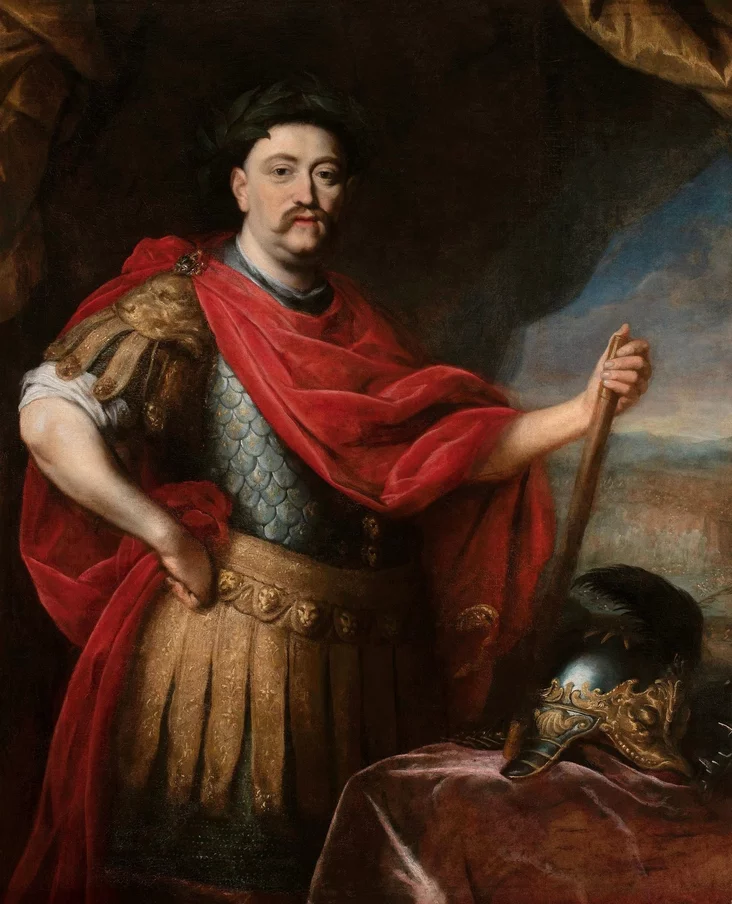
The radicalization of the historical date was a result of the official refusal by the Vienna magistrate to erect a full-fledged monument to the Polish king and Grand Duke of Lithuania, John III Sobieski. The initiative arose in 2013, and in 2018, the project received formal approval.
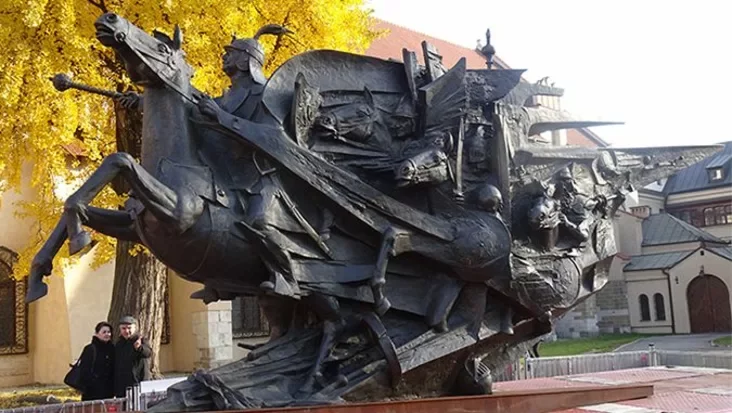
The bronze equestrian sculpture, 8 meters high and weighing 3 tons, was cast in Poland according to the design of Krakow sculptor Czesław Dźwigaj. The composition depicts the king on horseback accompanied by hussars with defeated Turks under their hooves. The finished monument never crossed the Austrian border and is now reluctantly exhibited in Polish cities, including near the palace in Kanczuga Wielka.
The Vienna City Council, controlled by social democrats, finally blocked the project. Vienna's Culture Councilor, Veronica Kaup-Hasler, explained the decision by expert recommendations, which advised against heroization and militaristic rhetoric in favor of symbols of peace.
According to a statement from the magistrate, the city will not create a platform for xenophobic agitation and inciting Islamophobic or anti-Turkish sentiments among the population. Officials insist that a monument already exists in the form of an empty granite pedestal installed in 2018 with text in three languages calling for peaceful coexistence.
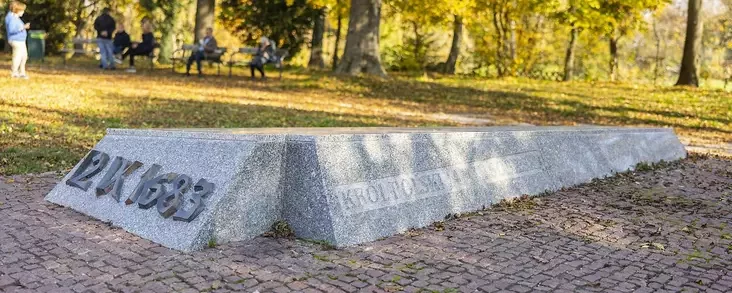
The decision of the Austrian capital sparked a diplomatic scandal. Poland's ambassador to Austria, Zenon Kosiniak-Kamysz, sharply criticized Vienna's stance. The diplomat called the empty pedestal with its barely legible inscription inappropriate for the scale of the historical figure.
He also pointed out the presence of memorials in the city to such controversial figures as Che Guevara and Joseph Stalin, as well as a massive monument to the Soviet army in the central square.

The actions of the ruling party met with strong opposition from the Austrian opposition. Representatives of the right-wing Freedom Party of Austria called the situation a manifestation of historical amnesia and a violation of earlier promises, emphasizing the factual impossibility of Vienna's existence in its modern form without Sobieski's intervention.
The conservative Austrian People's Party also joined the criticism. As a sign of protest against years of inaction, politicians from this party installed a symbolic full-size cardboard replica of the monument on the empty pedestal in August 2026, demanding that the magistrate fulfill its obligations to the Polish side.
«Nasha Niva» — the bastion of Belarus
SUPPORT USNow reading


In the Czech Republic, Poles Beat a Pole, Mistaking Him for a Ukrainian Due to a Hat in the Colors of Upper Silesia. The Guy Was on a Charity Bike Ride for His Pregnant Partner Who Had Cancer


Comments
Ні трэба было дапамагаць Вене ....
Праз нейкі час раздербанілі і РП і ВКЛ...з сваімі камрадамі
Як і зараз Вена Берлінт Булапешт...Масква)))