


The cruise lasted 10 days and included stops in seven cities in three countries — Istanbul, Greece, Italy.
How much premium cabins cost, how to use one bank card to solve the issue of internet and transfers in Istanbul, and how much individual excursions in European cities cost, Myfin recounts.
Better to be safe than sorry before the trip: how and why
This was already the third cruise for Yulia Shramchanka's family; they bought it in advance through T9Tour, paying 50 euros per person for early reservation. This is both more convenient and offers many bonuses and the opportunity to choose a cabin.
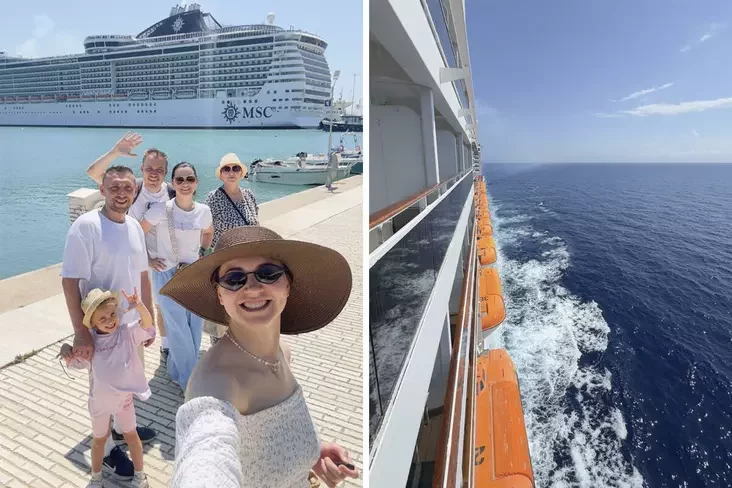
— This year, I combined buying a cruise for June with "Black Friday," which usually lasts a week at the cruise company. I don't track hot deals. They have few cabin options, you can't guess the date, and plane tickets might already be gone or expensive. This time, the cruise started in Istanbul, a round-trip ticket for one adult cost 1300 BYN, and for a five-year-old daughter, it was 1000 BYN.
Before a cruise, it's important to be prepared for flight delays. The Minsk residents solved this problem by reserving a hotel via Booking.com for a day before departure and a day after return. This not only saved them from excessive stress but also provided time for walks around the city.
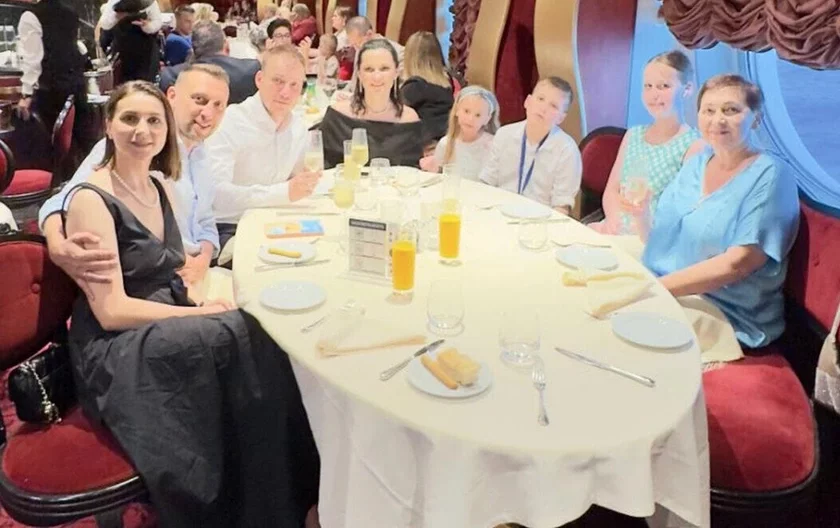
A large company gathered: Yulia's family of four (with two children — 12 and 5 years old), her mother, and a friends' family with a 13-year-old daughter.
For the first night's stay, they chose a location in the old center. From there, it was convenient to walk to historical sites, and they easily walked to the cruise terminal. A room with breakfast cost 90 euros for the family. Before flying home, they reserved a hotel closer to the airport, for 45 euros. The transfer from the port to the hotel cost 40 euros for the family.
— The transfer from and to the airport in Istanbul, by the way, was free – a bonus from a premium Visa card. This same card provided fast-track at the airport, free access to the business lounge, and an e-SIM with an internet package in Europe for the trip. This also saved money.
The cruise lasted 10 days and included stops in seven cities in three countries — Istanbul (Turkey), Corfu island (Greece), Bari (Italy), Trieste (Italy), Katakolon (Greece), Piraeus (Greece), Kusadasi (Turkey). For two days, the liner sailed at sea.
How much they paid for the cruise and what was included in the price
The basic fare on the liner is an "all-inclusive" system: accommodation, 24-hour meals, and port fees.
Everything else (internet, alcohol, excursions) is purchased separately as packages.
— A comfort-class cabin without a window for mom and the 5-year-old daughter cost 2500 euros. Our option for two adults and a teenager cost twice as much. This was an Aurea — a premium-class cabin with a balcony and an included alcohol package. But thanks to a promotion, the price turned out to be the same as what is usually asked for a standard class with a balcony. Essentially, we received premium service without overpaying.
The Aurea class offers many pleasant bonuses: unlimited access to the thermal spa area throughout the cruise, priority boarding at the port, dinner at the restaurant at any convenient time, not strictly according to a schedule. And pleasant details — upon check-in, fruit with a bottle of sparkling wine, a choice of pillows, and bathrobes awaited them.
The cruise company offers bonuses to clients; with each new booking, the discount increases. Since this was the family's third cruise, they received a 5% discount. Therefore, the cabin with a balcony cost not 5000 euros, but 4800 euros.
Every day a new program — from musicals to illusionist tricks
The visa processing was entirely handled by the tour operator, who gathered the package of documents for the cruise. Tourists only needed to fill out questionnaires and visit the visa center once to submit fingerprints. The consular fee cost €35, plus a small additional charge for the services of the visa center itself.
Evenings always followed a classic scenario: dinner at a restaurant and a show in a huge theater with seating for one and a half thousand people.
Every day featured a new program — from musicals and dance performances to concerts and illusionist tricks.
Nightlife on the liner buzzed until dawn. Bars with live music, a casino, karaoke, and discos were open. But after many hours of excursions in the cities, there was no energy left for this. Closer to midnight, tourists would reach their cabins and instantly fall asleep.
The entertainment program on the liner is vast, with both free and paid options. For children, a whole system of clubs, divided by age, is thoughtfully designed.
— Teenagers, the son and friends' daughter, quickly formed their own company and were constantly disappearing into pools with real seawater, playing table tennis and foosball. There was no need to supervise them every minute, so they vacationed on their own. The younger daughter went to the club for her age, but we encountered a language problem. For working with children on liners, they try to select Russian-speaking staff, among others, but this time we weren't lucky. The daughter stayed in the club with pleasure only when there were other Russian-speaking children. But grandmother helped us out, periodically freeing us from parental duties.
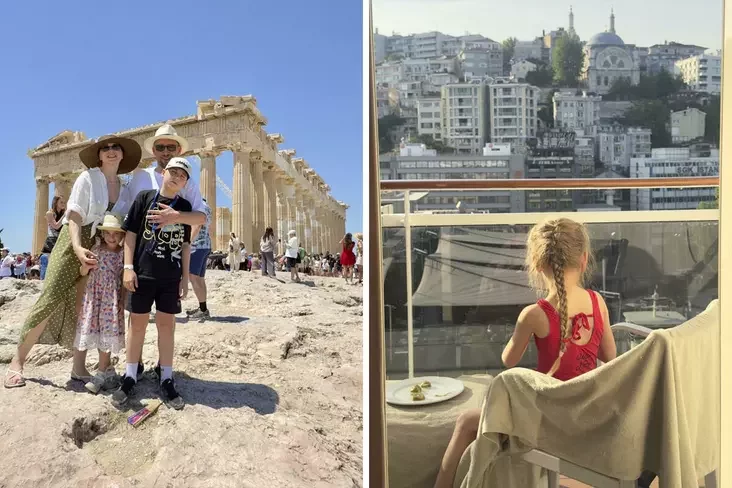
How to organize excursions and save money
On a cruise, access to food is open almost 24/7. There's a huge buffet-style restaurant, a la carte restaurants, snack bars, and cafes. For gourmets, paid themed restaurants are available.
— You can eat three times in an a la carte restaurant with a menu and a waiter or at the buffet, choosing your food; there are absolutely no restrictions. The children preferred the buffet more, while we favored the restaurant. If the liner stays in port all day, you can stroll around the city, return for lunch, and then go back to the city. You can order breakfast, pizza, etc., to your cabin. We hardly spent any extra money on food. We only bought ice cream for the children and tried Italian pizza.
Since this was not the Minsk residents' first cruise, they had perfected the format of excursions down to the smallest detail. If the port stop is short, half a day, and you want to see as much as possible, then a local guide is necessary. Yulia looked for a local individual Russian-speaking guide in advance through Instagram or specialized websites.
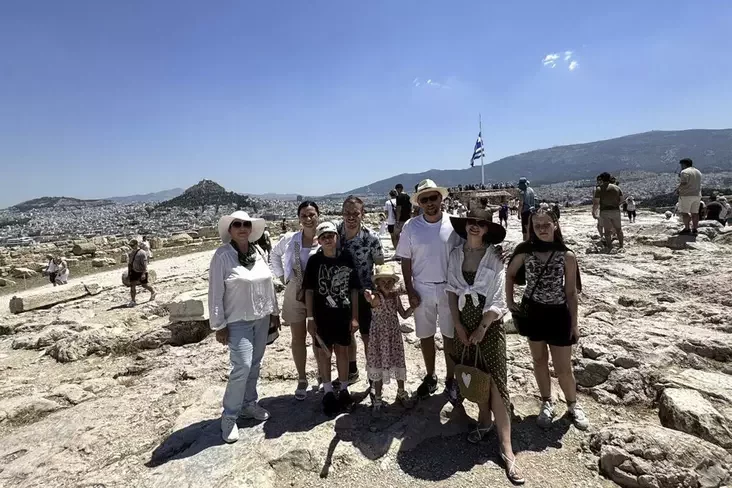
— This turns out to be more comfortable and often even cheaper than taking group tours from the liner itself. Sometimes we simply bought an audio guide in the izi.TRAVEL app and walked the route ourselves. This option is much cheaper, although, of course, it lacks live communication and the opportunity to ask the guide questions.
Excursion expenses in the ports for the Minsk residents averaged €250 per family per city. Out of seven stops, they took individual car tours in three. They were picked up right at the gangway and driven to top locations.
A cruise is also the perfect excuse to show off a suitcase full of your best outfits, Yulia believes. In the evenings, restaurants have a strict dress code: no shorts or flip-flops, everyone looks elegant.
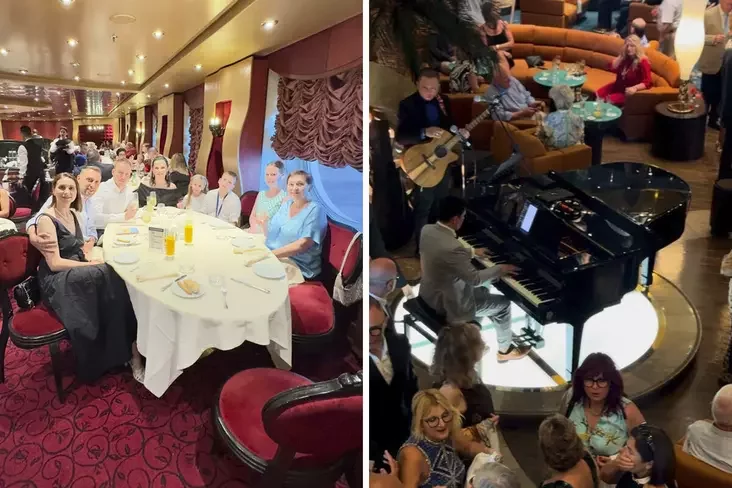
— For me, as a woman, such an aesthetic atmosphere is pure pleasure, although men often consider this a drawback. At the same time, a cruise is an active holiday, not lying on a sun lounger. You are constantly on the move: during the day you explore new cities, in the evening you explore the liner, returning to your cabin only to sleep.
For comparison, they compared the cruise with a classic Turkish vacation. A ten-day holiday for our family in a good hotel with quality food, children's animation, and evening shows now costs around €7000. With early booking — €6000.
But for that money, the liner offers a completely different level of experience, new cities, historical sites, and the cruise atmosphere itself.


Comments
[Зрэдагавана]