


"Mopeds" are becoming a thing of the past: Russia makes "Shaheds" jet-powered. What threat does this pose to Ukraine?
Kamikaze attack drones "Shahed-136" (in the Russian version "Geran-2") have been the main and most numerous means for the Russian army to conduct air strikes on the Ukrainian rear since autumn 2022. Now their era is coming to an end. Instead, jet-powered counterparts are entering the arena, which are much harder for Ukrainian air defense to shoot down. Thanks to this weapon, Russia has already been able to block Ukrainian ports on the Black Sea, writes BBC News Ukraine.
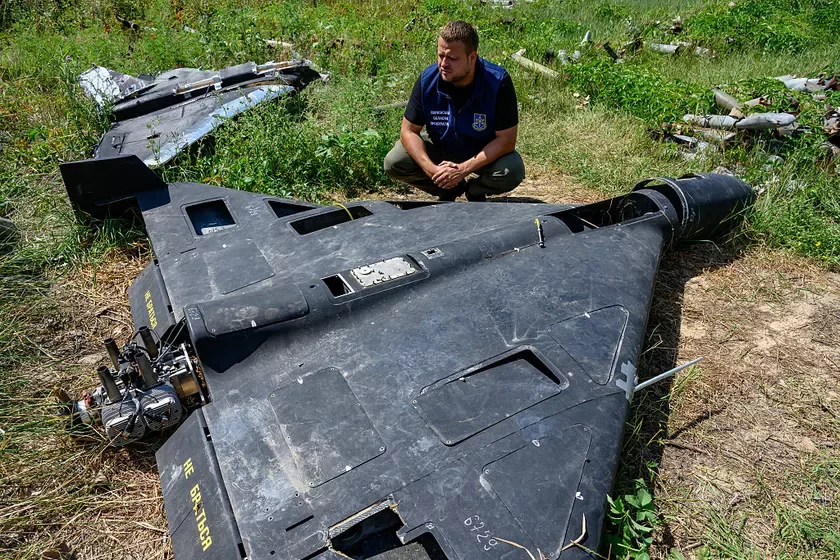
During the shelling of Kyiv on the night of August 4-5, the proportion of jet UAVs in the total salvo for the first time exceeded half, the Ukrainian Air Force reported. That night, the Russians launched 115 attack drones, almost 85% of which were shot down or suppressed.
The next day, the Russian Federation launched 101 "Shaheds" and again more than half of them were jet-powered. The percentage of successful interceptions fell even lower — to 65%.
In fact, Russia is creating new types of "Shaheds" to halt the trend that developed over 2025-26, when Ukraine managed to raise the interception rate of enemy attack UAVs to an extremely high 90-95%.
This was achieved, among other things, thanks to the rapid development of the Ukrainian industry of anti-aircraft interceptor drones.
They easily caught up in the air with conventional "Shaheds" ("Geran-2"), equipped with low-power gasoline engines that allowed them to reach speeds of only up to 150-200 km/h.
Not too great a flight altitude (up to 2 km), relatively low speed, and the inability for online control due to lack of access to "Starlink" led to the gradual end of the "Shahed" era.
Now these "mopeds," named for the characteristic buzzing sound of their motor, are becoming a thing of the past. But Russia has already found a replacement for them.
New Jet Threat
Simply put, a jet drone is one that has a small turbojet engine instead of a conventional internal combustion engine. This allows the drone to fly 2-2.5 times faster, meaning it is more likely to overcome air defense systems, which sometimes may simply not have time to deploy the necessary interception means.
In fact, these are ersatz-cruise missiles, but much cheaper, smaller in size, and less powerful.
During this war, Ukraine was the first to use such jet UAVs, though under the name "missile-drones." Publicly presented examples include "Peklo" (Hell), "Bars" (Snow Leopard), and "Ruta" (Rue).
However, Russia was the first to see the potential for their mass application. According to Ukrainian intelligence, Russia is already serially producing about 500 such jet drones per month and plans to bring their share to 50% of the total number of "Shaheds."
According to Vadym Skibitsky, Deputy Chief of the Main Intelligence Directorate, Russia's defense order for 2026 includes almost 100,000 Shahed-type drones, analogs, and imitator drones.
And while throughout 2025 – early 2026, the use of jet "Shaheds" was not massive or regular, starting from the second half of the current year, their number began to grow, and launches became almost daily.
During the shellings on August 5 and 6, Russia launched more than 50 jet "Shaheds," as stated in the Air Force report. During the attack on July 24, there were about 30 such units.
The Deputy Commander of the Darknode anti-Shahed battalion, with the call sign "Artes," told BBC News Ukraine that servicemen are observing an increase in the proportion of Russian jet UAVs.
"The proportion of jet attack drones relative to the total number of launches is growing: according to our observations, it can range from 25% to 50% of all daily launches," he noted.
They hit various targets. On land, they often strike locomotives; at sea, they hit grain tankers. They also attack electrical substations, warehouses, hangars. Production facilities, infrastructure objects, power and energy generation facilities, and air bases have also fallen under the attack of jet "Shaheds."
Types of Jet "Shaheds"
For strikes on Ukraine, the Russian army uses a whole line of jet drones belonging to the "Shahed" ("Geran") family.
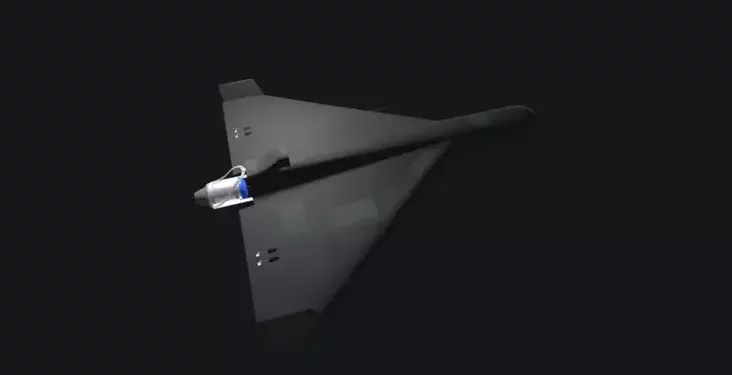
"Geran-3" is most similar in airframe shape to the classic "Shahed-136" ("Geran-2"). It is based on an Iranian design, presented in 2023 under the name "Shahed-238."
This is a drone in the shape of a "delta wing" without a tail section, 3.5 m long and 3 m wide, with an integrated turbojet engine. According to Ukrainian intelligence, Russia uses Chinese Telefly JT80 engines, which are freely available for purchase and can cost up to 24-30 thousand dollars per unit.
This engine allows the "Geran-3" to reach speeds of up to 300-350 km/h.
An even more powerful modification of this drone is the "Geran-4."
According to Ukrainian intelligence, Russia began combat use of this UAV only in May of this year.
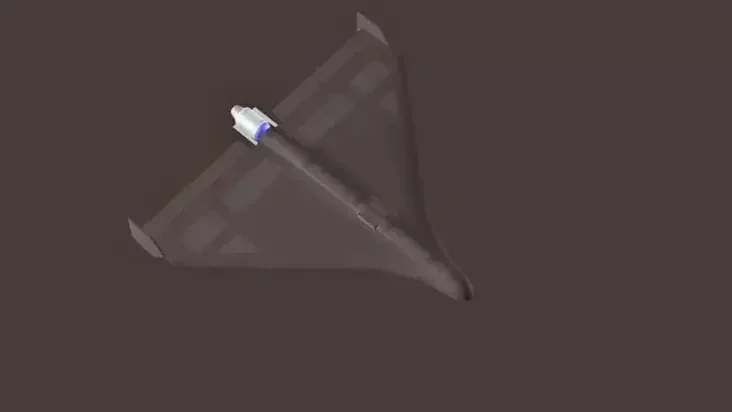
"Geran-4" has the same triangular shape and dimensions as a conventional Shahed, but an reinforced fuselage structure and improved aerodynamics. This is due to the use of a much more powerful jet engine (according to GUR data, we are talking about Chinese Telefly LX-WP-160 or TF-TJ2000A).
They can accelerate the drone to almost 500 km/h.
The reinforced fuselage itself ensures the structural integrity for flights at such speeds and with high overloads during maneuvers.
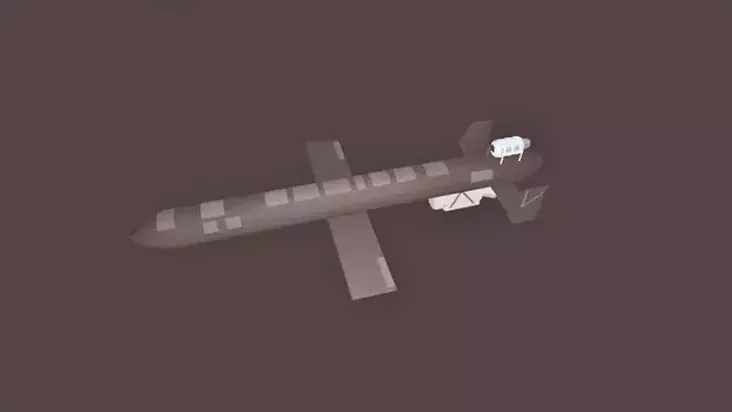
The latest modification of jet drones from the "Shahed" family, namely "Geran-5," fundamentally differs from its "relatives." It is likely built on the basis of the Iranian Karrar drone and visually resembles a conventional cruise missile.
"Geran-5" can be launched from an aircraft and reaches speeds of up to 600 km/h.
This missile-drone has a length of 6 m and a width of 5.5 m. The warhead is up to 90 kg.
This version is currently the rarest used for strikes on Ukraine. Russians prefer to use jet "Geran-3" and "Geran-4," which have a warhead of about 50 kg.
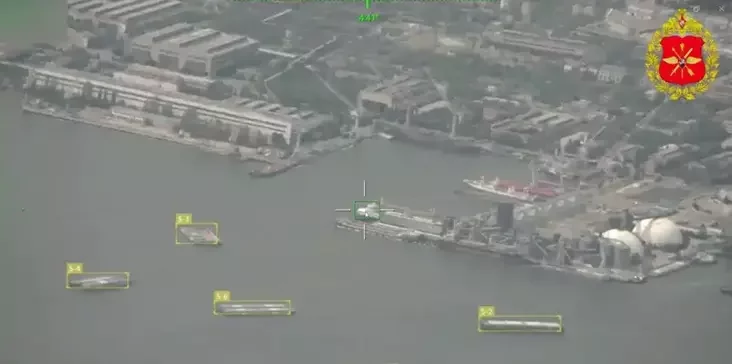
The greatest damage is caused by these drones in the "seeker" modification.
Such "Gerans" have automatic target recognition and acquisition. Russian sources show their active use in recent weeks for strikes on ships in the Black Sea near the Ukrainian coast.
According to Presidential Advisor Serhiy Beskrestnov (call sign "Flash"), such "Gerans" have several cameras operating in different modes, as well as a mesh-modem, with which the pilot controls the drone online via radio communication.
"If the 'Seeker' pilot, for example, locks onto a locomotive from a distance of a kilometer, a low-power electronic warfare system on the locomotive will not protect it. Machine vision algorithms will guide the 'Seeker' to the target without operator intervention," explains "Flash."
This works as follows: thanks to its high speed, the jet "Geran" overcomes Ukrainian air defense lines, and when approaching a moving target — a ship, locomotive, or car — the UAV system detects and acquires the target, the operator confirms it, and then the drone automatically attacks the target.
Since late June, the Russian Ministry of Defense has published about 40 videos of the use of jet "Gerans" with the "seeker" system for strikes on Ukrainian targets. In addition to ships, aircraft, uncrewed boats, shops, warehouses, locomotives, gas stations, trucks, and electrical substations have been attacked.
Are there any drawbacks?
Fast, stealthy, high-precision. The deputy commander of the Darknode battalion with the call sign "Artes" calls jet drones "guided cruise missiles."
But even this weapon has a number of drawbacks. And this is besides the price, which is 2-3 times higher than conventional kamikaze UAVs.
"First — distance: the higher the speed of the jet engine of a 'Shahed', the more fuel is needed. And the more fuel is needed, the smaller the charge the drone will carry or the shorter distance it will fly," explains the serviceman.
According to information on "Geran" jet strikes, their operational range is up to 500 km, which is why they most often attack frontline and border territories of the Kyiv, Chernihiv, Kharkiv, Odesa, Sumy, Poltava, and Dnipropetrovsk regions. In the case of a UAV controlled via a mesh system, this distance can be increased, but then a repeater is needed every 100 km for the drone to operate.
The second drawback is maneuverability: at high speeds, a jet drone physically cannot perform sharp maneuvers.
If it needs to circle in an area of interest, it has to reduce speed — and this creates a convenient window for interception.
According to "Artes," the Darknode battalion has more than 3000 downed "Shahed"-type UAVs, dozens of which are jet-powered. Most of them were destroyed by classic interceptor drones, which was the result of "correctly chosen tactics and the opportune moment for engagement."
How to counter them
So, how to counter jet drones? Ukraine uses anti-aircraft missile systems like Vampire, fighter aircraft, mobile fire groups with MANPADS, as well as interceptor drones for this purpose.
For the latter, however, this is quite a difficult task. The fact is that interceptor drones were created to counter "conventional" Shaheds, and their maximum flight speed is up to 250-300 km/h.
Jet UAVs, on the other hand, can reach speeds of up to 500 and even 600 km/h. Moreover, they fly much higher — up to 9 km — and many of them are controlled online by an operator.
The "Wild Hornets" company, which produces the Sting interceptor, says they have already shot down jet drones.
"Currently, we can intercept about 90% of conventional 'Shaheds', and about 10% of jet-powered ones, if we consider interceptions specifically by interceptor drones," said a representative of the manufacturer, who asked not to be named, to the BBC.
There is also information about the successful use of the Zirka interceptor from the NOCTIS company against jet UAVs.
Its peculiarity is that this drone has computer vision, which analyzes video stream in real-time, automatically detects the "Shahed", suggests the target to the operator for confirmation, and then switches to automatic tracking and guidance mode.
All this significantly increases the accuracy of hitting a high-speed air target and allows working within a short "time window," i.e., in a situation where a jet drone only flies near anti-aircraft positions for a few minutes.
To catch up with such "Gerans," Ukrainian interceptors must also be jet-powered.
Such developments are already being tested, says "Artes," the deputy commander of Darknode battalion.
"Right now, a number of Ukrainian teams have already developed and are testing high-speed and autonomous interceptor drones, including those with jet engines. I would not want to reveal details at all, but I can assure you that soon we will see the first results and move to systemic interception of jet Shaheds," he is confident.
The "Wild Hornets" company also expects that "approximately by October, an effective solution against jet 'Shaheds' will be found."
The main difficulty is not making the anti-aircraft interceptor drone faster, say the manufacturers.
"The main parameters for 'Shahed' interceptors are speed, flight altitude, and airtime. It is important to find an optimal balance of these characteristics," notes the company representative.
According to him, the flight time of jet "Shahed" interceptors should be up to 20 minutes, but the speed should increase by at least a third, and the effective operating altitude — by several kilometers.
However, higher drone speed usually reduces its airtime. Therefore, simply making a conventional interceptor faster will not work.
"Wild Hornets" state that jet UAV interceptors need to be created "almost from scratch" and there are "certain difficulties" here.
Ukrainian developers are already working on a solution.
Now reading


Unique photos of the construction of the Old Bridge in Grodno. Who photographed the dangerous caissons in which people risked their lives at the bottom of the Neman to place the supports? MANY PHOTOS


Comments