


How people live in the Latvian district center closest to Belarus and what they think about the border closure
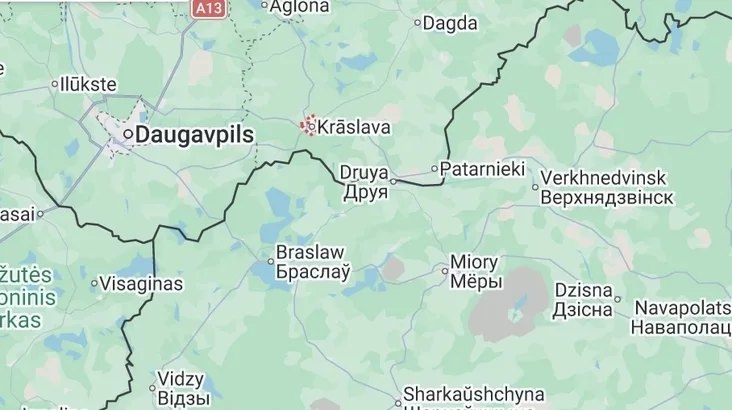
Since 2023, only one border crossing point operates between Latvia and Belarus — Hryharawshchyna-Pāternieki. In early August, the Latvian Ministry of Internal Affairs attempted to close it too. Radio Svaboda reports what residents of Krāslava (traditional Belarusian name — Kraslaŭka, Kraslaŭ), the Latvian district center closest to Belarus, think about this.
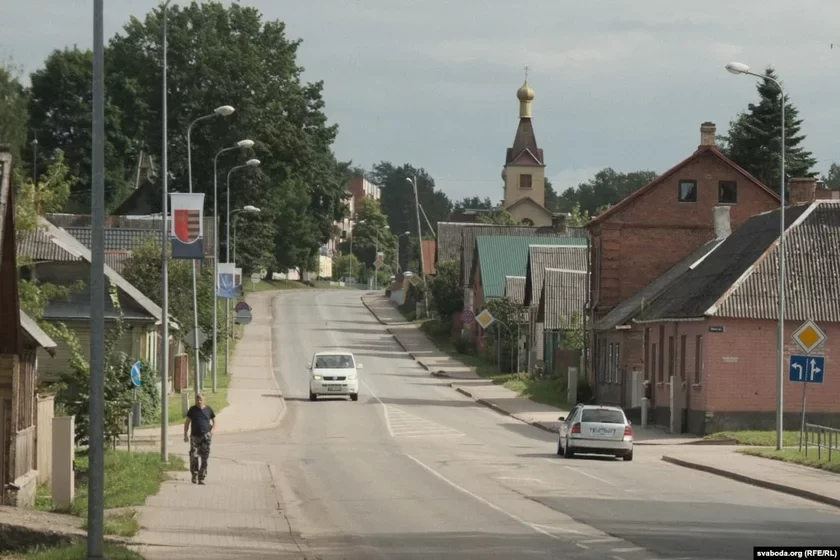
Since the 1990s, two border crossings were operational between Latvia and Belarus, allowing private transport to enter the neighboring country: "Urbany-Silene" and "Hryharawshchyna-Pāternieki". Latvia closed the first and most popular crossing point in 2023. The official reason was the organized flow of illegal migration by the Belarusian authorities.
The second one operated until the evening of July 31, when Latvia stopped transport пропуска there "for technical reasons." The country's government immediately proposed to completely halt border traffic through Pāternieki. Belarusian propaganda responded with loud statements about "unfriendliness."
On August 4, the Latvian Ministry of Internal Affairs joined the demands to close the last border point on the Belarusian border. The reasons cited were "national security" and the same illegal traffic of migrants from third countries. This proposal was eventually rejected. On the evening of August 4, the "Hryharawshchyna-Pāternieki" crossing point resumed operations. How long this will last, no one can say now.
"It's been a long time since we had Belarusians here"
"I was last in your country (Belarus) before the pandemic," says Olga, the owner of an agritourism farm in Krāslava. "Before, we all used to travel to Belarus from here. To Verkhnyadzvinsk, Polotsk, Vitebsk. Many people have relatives there, and also to buy things. Everything is better and cheaper there in your country. Now I don't know how it is. Few people travel anymore, since all this started."
Olga doesn't specify what she means by "all this." In Krāslava, people are reluctant to discuss political topics, at least with strangers.
Olga's words about kinship ties with Belarus are confirmed by official statistics. Latvians are still a minority in Krāslava. Most residents identify as Russians (38%), Poles (9%), and Belarusians (5%). In Krāslava municipality, the situation is similar. In some localities, right on the border with Belarus, the official proportion of Belarusians reaches up to 15%.
After Belarus introduced "visa-free travel," all of them can travel to the neighboring country without additional documents. It is much harder for Belarusians to enter Latvia.
"It's been a long time since we had Belarusians here," says Olga. "I don't even remember when the last time was. Probably before the pandemic. In Krāslava now, you won't even see cars with Belarusian license plates. There used to be many, your people came to us to shop. They would go to Daugavpils, further to Riga. Now it's very rare for someone from Belarus to be here."
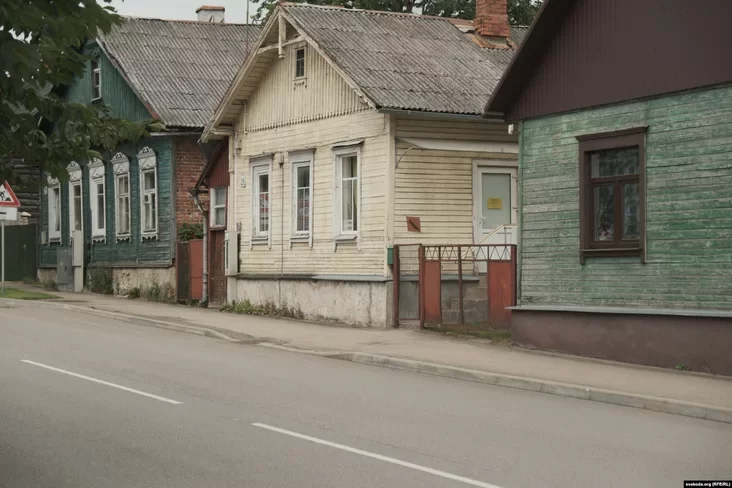
What prevents Belarusians from coming to Krāslava is roughly what our interlocutors in the Latvian district center concisely refer to as "before all this."
After the events of 2020, Latvia sharply restricted opportunities for obtaining visas. Tourist and business visas stopped being issued altogether. Only humanitarian visas, visas for visiting relatives by special invitation, or national visas for work or other compelling reasons can be obtained.
Since September 2025, the possibility of traveling to Latvia has become more complicated even for Belarusians holding Schengen visas from other countries. Now, every visit to Latvia must be separately declared on a special website, indicating the purpose of the visit, route, and personal data. Failure to do so 48 hours before crossing the Latvian border can result in a fine of up to 2000 euros. Krāslava residents warn that these are not empty words.
"Be careful here, we have police, military, constantly stopping people," warns local resident Vladimir, who has lived in Krāslava "since Soviet times," having moved here from Russia in his youth. "It's all because of these 'illegals.' They come from Belarus, they say. I don't know what's really going on. But closer to the border, there are many military personnel, they issue fines."
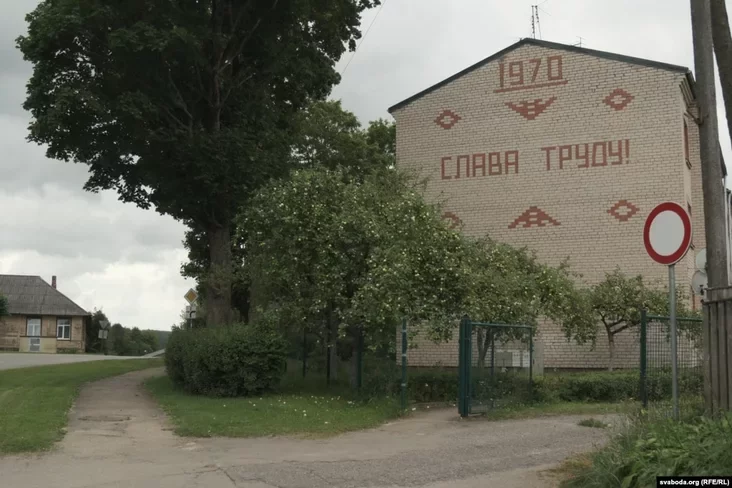
Vladimir's warnings are not baseless. On the streets of small Krāslava, a police patrol can be seen several times an hour, and in the outskirts of the town, many people in military uniforms are seen in special vehicles with and without identification marks. An intensified border protection regime has been in effect on the Latvian-Belarusian border for several years. Security forces have official permission to stop any transport for document checks, enter any premises without the owners' permission, and, if necessary, use physical force.
Near the border with Belarus itself, at a distance of approximately 2 km from it, the regime is even stricter. To enter this zone, a special permit from the Border Guard Service is required. Photo and video shooting are completely forbidden there, and on the approaches to such areas, yellow information signs warn of possible detention for clarification of circumstances. All this is a consequence of the migration crisis, which has subsided on Belarus's borders with Poland and Lithuania, but not with Latvia. In the first half of 2026 alone, Latvian border guards reported approximately 9,000 attempts of illegal border crossing from Belarus.
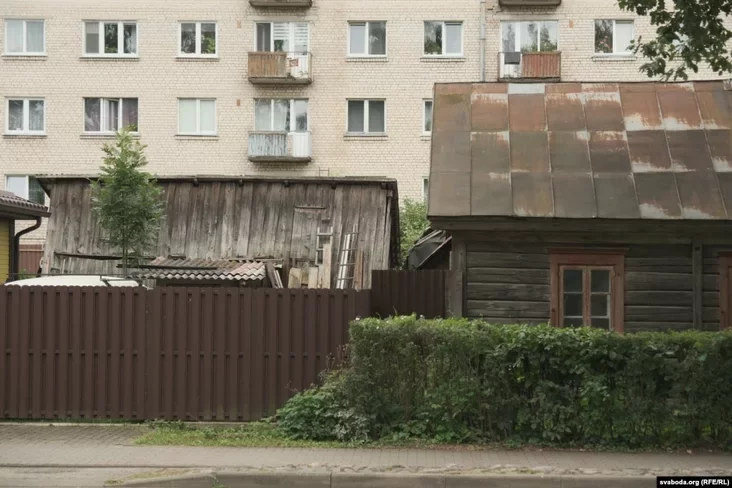
However, foreigners can still be met in Krāslava. Cars with Ukrainian license plates, motorcycles with German ones are seen. At a gas station located at the exit of the town towards the Belarusian border, trucks with Kazakh license plates are parked. Their drivers are reluctant to talk about the possible border closure.
"As long as it's open, we drive. If they close it, we'll go a different route, through Lithuania," says one of them. "I drive as my company tells me. There are smaller queues here, we drive through Latvia. We'll drive through Lithuania if they close the border."
"Yours is better"
Interlocutors among local residents, upon hearing questions about Belarus, recall Belarusian products that were once brought here. Primarily their cost and quality. After 2020, "buying Belarusian" in Krāslava became much more difficult.
"No, we haven't had anything for a long time," replies a vendor at the local market to a question about Belarusian goods. "We don't bring them and don't travel there (to Belarus) anymore. We sell our own, local products. There's hardly a market anymore, everyone started buying in stores."
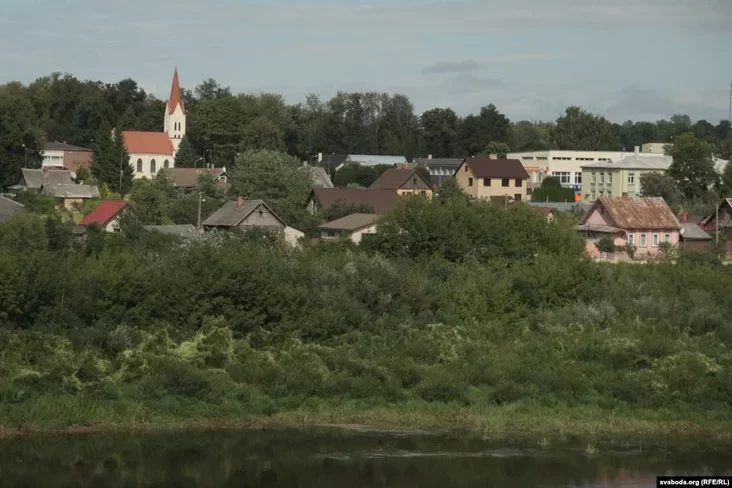
The market in Krāslava has indeed almost disappeared; on Saturday morning, there are only a few vendors selling vegetables and berries. In local shops, there are no Belarusian goods either. Only local products and those from other EU countries. Prices in shops and cafes might slightly scare residents of neighboring Belarusian Verkhnyadzvinsk. Krāslava residents also complain about them in conversations, again mentioning prices in Belarus.
According to official statistics, the average "net" salary in Krāslava municipality is about 700-800 euros (the average in Latvia is about 1350), unemployment rate is about 10%, and pension is about 500 euros. Young and able-bodied people try to move to Riga or further abroad. Over the past 20 years, the city's population has decreased by a third.
"Not to Belarus, they go abroad to the West," says Vladimir, our interlocutor. "I haven't heard of any young people going to Belarus. Here, only those who work with 'wood' (in the woodworking industry. — RS) or own plots can earn something. We have nothing else. But yours is better, I think. Those who travel say it's better, life is going on. Closing the border — I don't know why. Let people travel, who is it bothering?"
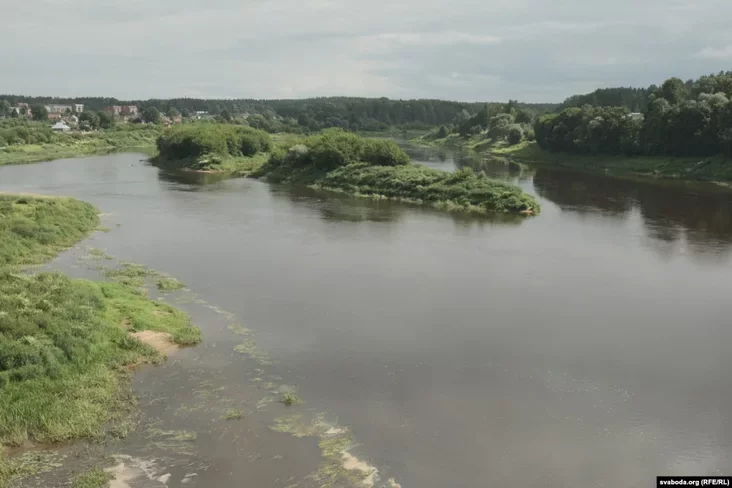
Local authorities in Krāslava are noticeably investing in tourism development. In the conditions of the border crisis, they can rely mainly on residents of Latvia, for whom numerous parking areas have been equipped on the banks of the Daugava. Kayaking on the river, cycling routes, and fishing are popular.
In the city itself, a large palace complex has been preserved, which once belonged to the Plater family, not foreign to Belarus, and where young Emilia (Plater) often visited. The palace itself is currently conserved and awaits funding for restoration. Next to it, in the outbuildings, a museum, educational, and tourist center operates.
There is no Belarusian language in announcements and flyers — only Latvian, Polish, English, and Russian. Employees of the information point at the palace say that there have been no Belarusian groups here "for many years."
"I've never been to Belarus," admits an employee of a Krāslava pizzeria with the name "Elena" on her badge. "I don't know what it's like there. I study in Riga, I work here while it's summer. I heard that they are closing the border, but I don't know anything about it, why."
-
From rare icons to Chinese vases: what you can see in Belarus's only contraband museum
-
Krautsoŭ: I wouldn't say Babaryka understands the political context well. And participation in the "New Belarus" conference is a weak move
-
For the Karavai Fest in Svislach, a 150-kilogram karavai was baked. PHOTO FACT
Now reading


Have they decided to destroy all manifestations of "Polishness" in Belarus? Authorities are quietly preparing a global purge of the State List of Monuments


Comments