


Exhibition on the 2001 Elections Opens at the Museum of Free Belarus
On September 5, an exhibition dedicated to the 2001 presidential elections in Belarus opened at the Museum of Free Belarus. That electoral campaign was intended to be the second democratic elections in our country, but it became the first non-democratic ones. The exhibition is called "The First Undemocratic" . Materials for the exhibition were donated to the museum by Polish political scientist and human rights defender Paweł Kazanetski, as reported by "Belsat".
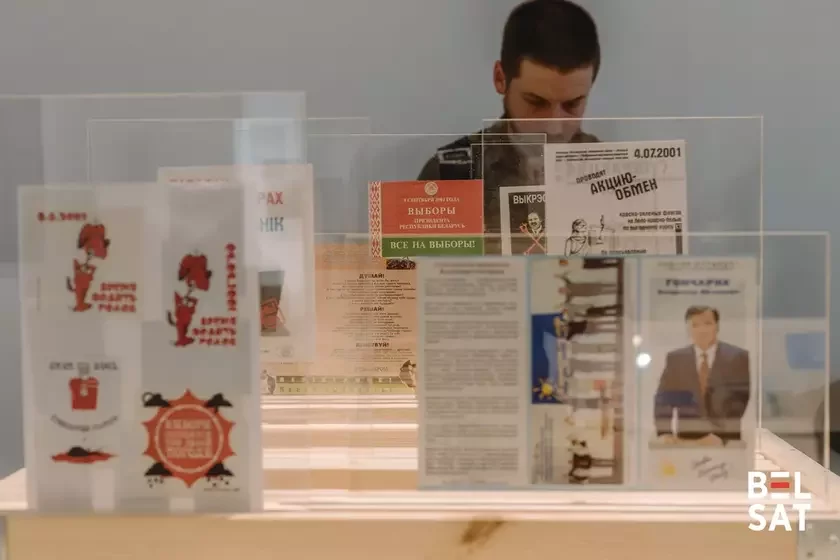
In 2001, democratic forces chose a single candidate – Uladzimir Hancharyk, although many had bet on Siamion Domash. On September 9, the first Belarusian – and unsuccessful – Square (with the seizure of the Palace of Trade Unions) took place. The result: Lukashenka – 75.65%, Hancharyk – 15.65%. Neither the USA nor the EU recognized the results.
These elections were also the first campaign during which street agitation, as well as the activities of independent observer groups and youth political initiatives – "Zubr" and others – manifested themselves very brightly.
At the exhibition, one can see, for example, an informational sticker with a map of Europe showing average salaries (Belarus – $65, Poland – $400, Germany – $2500), a brochure "Instructions for observers at precinct election commissions", a campaign leaflet by Uladzimir Hancharyk (in Russian) – 7 program points ("Strong state – wealthy citizens", etc.), and even a lighter with a half-eaten fish: "It had no voice. Do you?.."
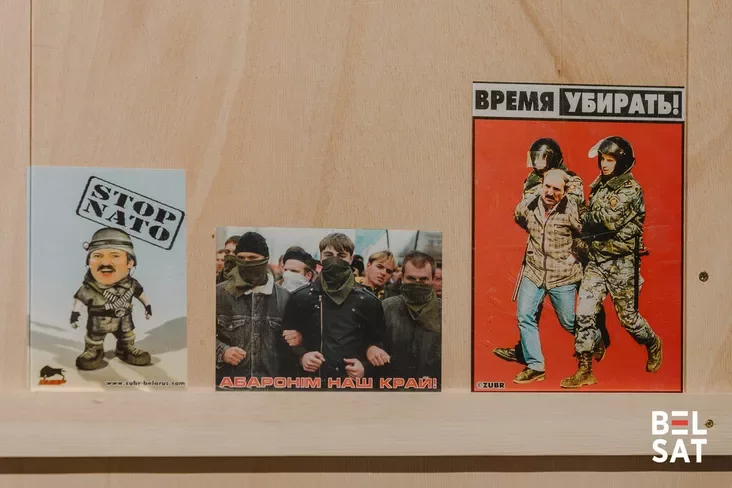
The collection owner, Paweł Kazanetski, told "Belsat" that he collected the exhibits for 10 years when he was in Belarus and had contacts with very different circles. "Why was the 2001 campaign important and interesting? Because it was the first campaign in which the opposition had the opportunity to use modern electoral technologies, where, on the one hand, there was a thought about a positive message to society, and on the other – about a negative message that showed Lukashenka's problems."

At the opening of the exhibition, politician Aliaksandr Dabravolski, who in 2001 was deputy head of the single candidate's election headquarters, Uladzimir Kobets – one of the founders and coordinators of the "Zubr" movement, journalists Aliaksandr Atroshchankau (in 2001 – press secretary of "Zubr") and Fiodar Pauluchenka (former director of "Charter'97" publication), and politician Viachaslau Siuchyk also spoke.

Aliaksandr Dabravolski noted that in the 2001 campaign, when compared to other elections, democratic forces had the greatest support (up until 2020). According to sociological studies, Lukashenka did not gain even 10%, and according to the calculations of American political technologist Trygve Olson, a second round of elections should have taken place.
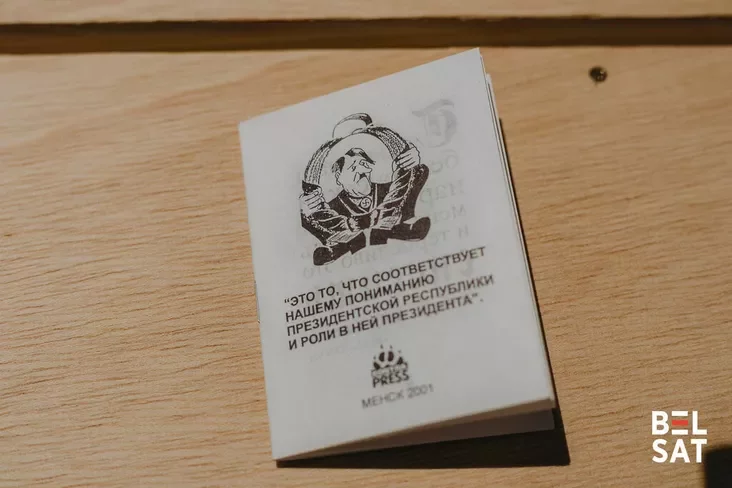
Journalist Aliaksandr Atroshchankau recounted at the exhibition's opening how he was the press secretary of "Zubr" and, on the eve of the elections, distributed a special issue of the newspaper "Svaboda" with an article by psychiatrist Dzmitry Shchyhelski about Aliaksandr Lukashenka's illness (Shchyhelski claimed that the politician suffered from mosaic psychopathy).
Journalist Fiodar Pauluchenka, reflecting on why Belarusian society was not shocked by compromising information about political murders and the "death squad" before the elections, noted that it was precisely then that "officials and many conscious Belarusians decided what to do next."
"These decisions they made at that time also influenced the events in Belarus in 2020. For those who understood everything then, 2020 was not a surprising revelation. It seems to me that the main choice made then by both the elites and Belarusians actually affects all of us even now. And that campaign was decisive," concludes Fiodar Pauluchenka.
The exhibition "The First Undemocratic" is being held at the Museum of Free Belarus in Warsaw with the support of the Embassy of the Kingdom of the Netherlands in Poland. The exhibition can be visited until September 11.


Comments
Тут яны распавядаюць самі https://www.svaboda.org/a/24866422.html
Партыя:
Камуністычная партыя Беларусі,
Камуністычная партыя Савецкага Саюзу
Адукацыя:
Акадэмія грамадзкіх навук пры ЦК КПСС,
Інстытут народнай гаспадаркі (1961).
По образованию - экономист, по основной профессии - чиновник. В 1965 году перешел на партийную работу, занимал ряд руководящих постов. Перестройку встретил на должности второго секретаря Могилевского обкома КПБ.
С 1986 года - профсоюзный лидер. Названия, правда, менялись -- председатель Белорусского республиканского совета профсоюзов, председатель Федерации профсоюзов белорусских.
1961 - 1965 гг. - экономист, зам. и. о. гл. бухгалтера совхоза "10 лет БССР" Любанского р-на. Минской области.
1965 - 1970 гг. - первый секретарь Любанского райкома ЛКСМБ.
1970 - 1976 гг. - инструктор Минского обкома КПБ, 2-й секретарь Дзержинского райкома КПБ.
Связи:
Обусловлены богатым номенклатурным прошлым.
Был выдвинут единым кандидатом в президенты от демократических сил.
Аляксандр Дабравольскі быў намеснікам кіраўніка яго выбарчага штабу ў 2001 г.
После выборов уехал в Москву, вернувшись в Беларусь лишь в 2004 году.
https://www.svoboda.org/a/24223146.html