


"If you write, then only hot on the trail." Former political prisoner Ihar Karney released a book of prison memoirs
The human rights publishing house Sviedki is releasing a book by journalist and former "Svaboda" member Ihar Karney, "Incommunicado. Torture by Solitude," which he wrote in 2 months. Radio Svaboda spoke with the author.

In Belarusian realities, books about prisons are not something exclusive and unique. And after 2020, a peculiar "six handshakes theory" operates in Belarus: people learn about the punitive system not only from the victims themselves, but also from relatives, friends, and acquaintances, says Ihar Karney, the author of the new book "Incommunicado. Torture by Solitude."
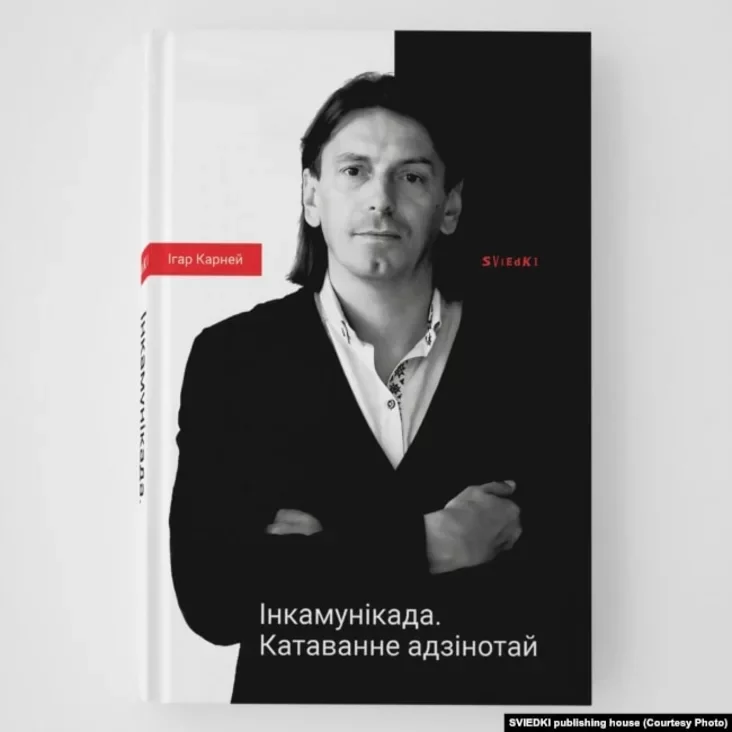
The journalist was detained on July 17, 2023, and sentenced to 3 years of imprisonment allegedly for cooperation with an extremist formation, and received another 11 months for "malicious disobedience to the colony administration." He served almost two years. In June 2025, he was expelled from Belarus. He first found himself in Lithuania, then moved to Portugal to his family.
"The idea for the book was in the air, I already realized in the pre-trial detention center that all this would need to be reflected. Perhaps someone had harsher and scarier trials, but there was neither the impetus nor the desire, and some lacked the skill and ability to describe it all. And I, being a journalist, was forced to write," Karney recounts.
"Of the papers, only the passport was left"
Ihar Karney recalls how in the summer of 2025, a month after his expulsion from behind bars, he arrived in Warsaw to primarily meet with his daughters, who live in Poland, and also with friends.
"Tatiana Niadbai, the head of Belarusian PEN, suggested I not drag it out. But, unlike my colleague Aleh Hruzdzilovich, who published separate parts on the Radio Svaboda website and then released these memoirs as a book, I didn't have such a luxury — to write in pieces, I had to write the book at once. I came to the conclusion: if you write, then only hot on the trail, while everything is in vivid colors. Otherwise, all impressions will dissolve, scatter, dissipate, and reassembling it all from fragments — there will be no enthusiasm, no strength, no memory, no impetus. It's an illusion that time passes and wounds heal," the journalist admits.
Ihar Karney was released from prison with nothing — not a single piece of paper, sheet, or letter was returned to him. How did he manage to write a book of over 400 pages without notes, from memory, in such an incredibly short time — 2 months?
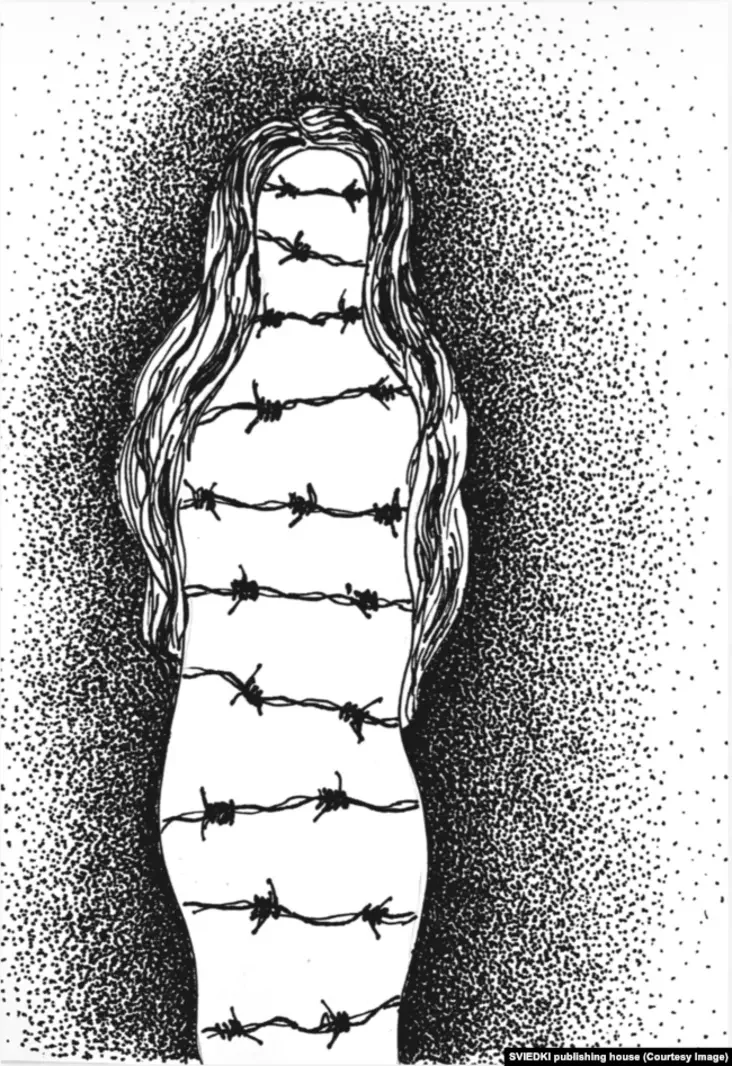
"In 2021-22, prisoners still had opportunities to send something from behind bars. When I was jailed in 2023, it was already impossible. Several times there were 'shmons' [searches] in the colonies in Shklou and in Mazyr, where I ended up after the second sentence. And everything I had noted and restored was confiscated there. And the 'control shot' — during the forced departure, or rather, cynical expulsion, the KGB officers took the rest in 'Amerikanka' [KGB pre-trial detention center] — what remained, including personal letters from relatives… Of the papers, only the passport was left, which was also soon declared invalid," says Karney.
"When I started writing the book, I didn't use the word 'incommunicado'"
The journalist didn't want to repeat himself, as books by former prisoners had already been published, and new people would probably also write. It was decided to focus specifically on isolation — on the incommunicado regime. Ihar admits that he didn't know this word before. He first heard it in a conversation with a lawyer and didn't immediately realize what it meant.
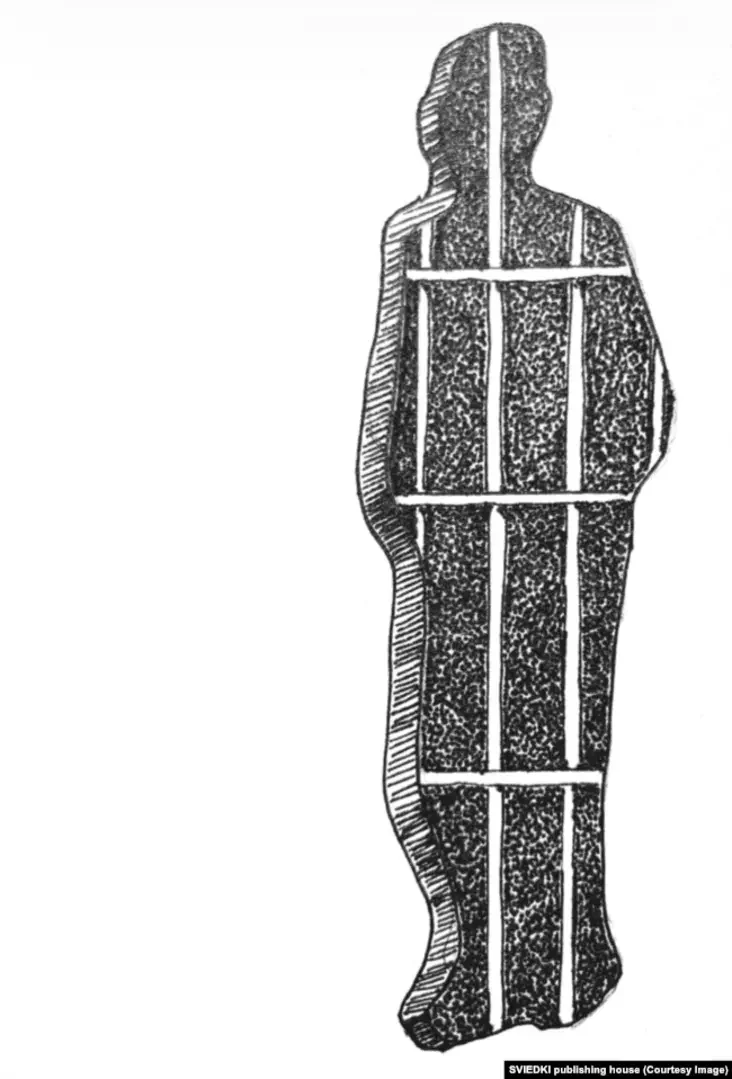
"Because sitting in an isolation ward, there is no incommunicado yet: you are a suspect, you hope: maybe they'll release you. There were meetings with a lawyer, correspondence, deliveries. You could still exist — not live, but just exist. Well, and when the 'colonial' adventures began, the conditions there are an order of magnitude harsher, restrictions on all fronts. When I started writing the book, I didn't use the word 'incommunicado,' it appeared at a later stage of editing. I had another version: the title 'Torture by Solitude' and the subtitle 'How Dissent is Beaten Out,'" the author of the book admits.
He believes that in his own case, perhaps this is not entirely justified, as many people spent more than a year in a regime of total restriction not only from relatives and loved ones, but also from the outside world in general. Ihar had six months of solitary confinement in the Shklou colony (he only worked 4 days at the sawmill with Pavel Belavus), and the rest of the time — in the punishment cell (ShIZA) and cell-type room (PKT). In the strict regime in Mazyr, he was also in ShIZA, but there were 4-5 people there.
"If you're a 'yellow-tagger' with the status of 'extremist' and a professional record No. 10 – segregation occurs. As for 'white-taggers' (murderers, maniacs, rapists, robbers) – from the point of view of the penitentiary system, these are normal people, but with political prisoners, extremists, it's better not to interact at all. And, if possible, create unbearable conditions for them. Not everyone can physically endure these abuses. When a person is thrown into a ShIZA without reason, new violations are invented, then placed in a PKT, set up again, and so on until the next criminal case under article 411 – it becomes a 'vicious circle' from which one might not escape, even with a small initial sentence," says the former political prisoner.
In his opinion, people with yellow "extremist" tags are perceived as material for experiments. Neither health, age, nor the reason a person ended up behind bars is taken into account. Unceremonious attacks are launched.
"Moreover, in some places, it's more concentrated. It seemed to me that specifically in the Shklou colony (this is confirmed by other inmates – Ahira Hayeuski-Khanada, Alyaksandr Yarashuk, Paval Seviarynets, whose place I briefly took) – all of them are convinced that there is a 'special task' – to put pressure on political prisoners. And the head of the Shklou colony is Karniyenka (his nickname is Karney, I heard the guards mock their boss). He created unbearable conditions for me and personally decided my fate. So the 'Karneys' didn't get along," admits former political prisoner Ihar Karney.
How not to go crazy
The book "Incommunicado. Torture by Solitude" is divided into 4 "stages": "Isolation," "Cell," "Voice," and "Support."
"I share my 'prison universities': how to endure these trials, how not to go crazy in a psychological sense, how to endure physically. Because when you don't see the sun, the sky, you are walled up in four walls without a window, you are constantly freezing, underfed – this affects not only your physical state, but also your mental one... I met people who simply went insane sitting in such conditions. Not everyone can morally adjust themselves, ignore external conditions, and try to concentrate on their inner world.
Perhaps sincere believers or people with meditation or psychological practices endure such conditions more easily – they simply switch their brains," Ihar says.
An excerpt from the book: "Cynical jailers know that true violence is not in pain, not in handcuffs, not in screams. The most effective pressure is to force a prisoner to exist in a world where there is no one but himself. To listen to one's own breathing until one begins to doubt whether it is worth continuing. And in this concrete sack, where even the rustle of footsteps echoes, suddenly something incredible: a fly makes its way through a crack. At first, just irritation, instinct — to swat, to destroy. But the hand freezes… And I feel an almost childish joy: I am not alone!"
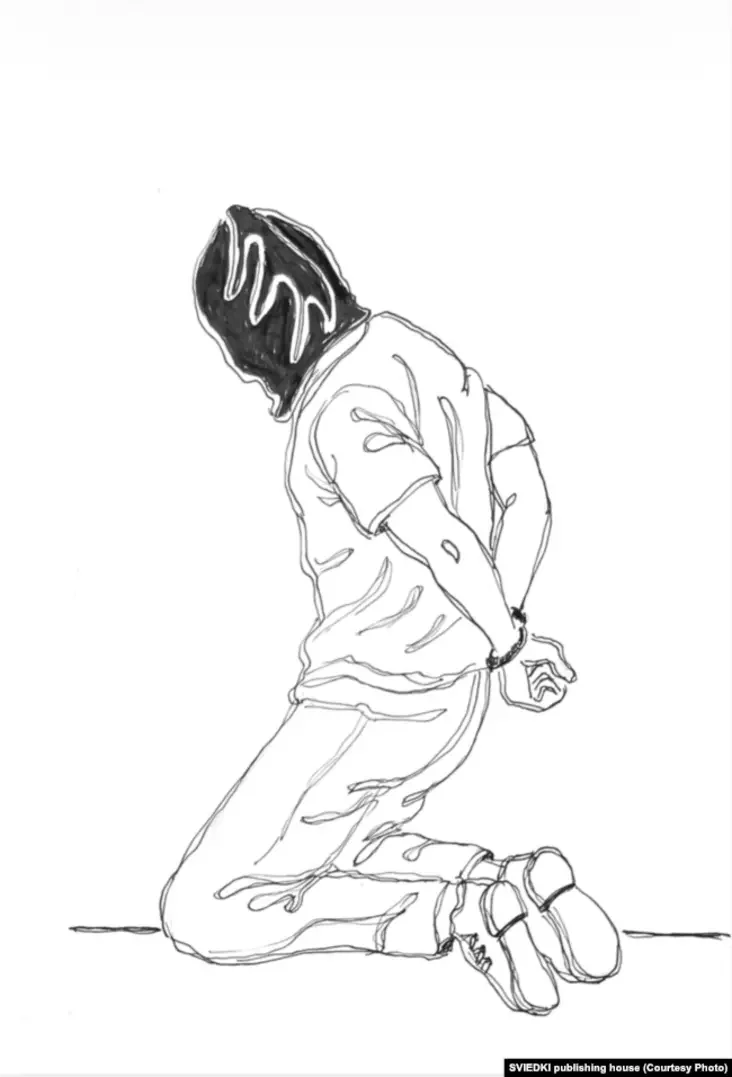
Karney recalled how in Mogilev prison No. 4, while awaiting appeal after a new sentence under Article 411, he came across Jack London's book "The Star Rover" – about a professor sentenced to life imprisonment who travels through time.
"If I had known about this work earlier, maybe it would have been easier for me. It's about a condemned man, also in a 'straitjacket,' who was physically almost dying, but he would fly out of his body and supposedly travel through the universe. And indeed, if you manage not to engage in self-pity, to distance yourself from this mockery, you have more chances to keep a healthy mind," the journalist says.
According to the former political prisoner, in places where there is a certain segregation, people with yellow "extremist" tags are perceived as material for experiments. Neither health, age, nor the reason a person ended up behind bars is taken into account.
"So that it doesn't seem like it was invented, generated by my sick intellect..."
The idea to supplement the book with the voices of other "inmates" was born during the work on it. In "Voice" — more than two dozen memoirs of former political prisoners: "Losik's Torture Chamber," "Charniauskaya's Communal Apartment," "Seviarynets's Cross," "Mazheika's Hygiene," "Klaskouskaya's Insects," "Semchanka's Choice," "Lutskina's Strike," Parkhimchyk's "Farm," "Labkovich's Themis."
"So that it doesn't seem like it was invented, generated by my sick intellect (not artificial, but sick), so that the book doesn't appear subjective, the idea arose to include the impressions of several people who went through similar trials," he says.
Ihar was in the first batch of those pardoned and expelled from the country in June 2025. He had just started writing the book — in September, the second batch was released, which included many of his colleagues and friends with whom he had crossed paths in the zones in Shklou and Mazyr. Then there were other batches, and he added the stories of the released to the almost finished book.
"There were other forms of abuse: the house arrest of Yuliya Charniauskaya or 'khimiya' [forced labor with restrictions on freedom] with assignment for IT specialist Viktar Parkhimchyk. And this is not easy at all when strangers are constantly with you, who have settled in to such an extent that even in Charniauskaya's refrigerator, the guards had their own shelf. Ms. Yuliya even thought that if she had the health, she would go and serve her time. IT specialist Viktar Parkhimchyk, who was serving 'khimiya' with assignment, was placed to work as a livestock breeder on a farm, where he had to assist with cow births. The stories are different, and some are envious, saying that, supposedly, on house 'khimiya' or house arrest, a person sleeps in their own bed. But it turned out that it's not all that simple," says the author of the book "Incommunicado. Torture by Solitude," Ihar Karney.
Now reading


The Return of Kaschei, the Abolition of Rusalkas, Navie from Polotsk, Kopsha and Vegelmof. What the First Belarusian Guide for Fantasy Translators Offers


Comments
Цяжка ўявiць, што масавы чытач знойдзе шлях да старой навiны.