


Belarus, Germany, Britain, Belgium, USA. The Life Paths of Janka Zaprudnik
Today marks 100 years since the birth of Janka Zaprudnik — historian, writer, and public figure.
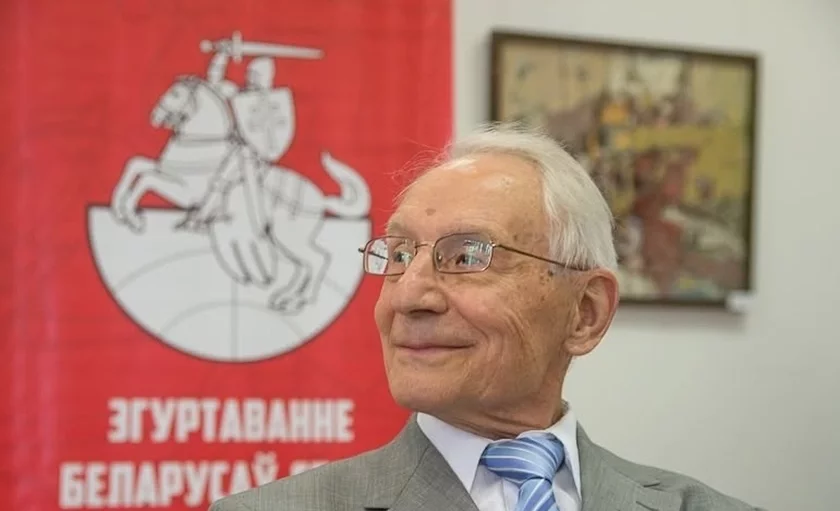
Janka Zaprudnik was born on August 9, 1926, in the ancient town of Mir, which at that time was part of Western Belarusian lands within the Polish state. In fact, at birth, he was named Siarhei Vilchytski, and would become Zaprudnik 20 years later.
In Mir, Siarhei Vilchytski graduated from school in 1942. To avoid being sent to forced labor in Germany, he had to continue his studies. So, the young man and his friends went to a junior high school (progymnasium) in Baranavichy. His teachers were Anton Lutskievich's sons – Liavon and Yurka.
Then – a commercial school (in today's terms, an economic and financial college), participation in the Union of Belarusian Youth. And in the summer of 1944, at less than 18 years old, emigration from Belarus.
In his book "The Dozen," Zaprudnik writes that he managed to leave a short note for his parents: "My dear ones, I don't know what will happen to me if I go West, but I know what will happen here. That's why I'm leaving, I'll return someday. Hugs. Strong kisses."
They never saw each other again. His father, Mikalai Vilchytski, was mobilized into the Red Army and soon died at the front. His mother passed away in 1981.
After the war, to avoid implicating his parents, he changed his name to Janka Zaprudnik and returned to education.
The young man graduated from the famous Janka Kupala Belarusian Gymnasium in Bavaria and took an active part in the scout movement.
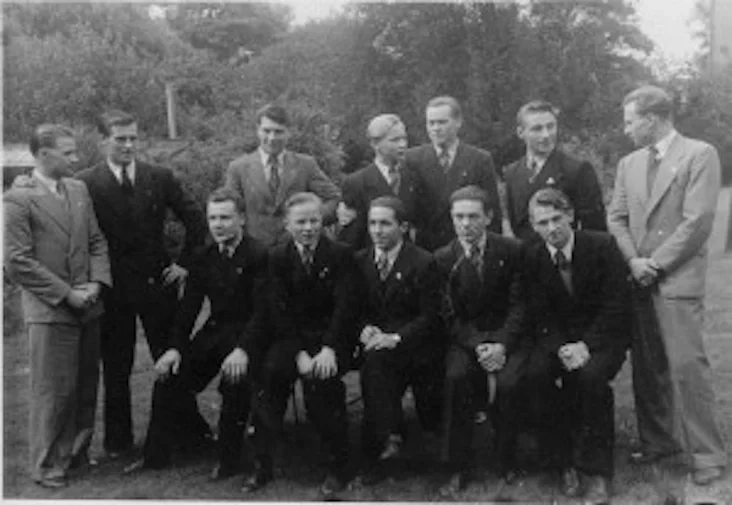
And in 1948, together with 11 other young men (his famous book "The Dozen" is about this), he went to Great Britain, where he worked in the mines for three years.
There, Zaprudnik joined active emigre life. But after his work contract expired, he moved to Belgium, where several dozen Belarusian youths had the opportunity to study at Leuven University.
Zaprudnik graduated from the history faculty and got a job at the newly created Belarusian section of "Radio Liberation" (today – "Radio Free Europe/Radio Liberty"). In Munich (where Radio Free Europe/Radio Liberty was located until 1995), Zaprudnik worked for three years, and then decided to move to the USA – the then hotbed of Belarusian emigre life.
After World War II, about 30-40 thousand Belarusians moved to the USA. They were nationally conscious; they created dozens of Belarusian organizations, Belarusian centers, and churches in New York, Cleveland, Chicago, South River, New Brunswick. They even reached Los Angeles, Colorado, and Florida.
Zaprudnik settled in New York, where he defended his doctoral dissertation "The Political Struggle for Belarus in the Tsarist State Dumas (1906-1917)" and received a Ph.D. in History. He taught Russian and Soviet history at Queens College of the City University of New York.
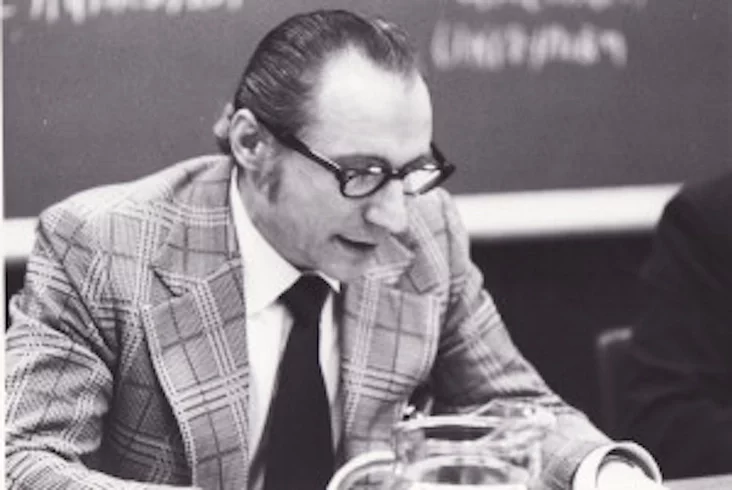
In parallel, he continued his work in the Belarusian editorial office of Radio Free Europe/Radio Liberty, rejoined Belarusian public organizations, was a member of the Belarusian Institute of Arts and Sciences (BIAS), the Belarusian-American Association, the Association of Belarusian Youth in America, and others. He was a long-time member of the Rada BNR (Council of the Belarusian Democratic Republic) and edited various Belarusian periodicals.
From 1980-1995, he edited the main emigre newspaper in America – "Belarus." He wrote several books on the history and culture of Belarus.
He was only able to visit Belarus in the early 1990s.
Zaprudnik recalled how in the 1970s, writer and editor of the "Nyoman" magazine Yauhen Vasilionak came to New York for the UN Assembly. While going to a restaurant with Zaprudnik and Vitaŭt Kipiel, he asked, "Have you heard of an emigrant named Vilchytski?..." His mother, he said, was looking for him, missed him, and cried.
The surname, however, was written on a piece of paper. Zaprudnik was found: "There was some Vilchytski in New York, but he left." Vasilionak did not ask further.
From the 1990s, his visits to Belarus became regular. Janka Zaprudnik came with his wife, Nadzieja. They participated in Belarusian events, presentations, financially helped relatives and simply strangers, gave money for studies, and contributed to the Ivianiec church.
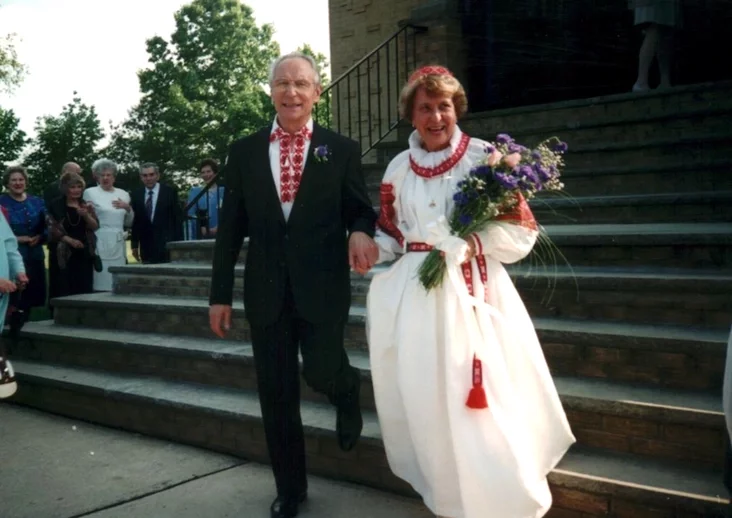
Nadzieja Zaprudnik recalled: "We had the means, we worked. We were people who, as they say, are 'giving away' — who give. When my husband once calculated a bit between us (we don't boast about what we did), it turned out we had donated about a million dollars to Belarus. When we traveled to any country, and especially to Belarus, it was always with help. Once Janka said: 'Well, you take ten thousand and I take ten thousand, and we give it away.' Then we return home."
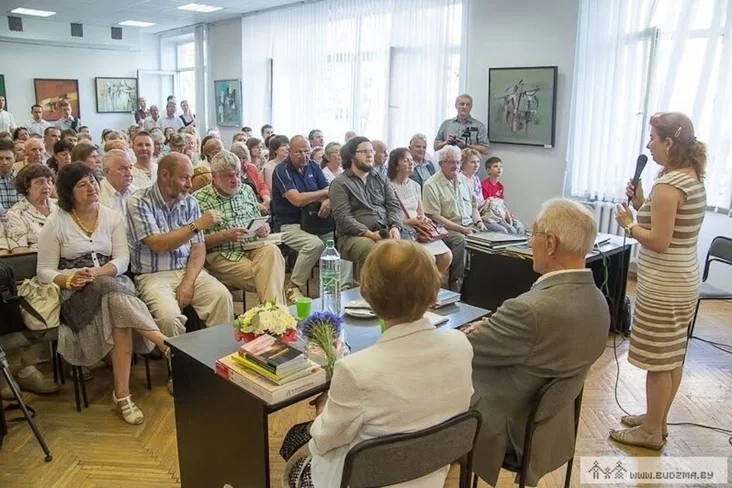
In 2016, 90-year-old Zaprudnik came for the presentation of his book of correspondence. The Pushkin Library hall was full. And then, with his wife, they arranged a traditional tour of Belarus.
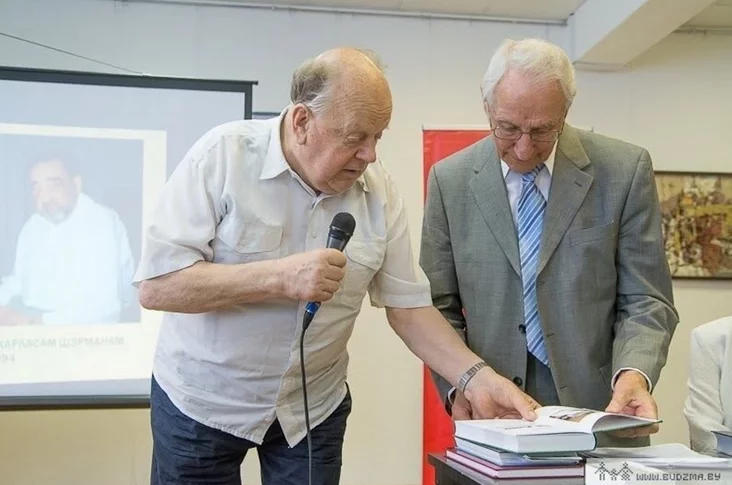
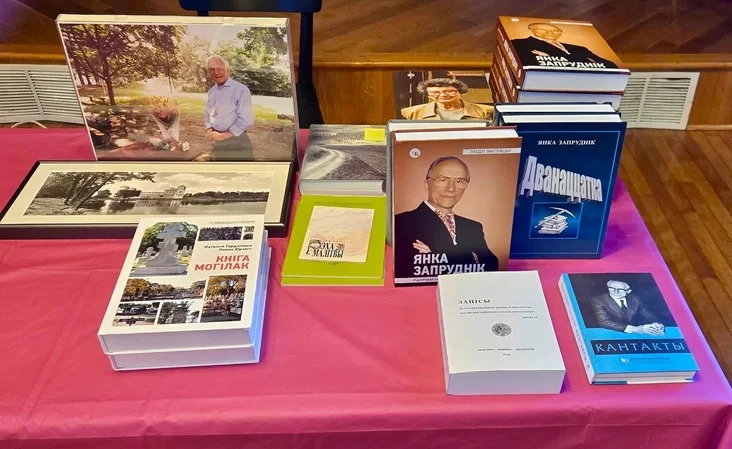
Janka Zaprudnik is also known as a poet. He wrote under the pseudonym Siarhei Yasen. In 2017, a collection of his works "Biaharu maiho zarnitsy: paeziya (1946—2017): dzionnik (1949―1954)" (My Shore's Dawns: Poetry (1946—2017): Diary (1949―1954)) was published.
He passed away on May 26, 2022, living 95 years. But until his last months, he maintained a clear mind, painfully reacting to the events of 2020 and the forced emigration of hundreds of thousands of Belarusians.
Now reading


In the Czech Republic, Poles Beat a Pole, Mistaking Him for a Ukrainian Due to a Hat in the Colors of Upper Silesia. The Guy Was on a Charity Bike Ride for His Pregnant Partner Who Had Cancer


Comments
Гл. п. 1: Правительство СССР признаёт советско-германские договоры 1939 года касательно территориальных перемен в Польше утратившими силу.
Такім чынам, у сілу заключэння дамовы Сікорскага-Майскага дзеянні СССР па пераводзе грамадзян Польшчы ў савецкае грамадзянства з'яўляюцца юрыдычна нікчэмнымі, спецыяльны ўказ ад 29.11.1939 не мае юрыдычнай сілы ў дачыненні жыхароў Заходняй Беларусі, якія на момант падпісання пакта Молатава-Рыбентропа (з сакрэтнымі пратаколамі) ад 23.08.1939 з'яўляліся грамадзянамі Польшчы. То бок, дзеянні сп. Сяргея Вільчыцкага не могуць быць ацэнены як супраца грамадзяніна СССР з агрэсарам Германіяй, бо грамадзянінам СССР ён не з'яўляўся. Пра пытанні дзяржавы фактычнага і юрыдычнага грамадзянства (Польшчы) да Сяргея Вільчыцкага нічога не вядома, таму ўсе накіды пра "калабарацыянізм" - беспадстаўныя.
Тое самае датычыцца большасці беларусаў грамадзян даваеннай Польшчы на акупаванай немцамі тэрыторыі.
Дамова Сікорскага-Майскага не была дэнансавана, нягледзячы на спыненне кантактаў паміж СССР і польскім урадам на выгнанні ў 1943 г. пасля выкрыцця злачынстваў у Катыні.
Так што, пераслед і рэпрэсіі 1944-1950-х гг. супраць так званых "калабарантаў" (супрацоўнікаў цывільнай адміністрацыі пры акупацыйных уладах, настаўнікаў, рэлігійных дзеячаў) былі цалкам незаконныя нават паводле заканадаўства