


The EU Discussed Migration Policy After Crisis in Spain. No Unity Found
EU interior ministers held an emergency video conference after the recent migration crisis in the Spanish enclave of Ceuta. They attempted to develop common measures to prevent similar situations from recurring, but the negotiations revealed serious disagreements between EU countries, reports BBC.
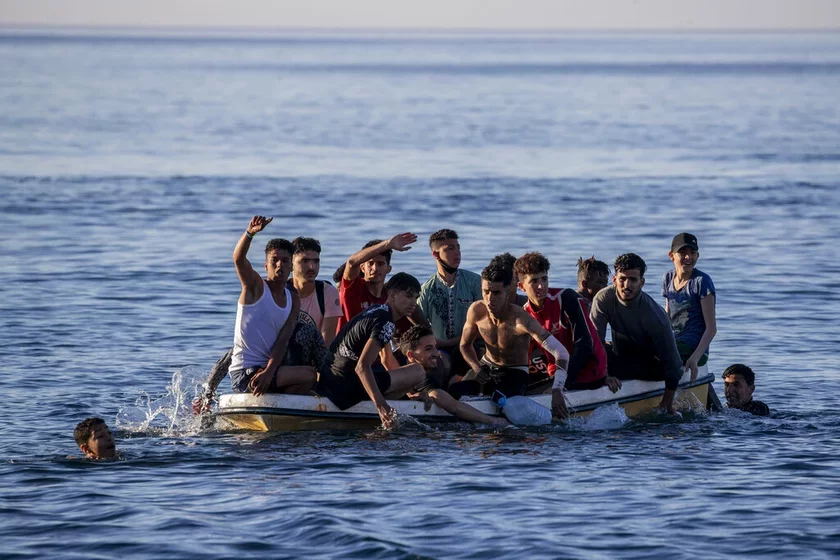
The crisis in Ceuta became one of Spain's biggest migration challenges. Last week, over 50,000 people broke through from Morocco into the Spanish enclave. Spanish authorities began returning migrants to Morocco, but some people remained in Ceuta.
The Spanish government, led by Prime Minister Pedro Sánchez, adopts a softer approach to migration compared to many other EU countries. This has drawn criticism from states advocating for stricter border control.
Italy took the sharpest stance. Prime Minister Giorgia Meloni criticized Madrid's migration policy and even proposed temporarily excluding Spain from the Schengen Area. This idea was supported by Denmark and Finland, but Spain rejected it, stating that such a decision is not foreseen by EU law.
After the crisis in Ceuta, the division within the European Union intensified between countries demanding stricter controls and limited migration, and states advocating for a more humane approach.
Pedro Sánchez appealed to the heads of European institutions to develop a common response to migration crises and accused some countries of an "egoistic approach." In response, 22 EU states, including Italy, Germany, Denmark, and Hungary, called for an even stronger migration policy.
Some European politicians believe that Madrid's decisions to legalize part of the irregular migrants could have been perceived as a signal of open Spanish borders.
Recently, the EU has already tightened migration rules, including allowing countries to establish special migrant return centers outside the European Union. Italy proposes expanding this practice and creating similar centers in African countries.
However, a common approach to the migration issue has not yet been achieved within the EU.
Now reading


In Belarus, rules for the evacuation of valuables in case of war approved: bricks from Brest Fortress with inscriptions will be saved before paintings by Chagall and Soutine

In Belarus, rules for the evacuation of valuables in case of war approved: bricks from Brest Fortress with inscriptions will be saved before paintings by Chagall and Soutine


Former Gazprombank Vice-President Volobuev – on serving in the AFU, connections with the "Black Spark" underground, and abandoning his family in Russia

Former Gazprombank Vice-President Volobuev – on serving in the AFU, connections with the "Black Spark" underground, and abandoning his family in Russia

"Have you seen the wallpaper from the developer? It's a nightmare." Why is state-provided renovation in apartments for those on the waiting list criticized?


Comments