


Statkevich Modeled Events That Could Unfold in Belarus This Autumn
Moscow may try to repeat the 2022 breakthrough towards Kyiv, while Ukraine could respond with powerful strikes. The politician and ex-political prisoner reflects on the so-called new "Belarusian Front" in his Telegram channel.
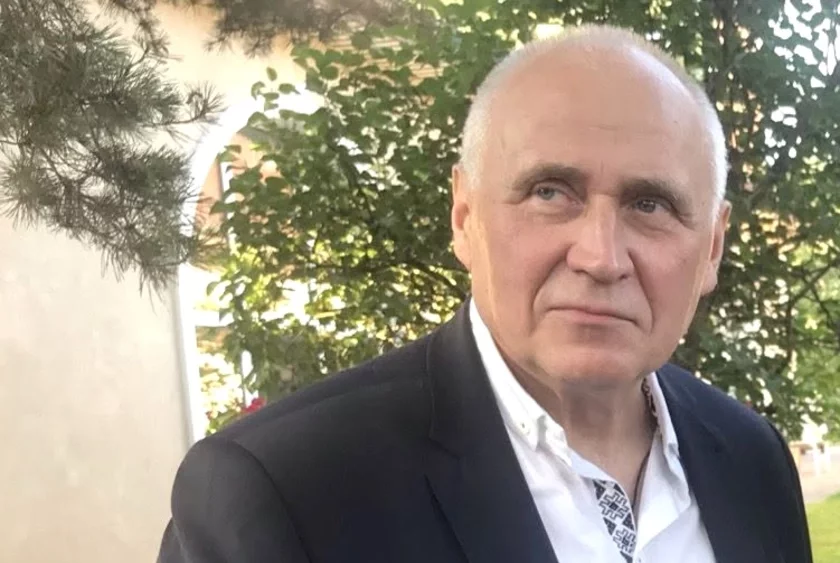
Statkevich first reminds of his article from May 19, where he considered Moscow's options for continuing the war against Ukraine: 1) Mobilization; 2) Expanding the line of combat engagements at Belarus's expense; 3) Using tactical nuclear weapons.
"I have already analyzed their prospects in that text, but now a lot of additional information is emerging, from which one can infer which option for continuing the war the Kremlin is leaning towards. At least for now," he writes, —
Russia is preparing for a new mobilization after the parliamentary election campaign in September.
According to various Ukrainian military analysts, between half a million and a million new soldiers could be mobilized in the Russian Federation, who will begin to be sent to the front as early as November. Also, the Ukrainian side states that intensive construction of military infrastructure is underway on Belarusian territory near the border with Ukraine. Given this, it can be predicted that Moscow plans to send part of its troops to our territory to once again try to attack Ukraine from the north and, at a minimum, divert its military forces from other areas to the "Belarusian" front.
And also, to try to repeat the 2022 breakthrough towards Kyiv.
The latter, given the marshy terrain along most of the Belarusian-Ukrainian border and Ukraine's advantage in drones, has little chance of success. But from our territory, Russian troops will be able to inflict massive, precise aerial strikes with drones and missiles on Ukraine to force it to surrender.
In response, Ukrainian troops will begin to inflict massive strikes on Russian military communications, equipment, warehouses, command posts, and deployment locations in populated areas. Our roads, bridges, cities, military, and petrochemical enterprises will come under attack.
Especially within the range of the most effective current Ukrainian medium-range Hornet drones with artificial intelligence — 150 kilometers from the Ukrainian border.
Within this zone are Gomel, Brest, Mozyr, Pinsk, and many smaller cities and towns. If the Russians again start striking Ukraine's energy facilities, as they did last winter, but also from our territory, then we will receive a "mirror" response — long-range strikes on our similar facilities throughout Belarus.
The destruction of buildings in populated areas, industry, and infrastructure, casualties among the civilian population, major cities without electricity and heat — this will be the price just for passive complicity in the aggression. And there are also consequences from the mere presence of foreign troops on our land during wartime.
Soldiers who know that death awaits them among the Palesian swamps, and who want to "have their fun" one last time. And who are convinced that the entire local population must fulfill their every wish for "protection from 'Ukronazis'." Moreover, they face no additional threat for murders, robberies, rapes of "locals." Because, even if a case goes to court, which is doubtful, they will not go to prison from there, but again, to the front.
In the history of Belarus, there was already the experience of long-term presence of Moscow troops on our territory during the Muscovite-Belarusian War of 1654-1667, which Russia later bashfully called the "Polish" war, and in which more than half of Belarusians died.
I will not write here about all the horrors of that war — their description would fill a large book, writes Statkevich. — But I will give one example. In 1654, Muscovite troops besieged Mogilev. The siege was short, as predominantly Orthodox townspeople themselves opened the city gates to "co-religionists." Later, having become better acquainted with their "brothers in faith," in 1661 these peaceful people raised a rebellion and almost completely slaughtered the seven-thousand-strong garrison of "liberators."
Well, in today's situation, there are also long-term consequences, because withdrawing Russian troops from our land, even after a truce between Russia and Ukraine, will be extremely difficult. Having failed to capture a large country, they might decide to seize at least a smaller one, to justify the deaths and maiming of hundreds of thousands of their soldiers in the eyes of ordinary Russians and to have something to declare a victory.
Undoubtedly, the regime ruling in Belarus resists as much as it can to avoid such a scenario. But, given its global dependence on Moscow, refusing to fulfill its "allied" obligation is becoming increasingly difficult.
Decades of holding power eventually come with a price. Such bonuses are not given "for free."
The previous payment with our language, history, and culture only created preconditions and whetted the appetite for the complete absorption of what is now an "artificial nation that speaks the same language as us." Moreover, Moscow needs new soldiers and a military foothold for subsequent wars.
So now, the fate of our state, nation, and millions of Belarusians could become the price for the "continuation of the banquet" for one family," wrote Mikalai Statkevich.
-
Media replaces the state for Belarusians. And for now, it won't be otherwise
-
Zmitser Dashkevich: In exile, I am a wanderer, but I have what I wouldn't have in Belarus now — the opportunity to bear fruit for the Lord
-
Kaverin: I have a daughter growing up, and I would like her to live, rather, in the world that feminists imagine as ideal


In the Czech Republic, Poles Beat a Pole, Mistaking Him for a Ukrainian Due to a Hat in the Colors of Upper Silesia. The Guy Was on a Charity Bike Ride for His Pregnant Partner Who Had Cancer


Comments