


Police officer knew Russia does not extradite its citizens, but extorted $22 thousand from a killer who feared extradition to Belarus
A Russian criminal was involved in murders, rapes, and robberies in Belarus in the 1990s. And ultimately became a victim himself.
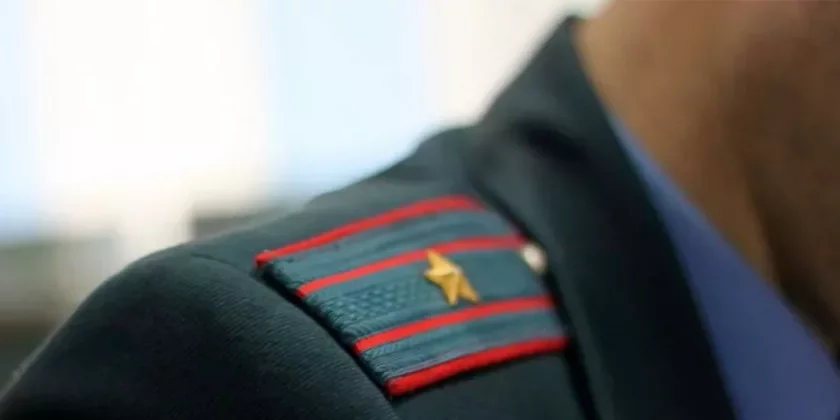
In 2024, the Soviet District Court of Voronezh (Russia) convicted senior criminal investigation officer Alexey Feoktistov for bribery in a particularly large amount, which he received from a murderer.
Instead of fulfilling the request of Belarusian law enforcement to search for the killer, Feoktistov made a deal with the criminal for $22 thousand, promising to close the case in return.
Who is Feoktistov and why did the case go to him?
Since 2019, Alexey Feoktistov held the position of senior operational officer for particularly important cases in the search organization department of the Criminal Investigation Directorate of the Main Directorate of the Ministry of Internal Affairs of Russia
for the Voronezh region. He was responsible for organizing the search for criminals in the region.
In March 2020, he received a request for the interstate search of a man (in the case materials, he is referred to by the acronym "FIA1", later he took the name Mikhail). In Belarus, he was accused of murder.
According to Feoktistov's own testimony in court, his Belarusian colleagues explained to him that the man had been wanted since 1996 for a series of seven serious crimes — three rapes, robbery, and murder. But since he was a citizen of the USSR (and later Russia), he was not subject to extradition to Belarus. According to Feoktistov, the Belarusian side understood this and only wanted to determine the man's location to speak with him independently.
The first attempt to detain failed — and the idea of a bribe was born
In early April 2020, Feoktistov located the man in Voronezh, but he escaped during an attempt to detain him. On April 8, 2020, he was located again — according to the case materials, it was at this moment that Feoktistov got the idea: to get money from the man for not detaining him and not carrying out mandatory investigative measures.
According to Feoktistov's own version, the situation was as follows. He tracked the man's car ("Mitsubishi Outlander") and, along with a colleague, tried to stop him near a shopping center, showing his ID through an open window. The man sharply drove away, hitting a parking barrier that fell onto the service vehicle, and fled. After this, Feoktistov called the number linked to the car via WhatsApp, addressed the man by name, and said that he was wanted in Belarus: "I know where you live, next time I'll come to your house with special forces... But if you don't want that to happen, we can resolve this issue somehow."
The man called back and agreed to "resolve the issue." In subsequent correspondence, Feoktistov demanded approximately $22 thousand, part of which was allegedly for the repair of the damaged car. The victim agreed, fearing extradition to Belarus.
How the money was transferred
On May 28, 2020, Feoktistov and a colleague detained the man near the "Pyaterochka" store, handcuffed him, and took him to a forest belt. There, Feoktistov again demanded money for not detaining him. The man got scared, called his sister living in Spain, and asked her to urgently transfer money to a Sberbank card he used with her permission. The sister transferred a little less than he requested. Under Feoktistov's control, the man was driven to several ATMs in Voronezh, where he withdrew approximately a third of the required amount, as limits did not allow more. Feoktistov gave the man three days to collect the remaining sum.
The police officer came to him only a month later, again ambushing him near "Pyaterochka". The killer was brought home, where he took the previously collected money and handed over the last part in the car. Moreover, Feoktistov had managed to increase the total bribe amount by then — "for delaying the transfer."
“Let me catch you again”: how the story dragged on until 2022
After June 2020, according to the victim's testimony, he was left alone. But Feoktistov himself told a different story in court: he had previously copied contacts from the man's two mobile phones (he asked him to leave them with him while he went to get the money), and then contacted his Belarusian colleagues, informing them that he could catch the killer, but this required a new official request for technical measures (phone number tracking).
At the end of 2020, such a request was received. Feoktistov obtained permission from the regional court for technical measures, but at the time of their implementation, the phone was outside Voronezh, and its exact location could not be determined. The request period was expiring — Feoktistov called Belarus and asked to repeat the attempt later. The Belarusian side agreed: "We've waited 27 years, we can wait a bit longer."
The next request came a year later, in early 2022 — again with a request to carry out technical measures and detain the person. This time, Feoktistov determined the probable residential address. He asked his Belarusian colleagues if they would come themselves — they replied that it was not possible and asked him to detain the killer independently.
On February 18, 2022, Feoktistov and a colleague did not enter the killer's house but engaged a traffic police (GAI) crew: they described the man, showed a photo, and asked them to stop his car if he drove away. When a "Nissan Terrano" left the yard, the GAI stopped the car and delivered the driver to the police station. During a document check, a forged driver's license was found on the man.
According to the victim's testimony, at the station, Feoktistov took him to the restroom and warned him to keep quiet about the money transfer. The man was taken to the prosecutor's office for an extradition check — there it was confirmed that he was a citizen of Russia, so extradition to Belarus was denied, and he was released.
How everything was revealed
It was after this detention in February 2022 that the man decided to file a statement with the Investigative Committee — he reported giving a bribe to Feoktistov. The statement was registered on June 2, 2022. He explained that he considered the police officers' actions illegal and feared that they might do the same to other people.
Moreover, even during correspondence and meetings with Feoktistov, the man recorded parts of phone conversations on video — precisely to "possibly protect himself from further unlawful actions" by the police officer.
The defense insisted on fraud, not bribery
In court, Feoktistov pleaded guilty only partially: he did not dispute the fact of receiving the money and the amount, but insisted that his actions should be qualified not as bribery, but as fraud. The defense's logic was that if the man could not be extradited to Belarus anyway, then Feoktistov simply deceived the person to extort money.
The court rejected this argument: regardless of whether there was a real threat of extradition, both Feoktistov and the man himself were interested in the police officer's inaction — one for the bribe, the other to avoid being searched. The question of the reality of extradition was not within Feoktistov's competence and does not affect the qualification of his actions.
Verdict
The court qualified Feoktistov's actions under Part 6 of Article 290 of the Criminal Code of Russia — receiving a bribe by an official personally, in the form of money, for illegal inaction, on a particularly large scale.
The police officer was sentenced to 8 years in a strict-regime penal colony, deprived of the right to hold public office in the Ministry of Internal Affairs bodies, and stripped of his major rank.
Now reading


An old stone building near the town hall in Mogilev was being prepared for the city museum. Now it's being turned into an office for the Russian embassy, headed by a former 'LPR' minister


Comments