


"I thought life was ending, but he had a lot of plans at 70." Freestyle world champion Ramanouskaya on Kazeka
"For me, he was always an experienced professional. At first, I was a little afraid of Nikolai Ivanovich."
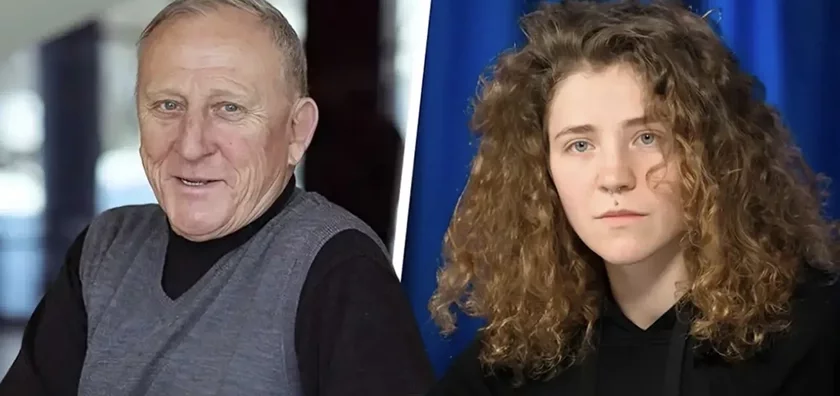
On August 10, Nikolai Kazeka, the legendary Belarusian freestyle coach, passed away at the age of 76. His protégés continuously won Olympic medals from 1998 to 2022. Kazeka's trainees took Olympic gold four times, while world championships were won only twice: Alexei Grishin won among men in 2001, and Aliaksandra Ramanouskaya among women in 2019. This result became the peak of the young woman's career, who ended her career early. The 29-year-old ex-freestyler shared her memories of Kazeka with Betting.team.
— For me, Nikolai Ivanovich is first and foremost the head coach, a mentor. My formation as a person and my entire sports career took place under his guidance. He inspired, he was an example in many moments — both in sports and in life.
— How did you learn about Kazeka's death?
— I was driving home from work when I received a message of condolence. Because of who sent the message, I immediately thought of Nikolai Ivanovich. I started searching online but couldn't find any information. I asked the sender what had happened. That's how I found out. About 10 minutes after the message, news of his death appeared online.
— When was the last time you spoke with Kazeka?
— Unfortunately, we hardly spoke for the last two years. Immediately after I left freestyle, we met and talked a few times. But then I tried to distance myself from sports, got involved in other things, threw myself into work. I constantly thought that I should still call, arrange a meeting, but I kept postponing it. And I didn't make it in time.
— When Kazeka suffered severely from COVID in 2021, did you support him?
— Back then, I learned everything from the internet, from acquaintances. Because I somewhat withdrew into myself, our contacts dwindled to nothing. If we maintained contact, it was on his initiative, for which I am very grateful. In communicating with people, I am not the most proactive person — mostly friends pull me somewhere, not the other way around. But Nikolai Ivanovich sometimes called or wrote himself. Without a reason — just to talk, to find out how things were. I worked not far from his house, and when we talked on the phone, I said I could see his apartment from my office window. It was always pleasant to hear from him.
— Do you remember how your collaboration began?
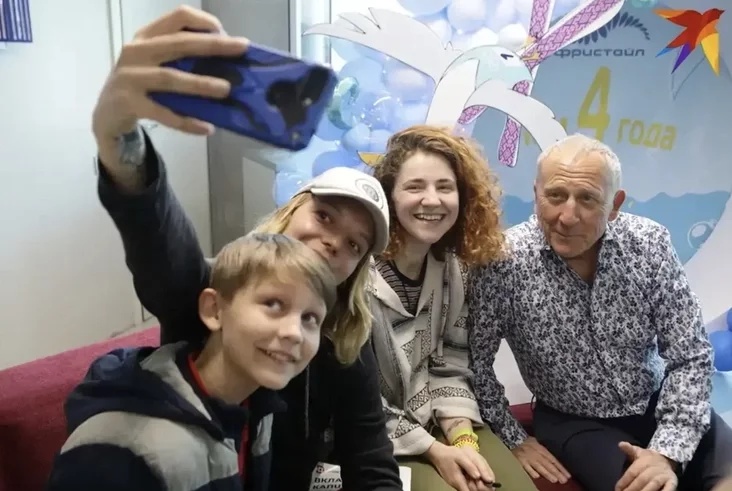
— Of course. I came to freestyle early, but even before I made it to the Belarusian national team, I knew who Kazeka was and what he had achieved. We even sometimes crossed paths. He saw certain prospects in me, and in 2011, I came under his guidance. For me, he was always an experienced professional. At first, I was a little afraid of Nikolai Ivanovich. Such an authoritative person, and I was very young, unsure of myself. And it seemed to me that I wasn't living up to his expectations, so I worried a lot. But that passed. Fears often exist only in our heads. And as we got to know each other better through our joint work, our mutual understanding became very good, and working together became easier with each passing year.
— Did he notice your fear?
— I think so. He possessed an amazing balance of coaching skills that allowed him to train excellent athletes. He always knew how to look deep into a person, feel them, and find an approach to everyone. He was very tactful — he never criticized me directly, didn't emphasize my fears, and didn't give me reasons to worry.
— But were there moments when he criticized you, or got angry with you?
— When it was necessary, he praised; in other situations, he could also criticize. As for simply scolding or shouting, there were very few such instances during my career, maybe a couple of times. I don't even remember the reasons. But his scolding was always within the bounds of decency. And criticism or very rare outbursts of anger had objective reasons. And the athletes drew conclusions.
— Could he talk to you heart-to-heart?
— Even when we talked outside of training and competitions, it was still about sports, about freestyle. When I got older and a mutual understanding was established between us, then during our constant interactions we could talk heart-to-heart, even argue. He was interested in my moral state, my thoughts, and offered advice.
— Did you experience his pedagogical talent, which many talk about?
— Absolutely. Nikolai Ivanovich had human qualities that allowed him to find common ground with those around him. Including boundless wisdom.
— When you became a world champion, how did Kazeka behave? Did he forgive more, or perhaps, on the contrary, demand more?
— It seems to me that his team had so many stars that he regarded high achievements as the logical outcome of joint work. Neither he nor I perceived it as the absolute peak. For us, the championship was an excellent milestone from which we could move forward. I can't say that he started demanding more. He had a balance of strictness and gentleness in everything. Athletes didn't feel constrained by rigid rules, but discipline was always maintained.
— When you sustained a serious injury and underwent rehabilitation in 2020, how did Kazeka react?
— As a coach, he was very upset. We both understood that this was a serious challenge for me. However, Nikolai Ivanovich never looked pessimistically at such situations. He was supportive, and we both proceeded from the understanding that we would get through this period and continue working.
— Did he have more positivity regarding your health and recovery than you did?
— Largely, yes. When I was recovering, I saw his eyes, heard him talk about his plans for working with me, the prospects. I looked at his enthusiasm and caught his positivity myself. His behavior simply didn't leave any room for sadness.
He was generally such an optimistic person. No matter what the problems were, he always tried to look at everything positively. Even when things weren't going entirely well in his coaching career, I still saw that he had a multitude of ambitions and plans. He wanted to achieve his potential, he sought various ways.
— What lessons did you learn from your time working with him?
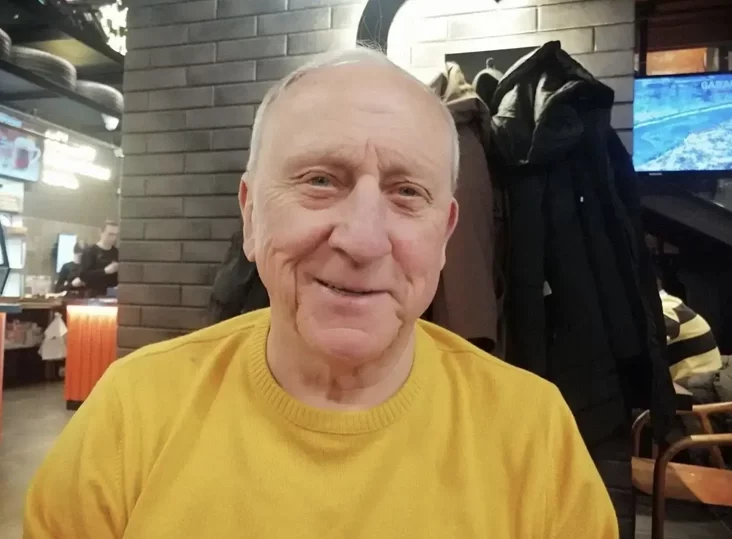
— I'll still have to think about the lessons. What he could definitely teach was never to give up, never to lose heart. When we met after I finished my career, I saw his energy. I thought: damn, I'm just over 20 years old and it feels like life is already ending, but Nikolai Ivanovich is 70 and he's making plans about how and whom he'll train.
— Finally, perhaps you can recall some positive story about him?
— We were once in Switzerland. Nikolai Ivanovich was walking around and saw that near one house, the owners had put out unwanted items on the street. And he returned to the hotel with a remote-controlled car — a fire truck with an extending ladder. He was surprised that it had been thrown away. Then he walked through the corridors with it. Maxim Hustik was getting a massage — Nikolai Ivanovich rolled the car over and raised the ladder right to Maxim's face. That's how he amused himself with the toy. A very vivid example of Nikolai Ivanovich's positivity.


Comments