


Free Accommodation and AI Instead of a Guide. A Belarusian Woman Traveled Three European Countries in 16 Days for €900
Ulyana, a student from Brest, travels via couchsurfing, entrusting her accommodation to real people and her logistics and routes to artificial intelligence ChatGPT. One of her recent 16-day trips covered three countries and nine cities, plus mountains, Myfin.by reports .
Entrusted the Route to a Neural Network
“I asked ChatGPT to create a route for me across several countries. The main criteria were no excessive heat and moderate prices. As a result, from the suggested list, I chose Poland, Germany, and the Czech Republic. Besides, I have friends in these countries, so it seemed like an ideal option to me.”
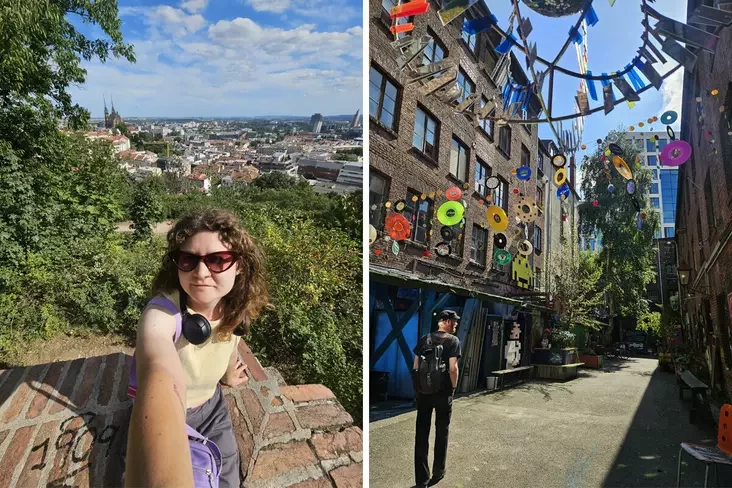
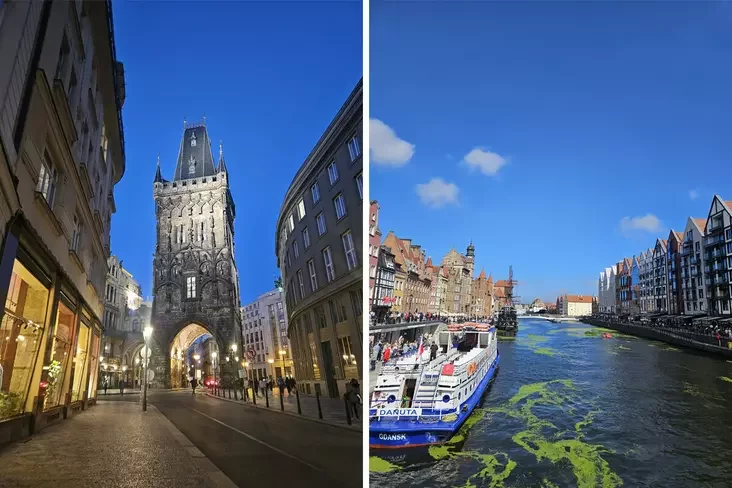
Once Ulyana decided on the countries, she asked ChatGPT to suggest cities to visit that would be logistically sound. The resulting route was as follows: Warsaw — Olomouc — Brno — Prague — Munich — Bavarian Alps — Nuremberg — Berlin — Hamburg — Gdańsk.
Ulyana understood that ChatGPT wouldn't be able to act as a full-fledged tour operator and provide specific prices with a detailed itinerary, so she searched for tickets and inexpensive or free activities herself. Sometimes she managed to save a good deal. In Warsaw, for instance, the girl managed to get into the Museum of Modern Art for just 1 Zloty (75 Belarusian kopecks) because there was a student promotion.
“I Tried to Choose Either Low-Cost Airlines or FlixBus”
The girl saved money for the trip from student part-time jobs, accumulating a little over 900 euros.
“The biggest expense item turned out to be transport, about 350 euros. Mostly due to the constant need to move between cities. I tried to choose either low-cost airlines or FlixBus. I flew low-cost from Hamburg to Gdańsk. From Warsaw, I went to Olomouc in the Czech Republic by FlixBus, and it turned out not to be that cheap, costing 50 euros.”
If you plan to travel actively around Germany, it's worth getting the single Deutschlandticket. It costs 63 euros and grants unlimited travel for a whole month. The ticket is valid for all urban public transport and any regional trains throughout the country.
An international student card ISIC would have significantly helped Ulyana save on her budget, but she learned about it too late.
“It turns out, this card can be made even in Belarus. It offers a huge number of discounts on transport, cultural programs, and much more. For example, in the Czech Republic, you can get a 50% discount on travel with it.”
Lifehack: Choose People with Similar Interests
When choosing cities for her trip, Ulyana immediately starts looking for locals willing to host her.
“It's not only a great way to save money but also a unique opportunity to see the city through the eyes of its residents, to understand their culture more deeply. We often had a cool cultural exchange: I talked a lot about Belarus, and the hosts talked about their countries and cities.”
Thanks to couchsurfing, Ulyana visited not only popular tourist locations but also places she would never have found on her own. And here's a lifehack: choose people with similar interests — that way you'll get the most out of your trip.
Ulyana's specialty is urbanology and city management; in Hamburg, she stayed with a guy who works in urban planning.
“Thanks to this, I received a free exclusive program, which usually costs a lot of money. On the very day of my arrival, he was conducting an urban planning tour for students from Chicago. Together with them, I was able to visit inside one of the abandoned bunkers. We also visited an unusual creative cluster — an old building that local artists occupied and transformed into an art space. It’s not easy for a tourist to find and visit such spots independently.”
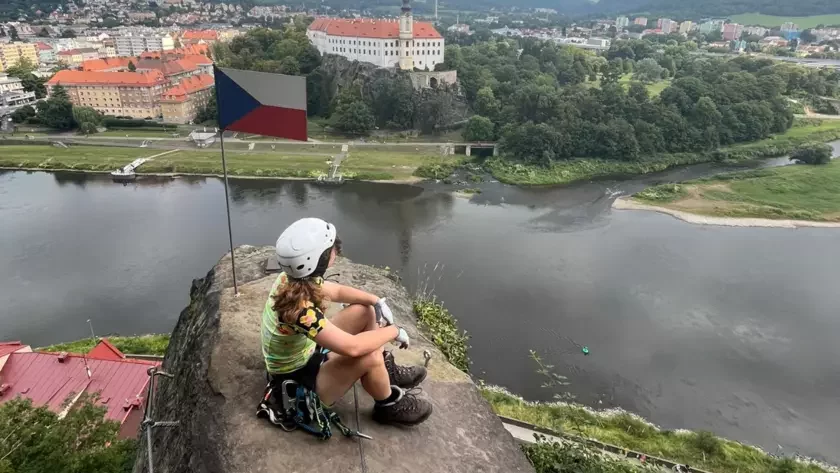
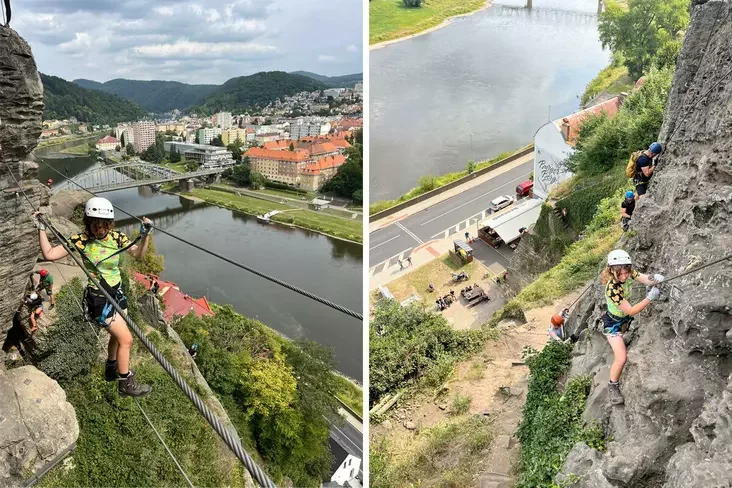
In Prague, the girl stayed with a friend she had met in Tenerife thanks to couchsurfing. Her friend was into rock climbing and suggested climbing a "iron path" in the mountains, a via ferrata — a rock route secured with steel cables, metal rungs, and ladders.
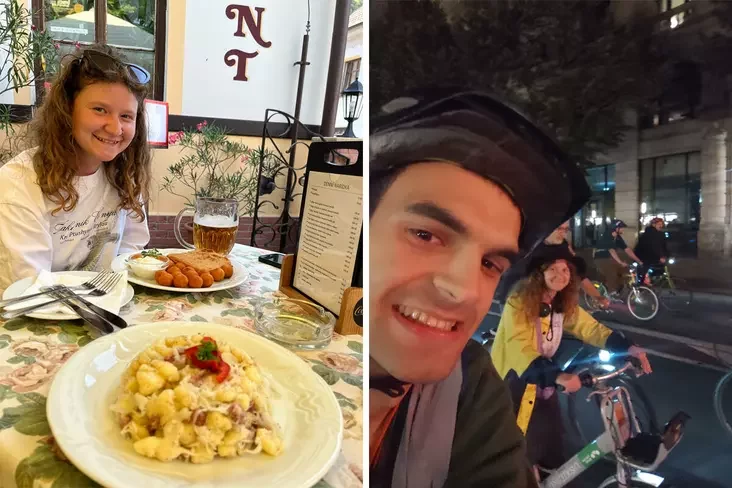
In Berlin, with the help of her host, Ulyana experienced Critical Mass — a worldwide cycling movement. Participants gather on the last Friday of each month to ride in a column through the city, thereby drawing attention to cyclists' rights in traffic.
“It looked like some kind of carnival. There was a lot of music, people in costumes, homemade decorations.”
“In Every New City, I Visited a Specialty Coffee Shop”
Saving money on trips doesn't mean denying yourself everything. On the contrary, if you manage your budget wisely, the saved money can be happily spent on things you truly enjoy.
“But what was truly hard for me to give up, and what became a crucial point for me during the trip, was coffee shops. I loved going into a specialty coffee shop in every new city, getting a cup of coffee, and generally seeing how developed the coffee culture was there. It brought me immense joy.”
In Prague, Ulyana paid 3.2 € for a flat white, in Olomouc — 3.3, in Gdańsk — 3.7, in Hamburg — 4.3. She ate in various ways: sometimes she went to restaurants, sometimes she grabbed fast food at McDonald's or bought ready-made meals at supermarkets.
“Regarding payment, I used a card during my trip. Just in case, I had cash euros and dollars with me, but they were practically not needed.”
Ulyana also had couchsurfing experience in Brest, but in that case, she was the one hosting people from France, Germany, and Russia.
“I would say this about couchsurfing: it's an economy to a certain extent, but it gives much more in terms of emotions and experience. Such an experience that is very difficult or even impossible to get independently by simply visiting these cities and places. And, of course, new acquaintances that can grow into true friendships. That's what happened to me with a girl from Prague whom we met in Tenerife while staying with the same host. In other words, couchsurfing is much more about human interaction than about saving money.”


Comments
Берасьце - Тэрэспаль 50 эу́ра , нармалёва