


Yemen Declares Large-Scale War on Houthis: 100,000-Strong Army Supported by Saudi Arabia Will Try to Regain Control Over the Red Sea
The decision was made after the group seized strategic islands and ports in the Bab-el-Mandeb Strait, directly threatening Saudi oil exports and global shipping.
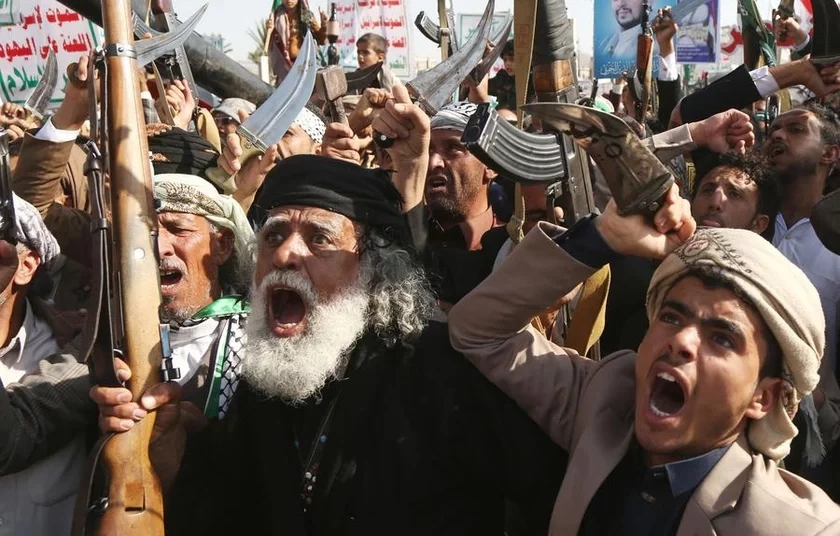
The internationally recognized government of Yemen has officially announced the exhaustion of peaceful means and the beginning of a full-scale offensive against rebel positions.
The head of Yemen's Presidential Leadership Council, Rashad al-Alimi, announced the transition from the preparation stage directly to military operations. The goal of the campaign is the full return of territories and the restoration of governmental authority over the entire country. As reported by The Insider, all state, security, and military structures have been put on full alert. Al-Alimi also promised amnesty to Houthi militants who voluntarily lay down their arms and called on residents of occupied areas to cooperate with government troops.
With Saudi Air Support and American Intelligence
More than 100,000 servicemen from Yemeni formations financed by Riyadh are planned to be involved in the operation. According to Reuters, the command considered two scenarios: a local operation to de-blockade the Bab-el-Mandeb Strait or a simultaneous large-scale offensive in four provinces at once: Al Bayda, Ma'rib, Taiz, and Al Jawf.
The ground phase will be conducted exclusively by Yemeni forces, while Saudi Arabia will provide massive air support, including previously acquired Turkish drones.
The United States of America is providing the coalition with intelligence data and coordinates for target selection. However, US President Donald Trump rejected a direct request from Crown Prince Mohammed bin Salman for direct involvement of American aviation in strikes against Houthi targets. Pakistan sent additional assistance to the coalition in the form of military equipment and advisors.
Threat to Oil Transit
The catalyst for the new phase of the war was the rapid advance of the Houthis to strategic sea lanes. On September 10 and 11, the rebels took control of at least four key points: the major port of Mocha, the islands of Hanish and Perim, and the coastal city of Dhubab. This allowed the group to effectively seize the Yemeni coastline of the Red Sea.
For Saudi Arabia, this route is a critically important alternative for oil exports, bypassing the Strait of Hormuz. The Houthis' access directly to the narrowest part of the Bab-el-Mandeb Strait gives them the ability to attack commercial vessels with impunity, not only with sophisticated long-range weapons or drones but also with conventional short-range artillery systems directly from the shore.
Humanitarian Crisis Amid Mobilization
Legal preparations for the offensive began on September 29, when the Yemeni parliament approved a general mobilization. Despite the fragmentation of anti-Houthi forces within the country, Saudi Arabia's return to large-scale hostilities signifies the resumption of full-scale war after several years of relative truce and calm.
The escalation of the conflict has already triggered a new wave of internal migration and a worsening social situation. According to estimates by the UN World Food Programme, tens of thousands of people have been forced to leave their homes in recent weeks alone. As of today, in areas controlled by the internationally recognized government of Yemen, 74% of households face acute food shortages.
Now reading


"Why should we somehow restrict ourselves?". RTBD director explained why she staged a play based on Pushkin in one of the last theaters in the country that worked in Belarusian


Comments
Там бы Адэн абкапваць ды ўмацоўваць.
А не пра наступы мроіць.