


Frontex: Migrant tunnels on the Belarusian border are being built with the knowledge and support of the Belarusian authorities
The European Border and Coast Guard Agency Frontex believes that without the consent of Belarusian state structures, the digging of tunnels through which migrants enter Lithuania, Latvia, and Poland from Belarus would be impossible, writes Tagesschau.de.
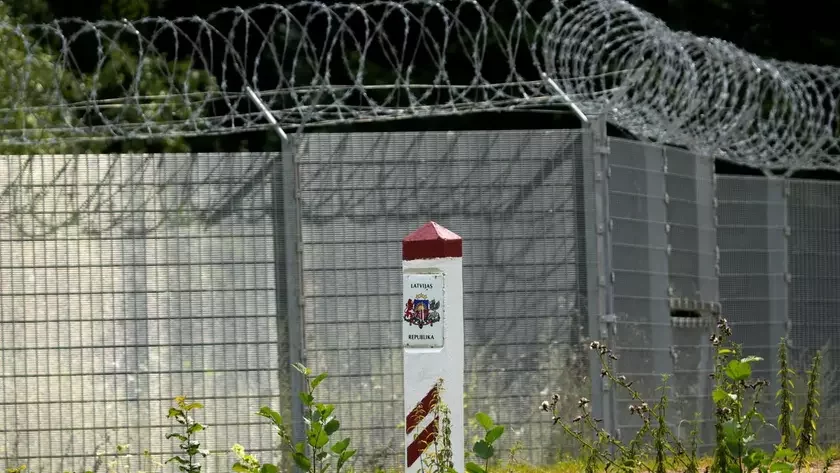
According to information from German broadcasters WDR and NDR, an internal Frontex analysis indicates that such tunnels on the Belarusian side of the border could hardly have been built without the knowledge and support of Belarusian special services. It is also not ruled out that Alexander Lukashenka's regime may involve specialists, as well as the migrants themselves, in their construction.
Recently, tunnels have become a new way to cross the fortified EU border. In 2026, five such tunnels have already been found in Lithuania. According to official data, at least 86 migrants from Afghanistan, Pakistan, Iraq, and India entered the country through three of them. The other two objects were discovered while still under construction.
Last week, a tunnel was discovered for the first time on the Belarusian-Latvian border. It was located near the closed border crossing Silene. According to Latvian authorities, 15 migrants managed to pass into the country through it.
At the same time, the total number of illegal crossings of the EU's eastern external border has decreased. For the first half of 2026, Frontex recorded 3,209 cases of illegal entry, which is 44% less than in the same period last year.
However, the agency believes that a decrease in the number of crossings does not mean the disappearance of migration pressure. Reinforced border measures in Lithuania, Latvia, and Poland have made traditional routes more difficult, so Belarusian structures, according to Frontex's assessment, are looking for new ways to transport people.
The agency's internal document calls tunnels one of these new methods and predicts that they may continue to be used as long as migration pressure from Belarus persists.


Comments