


"A Gift to City Residents." Another Underground Passage Opened in Mogilev, While Wealthier Vilnius Rejects Them
While neighboring European capitals acknowledge underground passages as a mistake from the last century and close them, Belarusian officials consider them an achievement and a sign of care for citizens.
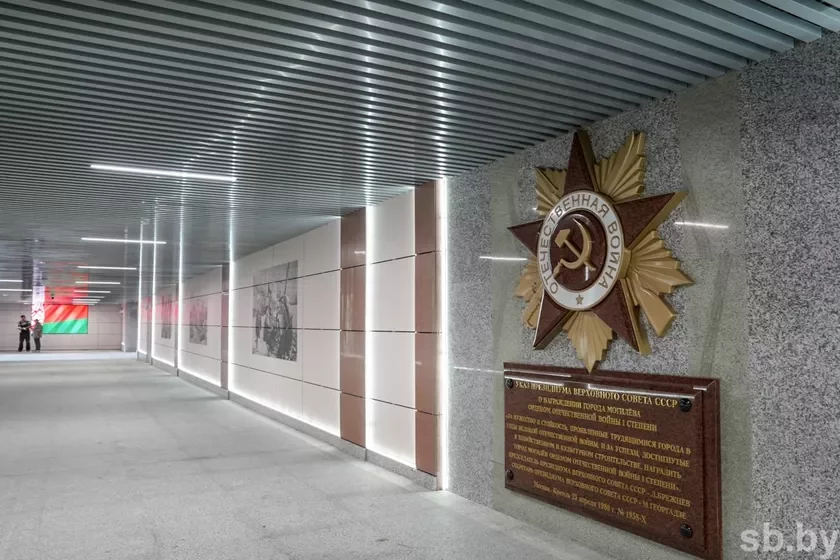
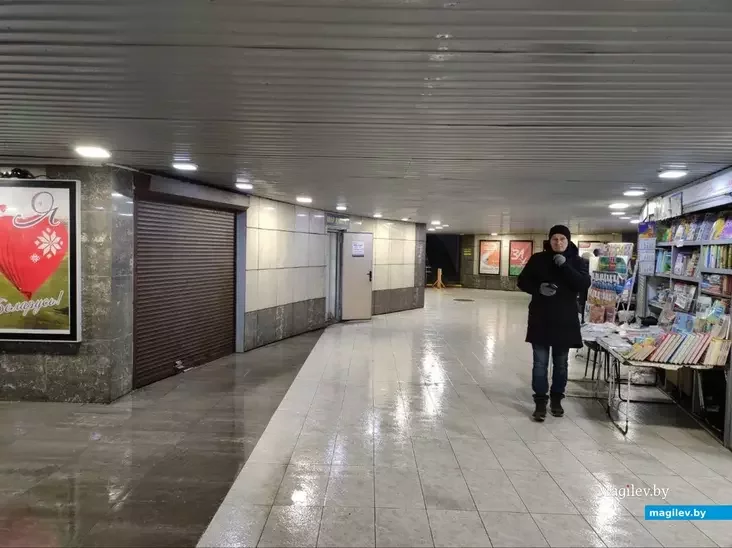
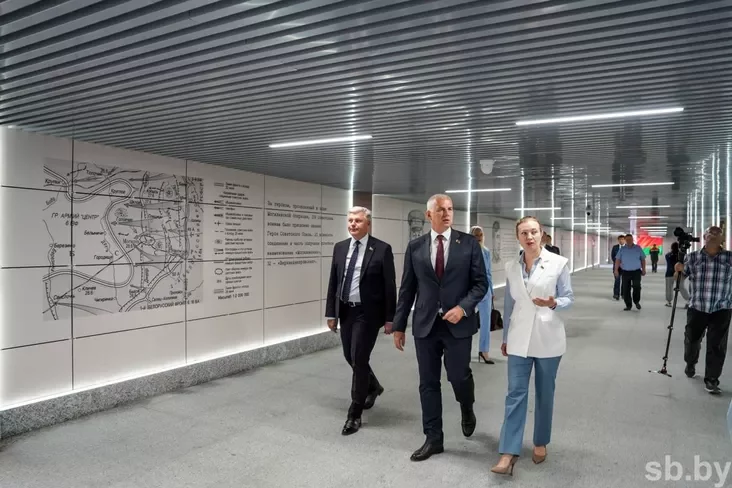
On August 31, 2026, a new underground passage was opened in Mogilev at the intersection of Mira Avenue with Yakubouski and Kosmonautau Streets. It was under construction for ten months. The 60-meter tunnel is equipped with three exits with anti-slip stairs, two elevators, CCTV cameras, and five LED screens.
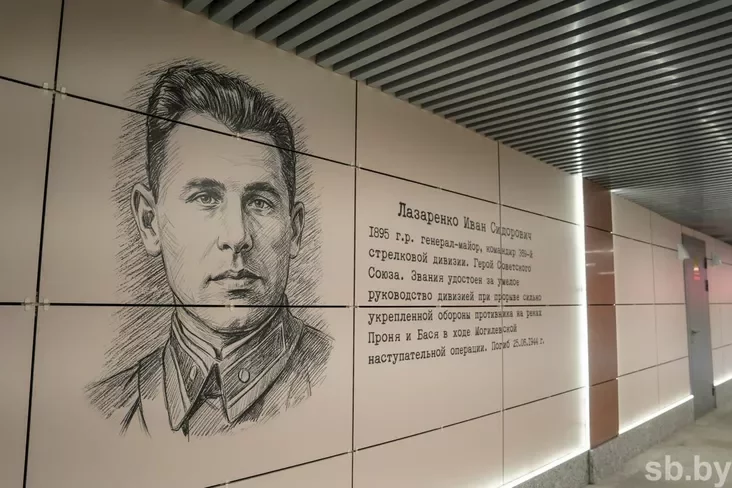
State media and officials traditionally call such facilities "gifts to city residents." To justify the significant expenses, the space was transformed into a thematic gallery: portraits of commanders of the Second Belarusian Front were placed on the walls. City Executive Committee Chairman Sergei Chartkov stated that such a design should instill a sense of pride in soldiers among students of nearby educational institutions.
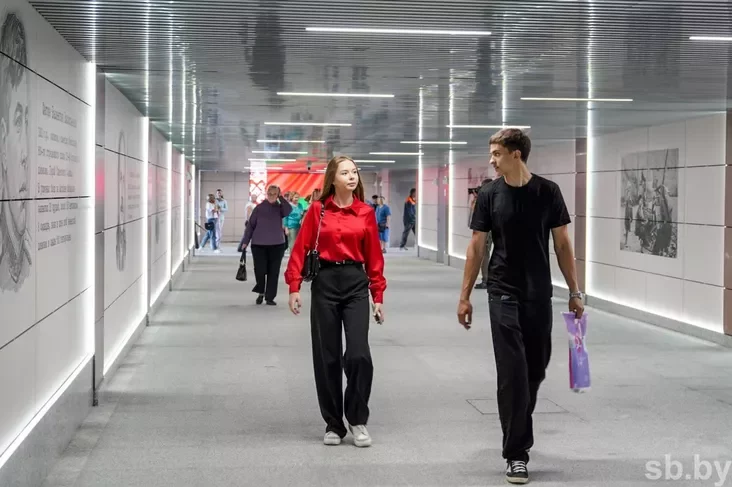
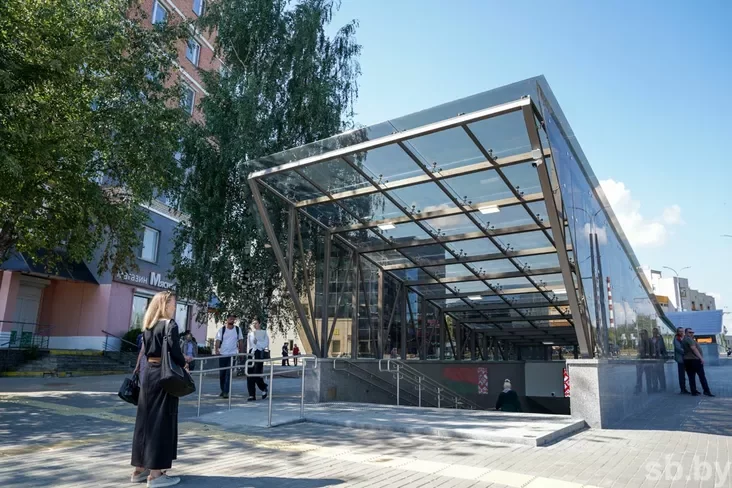
This is already the eleventh underground passage for Mogilev. The first tunnels in the city were built in the 1970s near industrial giants Khimvolokno and Mogotex.
However, in our time, due to low pedestrian traffic, they became gathering places for marginalized groups, turned into dumps, and were eventually boarded up.
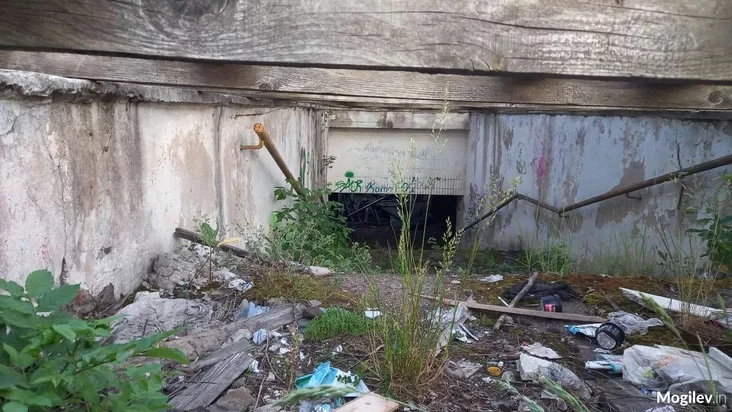
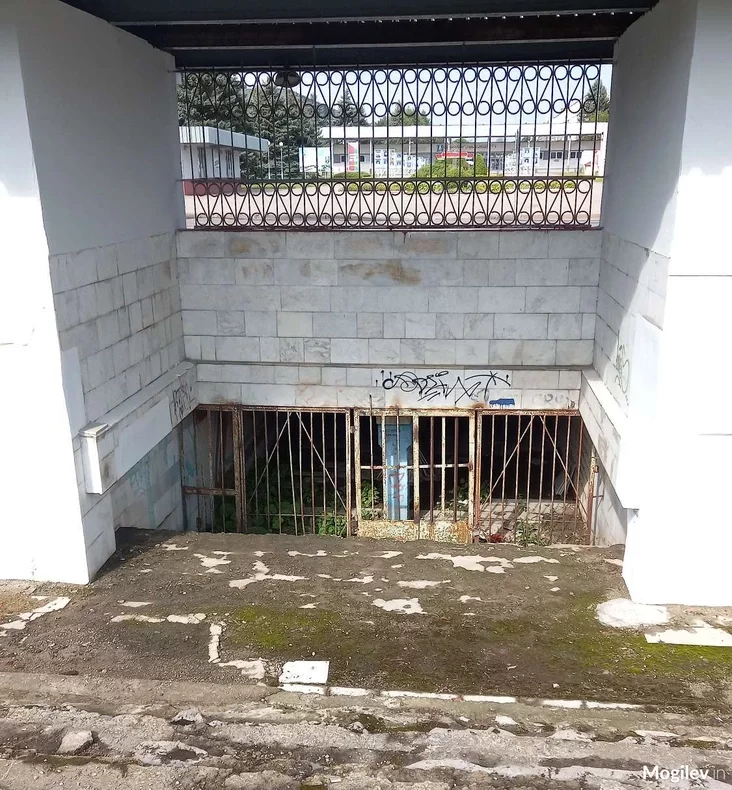
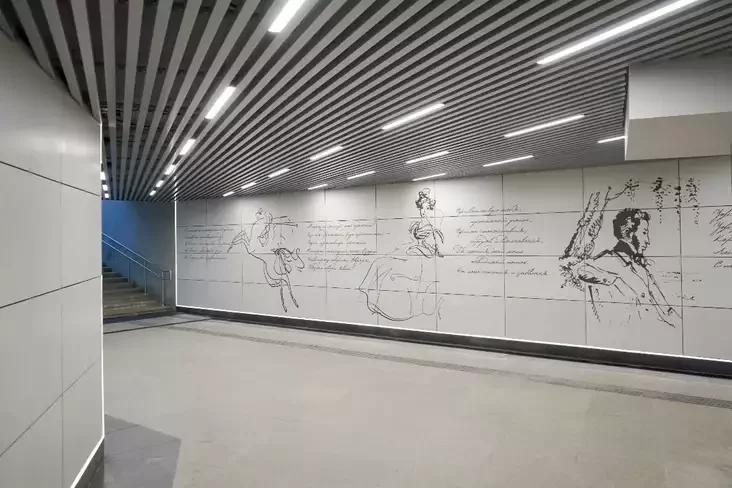
However, after a long pause, the construction of underpasses resumed with new vigor. Since 2009, an underground passage was built in Buynichi, a suburb of Mogilev, then near the Dnieper Bridge; two tunnels under the railway and highway were opened in the Sputnik-2 microdistrict (these, undoubtedly, were necessary and built as passages through embankments); and in December 2024, a passage under the intersection of Pushkin Avenue and Astrovsky Street was completed. As we wrote earlier, it was transformed into a mini-museum and decorated with poems by the Russian poet Alexander Pushkin.
Regional centers of Belarus are no longer unique in this; the trend is spreading to district centers. For instance, during the reconstruction of the bypass road, the construction of Lida's first underground passage in history began. Local residents criticized the project as an irrational waste of budget funds, as pedestrian traffic there is minimal.
Why an Underground Passage is an Urban Planning Mistake
In absolutely any city, about 30% of the population consists of people with limited mobility, including not only people with disabilities but also pensioners, parents with strollers, cyclists, and people with heavy luggage. For them, the necessity of going underground creates a serious physical barrier.
Attempts to compensate with ramps or lifts often prove ineffective. The steepness of many ramps exceeds the standard 10%, making them unsuitable for safe use. Installed elevators also regularly break down. As Ivan Shalankevich, director of the Minsk enterprise "Goravtomost," previously explained,
underground passages are not heated, so in cold weather, condensation and frost form on the equipment, causing the lift electronics to malfunction or break down completely.

The illusion of complete safety of such facilities is refuted by road accident statistics. Pedestrians intuitively choose the shortest path and avoid unnecessary physical effort, so they often ignore tunnels and cross the roadway on the surface.
This provokes serious accidents: drivers do not expect people to appear on traffic-light-free sections and do not reduce speed. Studies show that accident hotspots are often located directly above underground passages.
Eliminating surface zebra crossings and traffic lights does not solve the problem of car congestion. Traffic lights perform the function of traffic dosing, evenly distributing the flow of cars across the street network.
When a street is turned into a traffic-light-free thoroughfare, cars simply reach the next bottleneck faster, where they create an even larger traffic jam. At the same time, the absence of obstacles provokes speeding, which degrades the overall safety of the street without genuinely increasing its throughput capacity on a district scale.
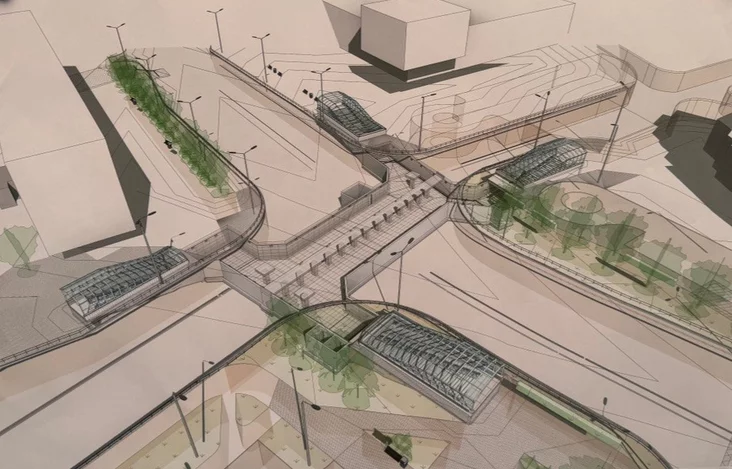
In addition to transport problems, underground passages create a constant financial burden for municipalities. Constructing an underpass costs dozens of times more than equipping a surface crossing, and subsequent maintenance requires regular expenses for lighting, pump operation, and finishing repairs.
With a lack of funding, such places quickly degrade. Since tunnels are hidden from the eyes of passersby and residents of nearby houses, they become marginalized, attract vandals, and turn into areas of psychological discomfort. And examples of this, as we noted above, exist in Mogilev itself.
Vilnius Has Money, But Doesn't Spend It on Underground Passages
For comparison, we can turn to the experience of Lithuania's capital. Although this city is almost twice as large as Mogilev (619,000 people versus 353,000), it is more comparable to it than megacities like Warsaw. Furthermore, Vilnius also does not have a subway system, so underground passages here cannot be dictated by access to metro stations.
The absolute majority of underground passages in Vilnius were designed and built in the 1970s-1980s, during the Soviet era, when the concept of separating pedestrian and vehicular flows onto different levels prevailed. The bulk of such facilities appeared along major transport arteries in residential areas — on Savanorių Avenue (Volunteers) and Laisvės Avenue (Freedom), which in Soviet times was designed and partially called Kosmonautų Avenue.

Since the mid-1990s, and especially in the 21st century, Vilnius's urban doctrine has fundamentally changed with the transition to the concept of "a city for people." The municipality officially recognized underground passages as an outdated and unfriendly solution for the urban environment due to the creation of insurmountable barriers for citizens with limited mobility and criminogenic risks.
Today, the city prioritizes surface movement. The city is forced to reconstruct and maintain its existing Soviet legacy in working order, without yet resorting to radical solutions like demolishing the structures. For example, a few years ago, the underground passage on Konstitucijos Avenue, in the local business district, was renovated.
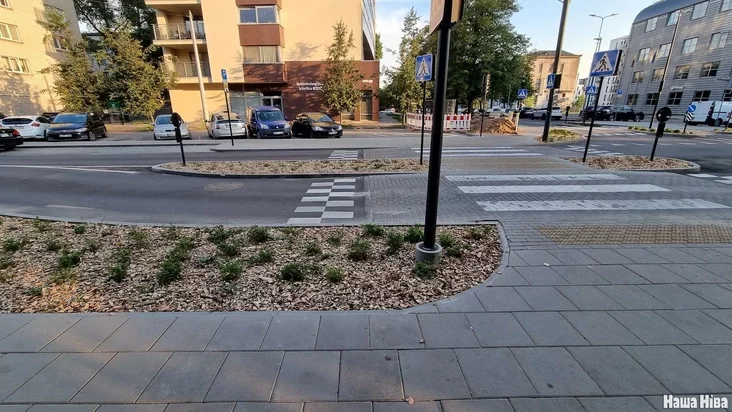
It cannot be said that underground passages are not built in Vilnius at all. At the very least, one can recall the tunnel near the Vilnius Outlet shopping center. However, while in Mogilev an underground passage is dug at the intersection of ordinary city streets, this one is laid under the 10-lane Pilaitės arterial street on the outskirts. This is purely a whim of the shopping center, as there is nothing else nearby. Moreover, the underpass is duplicated by a surface crossing in a U-shaped configuration. Pedestrians have a choice: waste time at traffic lights or expend effort descending underground. In Belarusian cities, however, a new underground passage always becomes the only option for crossing streets in any direction.

In the center of Vilnius, however, the construction of new underground passages has definitively ceased. This creates a paradoxical contrast with Mogilev.
Vilnius is approximately five times richer than Mogilev in terms of nominal GDP per capita and about three times richer in terms of residents' real incomes and wages.
But the Belarusian regional center, significantly smaller and an order of magnitude poorer than the Lithuanian capital, continues to systematically spend budget funds on building underpasses precisely in the central part of the city, which should serve pedestrians and cyclists, not arterial car traffic.
A Healthy City Builds Bridges and Bike Paths, Not Underground Passages
While Belarusian cities spend budgets on non-alternative underground infrastructure, Vilnius implements a 15-minute city strategy, prioritizing surface movement. The main tool of this policy has been the humanization of streets: car lanes are narrowed to the standard 3 meters, and the freed space is allocated for landscaping, bike paths, and safety islands.
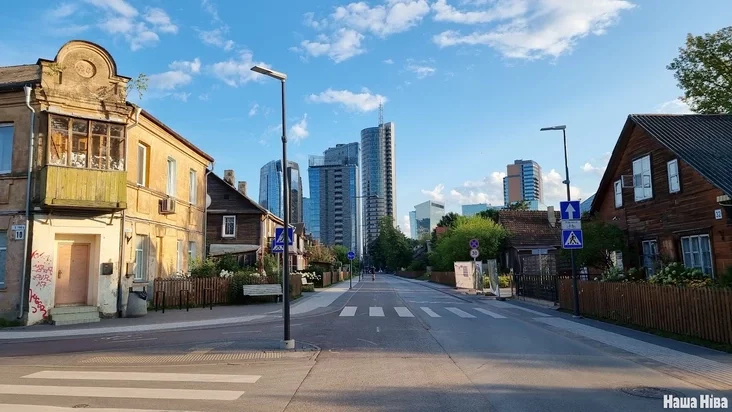
To enhance pedestrian comfort, Lithuania's capital plans to implement diagonal surface crossings, allowing people to cross the roadway simultaneously in all directions along the shortest trajectory.
The approach to cycling infrastructure also differs fundamentally. Vilnius is building a segregated network of red asphalt and creating special "bicycle streets" where speeds are limited to 30 kilometers per hour, and cars are prohibited from overtaking two-wheeled vehicles. In the historical city center, cyclists are even moved from sidewalks to the roadway into shared calmed traffic flows to protect pedestrians.
In Mogilev, the situation is the opposite: there is no single bike network; paths are painted directly on sidewalks; cyclists are prohibited from riding on the main pedestrian Leninskaya Street; and it's impossible to ride on parallel streets due to overly narrow pavements or high (up to 20 cm) curbs.
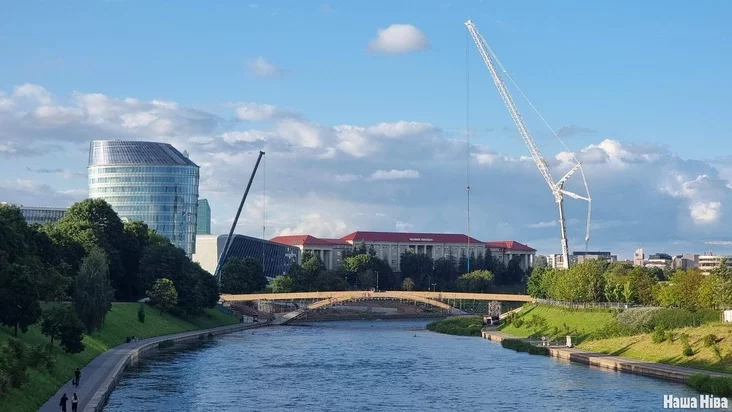

To improve connectivity between districts, the Vilnius municipality is investing in overground structures. A program for the construction of four new pedestrian and cycling bridges over the Neris River – Albert (in honor of the 17th-century writer Albert Wijuk Kojałowicz), Kernavės, Zakrutas (Užvingis), and Antakalnis-Žirmūnai – has been approved and is already being implemented. This is in addition to the 11 bridges over the Neris currently in operation. The distance between some bridges is less than 500 meters. All of them are designed to connect major residential and business districts without forcing people underground or making them walk along noisy main roads.

In Mogilev, however, there are only three bridges across the wide Dnieper, and pedestrian bridges are non-existent. A pedestrian bridge project from Padmikolle Park to Zadnyaproue, announced back in 2020, remains merely a promise on paper — there's no money for it, but there is money for underground passages where an ordinary surface crossing would suffice.
The contrast between the two models demonstrates different vectors of development. Lithuania's capital, having gone through a phase of total automobilization, is now investing in traffic calming and creating a barrier-free environment.
Belarusian cities are betting on cities not for people, but for cars — this flawed model from the middle of the last century does not solve problems, but exacerbates them and makes urban space unsuitable for comfortable living.
«Nasha Niva» — the bastion of Belarus
SUPPORT USNow reading


In Gomel, the head of an association that searches for the remains of victims of war and Stalinist repression, and his nurse wife, were sentenced for political reasons


Comments