


Americans are developing sodium batteries as an alternative to lithium, but fear the Chinese
In the USA, active development of sodium-ion batteries is underway, which could become an alternative to lithium-ion batteries, especially for electricity storage in grids and backup power for data centers, writes The Wall Street Journal.
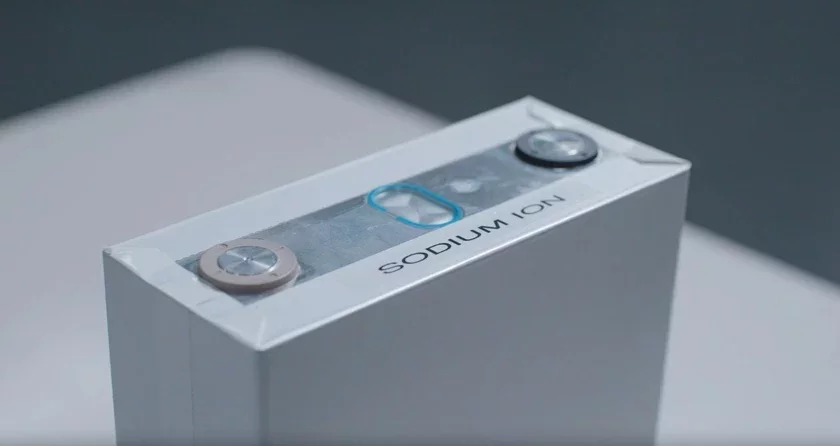
The main problem with modern lithium-ion batteries is the risk of so-called thermal runaway. If one cell overheats and catches fire, the fire can spread to neighboring cells and eventually engulf the entire battery pack. Such incidents are rare, but they do happen. For example, in 2025, a fire occurred at a Tesla Megapack battery site in Nevada.
To prevent overheating, large lithium-ion energy storage systems require liquid cooling. This complicates the design, increases the number of potential malfunctions, and takes up additional space.
Sodium-ion batteries have an advantage in this regard. Peak Energy is developing batteries that can be passively cooled — using the air around the batteries. According to company representatives, sodium-ion cells can also catch fire, but the likelihood of such an event is much lower.
Peak Energy currently has manufacturing capacity of about 100 MWh per year. The company's future factory is expected to be able to produce approximately 40 times more.
Another American startup, Inlyte Energy, is developing a different type of sodium battery. It uses iron powder, steel, aluminum oxide, and common table salt. The company's founder claims that such cells cannot catch fire in the usual sense: even if one cell overheats, it does not reach a temperature that could cause neighboring cells to ignite.
This allows for denser arrangement of cells and potentially achieving the same or even greater energy density per square meter as in some lithium-ion systems.
Inlyte also plans to deliver its first battery system to the energy company Southern Company for testing at an energy storage facility in Alabama.
However, sodium-ion batteries have a significant drawback: in terms of energy per unit mass, they currently lag behind lithium-ion batteries. Therefore, for electric vehicles, airplanes, and other modes of transport where weight is crucial, lithium-ion technology remains more promising for now.
However, for stationary energy storage, weight is not as critical. There, safety, cost, lifespan, and ease of cooling become more important. Therefore, energy grids and backup power for data centers could become the first large markets for sodium-ion batteries.
At the same time, the US is striving not to repeat the situation with lithium-ion batteries. Although many key technologies were developed in the West, China today dominates the production of materials and the batteries themselves.
Chinese giants BYD and CATL have already announced plans for large-scale production of sodium-ion batteries. American companies warn that the US could once again find itself in a situation where they develop a new technology themselves, but China will be faster to set up its mass production and gain control over the global market.
Thus, sodium-ion batteries are unlikely to completely replace lithium-ion ones, but they could become an important technology for electricity storage. Their main advantages are potentially greater fire safety, simpler cooling, and less dependence on lithium. And the main task for American manufacturers now is not only to create such technology but also to manage to scale up its mass production before China.
Now reading


"Have you seen the wallpaper from the developer? It's a nightmare." Why is state-provided renovation in apartments for those on the waiting list criticized?


Comments
если успеют, потому что будущее вообще на других материалах.
= энергія разлічваецца з ПЛОШЧЫ, а не з АБ'ЁМУ?! як гэта зразумець? )
ці ўсё вы прачыталі?
+ чарговая "рэвалюцыя" аўтабатарэй - гэта перманентная з'ява... ну, IXBT, напрыклад, пра гэта піша ці не кожны месяц )