


The book by historian and professor Jury Hryboŭski was published in Białystok (publishers — Belarusian Historical Society, Kamunikat.org foundation).
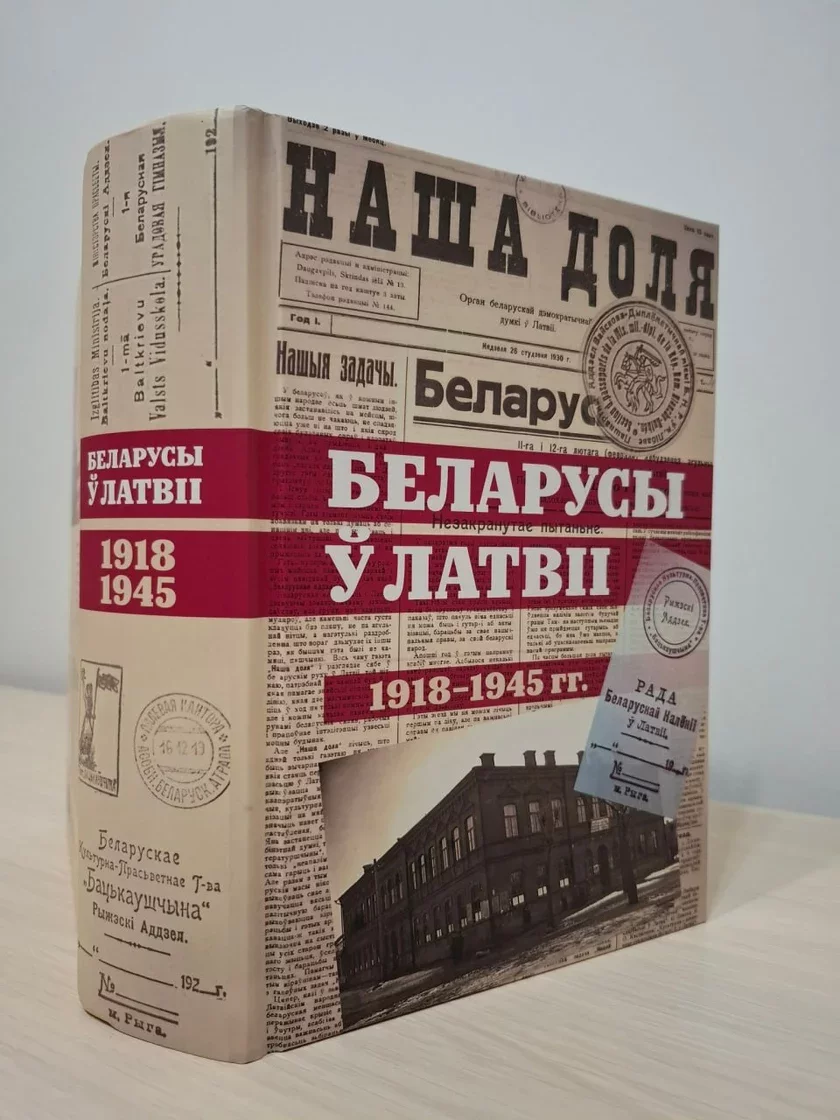
This is a 1054-page work, prepared based on many years of research in archives and libraries in Belarus, USA, Latvia, Lithuania, Germany, Poland, Russia, Czech Republic, and Estonia, reports the Belarusian Institute of Public History.
The book presents the history of the Belarusian community against the backdrop of key stages of Latvian history: the struggle for independence, the building of a democratic state, the establishment of authoritarian rule, as well as the Soviet and German occupations. It was during the interwar period that Latvia became one of the most important centers of the Belarusian national movement outside of the homeland.
Also, aspects of Latvian-Belarusian relations, which previously were almost not systematically described, are separately considered; in the foreword, former Latvian Ambassador to Poland Juris Poikans calls the book a significant contribution to both historiographies.
Now reading


Siarhei from Khoiniki accumulated alimony debts at home and went to storm Vovchansk. But the funeral compensation will be taken by his second wife — a Russian one


Comments
1407: лат. Sigillum Allexandri allas Wytowdi magnis ducis Lithwanie d[omini]ni Russie et cetera[19] (Печатка Олександра, або Вітовта, великого князя Литви, господаря Русі та інших)
Руси как единого централизованого княжества в ВКЛ не было,значит речь о народах,литвы и руси,а потом надпись и ИНШИХ,что означает иншия народы и уже на самой печатке герб Тракайского княжества и Жамойци(на равне с Русью и Литвой),что доказывает на наличие четырех народов ВКЛ: Руси,Литвы,Жамойци и народа Тракайского княжества(Аукшайтов).