


Due to their biological characteristics, mushrooms readily absorb cesium-137 and accumulate radionuclides much more intensely than other forest plants. The amount of cesium-137 in mushrooms is always higher than in the soil on which they grow.
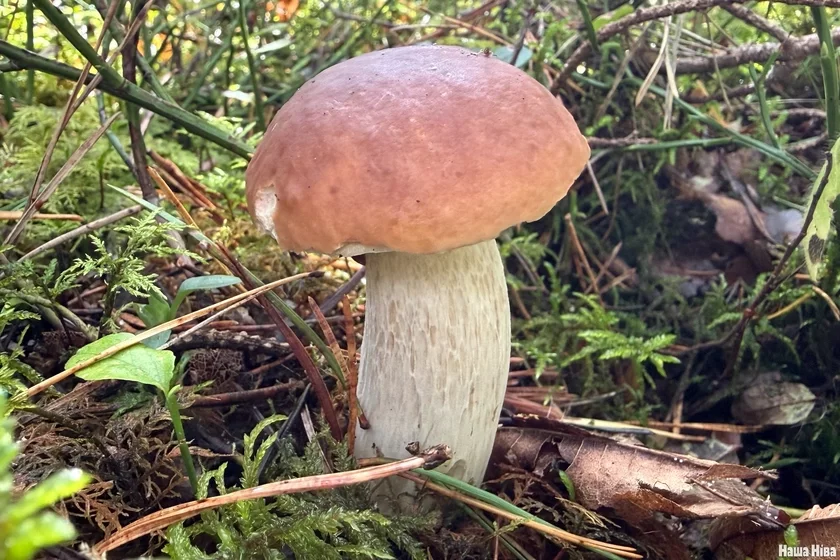
Mushrooms are divided into four groups based on their ability to accumulate radionuclides.
Weak accumulators include honey mushrooms, common puffballs, champignons, and common morels.
Medium accumulators include russulas, boletes (babki), chanterelles, porcini (boroviki), and aspen boletes (padasinaviki).
Mushrooms that strongly accumulate radionuclides include milk caps (gruzdy), saffron milk caps (ryzhyki), woolly milk caps (vaŭnianki), and green knights (zalyonki).
Polish mushrooms, pig's ear (svinushki), slippery jacks (maslaki), and bay boletes (makhaviki) are characterized by the highest accumulation capacity.
In mushroom caps, the concentration of radionuclides is usually 1.5–2 times higher than in the stems. This is especially true for porcini, boletes, aspen boletes, and Polish mushrooms. No distinct difference in cesium-137 content is observed between young and old mushrooms. However, it is recommended to collect young mushrooms, as old ones may accumulate toxic substances.
Among wild berries, the ability to accumulate cesium-137 increases in the following order: viburnums, rowans, wild strawberries, blackberries, raspberries, lingonberries, blueberries. Cranberries and bilberries accumulate the most radionuclides.
Under the same growing conditions, bilberries can accumulate 2–3 times more cesium-137 than raspberries and wild strawberries.
-
"I would jump out on the go." A car with a snake on its hood was driving around Minsk
-
In Mogilev, a cafe gives sweets to schoolchildren for good grades. You just need to show your diary
-
ONT launched an intellectual show where participants have to guess frames from Russian TV series 'Univer' and 'Daddy's Daughters'
Now reading


He had four teeth knocked out, and then was expelled from the country. Now the former political prisoner has been arrested in Latvia with six migrants in his car

He had four teeth knocked out, and then was expelled from the country. Now the former political prisoner has been arrested in Latvia with six migrants in his car


"I love the Belarusian language even more than Russian — it's closer to my heart." A Moroccan has lived in Salihorsk for 18 years and can't get enough


Comments
https://be.wikipedia.org/wiki/%D0%A1%D0%B2%D1%96%D0%BD%D1%83%D1%85%D0%B0 - Свінушкі - гэта нарматыўная назва.
https://be.wikipedia.org/wiki/%D0%94%D0%B0%D0%B6%D0%B4%D0%B6%D0%B0%D0%B2%D1%96%D0%BA - Дажджавік — таксама. Але вы маеце рацыю, што порхаўка ўжываецца часцей і гучыць прыгажэй. "Старая порхаўка!" )
[Зрэдагавана]