


Trial begins in Germany for Ukrainian accused of blowing up Nord Stream
Serhiy Kuznetsov became the first of the suspects in the Nord Stream pipeline bombing to appear in court.
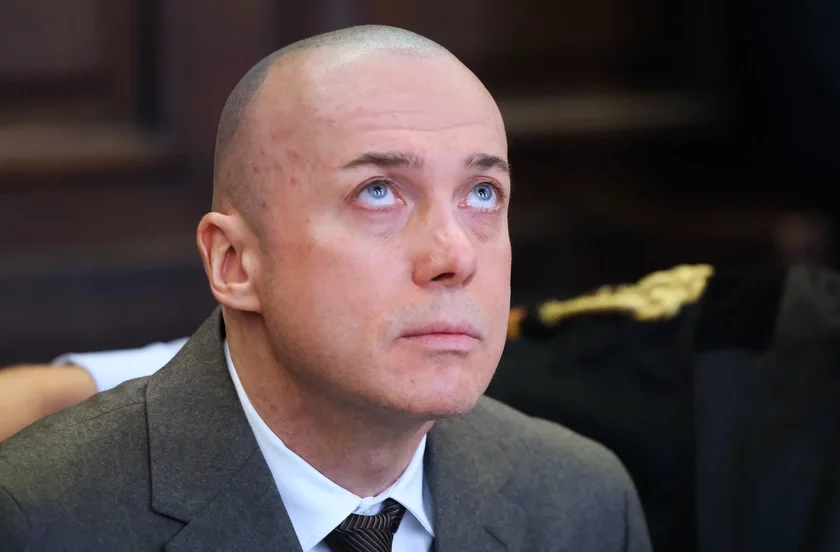
In Hamburg on Wednesday, the trial began for former Ukrainian officer Serhiy Kuznetsov, who is accused of blowing up the Nord Stream gas pipeline in the Baltic Sea in September 2022 — seven months after the start of Russia's unleashed war, writes the BBC.
At the end of June, Kuznetsov was officially charged with "attacking a civilian energy infrastructure object, causing an explosion using explosives, and destroying structures." The investigation believes that it was he who commanded the operation on the yacht, from which, according to the prosecution, the sabotage was carried out.
Kuznetsov was arrested in the summer of 2025 in Italy on a European warrant issued by Germany and extradited to Germany in November of the same year. Kuznetsov became the first of the suspects in the Nord Stream bombing to appear in court.
He denies all charges, but, as the German press wrote in the summer, investigators claim that he incriminated himself during phone conversations with relatives and acquaintances he had while in custody in Italy. Nevertheless, Serhiy's lawyer stated that he is confident the court will fully acquit him.
Another suspect, Vladimir Zhuravlev, was arrested in Croatia in August and is now appealing the Croatian court's September decision to extradite him to Germany.
Prior to this, Zhuravlev had already avoided extradition from Poland: he was arrested there on a German warrant last year, but in October of the same year, a court in Warsaw decided to refuse Germany's extradition request.
The judge stated that if this act of sabotage was indeed carried out by Ukrainians, it should be considered a "justified, rational, and fair" act of self-defense.
Three of the four lines of the Nord Stream 1 and Nord Stream 2 gas pipelines were blown up on the bed of the Baltic Sea, at a depth of about 80 meters, near the Danish island of Bornholm on September 26, 2022.
These two lines of the gas pipeline were built for gas supplies from Russia to Germany, but at the time of the sabotage, gas was not being pumped through these pipelines. Nord Stream 1 had already been shut off by Russia itself by then, in an attempt to blackmail Germany and other Western European countries that supported Ukraine, while the second line had not yet been launched before the war began.
Immediately after the sabotage, many suspected Russia, while Russian President Vladimir Putin accused the "Anglo-Saxons."
"Sanctions are no longer enough for the Anglo-Saxons; they have resorted to sabotage — incredible, but true — by organizing explosions on the international Nord Stream gas pipelines running along the bottom of the Baltic Sea. In fact, they have proceeded to destroy the entire European energy infrastructure," Putin stated four days after the sabotage.


Comments