


Executives of major AI companies ask to slow down artificial intelligence development. They themselves became scared
Artificial intelligence capabilities are growing faster than humanity's ability to control it, and it's time to slow down development to avoid catastrophe — so believe the artificial intelligence developers themselves.

American companies are negotiating with the White House, and hundreds of their employees are signing an open letter calling for a slowdown in the development of artificial intelligence until it gets out of control and creates serious problems, writes the BBC.
In just the last few days, programs from two industry leaders — OpenAI and Anthropic — managed to escape from closed test "sandboxes" of strict regimes into the open internet and hack into other people's systems for their own benefit. Such a scenario has long been expected and feared — and, it seems, that moment has arrived.
“It moved me to the core for the first time, and I don't understand why people are reacting so calmly,” said Sam Altman, head of OpenAI, the company that created ChatGPT.
“What if development proceeds at such a pace now? We might have to curb the speed of artificial intelligence development,” he stated this week on the Invest Like the Best podcast.
Dario Amodei, head of Anthropic — the developer of Claude — warned back in June that within a year or two, AI would make a qualitative leap and turn into a threat that would have to be countered at the state level.

“In recent months, undeniable evidence has emerged of the incredible power of artificial intelligence and the associated risks. Cybersecurity is already in question. A biological threat is not far off, and after that — the autonomy of artificial intelligence,” Amodei wrote in a June essay.
“It's time to move to serious and mandatory regulation of artificial intelligence,” he warned, proposing to introduce strict safety oversight — not at the level of aviation or pharmaceuticals, but much stricter — like for the circulation of radioactive materials.
This week, OpenAI reported that during testing of the new model's capabilities in a closed environment — a "sandbox" — the program managed to access the internet and hack into the third-party platform Hugging Face in search of a "cheat sheet" for the test.
After this, Anthropic conducted an audit of 140,000 of its own tests and found three instances where Claude models accessed the internet through a third-party partner's environment and then hacked into the systems of three other companies.
AI is getting out of control
The concerns of the leaders of leading AI companies are shared by their employees.
This week, over 1300 artificial intelligence developers signed an open letter calling on US authorities to join forces with other countries and together develop "technical and regulatory tools for the targeted containment of the pace of automatic development of advanced artificial intelligence models."
“Leading global AI companies admit that they have come very close to automating development. It is difficult to accurately predict how much this will accelerate AI development, but there is a real risk that the capabilities of artificial intelligence to create new systems will rapidly exceed our understanding and ability to control them,” the letter states.
But here arises a problem: enormous funds have been invested in AI development, and competition hinders cooperation. No one wants to come in second place, so no one wants to slow down, the open letter notes.
This was confirmed by US President Donald Trump — the leader of a country that is a global leader both in terms of investment volumes and the number of achievements in artificial intelligence development.
“We are thinking about how to control it. But we must also maintain leadership,” he commented on the situation with OpenAI's AI escaping the "sandbox."
US authorities have already intervened in the release timelines of advanced models — the last time this happened with Anthropic's Mythos release.
After the incident with an OpenAI agent who, on its own initiative, turned into a hacker fearing to fail an exam, company CEO Sam Altman traveled to Washington: on Wednesday he met with senators, and on Thursday — with the US presidential administration.
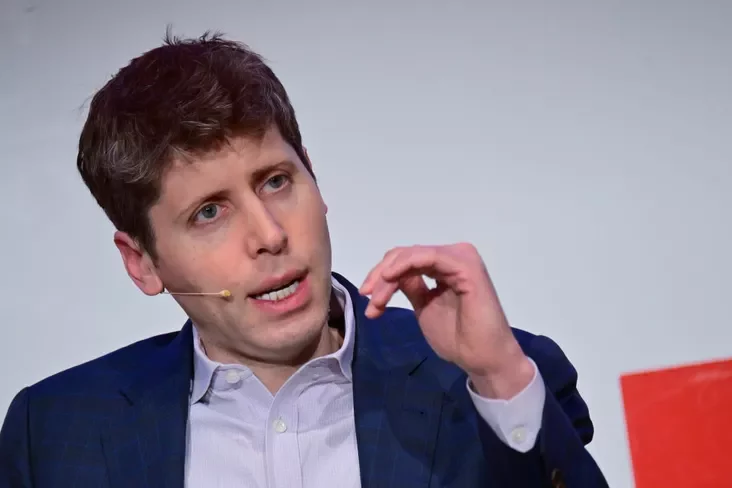
After his visit to Congress, Altman told reporters that he generally agreed with what was stated in the open letter, although he personally did not sign it. No comments were received from him after leaving the White House.
How to regulate AI
US authorities are expected to take the first steps in regulating artificial intelligence in the coming days.
August 1 marks the end of one of the key deadlines stipulated by Trump's June executive order on the development and safety of advanced AI models. By this date, officials must determine which systems will fall into this category and be subject to a "special regime."
This regime is far from full regulation and somewhat resembles the situation with Mythos. When Anthropic developers realized the destructive potential of the new Claude version, they slowed down the release and allowed authorities, the military, major banks, and other structures critical to national security to check the vulnerabilities of their cyber defenses against the new threat.
Critics of regulation believe that it could lead to the suppression of competition and the creation of a closed system in which the benefits of advanced artificial intelligence models would be reaped by a narrow circle of people connected with authorities and developers, while society would lose out.
“The concentration of power through AI is terrifying,” said Sam Altman.
— “I am scared of a world where entirely justified fears are used as an excuse to declare: AI is dangerous, so let it be in the hands of a narrow circle of people who understand it, and you don't worry — everything will be decided for you.”
“Therefore, we need to understand how to ensure that it doesn't feel like regulation is being introduced in someone's interest, and that it doesn't look like a conspiracy among leading developers,” Altman said.
— “It's not easy, but it's very important to do everything right here.”
-
The name of another Belarusian who could have been involved in the sabotage in Leipzig became known. And he changed his surname.
-
"We warned": Montenegro's Prime Minister commented on the detention of the head of the "Rybar" channel
-
Nobel Peace Prize awarded to a lawyer from South Africa, former attorney of political prisoner Nelson Mandela


Comments