


How often should you wash your hair and are conditioners and masks beneficial, explains a doctor
A trichologist is a highly specialized doctor who identifies and treats diseases of the hair and scalp. The "1906" project spoke with trichologist Katsiaryna Burlo and learned in which cases hair transplantation is advisable, how to choose a shampoo, and which procedures negatively affect hair condition.
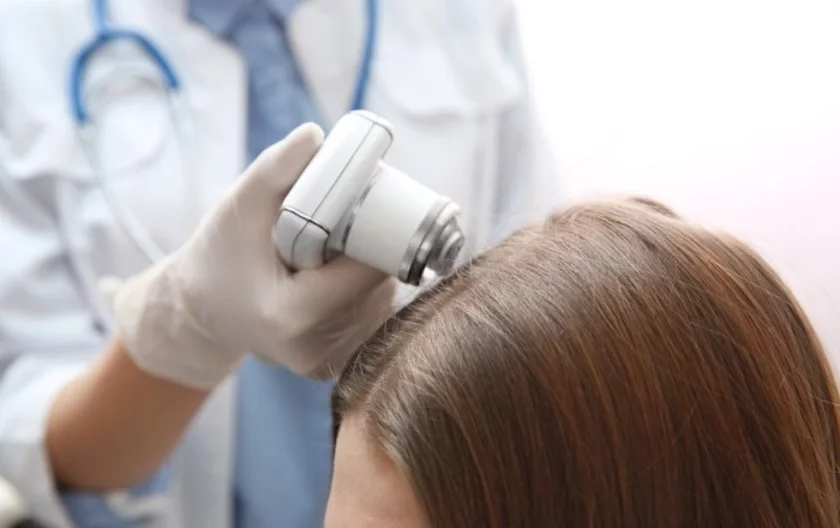
Photo: bellezza.ua
Why can hair fall out?
"Recently, the most common reason is stress. This is called post-stress alopecia. In such a case, all tests are good, and you don't understand what's happening to the person. Subsequent reasons include thyroid diseases, hormonal issues, and deficiency states," says the trichologist.
"Before a consultation, I ask the patient to have blood tests: a complete blood count, biochemical analysis, thyroid hormones, and some vitamins. Without them, we can only speculate about the cause.
It's important to perform trichoscopy to rule out or confirm scalp problems; this is done with special trichological instruments. Often, hair can fall out because the person has signs of seborrhea or seborrheic dermatitis (presence of inflammatory areas, white, yellow flakes on the skin), problems with the scalp," Katsiaryna explains.
Can hair fall out due to genetic predisposition?
"Because of this, hair thins and reduces in volume," explains the trichologist. "If a person has a genetic predisposition but their hair is falling out severely, that's already a signal to get tests done.
In the classic form of thinning, hair doesn't fall out excessively. As a rule, this can start from puberty. Mostly, serious cases require early consultation with a trichologist."
"People whose thinning started not at puberty but later, sometimes link it to entering university when there are many stresses. The second transitional age begins at 18-19 years old.
For example, some trigger occurs—severe stress, anxiety—after which the manifestation of androgenetic alopecia (hair thinning) begins. As a rule, this is hereditary-genetic in nature," she says.
How to understand if you have a predisposition to baldness?
"You need to find out the condition of your mother's and father's hair, whether it fell out. I also ask about siblings. If this information is insufficient, I can clarify about grandparents.
If tests reveal any problems, such as deficiency states: iron deficiency, vitamin D deficiency, I prescribe medications that need to be taken to eliminate this gap. And to prevent future deficiencies," she says.
"It's rare for a person to take a medication once in their life and then everything is fine," explains the trichologist. "Deficiency states mainly stem from diet problems and gastrointestinal tract issues.
If thyroid diseases are detected, I refer to an endocrinologist. If there are abnormalities in sex hormone tests, to a gynecologist-endocrinologist."
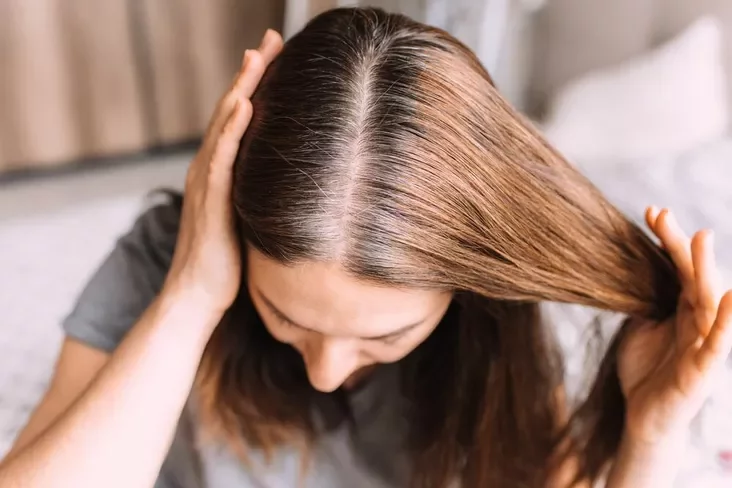
"A trichologist deals with hair loss related to heredity or scalp diseases. If all tests are normal, and there are no factors that could shift hair from the growth phase to the shedding phase, then we proceed to external therapy. This is strictly determined individually after examination and assessment by a trichologist.
There can be lotions, sprays, masks—all aimed at maximally curbing the thinning process and restoring normal hair follicle function," Katsiaryna explains.
Does hair transplantation work?
"Unfortunately, there are cases where, during examination, I realize that the thinning process has gone too far: the problem is more than 7-10 years old. Here, the trichologist decides whether external remedies will still help or if transplantation should be considered.
It works, but in my practice, I rarely encountered a patient opting for transplantation. After all, it costs money—approximately 2000-2500 dollars, depending on the number of hair follicles that will be transplanted from the occipital region to the frontal-parietal area. This is determined by a plastic surgeon," she says.
Does hair transplantation work equally well for men and women?
"Yes, but initially, before the operation, the head had to be completely shaved. Naturally, women couldn't make such sacrifices and resisted in every way. But now plastic surgeons have developed new methods, including transplanting long hair," Katsiaryna explains.
"We have a donor zone (occipital region) which is not susceptible to the destructive effects of the hormone dihydrotestosterone. So, the plastic surgeon takes grafts from the occipital region and transplants them to the frontal-parietal region.
Hair transplantation is indicated for both sexes, but men do it more often. In my six years of in-person practice, I've only had one girl who underwent transplantation in St. Petersburg.
Such operations are performed in Belarus, but none of my acquaintances have done them. As a rule, people travel to Turkey for this procedure," says the trichologist.

What procedures negatively affect hair condition?
"Trichologists do not approve of keratin straightening. It turns out that hair is naturally fluffy, and people try to make it straight. After such a procedure, the hairdresser will recommend washing hair with sulfate-free shampoos so that the keratin straightening composition washes out slower. Very often, a person comes to a trichologist after this procedure, I place a trichoscope on their head and see that scalp problems are already starting. Sulfate-free shampoos do not clean the scalp well. The person walks around with visually beautiful hair but with scalp problems," she explains.
"When the keratin straightening composition washes out, the hair will look worse than it was before. The procedure is performed using a very hot iron, which damages the hair along its entire length.
I approve of other hair care procedures because there is no thermal exposure," says the trichologist.
Is hair dyeing harmful?
"There are no serious contraindications," Katsiaryna assures. "It's important to wash the scalp thoroughly after dyeing and use a scrub. In my consultations, even two weeks after dyeing, I see residue on the scalp. This is harmful and can provoke oncological diseases in the future."
How to choose a shampoo?
"First, you need to determine your scalp type," she advises. "Most often, trichologists in their practice encounter oily scalps, which are more prone to the appearance of, for example, seborrheic dermatitis, or dry dandruff.
Those who wash their hair daily or every other day can immediately determine that they have an oily scalp type. Accordingly, shampoo should be chosen for that type.
A common mistake is when a person has an oily scalp, but dry hair ends and length, people start buying shampoos for dry hair. This is incorrect. Shampoo is chosen according to the scalp type."
How often should you wash your hair?
"Strictly as it gets dirty, you shouldn't prolong the moment," says the trichologist.
"I always explain to my patients that if you washed your hair on Monday morning and by Tuesday you can't go anywhere, you need to wash your hair. This is a mandatory rule.
There are many people who try to extend the time, thinking they are improving something, supposedly trying to 'retrain' their sebaceous glands. But this can all end up with a visit to a trichologist with complaints of itching and dandruff.
Sebum production in the body depends on many mechanisms. It's impossible to 'train' it to produce less or more in any way."
What vitamins should be taken for healthy hair?
"Vitamins should not be taken without controlling test results. But if, for example, in autumn or spring you want to support your body (and you know that you don't have any deficiency states), then biotin, vitamin D, vitamin E, and iron should definitely be in the complex. And all this should be taken strictly as a course. If it says on the package to take for 30 days, then you shouldn't take it for longer," she says.
Can you comb wet hair?
"Yes, you can. If a person uses standard hair care: shampoo, conditioner, mask—and despite this, their hair is still brittle, then tests should be done to check blood protein and iron levels.
If there are questions about selecting scalp care (specifically a product for the hair length), hairdressers deal with this. They choose masks and conditioners. A trichologist must differentiate hair shaft pathologies that arise due to improper care or have internal causes within the body," she explains.
Why do some people start graying early (from 25 years old)?
"This can indeed be a consequence of severe stress, as well as genetic predispositions," Katsiaryna lists the reasons. "I always ask at what age their mother and father grayed. In 70 percent of cases, they will answer that it was also early.
If there is no genetic predisposition, we turn to tests again. First and foremost, we will look closely at iron and copper levels here.
Graying is not considered a disease if there is a genetic predisposition for it. The same goes for baldness, by the way. There is a diagnosis, but in truth, trichologists view it as a cosmetic defect. A person can be completely healthy but, unfortunately, bald."
Also read:
How to start eating right and exercising? We asked a trainer
Thinking too much can harm your health
To make pills work faster, you need to lie on the correct side
Now reading


In the Czech Republic, Poles Beat a Pole, Mistaking Him for a Ukrainian Due to a Hat in the Colors of Upper Silesia. The Guy Was on a Charity Bike Ride for His Pregnant Partner Who Had Cancer


Comments
хочаш адчуць сябе пацыентам, ідзі да трыхолага
цікава, а трыхолаг можа даць адтэрміноўку ад арміі? ну праз себарэю там? а-то ў нас павальна на зборы забіраюць... а, выбачайце, а працаваць будзе хто? Аляксандр? Лушкін?