


Russia is deploying its military fleet to the Baltic Sea after Putin's threats towards Europe
The Russian command is redeploying additional warships of the Northern Fleet to the Baltic Sea. These maneuvers are taking place against the backdrop of increased control by European countries over Russia's "shadow fleet" and sharp statements by Vladimir Putin, who threatened the EU with reciprocal responses to inspections of Russian vessels.
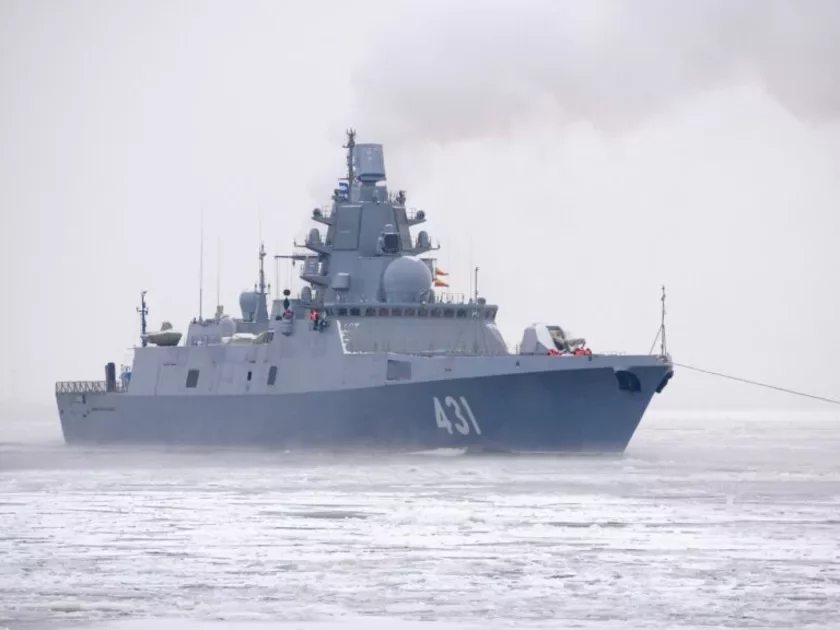
As reported by Bild, the Russian missile frigate "Admiral Kasatonov" has arrived in the Baltic Sea. This modern "Admiral Gorshkov" classs vessel, commissioned in 2020, is capable of carrying "Kalibr" cruise missiles and "Zircon" hypersonic missiles. Previously, the frigate was used to protect Russian cargo ships in the Mediterranean Sea and the English Channel.
The frigate is already the second large warship redeployed to the region in recent weeks. In late July, the large anti-submarine destroyer "Admiral Levchenko" of Project 1155, which has been part of the Navy since 1988, was sent from Barents to the Baltic Sea (incidentally, in the summer of 2024, Ukrainian military reported a fire on this ship due to engine problems).
According to information from the German newspaper Kieler Nachrichten, the destroyer "Admiral Levchenko" was spotted near the German island of Fehmarn. The publication notes that the ship could have replaced another destroyer — "Severomorsk", which previously patrolled the Fehmarn Belt strait between Denmark and Germany, performing the task of "ensuring the safety of civilian fleet vessels." This wording usually refers to the escorting of tankers of the so-called "shadow fleet," which transport Russian oil and liquefied natural gas circumventing Western sanctions.
Why Russian tankers needed military protection
The redeployment of warships is taking place against the backdrop of increased pressure from European countries on Russian commercial traffic. As stated in the report by the international organization ACLED, Russia's "shadow fleet," numbering between 1000 and 3200 old tankers with hidden owners, is used by the Kremlin not only to circumvent the oil embargo but also as an instrument of hybrid warfare.
European intelligence agencies have repeatedly suspected these vessels of conducting reconnaissance, launching drones over NATO military facilities, and even damaging underwater infrastructure (communication cables and pipelines) in the Baltic Sea. In response, EU and NATO countries have begun conducting operations to intercept, inspect, and even arrest such tankers, often citing violations of maritime law, the use of fake flags, and lack of insurance. In addition, the European Union continues to blacklist Russian tankers in its sanctions lists.
Moscow reacted to Europe's actions with a sharp escalation. In March 2026, the Kremlin officially announced plans to use naval warships to escort vessels of the "shadow fleet." On the eve of the redeployment of ships to the Baltic, Vladimir Putin publicly threatened European countries, calling inspections of Russian tankers "piracy and robbery." He promised that Russia would respond with "mirror measures," which effectively means a threat of forceful boarding of European commercial vessels by Russian naval sailors.
The appearance of Russian frigates and destroyers in the Baltic near the territorial waters of Germany and Denmark, on the one hand, should complicate the procedure for inspecting tankers for Europeans, and on the other hand, demonstrates Moscow's readiness for direct military incidents at sea.
«Nasha Niva» — the bastion of Belarus
SUPPORT US


Comments