


A mortgage at 1% — how much will you actually overpay over the entire period?
The announcement of a 1% mortgage caused a stir. How good is this offer and how might it affect the real estate market in Belarus?

Interest exceeds expectations
A number of developers announced credit programs at 1% for 24 months. After this period, the rate rises to 15.4%. The maximum loan term is 20 years, and the loan amount can reach 90% of the property's value.
Naturally, the appearance of such a program generated great interest.
Developers participating in the program report an unprecedented increase in demand. However, some potential buyers, as noted by "Grand Crystal," upon seeing the attractive 1% figure, do not even fully understand that after the grace period ends, they will have to pay 15.4%.
How beneficial is it?
Undoubtedly, any reduction in interest rates is good. But if it only decreases for two years, one must carefully calculate the final interest and the total overpayment.
The two-year 1% period is primarily beneficial because over 24 months there will be an opportunity to make small contributions, as the interest payment is less than the principal repayment amount. This, for example, can allow one to save money for future renovations and furniture purchases.
If you recalculate the entire financial flow for 20 years, the promotional period reduces the real interest burden from 15.4% to 12.6% per annum.
In other words, the overpayments for the entire period will be exactly the same as if you were immediately issued a loan at 12.6%.
Moreover, the grace period can be utilized much more beneficially than just having a small payment. If your finances allow you to pay 1470 rubles from the very beginning, which you would need to pay from the 25th month (based on a loan of 100,000 Belarusian rubles), then practically all the money will go towards reducing the loan principal.
As a result, the real interest burden falls from 12.6% to about 9% per annum, which is already more significant.
However, if there is an opportunity to close the loan as quickly as possible, then in such a case, it will essentially turn out that the bank gave you money for two years at only 1%.
However, compared to mortgage interest rates in Poland or Lithuania, where one can build at 6%, 9% and especially 12.6% are still high rates.
Will demand for new builds increase?
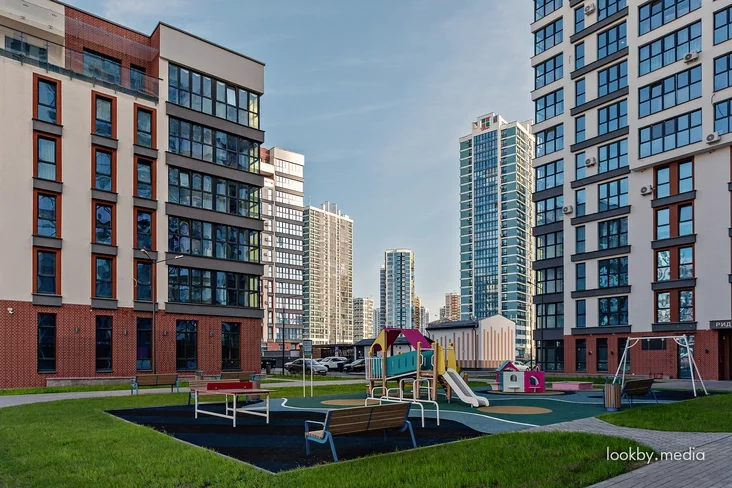
As for the market impact, such a program could significantly shift the balance of power — demand for secondary housing would decrease.
Even if developers raise prices due to increased demand, and housing on the secondary market remains at the same level or even becomes slightly cheaper, the factor of a "freebie" loan at 1% will sway some towards buying a new build.
Stimulus for the economy
On a national scale, this could provide an additional boost to the construction sector, which would positively affect the GDP.
However, residential construction is not a sector that can sustain long-term stable economic growth. Ultimately, in conditions of population decline, large volumes of construction can lead to an oversupply. Especially since even now there are plenty of apartments that simply stand with bare walls for years and even decades.


Comments
В Литве 4%, во Франции или Австрии (подальше от русского мира) около 3%.
А белорусские 12-15% это что-то из сумасшедшего дома.