


Auction by a priest, round dances in a downpour, and Tsikhanouskaya ready to clean siphons. Report from the Tutaka festival
The Tutaka festival is being held for the sixth time in the Borik tract in Podlachia, Poland. Svaboda visited the event on Saturday - the rainiest day of the festival.
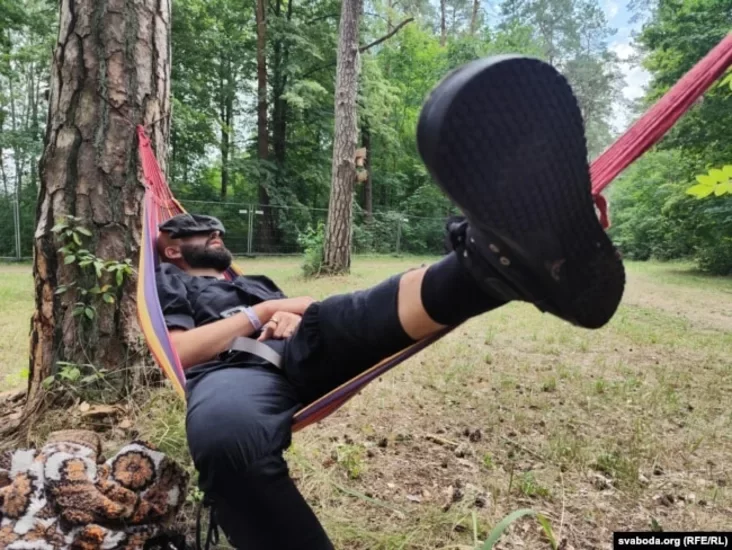
This year, the Tutaka festival is being criticized for expensive tickets and an offer that doesn't match the price. However, those who did make it to the forest in Podlachia paid for the atmosphere and the opportunity to be among their own. Despite the criticism, Tutaka remains a place where you can see blogger AyTsiBarada dozing in a hammock, an Orthodox priest conducting an auction, and ask Tsikhanouskaya if she likes beer.
Saturday morning in Białystok sees heavy rain. Train drivers heading to Waliły, which leads to Tutaka, loudly discuss their short lunch breaks before departure: "There's not even time to go to the toilet."
"Hello. For berries?" — the train conductor, apparently speaking to a Polish-speaking passenger with a dog whom he knows, begins the conversation.
"No way! 'Basovishcha'! This one is 'Tutaka'. Maybe I'll go mushroom hunting," she smiles.
"Oh, 'Basovishcha!' Today? That's why so many people are traveling. Today, 32 people," the railway worker responds.
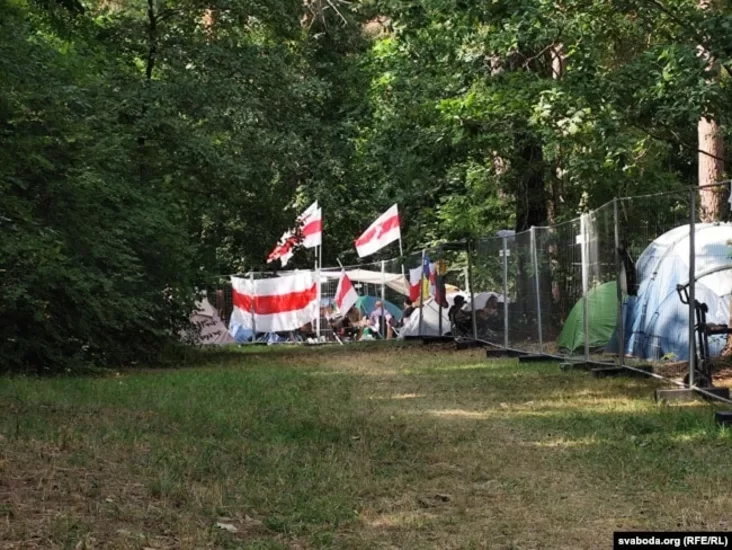
The carriage looks half-empty compared to the years when the festival train was packed. Hearing our conversation, the conductor asks if we are going to the Polish-Belarusian border. A conversation about trains to Belarus and open border crossings begins.
"Are Bobrowniki already open?" he clarifies. — "They have been for a long time."
"It's not 1939, when the 'Stowbtsy — Paris' train ran here," comments a colleague nearby.
Fifty minutes of travel - and we get off. To get a festival bracelet, unlike previous years, you don't go to the festival grounds, but to a gas station near Waliły station. There, Stasya Hlinnik with Krystsina Drobysh and "Tutaka" attendees who woke up early after a noisy night are drinking morning coffee. They say that even at the quiet campsite, where families with children were staying, songs were sung half the night. Breakfast at the Waliły bistro costs about 10 euros. An icon of the Mother of God of Kazan hangs in the hall.
"All?" — the Polish-speaking waitress asks in Russian after we place our order.
Tickets for admission
For the first time this year, tickets were sold for Tutaka. In the previous five years, admission was free. Adult tickets started at 35 euros, more expensive during the festival. For residents of the Hrodk commune, where the festival takes place, tickets were three times cheaper. A separate fee was required for a tent pitch for each adult. For a family with two children, participation in the festival costs an average of 150 euros.
"If you introduce tickets for a festival that used to be free, you should offer something beyond what was there before," Belarusians who decided not to go to the festival discussed online.
On the way to Baryk meadow, it smells of forest and flowers. We meet residents of Horodok, who for more than 30 years have attended "Basovishcha" here, and then "Tutaka", and ask if they will go to the festival.
"It's already old news," a villager in work clothes dismisses. "This year, tickets for Horodok residents are 55 zlotys. But for me, it's ridiculous. We have enough other festivals," he waves his hand somewhere towards other villages.
Finally, the interlocutor admits that the residents are offended that they cannot freely enter the celebration area in their own forest this year.
"Paid more, got less," says a regular visitor to Tutaka from Krakow. He regrets that the main concert with the bands "Razbitaye Sertsa Patsana" and B:N: was moved to late Sunday evening, when many are already heading home.
"On Thursday, there was nothing at all, on Friday, some discussions," his friend shrugs.
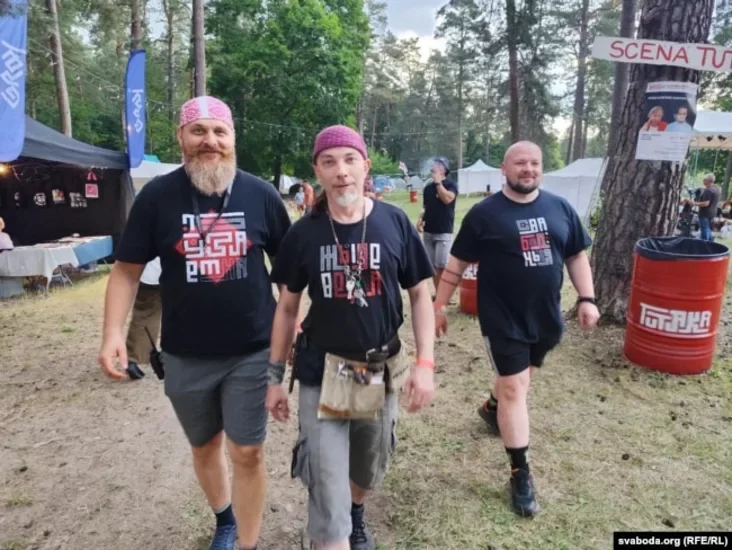
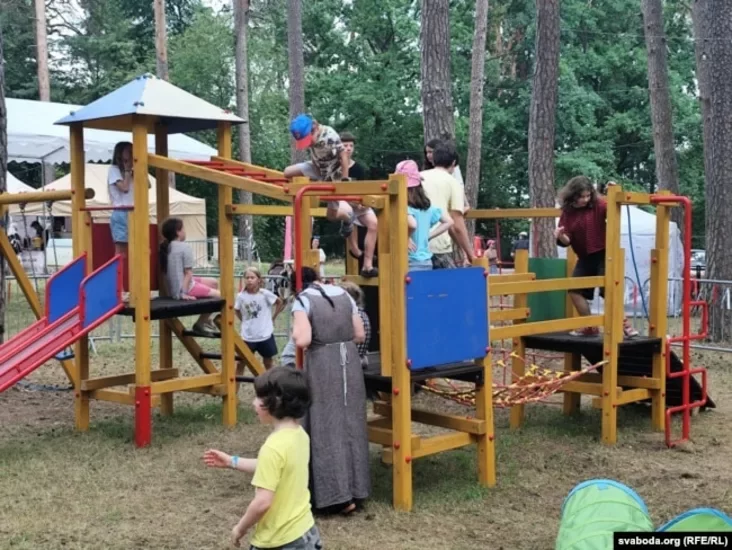
Other festival participants also noted that there were fewer events than before, and on Friday and Saturday morning, they attracted few visitors. An English-speaking couple passes by. She is from Poland, he is from Italy. The young people tell Svaboda that they expected a more crowded event and add that, apparently, it has a family format. The most active and noisy area of the festival really looks like the new children's playground, where kids climb slides, shoot bows, and squeal under the supervision of guardians.
Pavel Stankevich, head of the Tutaka Foundation, which organizes the eponymous festival, commented to Svaboda that as of Saturday morning, about 800 people had bought tickets. In previous years, he estimated the number of participants at approximately five thousand.
"The festival needs to develop. Belarusians should not expect anything from the Polish state or the European Union. Belarusians should also invest in what is valuable to them. I think next year people will get used to the idea that they need to invest in culture," Pavel Stankevich noted.
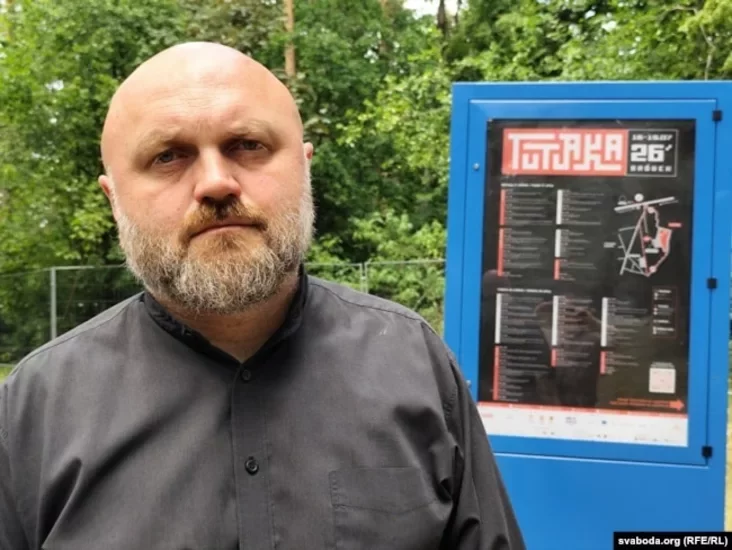
He added that one can still attend the festival for free: by organizing an interesting activity for Belarusians or by volunteering for the event. Additional amenities offered to participants by the organizers, according to Stankevich, include shower cabins in the tent camps, almost a kilometer of garlands in the glade, and the replacement of all festival equipment. Pavel added that they will be able to invite foreign bands to the festival if Belarusians buy tickets. He expressed gratitude to Belarusian artists who agree to perform for minimal fees, and to people who conduct other activities for free.
"This festival always ran at a loss, but now it might break even," the interlocutor noted.
The layout of the festival venues was also changed. This year, a tent city stands in place of the main music stage. There was no small stage where musical concerts used to be held during the day. The musical part began at 10 p.m.
"What to do until 10 p.m.?" a regular festival visitor wonders.
"I want to mosh," adds her companion, who comes to the festival to relieve stress.
"They have now rebuilt the stage with awesome sound," says another Belarusian about the main stage.
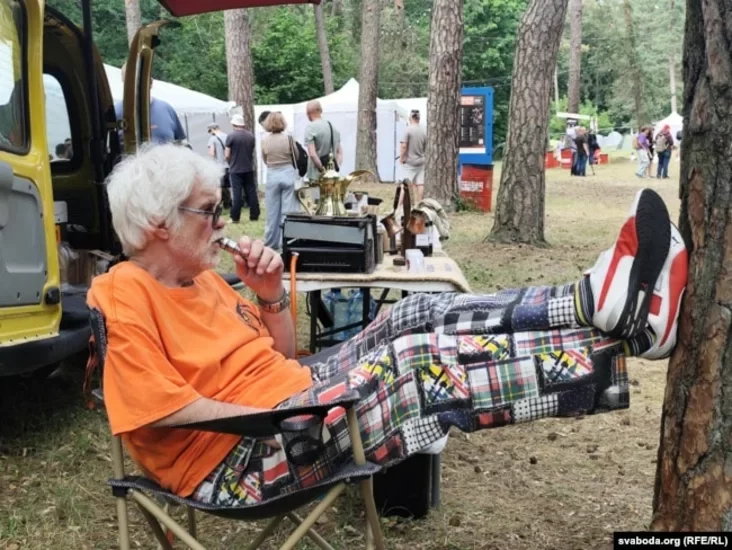
On Friday, those who arrived at the event after 10 p.m. were not allowed by security into either the concerts or the tent camp. The reason given was that the bracelet distribution point was no longer operating, festival participants recount. Some are indignant at the strict security work, while others believe that they are simply doing their job. For the first time, alcohol was not allowed to be brought into the entire festival territory. It was sold inside, but at higher prices. Backpacks and women's handbags are meticulously checked for everyone — and this immediately brings to mind Belarusian practices.
"Yesterday, one security guard herself told us how to get onto the territory via forest paths," our interlocutors share.
Football, booksellers, glitter
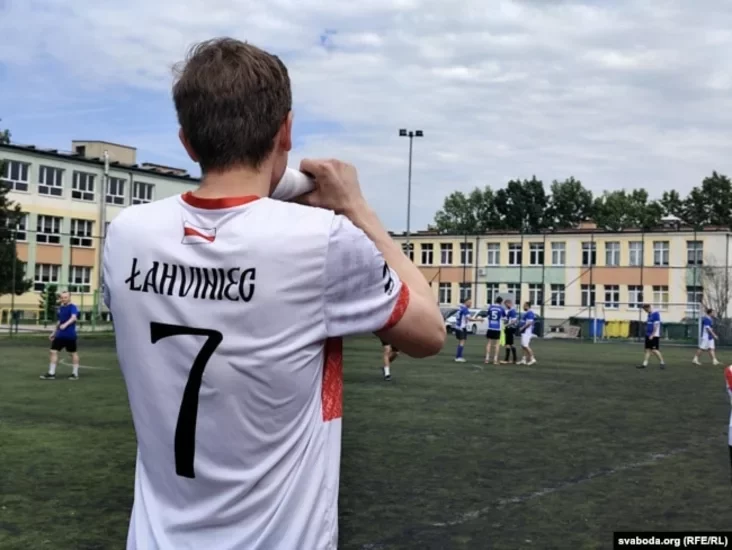
While the morning glade in Borik looks rather sleepy, nearby on the stadium in Horodok, a football tournament in memory of Ales Pushkin is taking place. Three teams are competing. Fans see a friend's heavy backpack and are delighted, because maybe it's a "treat" to make cheering more fun.
In Borik, Orthodox priest Father Aliaksandr Kukhta in the BySol fund's tent distributes glitter and chevrons for donations. In parallel, he eagerly reiterates a condensed version of his yesterday's speech about the national church in Belarus and explains why it is not necessarily Uniatism. Nearby, a musical quiz is held where participants must guess the authors of Belarusian songs, and former political prisoner, journalist Larysa Shchyrakova organizes photo sessions in traditional costumes.
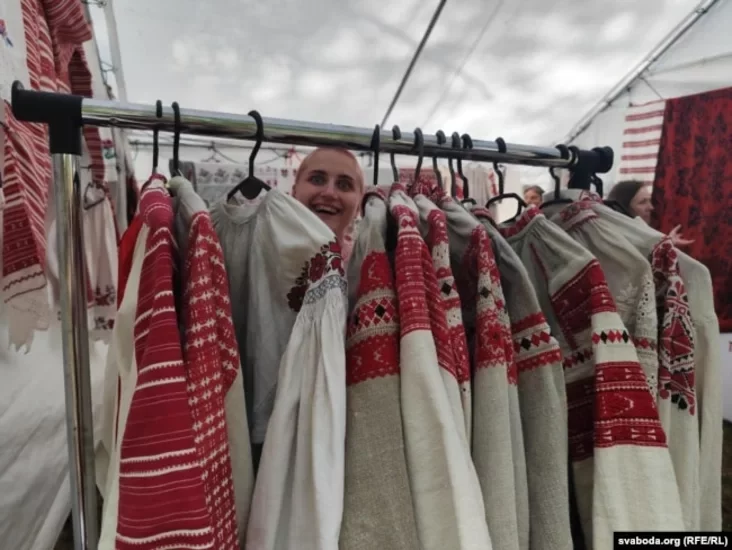
"If we don't know our own history, our neighbors will tell us what our history is," Ales Kirkievich, one of the authors of the "Kasa na Kamen" program, is heard saying from another tent.
Leadership is being discussed on the discussion stage.
"Jesus Christ, speaking Belarusian," Pavel Sieviaryniec tirelessly repeats his thesis. "What other leader with a million followers do you know?"
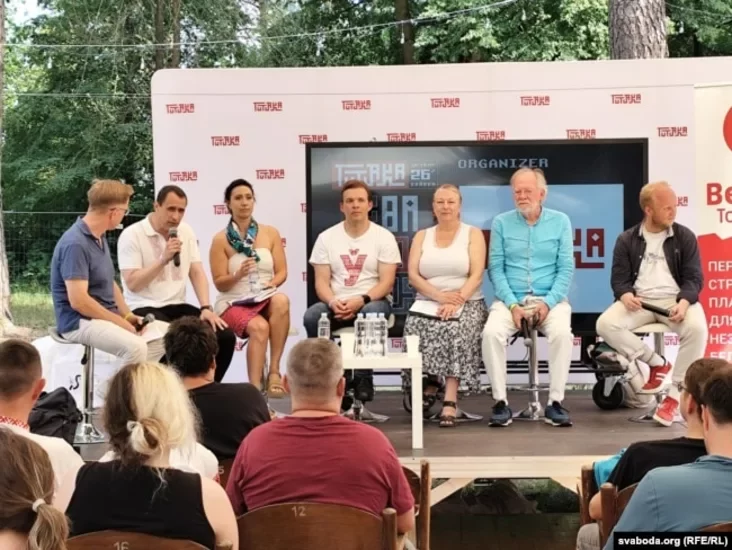
Almost no book publishers came to "Tutaka." Books are only available in the tent of the Białystok Center for Belarusian Culture. As Svaboda learned, one of the main reasons was the prices for booksellers to participate in the festival. While previously it was necessary to pay 10% of book sales, this year prices started from 500 zlotys for a spot, with additional charges for a table, chair, and storage space for goods. Other artisans had similar conditions: they paid from 140 to 250 euros depending on the size of the retail point, and not all covered their expenses.
"Book publishers don't understand that they are in the same boat as us. This year we only raised their prices to cover the ticket cost. It was too expensive for them. They don't understand that an audience awaits them here. They don't understand that we support them, and we also expect support from them," Pavel Stankevich commented on the situation.
Rain and Tsikhanouskaya
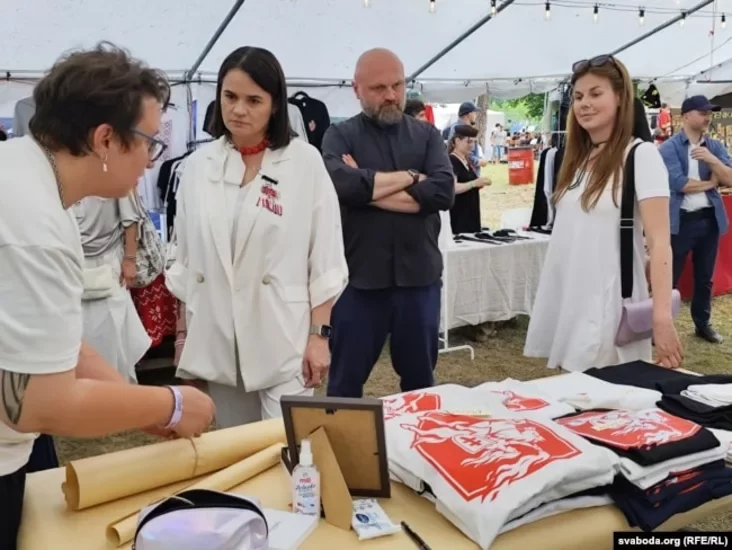
Sviatlana Tsikhanouskaya's arrival at the festival site does not cause a stir. Surrounded by several bodyguards and members of her Office, she walks around the festival tents. Fem-activist Nasta Bazar gifted Tsikhanouskaya a t-shirt with a "Pahonia" featuring a horsewoman of her own design.
"Nasta, will you still be involved in activism?" her acquaintance asks at this moment.
"We are planning a course for women on repairs," Nasta replies.
"I can teach. I know how to replace a sink's knee joint," Sviatlana unexpectedly joins the conversation.
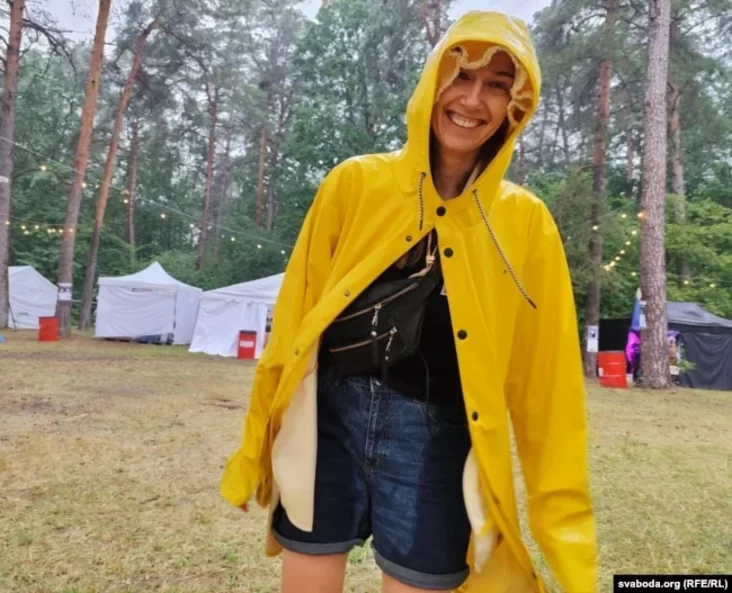
She suddenly leaves the site as a dark cloud approaches. Borik is covered by a downpour with a thunderstorm for two hours. Most hide under canopies, some bravely walk barefoot through puddles. At one table, they share how the midlife crisis has hit and how difficult it is to be parents. At another, a company cheerfully-anxiously googles what to do if a friend swallowed a metal tab from a beer can, and discusses how cool humorist Semyon Slepakov and director Alexander Nevzorov from Russia are.
The rain ends. An informal meeting with Sviatlana Tsikhanouskaya begins. She is asked questions ranging from the release of political prisoners to whether she likes beer (the answer to the latter is "no"). A representative of the Polish government asked if Poland is doing enough for Belarusians and how else they can help.
The democratic leader recounts that she lives more actively in Warsaw than in Vilnius, that her children have already arrived in Poland from the USA and live with her, and that representatives of the American side in negotiations with Lukashenka read posts in which Belarusians ask for the release of specific political prisoners.
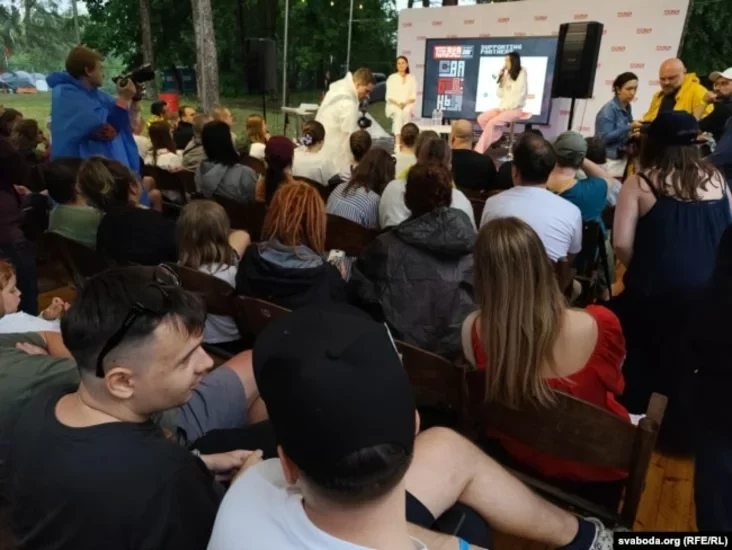
In response to a question about moving to Poland, Sviatlana notes: "I acquired a third home." "And we don't have a single one" - regret is heard from the audience. Sviatlana explains that she owns nothing, including three homes, as someone might have thought. By "third home," she meant Poland - after Belarus and Lithuania.
Auction and concerts
Musician Siarzhuk Douhushau, in a way known only to him, gathers a large crowd during a singing assembly – and now they are all singing "Kupalinka" together. Many are eager to listen to former political prisoner, lawyer, and bard Maksim Znak. He answers questions and performs his songs with a guitar. Lawyer Uladzimir Pylchanka is on stage with him. He accompanies his colleague on the accordion without rehearsal. The audience claps and sings along.
A spirited struggle erupted during the BySol fund's charity auction — the money from it is intended for political prisoners. Aliaksandr Kukhta, with a wooden meat mallet, announces lot after lot. He warns that he previously read up on how to conduct auctions and enthusiastically encourages those present to buy items that, a minute ago, they didn't need.
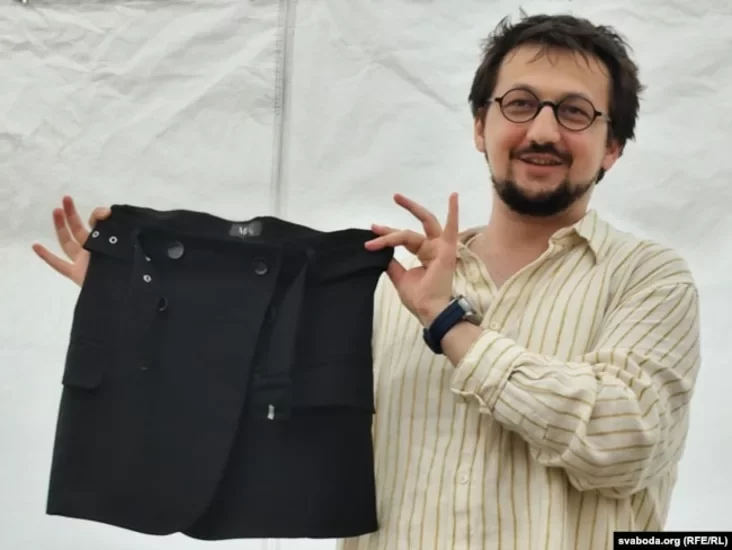
The most expensive lots were drumsticks from the Dzieciuki band's concerts and Sviatlana Tsikhanouskaya's corset, which she wore to a rally in Brest in 2020. Each was sold for 500 zlotys (about 380 rubles).
Also sold at auction were a painting with a diver by Belarusian artist Mikhas, a painting by singer Anastasiya Rydlieuskaia, a T-shirt from the "RSP" band, and an album by rapper Vinsent.

At the evening concerts, young performer Chornabrova, who combined traditional Belarusian music with electronic hip-hop, and pioneer of Belarusian-language rap Vinsent sang.
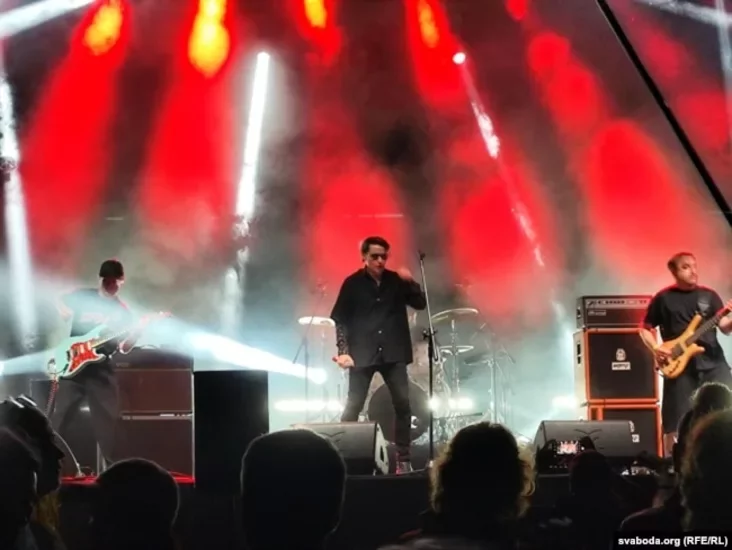
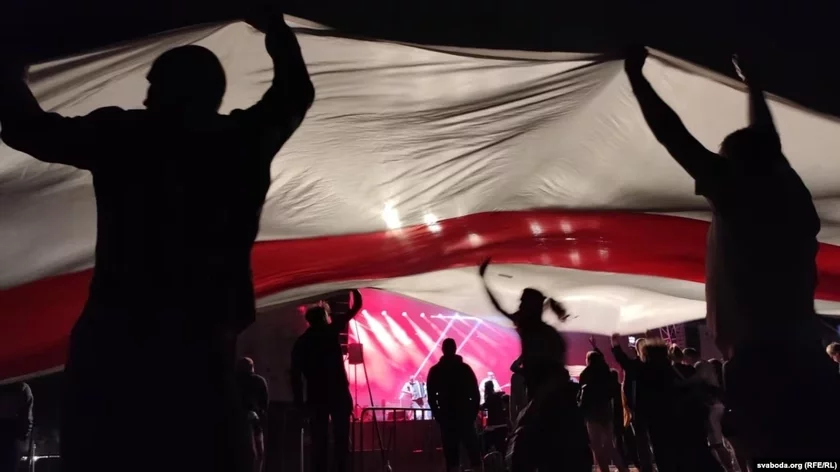
The headliners of musical Saturday were the Hrodna band Dzieciuki. Their presence in the program was voted for by the participants themselves. For their performance, Belarusians unfurled a massive white-red-white flag, moshed, and danced round dances. Dzieciuki concluded their performance with the song "Black Bread and Tea," which they dedicated to those still unjustly imprisoned in Belarusian jails and to volunteers in Ukraine. Then they were asked for an encore twice more.
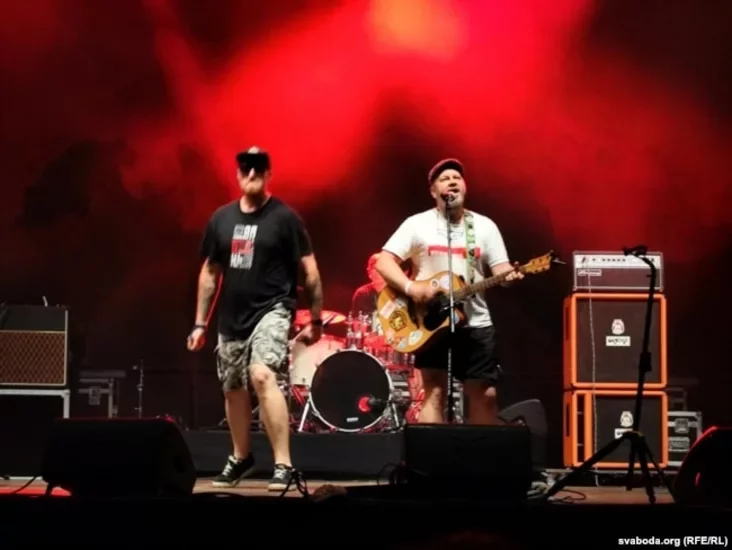
"Dzieciuki sang - and everything is good," smiles a woman from Hrodna, who in the morning was surprised by the low activity at the festival.
"The main point didn't disappoint. 'Dzieciuki!'" a Belarusian from Białystok rejoices.
"'Dzieciuki' were the best at the festival," his colleague agrees.
"I realized that I only want to give money for the atmosphere," admits one of the Belarusians, explaining why he decided to come to Borik despite hesitations.
"Thank you that they are doing this at all," concluded a regular visitor to both "Basovishcha" and "Tutaka" reflecting on the festival.
On the fourth day of the festival, Sunday, participants can look forward to meetings with politician Pavel Sieviaryniec and psychotherapist Hanna Matuliak, a discussion with book publishers, a screening of the film "Who Are You Such," weaving straw horses, and finally, concerts by the bands "Bez nazvy" and "Razbitaye sertsa patsana."


In New York, the Twin Towers were recreated in natural size using 2977 drones — corresponding to the number of victims of the September 11 terrorist attack


Comments